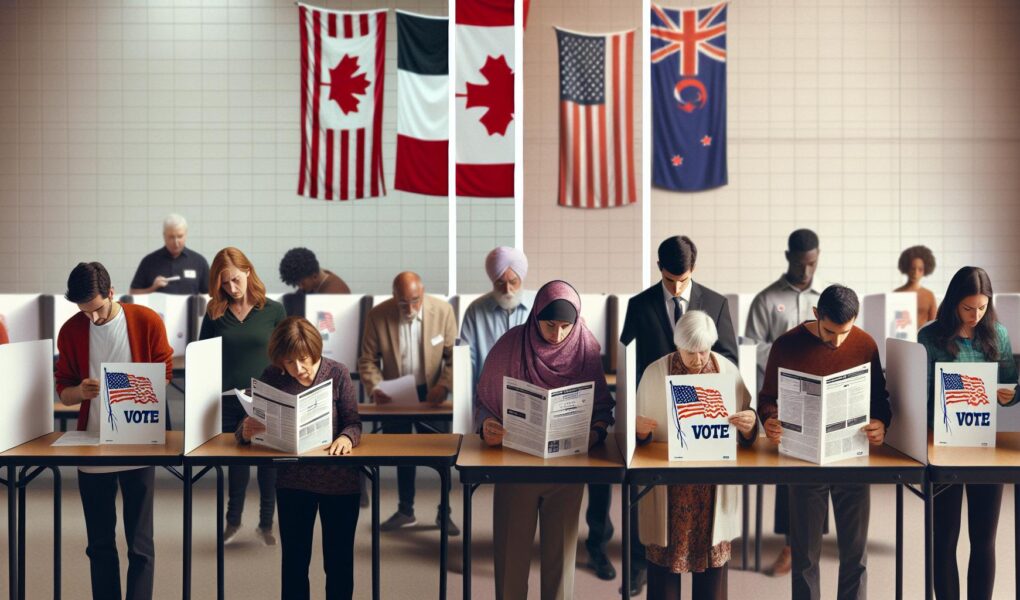
Did you know that holding permanent residency, weather in the U.S. or Canada, does not automatically grant you the right to vote? For many green card holders, understanding their voting rights can be confusing yet crucial, especially when it comes to participating in local or national elections. This comparison between Canada and the USA explores the distinct rules governing whether green card holders can cast ballots, helping you navigate your rights and responsibilities in each contry. Whether you’re aiming to engage more fully in your community or simply want to know your options, uncovering these differences can empower you to make informed decisions about your civic involvement. Keep reading to discover how these two neighboring nations approach voting rights for permanent residents and what that means for you.
Table of Contents
- Green Card Holder Voting Rights: Canada vs USA
- Understanding Voting Eligibility for Permanent Residents
- Legal Restrictions on Green Card Holders Voting in the USA
- Permanent Residents’ Voting Privileges in Canada Explained
- How Citizenship Status Impacts Voting Rights in Both Countries
- Key Differences in Electoral Systems Affecting Green Card Holders
- Common Misconceptions About Green Card Holders and Voting
- consequences of Unauthorized Voting for Green Card Holders
- Steps for Green Card Holders to Gain Voting Eligibility
- How Local vs National Elections Treat Permanent Residents
- Expert Tips for Staying Compliant with Voting Laws
- Future Trends and Potential Changes in Voting Rights for Green Card Holders
- Faq
- Q: Can Green Card holders participate in any local elections in the USA or Canada? A: Green Card holders cannot vote in federal or state elections in the USA. Though, some U.S. municipalities may allow non-citizen participation in specific local elections, but this is rare and varies by city. In Canada, permanent residents do not have voting rights in any federal, provincial, or municipal elections. For more details, see legal restrictions and local election sections in our article. Q: How do voting eligibility rules for Green card holders impact their political voice in USA vs Canada?
- Q: Why is citizenship required to vote but not for other civil rights in USA and Canada?
- Q: What are the penalties for Green Card holders who illegally vote in US elections compared to Canada?
- Q: How do absentee voting rules differ for US citizens living abroad versus Green Card holders?
- Q: Are there any exceptions or upcoming changes that might allow green Card holders to vote in Canada or the USA?
- Q: how can Green Card holders get involved politically if they can’t vote in Canada or the US?
- Q: what are the key differences in Green Card holder voting rights between Canada and the US at the municipal level?
- In Summary
Green Card Holder Voting Rights: Canada vs USA
It’s a common misconception that holding permanent resident status-whether the U.S.Green Card or Canadian PR card-grants voting rights. In reality, both Canada and the United States set clear boundaries: permanent residents are excluded from voting in federal elections. Though, the nuances and exceptions within each country’s election systems reveal critically important differences that everyone in this status should understand.
In the united States, the right to vote in federal, state, and most local elections is strictly reserved for U.S. citizens.Green Card holders, regardless of duration or intent to naturalize, are legally forbidden from voting. Doing so can lead to severe consequences, including jeopardizing immigration status and potential removal proceedings. Even municipal elections, where some countries allow non-citizen participation, generally exclude Green Card holders in the U.S., though a handful of cities have experimented with limited voting rights for non-citizens in local matters. Still,these are exceptions rather than the rule,emphasizing the country’s emphasis on citizenship as the gateway to voting rights.
By contrast, Canada’s approach to voting eligibility is more streamlined but equally clear: only Canadian citizens who meet residency and age requirements can cast ballots in federal, provincial, and municipal elections. Permanent residents in canada do not have the right to vote at any level of government. Unlike the U.S.,where “Green Card” is a widely recognized term,Canadian permanent residents must carry valid documentation and maintain residency status but have no electoral privileges until naturalization.For example, Canadian citizens must be at least 18 years old and have lived in their electoral district to vote-rules that don’t extend to permanent residents [[1]](https://www.elections.ca/vot/ing/pdf/table_e.pdf).
Practical Insights for Green Card and PR Holders
- Understand your status: Remember, holding a Green Card or Canadian PR status allows you many rights-work, live, and travel-but voting isn’t one of them.
- Avoid unauthorized voting: Voting illegally can cause irreversible immigration consequences, especially in the U.S., so always double-check your eligibility before participating in any election.
- Focus on naturalization: For both countries, becoming a citizen is the clear path to gaining voting rights. Prioritize meeting citizenship requirements to fully engage in your adopted country’s democracy.
While both countries maintain citizenship as the cornerstone of electoral participation, the social, political, and legal contexts differ, impacting how permanent residents experience civic life. Understanding these distinctions helps you protect your rights and plan your path forward with confidence.
Understanding Voting Eligibility for Permanent Residents
Permanent resident status, whether as a U.S. Green Card holder or a Canadian Permanent resident (PR),grants many important rights but notably excludes the right to vote in most elections. This distinction is critical because voting represents a fundamental aspect of civic participation and legal membership in a democracy. In both countries, the power to vote is predominantly reserved for citizens, and permanent residents must navigate specific legal frameworks that define their electoral eligibility.
In the United States, holding a Green Card allows you to live and work permanently but does not extend voting rights at the federal, state, or most local levels. Federal law explicitly restricts voting in all federal elections to U.S. citizens, and many states reinforce this rule for state and local elections as well. There are rare exceptions-for instance, a small number of municipalities have allowed some form of local voting participation by non-citizens-but these remain outliers rather than standard practice. Green Card holders who mistakenly vote in federal or state elections risk serious consequences, including potential deportation or loss of eligibility for naturalization [[1]](https://stilt.com/immigrants/can-green-card-holders-vote/), [[3]](https://www.uscis.gov/green-card/after-we-grant-your-green-card/rights-and-responsibilities-of-a-green-card-holder-permanent-resident).
Canada’s approach is somewhat more straightforward but just as strict regarding voting privileges.Only Canadian citizens can participate in federal, provincial, and municipal elections, with permanent residents systematically excluded regardless of residency length or intentions to naturalize. Unlike in the united States, where the idea of local voting by non-citizens occasionally surfaces, Canada enforces a clear-cut rule: citizenship is required to vote in any governmental election. The electoral process mandates voters be at least 18 years old and registered in their electoral district, conditions that apply solely to citizens.This clear boundary ensures permanent residents remain focused on the path to citizenship as the gateway to voting rights [[1]](https://www.elections.ca/vot/ing/pdf/table_e.pdf).
practical Considerations
- Check your electoral eligibility carefully: Never assume permanent resident status confers voting rights. Understanding these boundaries prevents accidental violations that could jeopardize your immigration journey.
- Prioritize naturalization: both countries use citizenship as the definitive step to full political participation. Meeting residency and other requirements to naturalize unlocks your ability to vote and influence local and national policies.
- Stay informed on local nuances: While voting rights are mostly off-limits, some U.S. cities may experiment with limited local voting rights for permanent residents. If you reside in such areas, confirm eligibility criteria before registering or voting to avoid legal troubles [[2]](https://govassist.com/blog/voting-rights-for-green-card-holders-2025-guide).
Fully grasping these eligibility rules empowers permanent residents to engage with their adopted countries lawfully and with confidence, protecting their rights and immigration status as they plan their long-term civic involvement.
Legal Restrictions on Green Card Holders Voting in the USA
Few legal boundaries are as strictly enforced in the United States as the prohibition against non-citizen permanent residents participating in elections. Although Green Card holders enjoy many rights-including living and working indefinitely in the U.S.-their privilege to vote in federal, state, and almost all local elections is explicitly denied. This exclusion underscores the important distinction between lawful permanent residency and full political citizenship,reflecting the nation’s commitment to reserving electoral power for citizens.
Federal law clearly states that only U.S. citizens may vote in federal elections, and this restriction cascades down to most state and local electoral processes. Various states have codified this rule further,often including penalties for non-citizens who attempt to vote.Such as, voting without citizenship can lead to serious legal consequences such as fines, criminal charges, or even civil immigration penalties including removal (deportation). Green Card holders must be particularly vigilant not to register to vote or cast ballots in federal, state, or local elections unless explicitly permitted.While the concept of non-citizen suffrage has cropped up in discussions and occasional local initiatives, it remains the exception rather than the norm, with only a handful of municipalities allowing non-citizen participation in limited types of local elections.
Practical Notes and legal Risks
- Strict federal restrictions: Voting in federal elections is legally reserved for U.S. citizens. This means Green Card holders cannot vote for President, members of Congress, or federal referenda.
- State and local laws vary but lean conservatively: Most states align with federal law in restricting voting rights to citizens, though a few local governments have experimented with allowing non-citizen voting in school board or municipal races. Always verify local rules before assuming eligibility.
- Potential consequences are severe: Illegal voting can jeopardize your entire immigration status, perhaps leading to deportation or disqualification from becoming a citizen.It’s essential to fully understand and comply with these restrictions.
The U.S.electoral system’s stringent limitations on Green Card holders ensure the integrity of voting rights in a way that carries broad political and legal implications. Unlike some countries that have modest allowances for permanent resident voting in local elections, the United States largely preserves these rights for citizens only, emphasizing naturalization as the definitive path to political participation. Green Card holders focused on becoming voting participants should prioritize the naturalization process, ensuring they meet all criteria before stepping into the voting booth legally and confidently.
For permanent residents seeking clarity, staying informed about state-specific policies or pilot programs involving non-citizen voting-and avoiding any temptation to vote prematurely-helps secure both their rights and their future in the U.S. Here’s a quick overview of typical voting eligibility as it relates to Green Card holders:
| Election Type | Green Card Holder Eligibility |
|---|---|
| Federal Elections (president,Congress) | Not permitted |
| Most State and Local Elections | Generally not permitted; exceptions very rare and localized |
| special Local Elections (e.g., School Board in rare municipalities) | Possible but extremely limited; check local regulations |
Understanding these legal boundaries empowers Green card holders to avoid costly mistakes and prioritize citizenship, the gateway to full democratic participation in the United States. For detailed guidance, consulting official resources and legal experts is highly recommended to navigate this complex terrain safely and knowledgeably [[1]](https://stilt.com/immigrants/can-green-card-holders-vote/), [[2]](https://govassist.com/blog/voting-rights-for-green-card-holders-2025-guide), [[3]](https://www.uscis.gov/green-card/after-we-grant-your-green-card/rights-and-responsibilities-of-a-green-card-holder-permanent-resident).
Permanent Residents’ Voting Privileges in Canada Explained
Permanent residents in Canada occupy a unique space within the country’s democratic framework. unlike some assumptions that permanent residents might have some voting rights due to their long-term residency, Canadian law firmly reserves the right to vote in federal, provincial, and municipal elections exclusively for Canadian citizens.This distinction underscores the principle that political participation, particularly voting, is a core privilege tied directly to citizenship status, reflecting a clear boundary between permanent residency and full membership in the Canadian polity.
That said, permanent residents in Canada are not entirely disconnected from the political process.They are legally permitted to actively engage with political parties and even contribute donations to them. This involvement allows permanent residents to influence political discourse and policy indirectly, helping shape the political environment while they prepare for eventual citizenship. Many permanent residents take advantage of this to stay informed and involved, participating in community discussions or advocacy efforts without crossing the legal line of voting [[1]](https://www.reddit.com/r/CanadaPolitics/comments/1gozcfb/permanent_residents_cant_vote_but_why_can_they/).
Understanding Political Participation Beyond Voting
- Joining Political Parties: Permanent residents can become members of political parties, attend party meetings, and contribute to party platforms, helping to advocate for issues relevant to their communities.
- Donating to Campaigns: monetary contributions are allowed, offering residents a voice through financial support, which is a powerful way to influence policies and election outcomes.
- Community Engagement: Many permanent residents engage in grassroots activism and participate in public consultations, preparing themselves well for active citizenship.
Though, permanent residents must be cautious not to confuse these privileges with actual voting rights. To participate legally in elections, they must complete the naturalization process and obtain Canadian citizenship. This involves meeting residency requirements, language proficiency, and knowledge about Canada’s history and governance. Preparing thoughtfully for naturalization not only opens the door to voting rights but also strengthens the connection permanent residents feel with their adopted country.
| Political Activity | Permanent Resident Eligibility |
|---|---|
| Vote in Federal, Provincial, or Municipal Elections | Not permitted |
| Join Political Parties | Permitted |
| Donate to Political Campaigns | Permitted |
| Participate in public Consultations and Advocacy | Permitted |
For those on the path to citizenship, staying informed about the political landscape and understanding these distinctions can be empowering. It helps permanent residents avoid unintentional legal pitfalls while encouraging meaningful participation in the democratic process within permissible bounds. The Canadian model thus balances inclusion-with political rights tied to citizenship-while still welcoming permanent residents into the political dialogue in meaningful ways.
How Citizenship Status Impacts Voting Rights in Both Countries
Voting rights hinge fundamentally on citizenship status in both Canada and the United States, drawing a clear line between permanent residents-commonly referred to as green card holders in the U.S.-and full citizens. While permanent residents enjoy many privileges, the power to influence elections directly through voting is typically reserved for those who have completed the naturalization process. This distinction reflects both countries’ emphasis on political membership as a core marker of citizenship, shaping a democratic framework that balances inclusion with legal boundaries.
In the United States, federal law explicitly prohibits non-citizens from voting in federal elections. This restriction extends to green card holders at all levels of federal, state, and most local elections. Citizenship is a prerequisite for voter registration and participation, and states employ various checks to verify eligibility, such as requiring proof of citizenship when registering to vote. Attempts to mandate documentary proof of citizenship have faced legal challenges, underscoring the sensitivity and complexity surrounding voter eligibility enforcement. For green card holders, this means actively voting before naturalization is considered illegal and can carry serious legal consequences [[1]](https://www.brennancenter.org/series/voting-and-citizenship), [[2]](https://www.aclu.org/press-releases/court-blocks-documentary-proof-of-citizenship-provision-in-voting-executive-order).
Canada presents a similarly firm stance: permanent residents cannot vote in any federal, provincial, or municipal elections. Instead, voting rights are reserved for Canadian citizens, making citizenship the definitive criterion for electoral participation. However, Canadian permanent residents can engage politically in meaningful ways outside of voting, such as donating to political campaigns or joining political parties. This approach supports community involvement while reinforcing citizenship as the gateway to full democratic rights. It also provides a valuable pathway for permanent residents preparing for naturalization to become active participants in the political process in other capacities.
Citizenship Status and Political Rights: Key Considerations
- Legal barriers: Both countries clearly outlaw voting by permanent residents, emphasizing that citizenship confers the right to participate in formal elections.
- Political Engagement Opportunities: Permanent residents can frequently enough join political parties or contribute financially to campaigns, which helps them shape local or national political dialogue without voting.
- Pathway to Voting: Naturalization marks a key milestone where permanent residents gain voting and other full political rights, making citizenship a transformative status.
| Country | voting Rights for Permanent Residents | Other Political Participation | Requirements to Vote |
|---|---|---|---|
| United States | No voting in federal, state, or most local elections | Limited political engagement beyond voting; cannot vote before citizenship | Must be a U.S. citizen with proof at registration |
| Canada | No voting in federal, provincial, or municipal elections | permitted to join parties, donate to campaigns, and participate in advocacy | Must be a Canadian citizen |
Understanding these distinctions helps permanent residents navigate their rights and responsibilities without jeopardizing their legal status. Such as, green card holders in the U.S. should be cautious about participating in certain local elections where some jurisdictions might allow noncitizen voting in very limited contexts (such as school board elections), though these are exceptions rather than the rule. Staying informed about the convergence of citizenship status and voting rights not only safeguards legal compliance but also empowers residents to actively prepare for full political participation through naturalization.
Key Differences in Electoral Systems Affecting Green Card Holders
Voting systems in Canada and the United States reflect foundational differences in how each country integrates-or restricts-permanent residents from electoral participation. While both countries maintain citizenship as the cornerstone for voting eligibility, the nuances in their electoral frameworks and local policies create distinct experiences for green card holders and permanent residents, influencing political inclusion and community engagement.
One striking difference lies in the strict enforcement of citizenship requirements in the U.S., especially at the federal and state levels, where proof of citizenship is mandatory for voter registration. this stringent approach limits any ambiguity about who can vote, effectively barring green card holders from polls across nearly all elections. That said, there are rare and highly localized exceptions in some U.S. municipalities, such as San Francisco, which have experimented with allowing noncitizen residents-sometimes including permanent residents-to vote in specific local elections like school board races. These pockets of inclusivity are exceptions rather than the norm and have sparked legal and political debate, highlighting tensions between local autonomy and federal electoral regulation [[3]](https://www.politico.com/news/2025/02/10/ny-courtnoncitizen-voting-00203174).In contrast, Canada’s electoral system enforces a clear-cut prohibition on permanent resident voting at every level-federal, provincial, and municipal-with no formal exceptions. This uniformity provides clarity: permanent residents can participate politically only through indirect means, such as joining political parties or contributing to campaigns. The Canadian approach prioritizes a cohesive national standard, arguably promoting political stability and clear citizenship-based rights, but it can feel restrictive to permanent residents eager to exert influence on decisions affecting their communities.
Practical Implications for Permanent Residents
- Local vs. National Impact: In the U.S., even though green card holders cannot vote in federal or state elections, the existence of localized voting opportunities in some cities means permanent residents should stay informed about specific municipal rules-participating where legally permissible but avoiding unauthorized voting to prevent legal consequences.
- Political Engagement Beyond Voting: Both countries allow permanent residents to engage non-electorally, but Canada provides a more structured framework for such involvement through political party memberships, encouraging civic participation without extending franchise rights.
- Pathway Clarity: The U.S. system’s district-by-district variability can create confusion, whereas Canada’s strict uniformity avoids ambiguity but demands clear communication to permanent residents about their rights and limits.
| Aspect | United States | Canada |
|---|---|---|
| federal Election Voting | Prohibited for green card holders | Prohibited for permanent residents |
| State/Provincial Election Voting | Generally prohibited, with rare local exceptions | Prohibited for permanent residents |
| Municipal Election voting | Rare exceptions in some cities (e.g., San Francisco school board) | Prohibited for permanent residents uniformly |
| Political Engagement Rights | Limited; no voting but possible campaigning and advocacy | Allowed; join parties, donate, campaign-without vote |
Understanding these distinctions empowers green card holders to navigate their political rights with greater confidence and avoid unintended legal pitfalls. Staying abreast of evolving local laws-such as pending court decisions over noncitizen voting in New York City-and engaging through available political channels can help permanent residents influence their communities while respecting the legal frameworks that safeguard electoral integrity.
Common Misconceptions About Green Card Holders and Voting
Many people assume that holding a green card automatically grants voting rights similar to those of citizens, but this is far from the truth in both the United States and Canada. A common misconception is that permanent residency equates to political enfranchisement, yet in reality, voting rights are almost exclusively reserved for citizens in these countries. For instance, green card holders in the U.S. cannot legally vote in federal or state elections, and only in very rare local contexts-like some school board elections in cities such as San Francisco-might they be allowed to participate. These exceptions are few and heavily scrutinized, which frequently enough surprises residents who expect broader electoral inclusion[[3]](https://wise.com/us/blog/can-green-card-holders-vote).
Another frequent misunderstanding concerns the perceived uniformity of voting restrictions. Many believe that all noncitizens are categorically barred from all voting processes everywhere in the U.S. and Canada. While the broad rule does prohibit permanent residents from voting, there are notable nuances, especially at the municipal level in the U.S. These exceptions are often misinterpreted as a widespread right rather than very limited and localized allowances. Conversely, Canada’s steadfast adherence to a total ban on permanent resident voting-across federal, provincial, and municipal levels-offers clarity but still fuels the incorrect notion that political participation through voting is at least possible outside citizenship there as well. This contrast highlights the need for permanent residents to be well-informed about their specific rights or restrictions depending on their location.
Why Understanding These Misconceptions Matters
- Protect Yourself Legally: Unauthorized voting can lead to serious consequences, including fines, deportation, or impacting future citizenship applications. Knowing where the line is drawn helps green card holders avoid these risks.
- Engage Politically in Other Ways: Many permanent residents overlook the myriad ways to participate politically without voting, such as joining political parties, volunteering for campaigns, or community advocacy, especially in Canada where these avenues are more structured.
- Recognize Local Variations: In the U.S.,municipal election rules can differ vastly,so actively researching local laws and elections is crucial to avoid inadvertent violations while maximizing community involvement.
Dispelled myths empower green card holders to take meaningful steps toward political engagement that respect the legal frameworks in place. Such as, in Canada, while voting remains off-limits, permanent residents can join political parties and contribute financially, providing an alternative route to influence policies. In the U.S., understanding that voting rights are reserved for citizens underscores the importance of timely naturalization for those eager to fully participate in democracy. Avoiding assumptions about automatic voting eligibility prevents unnecessary legal complications and sets clear expectations for active, lawful involvement in community and political life.
Casting a ballot without the legal right to do so can carry serious ramifications-not just inconveniences. For green card holders, who are permanent residents but not citizens, participating in elections where they’re prohibited can jeopardize their immigration status and future prospects in both the united States and Canada. Understanding these consequences is crucial to navigating your rights and responsibilities confidently.
In the United States,voting in federal,state,or most local elections as a green card holder is explicitly illegal. Doing so may be treated as a fraudulent act with severe legal consequences.Under federal law (52 U.S. Code § 20511), knowingly submitting false data or voting unlawfully can lead to criminal penalties, including fines and imprisonment[[1]](https://www.law.cornell.edu/uscode/text/52/20511). Beyond criminal charges, casting an illegal vote can trigger immigration enforcement actions. These may range from denial of naturalization applications to deportation proceedings. For permanent residents aiming to eventually become U.S. citizens, unauthorized voting can be viewed as a serious form of moral turpitude, damaging their eligibility and delaying or halting citizenship status altogether.
Canada’s approach is more straightforward but no less strict. Voting rights are reserved exclusively for Canadian citizens at federal, provincial, and municipal levels, with no exceptions for permanent residents. Should a green card equivalent-permanent resident-cast a ballot, they risk similar consequences. While canada’s penalties related to unauthorized voting tend to focus on criminal sanctions rather than immigration consequences, permanent residents must realize that breaking voting laws could harm their reputation and future chances of citizenship. The Canadian system emphasizes legal clarity and enforcement to protect the integrity of elections.
Practical advice to Avoid Unintentional violations
- Know Where to Vote: Always verify your eligibility before participating. Local election rules can vary, but permanent residents should generally avoid voting unless explicitly permitted (rare exceptions in the U.S.municipal context).
- Seek Alternative Political Engagement: Both countries offer non-voting avenues, such as volunteering in campaigns, advocacy, or joining political organizations, allowing green card holders to contribute meaningfully without risking legal trouble.
- Prepare for Naturalization: Prioritize applying for citizenship when eligible to gain full voting rights and avoid uncertainties related to unauthorized participation.
| Country | Unauthorized Voting Penalties | Impact on Immigration Status | Legal Nuances |
|---|---|---|---|
| United States | Criminal fines, imprisonment, and fines under federal law | Possible denial of naturalization, deportation risk | Rare local exceptions; strict federal prohibitions |
| Canada | Criminal penalties; fines less common but possible | Reputational harm; potential negative impact on citizenship | No voting allowed for permanent residents at any level |
Ultimately, the safest course for green card holders is to respect these voting restrictions to protect their legal standing. While the urge to participate politically is natural, investing time and energy into lawful channels of involvement will safeguard not only your rights but also your residency status.
Steps for Green Card Holders to Gain Voting Eligibility
Few rights are as cherished by permanent residents aspiring to fully participate in their adopted homeland’s civic life as the right to vote. However, obtaining voting eligibility is a distinct process that hinges upon naturalization rather than residency status alone, both in the United States and canada. for green card holders or permanent residents eager to contribute to elections, navigating this path requires careful understanding and purposeful steps.
In both countries,the foundational requirement is acquiring citizenship. Merely holding a green card-whether in the U.S. or Canada-is not sufficient to cast a legal vote in federal, provincial, or many local elections. The naturalization process involves fulfilling residency duration requirements, language proficiency, demonstrating knowledge of the country’s history and governance, and passing a citizenship test. Once naturalized, individuals gain voting rights automatically, unlocking their full civic participation privileges.
Essential Steps Towards Citizenship and Voting Eligibility
- Maintain Continuous Residency: Permanent residents must ensure they meet specific time thresholds living physically within the country. for example, in the U.S., most applicants must have resided continuously for at least five years as a green card holder before applying for citizenship.
- Meet Eligibility Criteria: This includes clear criminal records, the ability to demonstrate proficiency in English or French (in Canada), and passing the citizenship test designed to evaluate knowledge of core civics and history.
- Submit a complete Application: Timely and accurate submission of the naturalization paperwork, alongside appropriate fees, initiates the legal transition from permanent resident to citizen.
- Attend Interviews and Take the Oath: Applicants must complete an interview with immigration officials and take an oath of Allegiance, affirming their commitment to their new country.
For green card holders committed to becoming active voters, understanding these milestones is critical.The patience and dedication invested in naturalization reap substantial rewards, including legal voting rights, eligibility for certain public offices, and expanded participation in democratic processes.
Real-World Considerations and Encouragement
Some permanent residents may hesitate due to concerns over language barriers, lengthy wait times, or uncertainty about the process. Though, many community organizations in both countries provide resources, citizenship classes, and legal advice to support applicants.Taking advantage of these services can ease the journey toward eligibility.moreover, while awaiting citizenship, permanent residents can actively engage with political campaigns, advocacy groups, and community boards in permissible ways, helping to shape the discourse constructively without risking legal repercussions. Planning ahead to become a citizen ensures the ability to vote without jeopardizing immigration status or facing penalties for unauthorized participation[[1]](https://www.migrationpolicy.org/content/noncitizen-voting-us-elections).
| Step | U.S. Voting Eligibility | Canada Voting Eligibility |
|---|---|---|
| Residency Duration | 5 years as green card holder (3 years if married to a U.S. citizen) | 3 years as permanent resident before applying |
| Language Requirement | Basic English proficiency required | English or French proficiency required |
| Citizenship Test | Civics and English test | Knowledge of Canada and official languages test |
| Voting Eligibility | Only after official naturalization and oath | Only after official naturalization and oath |
By methodically following these steps, green card holders in both countries can transform their permanent resident status into full citizenship and as an inevitable result, gain the right to vote. This journey not only empowers individuals politically but also fosters deeper integration into the societal fabric of their new home.
How Local vs National Elections Treat Permanent Residents
Across both the United States and Canada, the ability of permanent residents to participate in elections varies substantially when contrasting national and local electoral processes. While naturalized citizens can vote freely in all federal, provincial/state, and local elections, permanent residents-frequently enough green card holders-face stringent limitations that differ notably between the two countries, especially at the local level.
In the U.S., national elections are strictly reserved for U.S. citizens, meaning green card holders cannot vote in presidential, congressional, or statewide contests under any circumstances. However, some municipalities have started to allow non-citizens, including permanent residents, to vote in certain local elections-particularly school board races or municipal advisory votes. Such as, places like San Francisco and certain towns in Maryland have granted limited voting rights to non-citizens in very specific local contexts. These exceptions remain rare and tightly regulated, emphasizing that the default rule is exclusion unless explicitly stated otherwise by local law [[3]].
Canada’s approach is more uniformly restrictive. Unlike select U.S. localities, permanent residents in Canada do not have the right to vote in federal, provincial, or municipal elections. voting privileges at any level are exclusively reserved for Canadian citizens. Therefore,no matter the municipality or province,holding permanent residency-even with several years of continuous physical presence-does not confer voting rights. This strict stance simplifies the framework but limits opportunities for permanent residents to influence local governance before naturalization.
understanding Practical Implications for Green Card Holders
- engagement Without Voting: As voting is off-limits for permanent residents in national elections and most local ones, engagement in other civic activities is crucial. this includes volunteering for campaigns, attending public hearings, joining community boards, or advocating for policies, which can all amplify influence without violating electoral laws.
- Watch for Local Ordinance Changes: U.S. permanent residents interested in voting rights at the local level should closely monitor their city or county rules, as some may expand non-citizen voting privileges, though these remain exceptions rather than the rule.
- Naturalization as the Ultimate Goal: The clearest path to voting eligibility and full civic participation lies in completing the citizenship process. Only upon naturalization does a permanent resident gain unrestricted voting rights in both national and local elections across both countries.
Comparative Summary of Voting Rights for Permanent Residents
| Election Level | United States | Canada |
|---|---|---|
| Federal/National Elections | Only U.S. citizens can vote; green card holders prohibited | Only Canadian citizens can vote; permanent residents prohibited |
| State/Provincial elections | Only citizens eligible; permanent residents prohibited | Only citizens eligible; permanent residents prohibited |
| Local/Municipal Elections | Generally only citizens, but select jurisdictions allow limited non-citizen voting | Only citizens eligible; permanent residents prohibited |
Ultimately, understanding where permanent residents can and cannot vote helps avoid legal pitfalls and informs expectations about civic involvement. Being well-informed allows permanent residents to channel efforts into lawful and impactful community participation while preparing for the path to citizenship and its accompanying electoral rights.
Expert Tips for Staying Compliant with Voting Laws
Few actions carry as much weight as casting a ballot in a democratic society-but for green card holders, understanding the nuances of voting eligibility is absolutely critical to avoid unintentional legal infractions. In both the united States and Canada, permanent residents face complex, strictly enforced rules that prevent them from voting in most elections. Navigating this landscape with care not only preserves their legal standing but also protects the integrity of the electoral process. Cultivating a clear understanding of compliance parameters is a vital skill for every green card holder committed to responsible civic engagement.
Stay Informed About jurisdiction-Specific Rules
While federal and provincial/state laws are mostly unambiguous-permanent residents cannot vote in national or statewide elections-some U.S.localities have begun permitting limited non-citizen voting, such as san Francisco’s allowance for permanent residents to vote in school board elections. It’s essential to verify the specific ordinances in your city or county before considering any form of electoral participation.Such as, some municipalities may require registration or proof of residency distinct from federal documents. Green card holders should regularly consult official government websites or trusted legal resources to confirm the scope of their voting rights, if any, within their communities.
- Never assume eligibility based on local residency; permanent residency alone rarely confers voting rights.
- Avoid voter registration applications unless citizenship is confirmed; attempts to register can trigger serious legal consequences, including potential immigration penalties or jeopardizing future naturalization.
- Decline invitations to vote in any election unless explicitly permitted; even well-intentioned participation in unofficial or advisory ballots can lead to misunderstandings with election officials.
Many permanent residents often confuse participation in community surveys or non-binding advisory polls with formal voting-which carries no legal risk but can lead to misconceptions about eligibility. Recognize these distinctions and exercise caution to maintain compliance.
Leverage Legal and Civic Engagement Alternatives
Engagement in the democratic process is not limited solely to voting. Green card holders can enhance their community involvement by volunteering in political campaigns, attending town hall meetings, or serving on advisory boards. These activities build valuable connections and allow you to influence policy discussions lawfully. Additionally, pursuing naturalization is the definitive route to unlocking full voting rights and broader civic participation. Preparing for citizenship should be prioritized through educational resources, legal assistance, and fulfilling residency requirements.
By blending vigilance, continuous education, and proactive community involvement, permanent residents can honor both the letter and spirit of voting laws. This approach ensures that their voices contribute meaningfully while safeguarding their immigration status. For tailored guidance, consulting immigration attorneys or local election authorities can provide clarity amid evolving legal landscapes.

Future Trends and Potential Changes in Voting Rights for Green Card Holders
One of the most intriguing developments on the horizon is the gradual opening of voting rights at the local level for permanent residents,particularly in the United States. while federal law firmly restricts Green Card holders from participating in national and state elections, a handful of progressive cities have begun experimenting with limited non-citizen suffrage, primarily in municipal or school board elections. San Francisco is a leading example,allowing permanent residents to vote in school board races-a move that advocates hope might inspire other jurisdictions to reconsider rigid eligibility rules.This trend reflects a growing recognition of the contributions that non-citizen residents make to their communities and the benefits of inclusive democratic participation.
Meanwhile, Canada’s approach remains more restrictive, with permanent residents generally barred from voting in federal and provincial elections. However, there is cautious discussion about expanding certain local voting rights, mirroring global conversations about the role of resident non-citizens in civic life. While no significant policy shifts have yet emerged nationwide, some cities are piloting advisory roles and community consultations that give permanent residents a voice without formal ballot access. These incremental steps could signal an eventual reexamination of voting privileges at the municipal level, especially as immigrant populations grow and demand more portrayal.
Adapting to Changing Demographics and Civic Engagement
As immigrant communities continue to expand across both the U.S. and Canada, pressure to reconsider permanent residents’ voting rights may intensify. Policy makers are balancing the twin goals of electoral integrity and inclusion, with discussions frequently enough centered on how to foster engagement without undermining citizenship’s unique privileges. For Green Card holders contemplating naturalization, these emerging local voting opportunities might provide a meaningful interim platform for political involvement, encouraging greater community integration and civic obligation.
- Stay updated on local ordinances: Changes may occur city-by-city, so permanent residents should monitor their local government’s announcements and voting rules closely.
- Engage with community organizations: Groups advocating immigrant rights often lead the charge for expanded voting access and can be valuable allies and sources of information.
- Consider naturalization: Despite evolving local options, becoming a citizen remains the surest path to full electoral participation nationwide.
Technological Innovations and Future Legal debates
Advances in election technology and data integration might also influence future voting rights for permanent residents by improving voter identification, reducing fraud concerns, and perhaps easing administrative burdens related to expanded local suffrage. Legislative debates may focus on crafting safeguards that allow non-citizen voting without jeopardizing public trust in elections.
Such as, some experts envision localized voting pilot programs monitored closely for both compliance and community impact, with results informing potential policy changes at larger scales. These experiments could help bridge the gap between strict citizenship-only voting norms and growing calls for greater inclusivity, potentially shaping a new paradigm around civic participation for permanent residents.
By staying informed about these evolving conversations, understanding jurisdiction-specific regulations, and pursuing relevant legal pathways, green card holders can better navigate the complexities of voting rights today while positioning themselves for greater involvement tomorrow.
| Country | Current Status | Future outlook |
|---|---|---|
| USA | No federal voting rights; limited local voting allowed (e.g.,San Francisco school board) | Potential expansion of local voting rights; increased civic engagement programs; pilot projects on non-citizen voting |
| Canada | No voting rights for permanent residents in federal or provincial elections; limited advisory roles at municipal level | Possible introduction of municipal voting experiments; increased community involvement initiatives |

Faq
Q: Can Green Card holders participate in any local elections in the USA or Canada?
A: Green Card holders cannot vote in federal or state elections in the USA. Though, some U.S. municipalities may allow non-citizen participation in specific local elections, but this is rare and varies by city. In Canada, permanent residents do not have voting rights in any federal, provincial, or municipal elections. For more details, see legal restrictions and local election sections in our article.
Q: How do voting eligibility rules for Green card holders impact their political voice in USA vs Canada?
A: Green card holders have limited or no voting rights in both countries, which restricts their direct political influence. The USA prohibits non-citizens from voting federally, while Canada excludes permanent residents entirely. Understanding these rules helps permanent residents navigate political participation through other means like advocacy, detailed in our ”Green Card Holder Voting Rights” section.
Q: Why is citizenship required to vote but not for other civil rights in USA and Canada?
A: Voting is legally reserved for citizens in both countries to ensure loyalty and political responsibility. While Green Card holders have civil rights like work authorization and residency, voting is linked to full political participation, which citizenship grants. Explore how citizenship status affects voting rights more fully in our “How Citizenship Status Impacts Voting rights” segment.
Q: What are the penalties for Green Card holders who illegally vote in US elections compared to Canada?
A: In the USA, unauthorized voting by a Green Card holder can result in criminal charges, fines, and deportation. In Canada, voting without citizenship is illegal but seldom occurs, with potential legal repercussions. See our section on ”Consequences of Unauthorized Voting for Green Card Holders” for specific penalties and compliance advice.
Q: How do absentee voting rules differ for US citizens living abroad versus Green Card holders?
A: US citizens abroad can vote absentee in federal elections, but Green Card holders, as non-citizens, are ineligible. Canada also restricts voting to citizens only. This distinction ensures non-citizens don’t cast votes, clarifying eligibility in our “voting Eligibility for Permanent Residents” section and linking to overseas voting resources [1].
Q: Are there any exceptions or upcoming changes that might allow green Card holders to vote in Canada or the USA?
A: Currently, no laws allow Green card holders to vote in Canada or the USA. Though, several local U.S. jurisdictions are exploring limited non-citizen voting rights in municipal elections. Stay updated by reviewing our “Future Trends and Potential Changes in Voting Rights” section for ongoing reforms and strategies for staying compliant.
Q: how can Green Card holders get involved politically if they can’t vote in Canada or the US?
A: Green Card holders can stay politically active by attending candidate forums, joining advocacy groups, volunteering for campaigns, and engaging in community discussions. These non-voting avenues help influence policy until citizenship status changes. Learn actionable tips in our “Expert Tips for Staying Compliant with Voting Laws” section.
Q: what are the key differences in Green Card holder voting rights between Canada and the US at the municipal level?
A: The US allows limited municipal voting opportunities for non-citizens in rare cases, whereas Canada strictly restricts voting to citizens in all municipal elections. This makes US local laws more flexible but still restrictive overall. for deeper insights, see our “How Local vs National Elections Treat Permanent Residents” and comparative analysis sections.
For more detailed guidance and expert advice, explore the full article sections on voting eligibility and legal restrictions for Green Card holders. Staying informed ensures compliance and supports your right to participate politically once eligible.
In Summary
Understanding the voting rights of green card holders reveals critically important differences between Canada and the USA that every permanent resident should know. While green card holders cannot vote in federal elections in the United States, Canada offers different guidelines that might align more closely with your rights and opportunities. If you’re considering your next steps, exploring our detailed guides on citizenship eligibility and permanent residency benefits can provide valuable insights to help you plan ahead with confidence.
Ready to stay informed and make empowered decisions? Subscribe to our newsletter for timely updates on immigration policies, voting rights, and resident responsibilities. Don’t hesitate to join the discussion below-share your experiences or ask questions to connect with others navigating similar paths. For further assistance, check out our expert consultation services designed to clarify your status and voting eligibility in both countries. Keep exploring, stay engaged, and ensure you’re fully equipped to exercise your rights as a green card holder in the USA or Canada.
A: Voting is legally reserved for citizens in both countries to ensure loyalty and political responsibility. While Green Card holders have civil rights like work authorization and residency, voting is linked to full political participation, which citizenship grants. Explore how citizenship status affects voting rights more fully in our “How Citizenship Status Impacts Voting rights” segment.
A: In the USA, unauthorized voting by a Green Card holder can result in criminal charges, fines, and deportation. In Canada, voting without citizenship is illegal but seldom occurs, with potential legal repercussions. See our section on ”Consequences of Unauthorized Voting for Green Card Holders” for specific penalties and compliance advice.
A: US citizens abroad can vote absentee in federal elections, but Green Card holders, as non-citizens, are ineligible. Canada also restricts voting to citizens only. This distinction ensures non-citizens don’t cast votes, clarifying eligibility in our “voting Eligibility for Permanent Residents” section and linking to overseas voting resources [1].
A: Currently, no laws allow Green card holders to vote in Canada or the USA. Though, several local U.S. jurisdictions are exploring limited non-citizen voting rights in municipal elections. Stay updated by reviewing our “Future Trends and Potential Changes in Voting Rights” section for ongoing reforms and strategies for staying compliant.