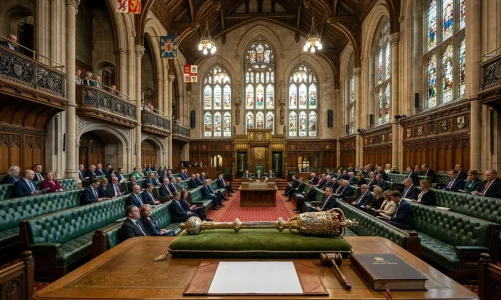
Political Communication
Political Communication represents civic discourse theory and institutional public relations law that structures message dissemination, ministerial briefings, press conferences, and constituent newsletters to ensure informed electorate, transparent policy justification, and standardized public dialogue.
Foundational Pillars & Key References
CORE STATUTORY GUIDE
Canada Address Check: Verification & Postal Tools
Comprehensive civic guide examining canada address check: verification & postal tools, detailing administrative requirements, statutory benchmarks, and procedural compliance for engaged citizens.
PROCEDURAL ANALYSIS
Canadian Public Directories & Address Privacy Guide
Comprehensive civic guide examining canadian public directories & address privacy guide, detailing administrative requirements, statutory benchmarks, and procedural compliance for engaged citizens.
LEGISLATIVE PROTOCOL
Proper Decorum & Rules of Conduct for Lawmakers
Comprehensive civic guide examining proper decorum & rules of conduct for lawmakers, detailing administrative requirements, statutory benchmarks, and procedural compliance for engaged citizens.
Administrative Jurisprudence & Statutory Architecture
Political communication encompasses the legal, technical, and conventional methodologies by which governing bodies and political entities communicate policy initiatives to the populace. Frameworks dictate the ethical boundaries between publicly funded government advertising (which must remain non-partisan and informative) and partisan election materials. Freedom of speech protections are balanced against statutory defamation, hate speech prohibitions, and electoral blackout rules.
Democratic accountability requires an ongoing calibration between institutional authority and public scrutiny. In modern constitutional governance, procedural standards are reinforced by statutory oversight bodies, judicial review standards, and strict administrative law precedents. Understanding these parameters empowers citizens, advocacy organizations, and legal scholars to engage with government entities transparently, effectively, and with verified legal standing.
| Governance Area / Domain | Constitutional Attribute | Procedural Standard & Value |
|---|---|---|
| Government vs. Partisan Communications | Resource Allocation Law | Strict separation preventing public treasury resources from funding partisan advertising or candidate promotion. |
| Householders & Parliamentary Mailings | Constituency Outreach | Regulated print newsletters sent by MPs to inform constituents of parliamentary business within statutory quotas. |
| Media Scrums & Press Briefings | Democratic Scrutiny | Conventions governing journalistic access, embargoed legislative releases, and on-the-record transparency. |
| Crisis & Public Safety Messaging | Emergency Communications | Statutory frameworks ensuring rapid, verified public safety broadcasts during crises without partisan distortion. |
Data Matrix Source: Codified Administrative Guidelines, Standing Orders, and Published Statutory Reviews cataloged by the Civil Procedure & Statutory Telemetry Desk.
Curated Research Directory & Topic Clusters
Statutory & Procedural Guides
Constituent & Advocacy Telemetry
Frequently Asked Questions
What prevents ruling parties from using taxpayer dollars for political advertising?
Government advertising policies and independent auditor general reviews enforce strict non-partisan guidelines, prohibiting the use of state funds for party logos or partisan slogans.
What is a parliamentary ‘householder’ mailing?
A householder is a printed parliamentary report sent by an MP to every residence in their district, funded through parliamentary allowances to update citizens on legislative business.
How do emergency broadcast protocols interface with political messaging?
Emergency alert systems are strictly reserved for verified public safety, natural disaster, and national security notices, barring any political or non-essential content.
Authored & Maintained by: Civil Procedure & Statutory Telemetry Desk
Notice: This research synthesis and structural taxonomy models published statutory codes, administrative regulations, and parliamentary procedure for informational and civic planning purposes only. It does not provide certified legal, parliamentary, or governmental counsel. For definitive rulings or case advice, consult an actively licensed attorney or official parliamentary officer in your jurisdiction.