
✨ This article was AI edited. Editorial responsibility: DemocracyLawBlog.com.
Produced with AI. This article was artificially generated. Editorial responsibility: DemocracyLawBlog.com.
MP stands for Member of Parliament, a democratically elected representative chosen by voters in an electoral district (constituency or riding) to serve in the primary legislative branch of government. In parliamentary democracies such as Canada, the United Kingdom, India, and Australia, MPs debate legislation, scrutinize executive government, and advocate for constituent interests.
Table of Contents
- What Does MP Stand For? Etymology and Parliamentary Meaning
- The Dual Constitutional Role of a Member of Parliament
- Constitutional Comparison: MPs Across Commonwealth Democracies
- How Someone Becomes a Member of Parliament: The Electoral Pathway
- The Different Types of MPs: Ministers, Shadow Ministers, and Backbenchers
- Key Parliamentary Terms Associated with MPs
- Frequently Asked Questions About Members of Parliament
What Does MP Stand For? Etymology and Parliamentary Meaning
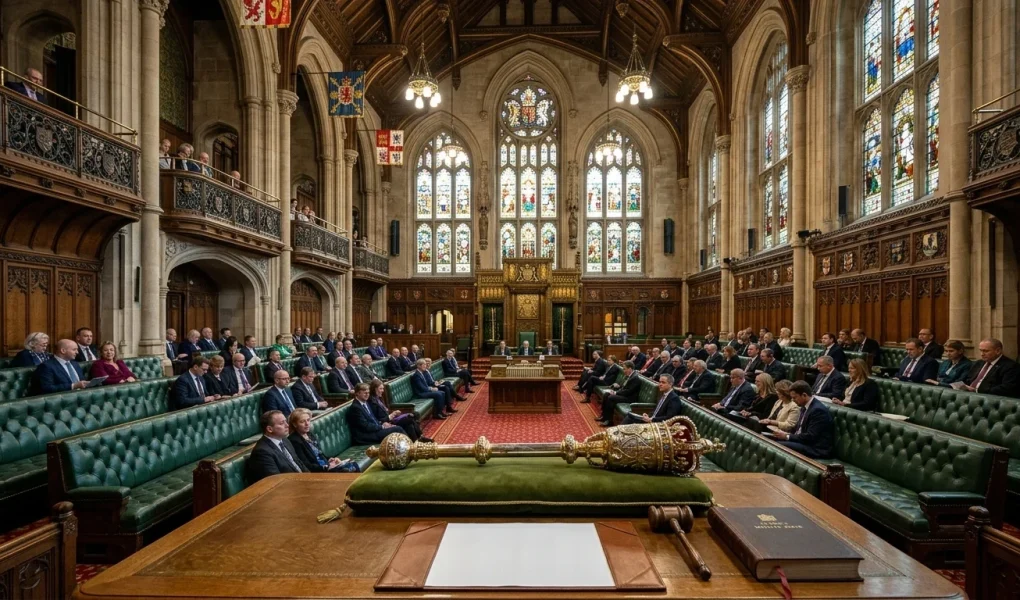
The acronym MP universally denotes a Member of Parliament within Westminster-style parliamentary constitutional systems. While presidential republics rely on distinct congressional bodies consisting of Representatives and Senators, parliamentary democracies concentrate supreme legislative authority in an elected lower house—most commonly named the House of Commons (as in the United Kingdom and Canada), the Lok Sabha (in India), or the House of Representatives (in Australia and New Zealand).
An MP is elected to represent a geographic territory known as a constituency, constituency division, or riding. Every citizen residing within that designated geographical boundary is a constituent of that MP, regardless of whether the citizen voted for the winning candidate or belongs to an opposing political party. Once sworn into office, an MP holds a constitutional mandate that bridges local community concerns with national policymaking.
The Dual Constitutional Role of a Member of Parliament
Every Member of Parliament balances two distinct, overlapping spheres of responsibility: legislative governance within parliament, and constituent advocacy within their local community.
1. The Parliamentary and Legislative Mandate
Inside the legislative chamber, MPs perform functions essential to the preservation of representative democracy:
- Debating and Voting on Bills: MPs examine government-sponsored legislation, propose amendments during committee and report stages, and vote on whether bills should pass into law.
- Executive Scrutiny and Accountability: Through mechanisms such as Oral Questions (including the weekly Prime Minister’s Questions / Question Period), written questions, and urgent debates, MPs demand transparency from government ministers.
- Committee Inquiries: Standing, select, and joint committees conduct forensic inquiries into government spending, public policy failures, international relations, and statutory effectiveness. Backbench MPs wield substantial investigative power during committee hearings.
- Confidence and Supply: In parliamentary governance, the executive government (the Prime Minister and Cabinet) must retain the confidence of the majority of MPs. By voting on budget supply bills and motions of confidence, MPs ultimately hold the power to sustain or dissolve a government.
2. The Constituency Advocacy Mandate
Outside the capital, MPs operate constituency offices that function as localized problem-solving hubs for ordinary residents. In this casework capacity, MPs and their casework staff assist citizens with federal matters, including:
- Immigration, citizenship applications, and visa processing delays.
- Federal taxation disputes with national revenue agencies.
- Pensions, disability benefits, and employment insurance claims.
- Veterans’ affairs, postal services, and national infrastructure projects.
- Petitions and grievances concerning systemic administrative failures.
Constitutional Comparison: MPs Across Commonwealth Democracies
| Jurisdiction | Legislative Chamber | Number of MPs | Electoral System | Key Powers & Distinctions |
|---|---|---|---|---|
| United Kingdom | House of Commons | 650 MPs | First-Past-The-Post (FPTP) | Exercises absolute parliamentary sovereignty; primary forum for ministerial accountability. |
| Canada | House of Commons (Chambre des communes) | 338 MPs (expanding to 343) | First-Past-The-Post (FPTP) | Constitutes federal parliament; jurisdiction strictly delineated by Sections 91 & 92 of Constitution Act. |
| India | Lok Sabha (House of the People) | 543 MPs | First-Past-The-Post (FPTP) | Represents world’s largest electorate; exercises exclusive control over Money Bills and executive survival. |
| Australia | House of Representatives | 151 MPs | Preferential Voting (Alternative Vote) | Forms the federal government; shares legislative oversight with an equally powerful elected Senate. |
How Someone Becomes a Member of Parliament: The Electoral Pathway
Attaining election to parliament involves rigorous democratic milestones governed by statutory election commissions (such as Elections Canada or the UK Electoral Commission):
- Party Nomination: Candidates typically seek the official nomination of a registered political party through local constituency association nomination contests, although independent candidates may also contest ridings.
- Nomination Papers and Financial Disclosure: Prospective candidates submit sworn nomination documents with supporting elector signatures and appoint an official financial agent to comply with campaign donation limits and audit regulations.
- The General or By-Election Campaign: Candidates participate in door-to-door canvassing, community debates, media interviews, and policy forums across the constituency.
- Election Day and Returning Officer Declaration: Following the counting of paper or electronic ballots, the returning officer issues the official declaration of election, and the newly elected MP is formally gazetted.
- The Swearing-In and Oath of Allegiance: Before taking their physical seat or voting in the House, MPs must take the statutory oath or solemn affirmation of allegiance to the Crown or the Constitution.
The Different Types of MPs: Ministers, Shadow Ministers, and Backbenchers
Not all MPs occupy the same operational rank within the legislative hierarchy. Parliament is structured into distinct tiers of authority:
Cabinet Ministers (Frontbenchers)
MPs appointed by the Prime Minister to lead executive government departments (such as Finance, Foreign Affairs, Defence, or Health). They formulate government policy, draft major legislation, and are bound by the constitutional convention of collective ministerial responsibility.
The Official Opposition (Shadow Cabinet)
Leading MPs from the largest political party not in government. They scrutinize individual ministers, propose alternative policies, and prepare to assume executive office in the event of an election victory or defeat of the government.
Backbench MPs
MPs who are neither government ministers nor opposition frontbench critics. Backbenchers sit on the physical benches behind the leadership. They possess greater freedom to champion local constituency campaigns, introduce Private Members’ Bills, and question executive policy during committee inquiries.
Key Parliamentary Terms Associated with MPs
Understanding the vocabulary of parliament is vital when analyzing the day-to-day actions of MPs:
- Hansard: The official verbatim transcript of all debates, questions, and speeches delivered inside the parliamentary chamber and committees.
- The Whip: A senior MP appointed by each party to maintain party discipline, ensure MPs attend crucial votes, and coordinate legislative strategy. The term also refers to the weekly circular detailing voting instructions.
- Parliamentary Privilege: Legal immunity granted to MPs protecting them from defamation lawsuits or civil arrest for statements made during parliamentary proceedings, ensuring uninhibited freedom of speech in debate.
- Constituency Surgery: Scheduled face-to-face consultation sessions held by an MP in their local district where constituents can directly present personal problems and request official intervention.
Frequently Asked Questions About Members of Parliament
What is the difference between an MP and an MLA?
An MP (Member of Parliament) serves at the national or federal level of government, dealing with country-wide matters such as national defence, foreign policy, federal taxation, criminal law, and immigration. In contrast, an MLA (Member of the Legislative Assembly) serves at the provincial or state level (such as in Canadian provinces or Indian states), handling regional matters including healthcare administration, school education, highways, municipal affairs, and property law.
Can you contact an MP if you did not vote for them?
Yes, absolutely. By constitutional convention, an elected MP represents all persons residing within their constituency, regardless of political affiliation, voting history, or citizenship status. MPs routinely assist constituents who voted for opposing candidates.
What postnominal letters do MPs use?
Elected representatives append the postnominal letters MP after their name (e.g., Jane Doe, MP). If an MP is also appointed to His Majesty’s Privy Council, they receive the prefix The Right Honourable in addition to the postnominal letters.
Can an MP be removed between general elections?
Depending on the jurisdiction, MPs can leave office through resignation, criminal conviction triggering statutory disqualification, death, or recall procedures (such as the UK Recall of MPs Act 2015, where a constituent petition can force a by-election following specific ethical breaches).
Get our latest guides, news, and insights highlighted in your Google Search & AI Overviews.


