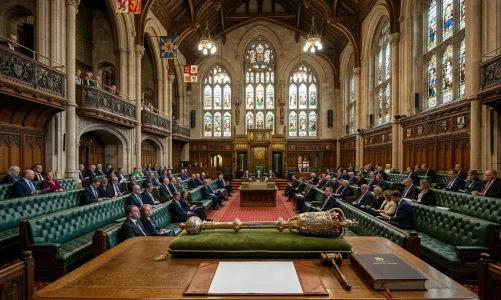
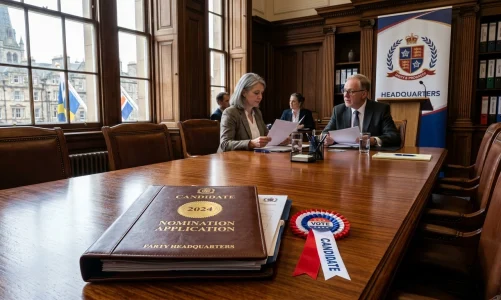
Political Roles and Responsibilities
Political Roles and Responsibilities represents constitutional public law and executive-legislative division of powers that defines the statutory remits, oversight limits, and constitutional duties of heads of state, ministers, speakers, and legislators to ensure prevention of executive overreach, preservation of the rule of law, and institutional checks and balances.
Foundational Pillars & Key References
CORE STATUTORY GUIDE
Meaning of MPs: Roles, Powers & Parliamentary Duties
Comprehensive civic guide examining meaning of mps: roles, powers & parliamentary duties, detailing administrative requirements, statutory benchmarks, and procedural compliance for engaged citizens.
PROCEDURAL ANALYSIS
Letter to Political Party Chair for Nomination
Comprehensive civic guide examining letter to political party chair for nomination, detailing administrative requirements, statutory benchmarks, and procedural compliance for engaged citizens.
LEGISLATIVE PROTOCOL
What Does Official Party Status Mean? Power Privileges and Perks
Comprehensive civic guide examining what does official party status mean? power privileges and perks, detailing administrative requirements, statutory benchmarks, and procedural compliance for engaged citizens.
Administrative Jurisprudence & Statutory Architecture
Constitutional governance functions through clearly delineated public offices, each constrained by statutory remits, conventions, and judicial oversight. The constitutional division separating the Head of State (symbolizing sovereign continuity), the Executive (responsible for state administration), the Legislature (deliberating laws and appropriations), and the independent Judiciary preserves institutional equilibrium. Understanding the distinct roles of the Speaker, the Government House Leader, and Official Opposition critics reveals how balance is maintained.
Democratic accountability requires an ongoing calibration between institutional authority and public scrutiny. In modern constitutional governance, procedural standards are reinforced by statutory oversight bodies, judicial review standards, and strict administrative law precedents. Understanding these parameters empowers citizens, advocacy organizations, and legal scholars to engage with government entities transparently, effectively, and with verified legal standing.
| Governance Area / Domain | Constitutional Attribute | Procedural Standard & Value |
|---|---|---|
| The Crown & Head of State | Constitutional Reserve Powers | Impartial sovereign embodiment exercising prerogative powers on ministerial advice, retaining emergency reserve powers. |
| The Speaker of the House | Parliamentary Arbiter | Non-partisan officer maintaining order, interpreting standing orders, and defending legislative privileges and autonomy. |
| Government House Leader & Whips | Legislative Logistics | Managing parliamentary timetables, organizing debate schedules, and enforcing party caucus voting cohesion. |
| Official Opposition & Critics | Institutional Scrutiny | Shadowing ministerial portfolios, leading committee scrutiny, and presenting viable alternative policy platforms. |
Data Matrix Source: Codified Administrative Guidelines, Standing Orders, and Published Statutory Reviews cataloged by the Civil Procedure & Statutory Telemetry Desk.
Curated Research Directory & Topic Clusters
Statutory & Procedural Guides
Constituent & Advocacy Telemetry
Frequently Asked Questions
What are the constitutional ‘Reserve Powers’ of a Governor General or Head of State?
Reserve powers are extraordinary authorities exercised without ministerial advice, including refusing parliamentary dissolution in specific circumstances or dismissing a prime minister in constitutional crisis.
Why must the Speaker of the House maintain strict non-partisanship?
The Speaker arbitrates legislative conflict and interprets standing orders; perceived neutrality is essential to maintaining the confidence and voluntary compliance of all assembly members.
What is the formal role of an Opposition Shadow Minister?
Shadow ministers dissect policies, question ministers during Question Period, and formulate constructive legislative alternatives for their designated departmental portfolio.
Authored & Maintained by: Civil Procedure & Statutory Telemetry Desk
Notice: This research synthesis and structural taxonomy models published statutory codes, administrative regulations, and parliamentary procedure for informational and civic planning purposes only. It does not provide certified legal, parliamentary, or governmental counsel. For definitive rulings or case advice, consult an actively licensed attorney or official parliamentary officer in your jurisdiction.