
✨ This article was AI edited. Editorial responsibility: DemocracyLawBlog.com.
Produced with AI. This article was artificially generated. Editorial responsibility: DemocracyLawBlog.com.
In the United Kingdom, public bodies do not have a general standalone statutory duty to reply to correspondence from Members of Parliament (MPs) or local councillors; however, they are bound by ministerial correspondence service standards (typically a mandatory 15-to-20 working day target), public law duties of procedural fairness, the Freedom of Information Act 2000 (FOIA), and statutory inquiry oversight from the Parliamentary and Health Service Ombudsman (PHSO).
Constituent advocacy is a cornerstone of the British parliamentary tradition. When citizens face administrative delays, NHS treatment denials, immigration backlog freezes, or local planning disputes, they frequently petition their constituency MP or local ward councillor. Understanding the legal obligations and administrative protocols governing how Whitehall departments, executive agencies, NHS trusts, and local authorities handle elected official correspondence is vital for effective public accountability.
Table of Contents
- Constitutional and Administrative Framework: Convention vs. Statutory Mandate
- Public Sector Obligations by Organization Tier
- Legal Mechanisms That Compel Public Body Disclosure
- Data Protection and Constituent Consent (UK GDPR)
- Sample Formal Escalation Letter from an MP to a Public Body Chief Executive
- Frequently Asked Questions on Public Body Responses to Elected Officials
Constitutional and Administrative Framework: Convention vs. Statutory Mandate
The relationship between elected representatives and public authorities in the UK operates through established constitutional conventions rather than a single overarching statute:
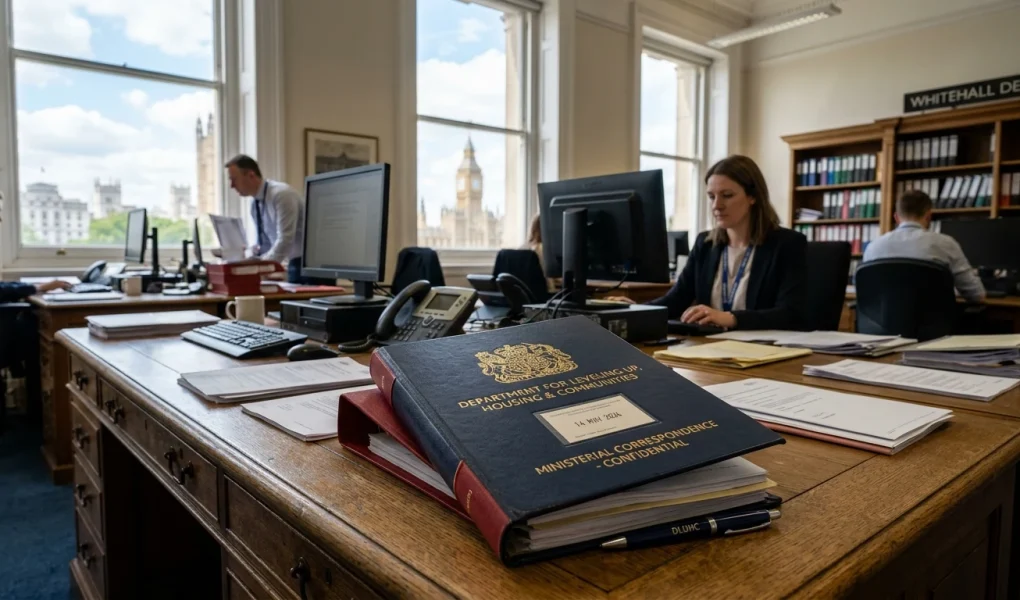
- The Parliamentary Convention of Advocacy: Ministers and civil service departments treat inquiries from MPs with elevated administrative priority, known across Whitehall as “Ministerial Correspondence” (MC).
- Cabinet Office Correspondence Guidance: The Cabinet Office issues binding service-level targets for central government departments, mandating that at least 95% of MP inquiries receive a substantive response within 20 working days.
- Local Government Association (LGA) Member Protocols: Local authorities establish statutory Member-Officer Relations Protocols under the Local Government Act 1972, dictating councillor inquiry response timelines (typically 5 to 10 working days).
For related guides on British civic correspondence, review our guide to guidelines for responding to constituent inquiries and explore the day-to-day responsibilities of MPs.
Public Sector Obligations by Organization Tier
| Public Authority Tier | Governing Framework | Standard Target Response Window | Enforcement & Escalation Mechanism |
|---|---|---|---|
| Whitehall Departments (e.g., Home Office, DWP, HMRC) | Cabinet Office Ministerial Correspondence Handling Rules | 15 to 20 working days | Written Parliamentary Questions (PQs), Adjournment Debates, PHSO inquiry |
| NHS Integrated Care Boards & Hospital Trusts | NHS Complaints Regulations 2009 & PHSO Principles | 20 to 25 working days | Care Quality Commission (CQC) escalation, Health Service Ombudsman |
| Local Municipal Authorities (Councils) | Local Council Constitution & Member-Officer Protocol | 5 to 10 working days | Council Chief Executive formal complaint, Local Government and Social Care Ombudsman (LGSCO) |
| Non-Departmental Public Bodies (NDPBs) | Framework Agreements & FOIA Section 10 | 20 working days | Departmental Select Committee scrutiny, Information Commissioner’s Office (ICO) |
Legal Mechanisms That Compel Public Body Disclosure
While an informal letter from an MP does not automatically constitute a court subpoena, parliamentarians possess powerful statutory and constitutional tools to compel responses:
1. Freedom of Information Act 2000 (FOIA) and EIR
If a public body fails to answer an MP’s informal factual inquiry, the MP or their parliamentary researcher can convert the inquiry into a formal Section 1 FOIA request, creating a legally binding duty to disclose information within 20 working days under ICO supervision.
2. The “MP Filter” for Ombudsman Inquiries
Under the Parliamentary Commissioner Act 1967, complaints regarding maladministration against central government departments cannot be brought directly by citizens; they must be referred through an MP (the “MP Filter”). When an MP submits a complaint to the Parliamentary Ombudsman, the public body is legally required to furnish records, internal memos, and testimony under Section 8 of the Act.
3. Parliamentary Privilege and Chamber Questions
An MP whose constituent inquiries are ignored by a government department can table an Urgent Question (UQ) or Named Day Written Question to the relevant Secretary of State on the floor of the House of Commons, compelling a public ministerial response recorded in Hansard.
Data Protection and Constituent Consent (UK GDPR)
Under the Data Protection Act 2018 (Section 8) and UK GDPR, public bodies can disclose confidential personal data to an MP or councillor without violating privacy laws if the disclosure is necessary for the discharge of the representative’s functions on behalf of an individual constituent, provided constituent authorization has been documented.
Sample Formal Escalation Letter from an MP to a Public Body Chief Executive
HOUSE OF COMMONS
London SW1A 0AA
[Date: October 26, 2026]
[Chief Executive Full Name]
Chief Executive Officer
[Public Body / NHS Trust / Executive Agency Name]
[Headquarters Address]
[City, Postal Code]
CONSTITUENT CASEWORK ESCALATION — URGENT
Re: Casework Ref: MP/2026/CONST-8820 — Case of Mr./Ms. [Constituent Name] (DOB: [Date], Ref: [Claim Number])
Dear [Chief Executive Name]:
I write further to my previous inquiries dated [Date 1] and [Date 2] regarding my constituent, [Constituent Name], who resides at [Address in Constituency]. Despite the passage of six weeks, my office has yet to receive a substantive response or acknowledgment from your agency.
My constituent faces severe administrative hardship due to the ongoing delay in adjudicating their statutory entitlement under [Relevant Regulation / Scheme].
Pursuant to Cabinet Office Ministerial Correspondence standards and the Public Sector Equality Duty, I request that your executive office review this file immediately and provide a comprehensive written determination within five working days.
If a substantive response cannot be provided within this timeframe, I will be left with no choice but to table a formal Written Parliamentary Question to the Secretary of State and refer this matter to the Parliamentary and Health Service Ombudsman for formal investigation.
I enclose my constituent’s signed UK GDPR consent authorization for your records.
Yours sincerely,
[Handwritten Signature]
[MP Full Name], MP
Member of Parliament for [Constituency Name]
Frequently Asked Questions on Public Body Responses to Elected Officials
Can a public body refuse to answer an MP’s letter?
While public bodies cannot be criminally charged for ignoring an informal letter, refusal to respond triggers parliamentary questions, select committee hearings, and formal ombudsman findings of maladministration.
What is the standard response time for an MP letter in the UK?
Central government departments aim to reply within 20 working days pursuant to Cabinet Office performance targets, with performance published annually in parliamentary transparency reports.
Do local councillors have legal rights to inspect council documents?
Yes. Under the Local Government Act 1972 (Section 100F) and common law “need to know” principles, councillors possess statutory rights to inspect local authority documents relevant to their committee duties.
How does GDPR affect public bodies sharing casework information with MPs?
Schedule 1, Part 2 of the Data Protection Act 2018 provides an explicit lawful basis for elected representatives to process personal and special category data when assisting constituents.
Get our latest guides, news, and insights highlighted in your Google Search & AI Overviews.


