✨ This article was AI edited. Editorial responsibility: DemocracyLawBlog.com.
Produced with AI. This article was artificially generated. Editorial responsibility: DemocracyLawBlog.com.
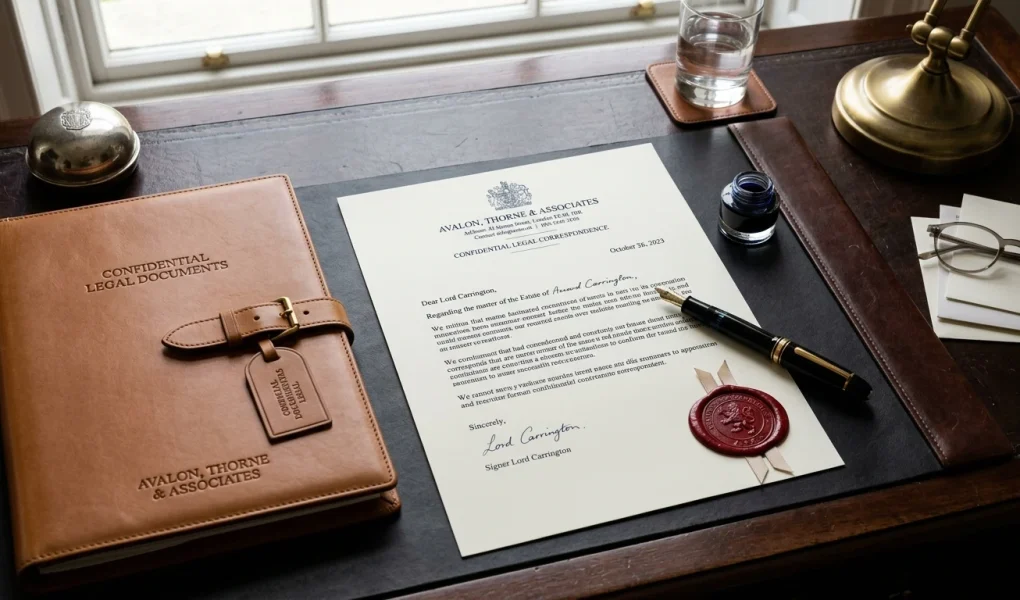
Official correspondence formatting standards govern formal government, diplomatic, and legal communications: using a standardized block or modified-block layout on official letterhead, including an explicit reference header/docket line, formal salutation punctuated with a colon, single-spaced analytical paragraphs with double spacing between sections, and a four-line signature block with full titles and contact coordinates.
Professional credibility, legal enforceability, and administrative efficiency depend upon consistent correspondence standards. In public administration, corporate governance, and litigation practice, official letters serve as binding records, historical evidence, and formal notices subject to freedom of information laws and judicial scrutiny.
Table of Contents
- Core Structural Elements of Official Correspondence
- Layout Comparison: Block vs. Modified Block vs. Semi-Block
- Typography, Margins, and Printing Standards
- Standard Envelope Formatting Rules
- Sample Master Official Correspondence Template
- Frequently Asked Questions Regarding Official Correspondence Standards
Core Structural Elements of Official Correspondence
A properly structured official letter follows a rigorous sequential anatomy designed for rapid archival classification and executive review:
- Institutional Letterhead: Centered or top-aligned official crest, ministry/firm name, physical address, and contact identifiers.
- Date Line: Fully spelled out date (e.g., October 26, 2026), avoiding ambiguous numerical shortforms.
- Confidentiality / Privilege Notice (If applicable): Bold, uppercase notation (e.g.,
CONFIDENTIAL,FOR OFFICIAL USE ONLY,WITHOUT PREJUDICE). - Inside Address Block: Full legal name, formal honorific, official title, organization, and complete mailing destination.
- Subject / Reference Line: Bold summary line starting with
Re:orSubject:indicating the case, bill, or project identifier. - Formal Salutation: Traditional honorific salutation punctuated with a colon (
:). - Substantive Body: Logical progression covering background, core analysis, statutory rationale, and explicit requested actions.
- Formal Valediction: Appropriate sign-off (e.g., Sincerely yours, Respectfully yours,).
- Signature Block: Four blank line spaces for physical wet ink signature, typed full name, official title, and department.
- Enclosures & Distribution Markers: Notations for attached exhibits (
Encl:) and carbon-copied parties (cc:).
For related guides on legal and civic communications, review our guides on how to address a legal letter and explore rules for writing official letters.
Layout Comparison: Block vs. Modified Block vs. Semi-Block
| Format Style | Alignment Rule | Paragraph Indentation | Primary Usage Context |
|---|---|---|---|
| Full Block | All elements left-justified (no tabs) | No indentation; single line space between paragraphs | Federal agencies, commercial law firms, modern corporate standards |
| Modified Block | Date, closing, and signature block centered or tabbed right | No paragraph indentation | Traditional diplomatic correspondence, state government offices |
| Semi-Block (Indented) | Date and closing right-aligned | First line of each paragraph indented 0.5 inches (5 spaces) | Formal judicial correspondence, academic institutions, personal official letters |
Typography, Margins, and Printing Standards
Official correspondence must adhere to clean typographic baselines:
- Paper Stock: 24-lb or 28-lb archival 100% cotton bond paper with authentic watermark.
- Margins: Exactly 1.0 inch (25.4 mm) on top, bottom, left, and right margins (or 0.75 inches for lengthy single-page executive memos).
- Typeface Families: Professional serif or clean sans-serif typefaces (Times New Roman, Garamond, Georgia, Calibri, or Arial) set at 11 pt or 12 pt.
- Ink Standard: Signatures executed exclusively in permanent blue or black archival-grade ink.
Standard Envelope Formatting Rules
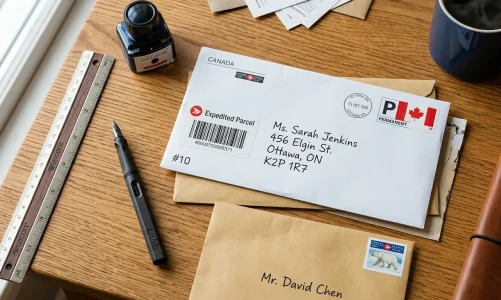
Ensure that physical mailing envelopes match letterhead aesthetics:
- Return Address: Upper-left corner, featuring identical typography and logo branding as the letterhead.
- Mailing Notations: Place special delivery markings (e.g.,
CERTIFIED MAIL,REGISTERED MAIL,SPECIAL DELIVERY) in uppercase, two spaces below the stamp zone in the top-right quadrant. - Addressee Block: Centered in the lower-right quadrant, formatted according to postal optical character recognition (OCR) standards without extraneous punctuation.
Sample Master Official Correspondence Template
[INSTITUTIONAL LETTERHEAD / SEAL]
[Department / Ministry / Corporate Office]
[Street Address, Suite / Floor]
[City, Jurisdiction, Postal Code]
[Telephone | Official Email | Web Domain]
[Date in Full: Month Day, Year]
CONFIDENTIAL & PRIVILEGED
[Recipient Full Name], [Honorific / Title]
[Title of Office]
[Organization / Department Name]
[Mailing Address Block]
[City, Province/State, Postal/ZIP Code]
Re: Comprehensive Assessment and Policy Determination — File Ref. No. 2026-GOV-1088
Dear [Mr./Ms./Director/Minister Last Name]:
This correspondence constitutes our formal institutional review regarding the regulatory modernization initiative outlined in your memorandum of [Previous Date]. Our policy analysis team has conducted an exhaustive statutory review in consultation with inter-agency stakeholders.
Following our evaluation, we submit the following core determinations and operational requirements:
- Statutory Alignment: The proposed operational protocols conform in all material respects with Section 18 of the Administrative Procedures Act.
- Resource Allocation: Capital expenditure authorizations must be certified by the Treasury Board prior to the commencement of Phase II digital infrastructure deployment.
- Compliance Reporting: Quarterly compliance audits will be submitted directly to the Oversight Secretariat pursuant to Schedule C guidelines.
We request that your department submit the finalized implementation schedule and designated project lead contact information by no later than [Deadline Date].
Thank you for your ongoing collaboration and dedication to institutional excellence.
Sincerely yours,
[Handwritten Signature]
[Your Full Name]
Executive Director of Regulatory Oversight
Department of Public Governance
Enclosures (2):
1. Schedule A: Statutory Compliance Matrix
2. Schedule B: Inter-Agency Cost Model
cc:
Office of the Deputy Minister
General Counsel, Legal Services Branch
Frequently Asked Questions Regarding Official Correspondence Standards
Why is a colon used instead of a comma after the salutation in official letters?
In business, legal, and government writing standards (such as the Gregg Reference Manual and Chicago Manual of Style), a colon (:) denotes formal official correspondence, whereas a comma is reserved for informal, social letters.
What does “cc:” signify at the bottom of an official letter?
cc: historically stood for “carbon copy” and now denotes “courtesy copy,” listing secondary recipients who are receiving identical copies of the document for informational or legal tracking purposes.
How should multiple enclosures be noted?
List enclosures below the signature block using Enclosure (for a single item) or Enclosures (#) followed by a numbered or bulleted list of the document titles.
What is the difference between “Sincerely” and “Respectfully”?
“Sincerely” or “Sincerely yours” is standard for professional and business peers. “Respectfully” or “Respectfully yours” is reserved for high-ranking officials, judges, heads of state, and senior clergy.
Get our latest guides, news, and insights highlighted in your Google Search & AI Overviews.