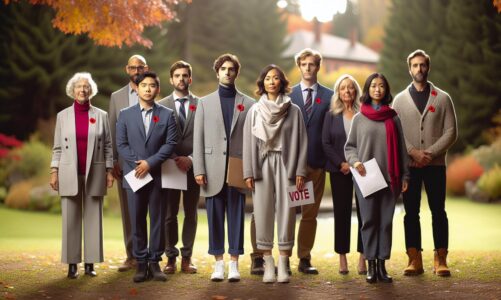
Did you know that women in Canada had to fight decades of social and political barriers before they could cast their first vote? Understanding how women gained the right to vote reveals not only a notable milestone in Canadian history but also the ongoing struggle for equality and depiction. This journey was shaped by persistent activists who believed voting was a crucial step toward improving society, addressing moral issues, and expanding women’s influence in public life. By exploring the efforts of key figures and movements that challenged the status quo, readers can appreciate how these achievements continue to impact Canadian democracy today. If you’ve ever wondered about the roots of women’s political rights and why they matter, this exploration offers insightful perspectives on resilience, social change, and the power of collective action. Let’s dive into the ancient path that led to women’s suffrage in Canada and uncover the stories behind this transformative right.
Table of Contents
- The Search for Women’s Voting Rights in canada: Early Beginnings and Social Context
- Key Figures and Movements Driving Women’s Suffrage
- Major Legal and Political Milestones in Canadian Women’s Voting Rights
- Regional Differences and Challenges Across Canadian Provinces
- Impact of World War I on Advancing women’s Political Rights
- Role of Indigenous Women in the Fight for Voting Rights
- Opposition and Controversies Surrounding Women’s Suffrage
- How Voting Rights Evolved After Initial Successes
- Lasting Effects of Women’s Suffrage on Canadian Society and Politics
- FAQ
- Q: When did Canadian women first gain the right to vote in federal elections?
- Q: How did World war I influence women gaining voting rights in Canada?
- Q: why were Indigenous and Asian women excluded from early Canadian suffrage laws?
- Q: What role did provincial differences play in women’s voting rights across Canada?
- Q: How did women’s right to vote impact Canadian society and politics after suffrage was won?
- Q: What strategies did Canadian suffragists use to advocate for voting rights?
- Q: When were women legally allowed to run for political office in Canada?
- Q: How can I learn more about the involvement of specific women in Canada’s suffrage movement?
- Insights and Conclusions
The Search for Women’s Voting Rights in canada: Early Beginnings and Social Context
The journey toward women’s suffrage in Canada began against a backdrop of deeply entrenched social norms that limited women’s roles primarily to the domestic sphere. Early in the 19th century, the idea of women participating in politics or voting was widely dismissed or even met with legal restrictions designed to bar them from the electoral process. As a notable example, laws from this era explicitly excluded women from voting under the guise of protecting them from the “dangerous conditions” at polling stations, reflecting societal attitudes that viewed women as fragile and incapable of political engagement. These restrictive views underscored how suffrage was not simply a political issue but one deeply intertwined with cultural assumptions about gender roles and citizenship rights [[2]](https://thecanadianencyclopedia.ca/en/timeline/womens-suffrage).
The roots of the suffrage movement were grounded in broader social reform efforts and emerging ideas about women’s education, employment, and legal rights. Women began organizing themselves into associations and leagues where they exchanged ideas, strategized, and cultivated leadership. It was during the late 1800s and early 1900s that a wave of activism surfaced, notably inspired by similar campaigns in the United States and britain. These early suffrage advocates included professionals like Emily howard Stowe, Canada’s first female physician, who became a pivotal figure in rallying support for electoral reforms and women’s advancement more generally [[1]](https://www.ebsco.com/research-starters/history/canadian-women-gain-vote). Social context mattered greatly-many suffrage campaigns gained momentum by linking women’s voting rights to contemporary issues such as labour rights, temperance, and education reform, which helped to broaden support across different segments of society.
- Social Attitudes: Prevailing gender norms saw women as caregivers rather than political agents, creating a ample barrier to suffrage.
- early Organizations: Women’s suffrage associations began forming in urban centers like Victoria and Toronto, fostering collaboration and advocacy.
- external Influences: Movements in the U.S. and Britain provided encouragement and strategic inspiration for Canadian activists.
- Legal Obstacles: Laws often included clauses explicitly barring women from voting or candidacy in elections, requiring sustained political challenges.
Understanding this early social context highlights how the struggle for voting rights was not a sudden event but rather a long and gradual process rooted in the transformation of the public’s perception of women’s roles. The evolving nature of women’s involvement in various spheres-education, work, and community leadership-laid the foundation for challenging the legal framework that denied their political voices. Readers interested in making modern advocacy more effective can take inspiration from these early activists’ persistence and the importance of coalition-building across different social groups. This historical perspective also underlines the value of patience and persistence in expanding democratic rights within any society.
Key Figures and Movements Driving Women’s Suffrage
Few movements in Canadian history illustrate the power of persistent advocacy quite like the fight for women’s voting rights. This struggle was propelled by a remarkable group of women whose courage and strategic vision helped transform political landscapes. One standout figure is Emily Howard Stowe, a trailblazing physician who not only shattered barriers in medicine but also passionately championed the cause of women’s suffrage. Her efforts extended beyond rhetoric-she helped found organizations that mobilized women to demand the vote and fostered a culture of political engagement that was previously unimaginable for women in Canada [[2]](https://www.ebsco.com/research-starters/history/canadian-women-gain-vote).
Alongside visionary leaders like Stowe were organizations such as the Dominion Women’s Enfranchisement Association, formed in 1889. These groups were vital in uniting disparate voices into a coherent demand for change, organizing petitions, public lectures, and lobbying campaigns to highlight the injustice of disenfranchising half the population. Their strategy involved building broad coalitions that connected voting rights with pressing social issues, such as temperance, education reform, and labor rights, making the suffrage movement more relevant and palatable to a wider audience [[3]](https://www.nelliemcclungfoundation.com/history-of-canadian-suffrage).
Strategic Mobilization and Collaboration
The women’s suffrage movement thrived due to its ability to harness both grassroots activism and political advocacy. Activists understood early on that change required engaging with multiple layers of society, from urban centers to rural communities. By establishing clubs and leagues in cities like Toronto and Victoria, suffragists created networks that facilitated the exchange of ideas and helped train women for leadership roles. these organizations also served as platforms where women developed practical skills in public speaking, organizing, and negotiation-tools vital for influencing political decision-makers.
- Key Leaders: Women like Nellie McClung, Henrietta Muir Edwards, and Augusta Stowe-Gullen made significant contributions by combining intellectual rigor with public activism.
- Movement Tactics: Lobbying, petitions, public debates, and civil disobedience were employed tactically to pressure governments.
- Cross-Cultural Outreach: Efforts gradually expanded to include diverse communities, although significant barriers remained for Indigenous and minority women.
Understanding the dynamics of these figures and movements highlights how vital leadership, institution, and persistence are for effective social reform. For those looking to build advocacy campaigns today, the Canadian suffrage story suggests concrete lessons: develop clear goals, create inclusive networks, link demands to broad social concerns, and prepare to engage patiently with political institutions. These components, deeply embedded in the suffrage movement, continue to resonate as pillars of prosperous activism.
Major Legal and Political Milestones in Canadian Women’s Voting Rights
The journey toward women’s suffrage in Canada was marked by a series of pivotal legal enactments and political triumphs that together reshaped the country’s democratic fabric. It began at the provincial level, where women first won the right to vote in their own local elections before gaining full federal enfranchisement. One of the most striking milestones occurred in 1916 when Manitoba became the first province to grant women both the right to vote and to run for office in provincial elections-a bold precedent that ignited similar legislative changes across the country. This provincial victory was quickly followed by Saskatchewan and Alberta in 1916, then British Columbia in 1917, exemplifying a domino effect fueled by persistent advocacy and shifting public sentiment [[1]](https://www.nelliemcclungfoundation.com/history-of-canadian-suffrage).
At the federal level, a landmark breakthrough arrived on May 24, 1918, with the passage of the “Act to Confer Electoral Franchise Upon Women,” which granted most women the right to vote in federal elections. This legislation was not only a culmination of decades of grassroots campaigning but also a reflection of women’s growing civic participation and contributions during World War I. Notably, the act initially enfranchised women who were white and British subjects, specifically excluding many Indigenous, Asian, and other minority women, revealing ongoing societal prejudices embedded within the legal framework [[3]](https://en.wikipedia.org/wiki/Women%27s_suffrage_in_Canada).
Steps Toward Inclusive Representation
While these statutes laid the foundation for women’s electoral engagement, the path to full inclusion was gradual and complex. Various provincial laws,like Ontario’s Married Women’s Property Act,empowered women in different facets of social life,such as granting married women control over their own wages-incremental yet critical milestones supporting wider suffrage goals. Parlimentary decisions, petitions, and relentless lobbying highlighted the interconnected nature of legal reforms and societal attitudes toward gender equality. However, it was critical for advocates to frame voting rights not merely as political concessions but as essential components of citizenship and social justice, which helped broaden support across different communities [[1]](https://www.nelliemcclungfoundation.com/history-of-canadian-suffrage).
- Provincial victories: Pioneering provinces like Manitoba and Alberta set early legal precedents that pressured others to follow suit.
- Federal enfranchisement: The 1918 Act was a watershed moment, though with notable exclusions highlighting the ongoing struggle for full equality.
- Legal reforms: property and marital laws complemented voting rights, strengthening women’s autonomy and political voices.
For readers seeking to understand or advocate for electoral reforms today,the Canadian suffrage milestones emphasize the importance of combining legal advocacy with cultural shifts. Achieving legislative victories often requires sustained public engagement, coalition-building across diverse social groups, and framing political rights within larger societal values like justice and citizenship.The Canadian experience teaches that legal change, while necessary, is part of a broader process of societal transformation that continues to evolve.
Regional Differences and Challenges Across Canadian Provinces
The push for women’s suffrage in Canada was anything but uniform, with each province presenting its own unique political climate, cultural attitudes, and social obstacles. Early successes in provinces like Manitoba and Alberta hold a special place in history not just because they were first,but because they demonstrate how localized advocacy,economic conditions,and demographic factors influenced the path to enfranchisement. For instance, Manitoba’s landmark decision in 1916 to grant women the right to vote was significantly shaped by grassroots organizations mobilizing rural and urban women alike, alongside supportive political leaders who recognized women’s growing social influence.
Yet, this progress came with regional complexities. Quebec lagged far behind other provinces, resisting suffrage reforms until 1940 due to a combination of conservative values, strong Catholic Church influence, and traditional views on gender roles. Simultaneously occurring, provinces like British Columbia and Ontario followed suit somewhat quicker but still faced persistent opposition rooted in concerns over altering power structures and voter demographics. Campaign strategies had to be carefully tailored to match these local realities, blending appeals to morality, citizenship, and social duty to sway public opinion and legislators:
- Manitoba pioneered women’s provincial voting rights in 1916, propelled by the active Manitoba Political Equality League and prominent activists like Nellie McClung.
- Saskatchewan and Alberta soon followed, owing much of their success to the strength of farmer organizations and their women’s auxiliaries, which saw women as crucial political partners in rural governance.
- British Columbia, after some defeats, granted provincial suffrage in 1917, reflecting growing urban activism and labor union support.
- Quebec held out much longer, only granting women the vote in 1940, highlighting that cultural and religious conservatism could significantly delay democratic reforms.
Addressing the Indigenous and Minority Women’s Barriers
Adding to these regional hurdles was the exclusion of Indigenous, Asian, and other minority women from early suffrage gains. Even in provinces where women won voting rights, these groups frequently enough remained barred from the polls due to federal policies or provincial regulations steeped in systemic discrimination. For example, Indigenous women were frequently denied the vote unless they gave up their treaty status or qualified under military-related exceptions during and immediatly after World War I. This meant suffrage victories were partial and uneven, demanding ongoing activism well into the mid-20th century to realize truly inclusive democratic participation.
Understanding these provincial discrepancies offers practical lessons for electoral reform advocates today. It underscores the need to recognize local contexts when pushing for change, engage diverse community stakeholders, and build coalitions that can navigate cultural and institutional resistance. Moreover,successful suffrage movements often combined education,persistent lobbying,and creative political alliances tailored to each province’s social fabric.
Summary Table: Key Dates of Women’s Provincial Suffrage in Canada
| Province | Year Women Gained Provincial Voting Rights | Notable Challenges |
|---|---|---|
| Manitoba | 1916 | Strong grassroots activism and political allyship |
| Saskatchewan | 1916 | Influence of farmers’ organizations |
| Alberta | 1916 | Support from rural women’s groups and political figures |
| British Columbia | 1917 | Labor unions and urban feminist activists played key roles |
| Ontario | 1917 | Balancing conservative opposition with evolving social attitudes |
| Quebec | 1940 | Strong Catholic Church opposition and cultural conservatism |
By appreciating these layered regional dynamics, we gain a richer, more nuanced understanding of Canada’s women’s suffrage history and the determination required to overcome deeply rooted social and political barriers across the country. This context not only honors the diverse efforts that shaped suffrage but provides a roadmap for current democratic inclusion initiatives.

Impact of World War I on Advancing women’s Political Rights
It was during the tumultuous years of World War I that Canadian women’s political rights saw an unprecedented acceleration, fueled by their indispensable contributions to the war effort and shifting societal attitudes. As men went overseas to fight, women stepped into roles traditionally reserved for men-working in factories, managing farms, volunteering in nursing and relief services, and sustaining the home front economies. This visible demonstration of capability and patriotism made it increasingly difficult to deny women the fundamental democratic right to participate in electing those who shaped the nation’s future.
World War I created a powerful moral argument that suffragists strategically leveraged: if Canada was fighting “to make the world safe for democracy,” then denying half the population the vote was an untenable contradiction. Government officials and the public alike began to recognize that women’s sacrifices were not only symbolic but also vital to national survival. This shift led to concrete political responses such as the federal government’s partial enfranchisement of women in 1917, initially limited to those related to servicemen, which marked a turning point on the path to full voting rights.
The War as a Catalyst for Legal and Political Change
The war’s impact was not uniform across Canada but created a momentum that provinces could not ignore. Manitoba’s decision in 1916 to grant women the provincial vote came just before conscription debates intensified, highlighting how political pragmatism intertwined with social justice ambitions. the linkage between wartime service and suffrage was a crucial tactic: leaders argued that women who were directly affected by-and contributing to-the war effort deserved a political voice. Areas with strong agricultural economies, such as Saskatchewan and Alberta, saw women’s roles in rural communities affirmed through voting rights, reflective of shifting gender dynamics propelled by wartime necessities.
Practical Lessons from Wartime Activism
For readers interested in advocacy or social change, the wartime suffrage movement in Canada offers valuable insights:
- Align the cause with broader societal values: Women’s rights gained traction when linked explicitly to democracy and national contribution.
- Demonstrate tangible contributions: Highlighting women’s critical roles in war industries and social services validated claims for enfranchisement.
- Leverage political opportunities: Wartime urgency created openings where reform advocates could push for accelerated legislation.
These strategies underline that successful movements often require framing goals within prevailing political narratives and proving direct societal benefits.
Despite these advances, it is important to acknowledge that wartime suffrage gains were partial and uneven, with Indigenous and minority women largely excluded due to discriminatory policies. The legacy of World War I’s impact on women’s political rights is therefore both one of remarkable progress and a reminder of the ongoing struggles needed to achieve full inclusivity.
| Key Wartime Milestone | Year | meaning |
|---|---|---|
| Manitoba grants women provincial vote | 1916 | First province to enfranchise women, setting a precedent |
| Federal Wartime Elections Act | 1917 | Partial federal vote granted to female relatives of servicemen |
| Alberta and Saskatchewan extend provincial suffrage | 1916 | Followed Manitoba’s lead, influenced by rural wartime contributions |
| British columbia grants provincial vote | 1917 | Fueled by urban activism and labor union support |
Understanding how World War I reshaped the political landscape for Canadian women reveals how social upheaval can accelerate democratic reforms. By recognizing the interplay of sacrifice, advocacy, and political climate during this era, contemporary readers can appreciate the strategic dimensions of social change and the enduring importance of inclusive democratic participation.
Role of Indigenous Women in the Fight for Voting Rights
Long before Canadian women broadly won the right to vote,Indigenous women faced a uniquely elaborate and often exclusionary political landscape shaped by federal laws that intertwined suffrage with Indigenous identity in restrictive ways. While the suffrage movement advanced for many women in the early 20th century, Indigenous women’s voting rights remained tightly linked to their status under the Indian Act, requiring them to relinquish their legally recognized Indigenous identity and treaty rights in order to participate in elections. This trade-off reflected a broader pattern of colonial control and assimilation pressures that meant Indigenous women-and men-were systematically marginalized from canadian democracy for decades.
The right to vote for Indigenous people at the federal level was not granted universally until 1960, long after many non-Indigenous women were enfranchised, and band council election voting rights evolved separately and unevenly. Indigenous women had to confront not only gender-based discrimination but also the imposed political erasure tied to Indigenous status loss. For example, when women were allowed to vote in band elections, it was often limited to those recognized as status Indians, a category defined by the government rather than Indigenous governance traditions themselves. This dual exclusion created a significant barrier to civic participation and voice within processes that affected Indigenous communities’ futures.Understanding this history is crucial for appreciating the gaps and inequalities that persisted even after other women gained voting rights.
Practical Implications and ongoing Challenges
The complex interplay between Indigenous identity and voting rights offers important lessons for those interested in equitable suffrage and political inclusion:
- Recognize legal frameworks and their limitations: Laws such as the Indian Act imposed conditions that forced Indigenous women to choose between cultural identity and political participation, highlighting how suffrage can be weaponized to enforce assimilation.
- Advocate for inclusive electoral policies: Ensuring Indigenous communities have autonomous control over their electoral processes and expanding federal voting rights without demands for status renunciation remains a contemporary goal.
- Amplify Indigenous voices in political discourse: Representation matters deeply; many Indigenous women have been instrumental activists, bridging traditional governance with modern political demands.
for those supporting or studying suffrage movements today, the story of Indigenous women in Canada underscores the importance of intersectionality and the necessity to dismantle structural obstacles that limit participation-not just on gender lines but also through cultural and racial lenses. It also encourages civic educators and policymakers to consult Indigenous communities directly to develop voting systems that respect and reflect their rights and identities.
Notable Examples of Indigenous Women Advocates
Several Indigenous women have played vital roles in advancing voting rights and broader political recognition in Canada. Their work often involves linking suffrage with broader movements for Indigenous self-determination and social justice, fostering environments where indigenous women’s leadership is centered, not sidelined. By learning from these leaders and their strategies, modern advocates can better navigate the legacies of exclusion and push forward toward truly inclusive democracy.
—
The ongoing evolution of Indigenous voting rights-and the meaningful involvement of indigenous women-is a testament to the resilience and determination of communities who have navigated complex legal and social hurdles. Their experiences remain a critical component of Canada’s collective journey toward democratic fairness and equity. For readers exploring the history of women’s suffrage, this underscores the vital importance of including all voices in the conversation and confronting the nuanced realities behind seemingly simple rights like voting.

Opposition and Controversies Surrounding Women’s Suffrage
The struggle for women’s voting rights in Canada did not unfold without significant opposition and controversy. Many opponents of suffrage argued that extending the vote to women would disrupt traditional social roles and the established political order. A common claim was that women’s primary responsibilities lay in the home, and political participation would distract them from these duties or undermine family stability. This perspective held that the domestic sphere was the rightful domain of women and that men were better suited to govern public affairs, a notion deeply embedded in the societal norms of the late 19th and early 20th centuries.
Resistance also came from those who feared that women’s suffrage might lead to radical societal changes. Some opponents worried that women voters would support temperance, labor reforms, or other progressive causes that threatened established business interests and political power structures. Others believed that women lacked the political knowledge or judgment necessary to vote responsibly, framing suffragists as overly emotional or unfit for political engagement. this resistance took organized forms, including anti-suffrage leagues composed of both men and women who campaigned actively against the enfranchisement of women, highlighting a complex social tension where even some women opposed the very cause of suffrage [[2]](https://en.wikipedia.org/wiki/Anti-suffragism).
Understanding the Role of Social and Political Arguments
Opposition to women’s suffrage often hinged on moral and social arguments that can seem surprising today.Anti-suffragists claimed that women’s “moral superiority” would be compromised if they entered politics, a realm considered corrupt and coarse. For example, claims that women voters would upset community harmony or bring instability on a large scale were common. Yet, fascinatingly, these opponents also sometimes argued that women’s domestic expertise uniquely qualified them to guide political decisions-just not through voting but through influence within the family or informal social channels [[1]](https://wams.nyhistory.org/modernizing-america/womens-suffrage/arguments-for-and-against-suffrage/).
Lessons for Modern advocates
When studying these historical controversies, it’s helpful to recognize that opposition frequently enough stemmed from deeply ingrained cultural values and fears rather than purely logical objections. For those advocating change today, this teaches the importance of addressing both the facts and the underlying anxieties connected to social roles and identity. Engaging skeptics with empathy and education, while presenting voting rights as a natural extension of broader social justice and equality, remains a valuable strategy.
- Recognize the power of cultural narratives: Opposition was sustained not just through legal battles but through social messaging about gender roles that linger today in some forms.
- Build alliances across communities: The suffrage movement’s ultimate success was strengthened by diverse coalitions that addressed multiple societal concerns simultaneously.
- Prepare for gradual change: Given the entrenched nature of opposition, incremental legal and social reforms were frequently enough necessary to expand suffrage sustainably and broadly.
These insights remind us that suffrage movements are as much about shifting public perception and culture as they are about legal victories. Understanding the complexities behind the opposition to women’s voting rights allows contemporary advocates to better navigate resistance and champion inclusive participation in democracy.
How Voting Rights Evolved After Initial Successes
The journey toward voting equality in Canada did not conclude with the first legislative victories; rather,the initial successes marked a pivotal beginning in an ongoing process of expanding democratic participation to all women. Early enfranchisement predominantly benefited white, middle-class women, leaving many marginalized groups-such as Indigenous and Asian women-excluded from the vote for years to come. this gradual evolution highlights how the extension of voting rights was not a single moment of achievement but a complex, layered progression shaped by social, political, and legal shifts over time.
Following British Columbia’s groundbreaking vote extension in 1917 and the subsequent federal recognition of women’s voting rights in 1918, efforts intensified to overcome remaining barriers. Notably, the enfranchisement trajectory revealed important lessons about the need for persistent advocacy and careful coalition-building. For example, while white women gained voting privileges sooner, Asian, Indigenous, and other racialized women frequently enough faced institutional exclusions grounded in discriminatory policies. It wasn’t until the late 1940s and early 1950s that many of these prohibitions were repealed, reflecting broader post-war social changes and growing awareness of global citizenship rights [1]Incremental Legal Reforms and Social Change
Beyond legal changes, activism shifted toward educational initiatives and community organizing to deepen political engagement among newly enfranchised women. increasing voter turnout and promoting informed participation became essential to solidify voting rights as a meaningful tool for social change. Women’s groups supported political literacy campaigns and encouraged women to run for office, broadening representation. Modern advocates can draw valuable insights from this era: achieving voting rights is only the first step. Sustained progress depends on combining legal victories with ongoing community support and empowerment. This includes fostering inclusive environments where all voices-especially those from marginalized backgrounds-are amplified and protected.
Canada’s phased approach to equal suffrage underscores the importance of patience and strategy when confronting entrenched inequalities. Lobbying efforts frequently enough hinged on tying suffrage rights to other contemporary concerns. As an example, during and after World War I, women’s significant contributions to the war effort fortified their claims to equal political participation. This context hastened enfranchisement for many women seen as loyal to national causes but delayed rights for others perceived outside this framework.
Maintaining Momentum Through Education and Advocacy
| year | Key Voting Rights Milestone | Notes |
|---|---|---|
| 1917 | Partial suffrage granted in B.C. and Wartime Elections Act federally | Selective enfranchisement focused on war-related eligibility |
| 1918 | federal vote extended to most white women | Addressed gender but excluded racial minorities |
| 1940s-1950s | Extension of voting rights to Asian and other minority women | Slow repeal of discriminatory voting laws |
| 1960 | Full suffrage granted to Indigenous women | Removes longstanding legal restrictions |
The evolution of women’s voting rights in Canada illustrates how social justice gains require persistent,adaptable efforts that respond to changing political contexts and inclusive commitments. By understanding this layered history, present and future advocates can better navigate complexities and champion more equitable democratic participation for all.
Lasting Effects of Women’s Suffrage on Canadian Society and Politics
The enfranchisement of women in Canada fundamentally reshaped not only the political landscape but also the broader social fabric of the nation. When women secured the right to vote, it marked the beginning of a more inclusive democracy that gradually expanded beyond gender to incorporate diverse voices and perspectives. this transformation had enduring effects, encouraging greater civic participation and shifting political priorities to address issues frequently enough overlooked in predominantly male electorates.
One of the most significant impacts was the rise of women as active agents of change within political parties and government institutions. With the vote came increased opportunities for women to run for and hold political office, which helped to diversify representation and policy-making. Women’s voices influenced areas such as education, health care, social welfare, and family law, reflecting new priorities tied to lived experiences that were previously marginalized. this broadening of political discourse enriched democratic processes and resulted in more nuanced governance.
Strengthening Civic Engagement Through Education and Advocacy
The expansion of voting rights also inspired a wave of civic education aimed at empowering women to use their newfound political powers effectively. Women’s organizations and community groups played key roles in fostering political literacy, encouraging voter turnout, and supporting candidates. For modern readers, this historic example underscores the importance of ongoing engagement beyond the ballot. Building informed, active communities remains crucial to ensuring voting rights translate into meaningful influence on social and political outcomes.
- Consider organizing local workshops or discussion groups that educate voters about how elections and policies affect daily life, mirroring early 20th-century women’s groups that boosted participation.
- encourage diverse representation by supporting candidates from varied backgrounds-this promotes policies that better reflect community needs.
- Advocate for inclusivity to avoid repeating historical exclusions faced by Indigenous, Asian, and other marginalized women.
Long-Term Influence on Social Policy and Equality Movements
Women’s suffrage in Canada was a catalyst for broader social justice initiatives, linking the political empowerment of women with pushes for racial equality, labor rights, and expanded social services. The ripple effects can be seen in the ongoing quest for gender equity and civil rights, where suffrage served as a foundation for challenging systemic discrimination and advocating for comprehensive social reforms.
| Decade | Key Social and Political Developments |
|---|---|
| 1920s-1940s | Growth of women’s political organizations and early female political leaders |
| 1950s-1960s | Extension of voting rights to marginalized groups and increased calls for civil rights |
| 1970s-Present | Women’s leadership in feminist, labor, and human rights movements influencing policy |
Understanding the long-term effects of women’s suffrage helps modern advocates appreciate that voting rights are a cornerstone of democratic inclusion but must be paired with sustained efforts to address inequalities that voting alone cannot solve. It reminds us that progress requires vigilance, inclusive policies, and a commitment to amplifying all voices within society’s political and social spheres.
FAQ
Q: When did Canadian women first gain the right to vote in federal elections?
A: Canadian women first gained the right to vote in federal elections in 1918 through the Act to Confer Electoral franchise Upon Women. This landmark law allowed most women, except Indigenous and some minority groups, to participate in federal voting. To learn more, explore the Major Legal and Political Milestones section of the article.
Q: How did World war I influence women gaining voting rights in Canada?
A: World War I accelerated women’s suffrage by highlighting women’s wartime contributions and increasing public support for their political inclusion. Women’s efforts on the home front and in military-related roles propelled governments to extend voting rights as recognition of their civic contributions.
Q: why were Indigenous and Asian women excluded from early Canadian suffrage laws?
A: indigenous and Asian women were excluded from early suffrage laws due to discriminatory policies and racial biases that linked voting rights to property ownership and ethnicity. These exclusions persisted until the 1940s-1960s when legal reforms extended suffrage to all women nonetheless of race.
Q: What role did provincial differences play in women’s voting rights across Canada?
A: Provinces granted voting rights to women at different times, reflecting regional social attitudes. For example, Manitoba led in 1916, while Quebec delayed until 1940. These disparities show how local politics shaped the suffrage journey across Canada’s diverse provinces.
Q: How did women’s right to vote impact Canadian society and politics after suffrage was won?
A: Women’s suffrage significantly expanded democracy and policy priorities in Canada, leading to greater focus on social reforms such as education, healthcare, and family welfare. This shift reshaped political parties and motivated ongoing movements for equality.
Q: What strategies did Canadian suffragists use to advocate for voting rights?
A: Canadian suffragists combined tactics like public petitions, rallies, lobbying politicians, and forming alliances with labor movements. They emphasized women’s contributions to society and appealed to wartime patriotism to gain public and political support.
Q: When were women legally allowed to run for political office in Canada?
A: Women were first allowed to run for provincial office in some provinces shortly after gaining voting rights; for instance, British Columbia granted this right in 1917, with other provinces following. Federal eligibility came later, reflecting evolving views of women’s political roles.
Q: How can I learn more about the involvement of specific women in Canada’s suffrage movement?
A: To deepen your understanding, explore detailed accounts of key figures and movements in the article’s Key Figures and Movements Driving Women’s Suffrage section. Researching pioneers like Nellie McClung offers insight into leadership that shaped women’s political rights.
For further insight on the historical context and evolution of women’s voting rights in Canada, be sure to explore sections like The Search for Women’s Voting Rights and How Voting Rights Evolved After Initial Successes.
Insights and Conclusions
Understanding the historic journey of how women gained the right to vote in Canada sheds light on the resilience and determination that shaped our democratic landscape.This milestone not only transformed political participation but continues to inspire ongoing conversations about equality and civic responsibility. to deepen your insight, explore our detailed articles on Canada’s suffrage movement and key figures in women’s rights history, or discover how voting rights evolved in other nations.
Don’t miss the chance to stay informed-sign up for our newsletter to receive expert updates on Canadian history and social justice topics directly to your inbox. If you have questions or reflections about this pivotal era, share your thoughts below or join our community forum to engage with fellow history enthusiasts. By revisiting these stories and supporting continued learning, we honor the legacy of those who fought for change and encourage active participation today.Continue your exploration now and uncover more about the transformative power of voting rights, women’s advocacy, and Canadian democracy. Your next step could be discovering how modern policies build on this foundation-visit our resources section for guides,timelines,and expert analyses designed to enrich your understanding and empower your voice.