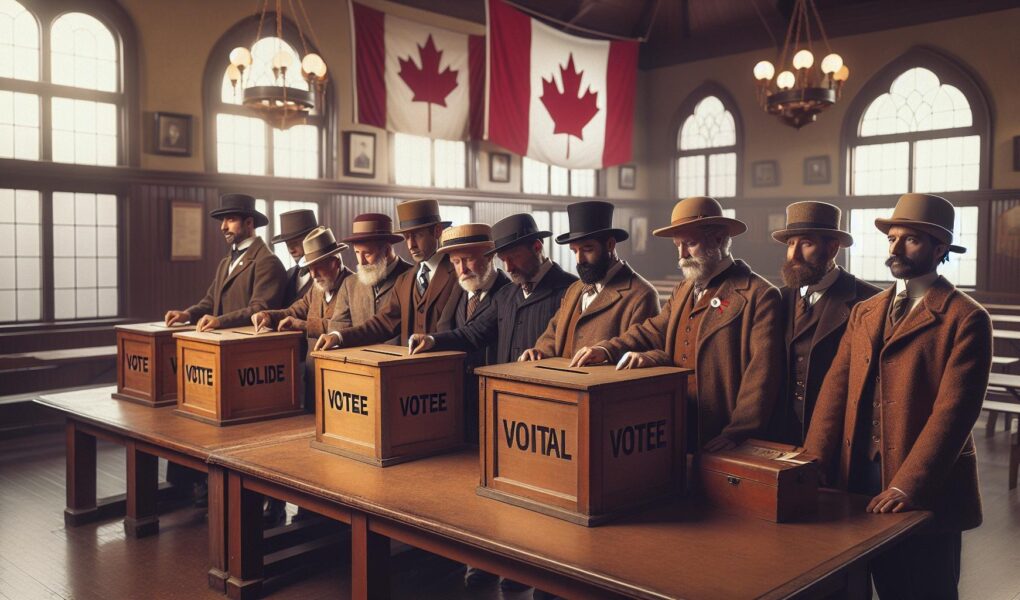
Did you know that while the story of women gaining the right to vote in Canada is well-documented, many might overlook the origins of men’s suffrage-the foundation of Canada’s voting system? Understanding when and how men frist secured the right to vote sheds light on the early political landscape and the evolution of democratic rights in the country. This topic connects directly to broader questions about who was included or excluded from the democratic process and why these historical milestones still impact voting rights today. Weather you’re curious about Canada’s political history, interested in the development of democratic participation, or simply want to grasp the roots of your own voting rights, exploring when men got the vote offers valuable insights. Read on to uncover the origins of male suffrage in canada and see how these early decisions set the stage for the inclusive democracy we continue to build.
Table of Contents
- Understanding the Origins of Men’s Suffrage in Canada
- Key Milestones in Canadian Voting Rights History
- Legal and Social Barriers Before Men’s enfranchisement
- Provincial Variations in Men’s Voting Rights
- Impact of Men’s Voting Rights on Canadian Society
- The Role of Political Movements in Granting Voting Rights
- Comparing Men’s and Women’s Suffrage Timelines
- How Indigenous and Minority Men Were Affected
- Myths and Facts About Men’s Right to Vote
- Legacy of Men’s Voting Rights in Modern Canada
- Frequently asked questions
- Q: How did property ownership affect men’s right to vote in early Canadian elections? A: Property ownership was a key requirement for men to vote in early Canadian elections, limiting suffrage to landowners and excluding many working-class men. Understanding this restriction helps explain how men’s voting rights evolved, as reforms gradually removed these property qualifications. For more details, see legal and Social Barriers Before Men’s Enfranchisement in the article. Q: Why did some provinces grant voting rights to men earlier than others in Canada?
- Q: What influence did labour and social movements have on extending men’s suffrage in Canada?
- Q: How did men who were Indigenous or minorities experience voting rights differently in Canada?
- Q: What was the typical minimum age for men to be eligible to vote in early Canadian elections?
- Q: How did men’s suffrage in Canada compare to voting rights milestones in other Commonwealth countries?
- Q: What myths exist about when men gained the right to vote in Canada?
- Q: How dose understanding men’s voting rights origins help in appreciating Canada’s modern democratic system?
- The Way Forward
Understanding the Origins of Men’s Suffrage in Canada
Long before Canada’s Confederation in 1867, voting rights were far from global-even for men. The early colonial era’s electorate was typically restricted to property-owning,white British males,reflecting the social hierarchies and political structures imported from Europe. These limitations rooted men’s suffrage in social class and property ownership rather than simply gender, setting a precedent that would influence voting rights for decades. Understanding men’s right to vote in Canada requires recognizing that it was not granted as a blanket right to all men at a single moment but evolved gradually through a patchwork of provincial laws and federal decisions.
At the time of Confederation, the Constitution Act, 1867 delegated control over election laws and the federal franchise largely to the provinces, meaning that men’s suffrage timelines and qualifications varied significantly across the country. This division allowed provinces to define voting eligibility based on property ownership, income, or other criteria, leading to considerable differences in who could participate in elections. For instance, some provinces extended the vote to all adult males earlier than others, while some initially excluded groups such as Indigenous peoples or certain ethnic minorities. The complexity of these provincial rules formed the foundation from which the concept of modern men’s suffrage emerged, shaping both political participation and societal norms.
Key Factors Behind the Gradual Expansion of Men’s Voting Rights
- Property and Taxation Requirements: Early laws frequently enough required men to own property or pay a certain amount of taxes to qualify as voters, a standard tied to the belief that property owners had a vested interest in governance.
- Age and Residency Constraints: Age thresholds and length of residency in an area also affected eligibility, limiting access to younger or more transient men.
- Exclusions Based on Race and citizenship: Indigenous men and some minorities were frequently excluded or faced additional barriers, a stark reminder that men’s suffrage was not synonymous with universal access.
For readers seeking to understand the origins of men’s suffrage in canada, it’s crucial to consider this gradual, uneven expansion rather than a single “right granted” event. This approach helps clarify many common questions, such as why voting rights appeared inconsistent or why certain groups only gained enfranchisement much later.Recognizing this history offers valuable insight into the ongoing evolution of democratic rights and the persistent challenges in achieving truly universal suffrage in Canada.
By appreciating these early restrictions and legal distinctions, contemporary voters can better understand the significance behind suffrage milestones and the political struggles that shaped the Canadian electoral landscape. in essence,men’s voting rights originated as privileges linked to property and social status,progressively transforming into the broader democratic right recognized today.[[1]]
Key Milestones in Canadian Voting Rights History
Canada’s journey to establishing men’s voting rights is marked by a series of gradual and regionally varied milestones rather than a single landmark event.Initially, suffrage was tightly controlled, heavily tied to property ownership and social standing, restricting the electorate to a relatively small, affluent segment of the male population. the landscape of voting rights evolved across the 19th and early 20th centuries as provincial and federal governments incrementally revised qualifications, reflecting shifting political philosophies and growing democratic ideals.
One of the earliest notable milestones came before Confederation, when colonial authorities set property ownership as a prerequisite for voting. Such as, in the early 1800s, voting was limited chiefly to affluent men who owned land or otherwise demonstrated economic independence, excluding many working-class men and all women. This system, inherited from British governance models, underscored the belief that property owners had a “stake” in society that justified their political participation [[2]](https://www.museedelaguerre.ca/cmc/exhibitions/hist/elections/el_012_e.html). After 1867, when provinces gained authority over election laws, voting rights became a patchwork, with some provinces liberalizing the franchise sooner than others.
| Year | Key Voting Rights Milestone | Province/Scope |
|---|---|---|
| 1828 | Property qualifications firmly enforced for voters | Upper Canada (Ontario) |
| 1867 | Confederation; provinces control voting laws | Canada (Federal/Provincial) |
| 1885 | Extension of the right to vote to most adult males without property requirements in many provinces | Several provinces including Ontario, Quebec |
| 1917 | Military men given federal vote despite some earlier restrictions | Federal level |
Throughout the late 19th century, provinces progressively removed property and tax payment prerequisites, expanding access to a broader male electorate.Yet, these changes were uneven and often accompanied by discriminatory exclusions targeting Indigenous peoples, certain immigrants, and other minorities. It wasn’t until the early 20th century that the federal government standardized voting qualifications more extensively, partly in response to pressures stemming from Canada’s participation in World War I. Notably, the Military Voters Act of 1917 temporarily enfranchised certain men who had previously been ineligible due to property or residency limitations, recognizing their service to the nation as a compelling reason to participate in democracy [[1]](https://www.elections.ca/content.aspx?section=vot&dir=bkg&document=ec90785&lang=e).
Practical Lessons from These Milestones
- Understanding regional differences is key: Because voting rights expanded at different rates across provinces, exploring local histories helps explain current political cultures.
- Property as a gatekeeper: The transition away from property qualifications reflects a broader democratic trend toward inclusivity that can inspire contemporary advocacy for accessible voting laws.
- The influence of broader social factors: Moments of national crisis, like World War I, can accelerate suffrage reform, highlighting how external events shape democratic progress.
Recognizing these key milestones not only clarifies historical questions such as “when did men get the right to vote in Canada?” but also frames voting rights as a continually evolving process influenced by social values, legal frameworks, and political will. For readers interested in canadian democratic development, examining these stages offers insights into the foundations of present-day inclusivity and the ongoing challenges faced by marginalized groups in achieving full political participation.
Legal and Social Barriers Before Men’s enfranchisement
Long before the expansion of men’s voting rights in Canada, the electorate was limited by a series of stringent legal and social qualifications that reflected prevailing attitudes about who was deemed worthy or capable of participating in governance. These barriers often intersected, reinforcing exclusions that went beyond mere property ownership to encompass race, ethnicity, and social class. For instance, even among men, those without sufficient property or financial stability were routinely denied the vote, reflecting a widespread belief that political power should be reserved for those with a tangible economic stake in society.
Property ownership requirements served as a primary filter. many provinces mandated that voters own land or meet certain tax payment thresholds, effectively disenfranchising working-class men, tenant farmers, and laborers. This assumption-that property owners were more responsible and invested citizens-ignored the growing demographics of urban workers and immigrants who contributed significantly to the country’s economy but lacked formal ownership. Legal statutes often codified these restrictions, making enfranchisement contingent on wealth that remained out of reach for many.
Beyond economic qualifications, social factors created additional layers of exclusion. Indigenous men, for example, were generally barred from voting for decades unless they relinquished their treaty rights and Indian status through a process called enfranchisement – a coercive legal strategy designed to assimilate Indigenous peoples.Similarly, certain immigrant groups, especially those from Asia, as well as Black Canadians and other minorities, faced overt or subtle discrimination embedded in voting laws or their enforcement. These racialized barriers reflected racist attitudes and policies prevalent in Canadian society well into the 20th century.
practical Advice for Understanding Historical Barriers
- Recognize the multi-dimensional nature of exclusion: Legal qualifications like property ownership only tell part of the story-social prejudices and systemic racism were equally impactful.
- Explore local and provincial history: Voting restrictions varied considerably across regions, so investigating provincial archives can provide more specific examples of barriers.
- Consider the broader social context: Economic transformations,immigration waves,and Indigenous-settler relations shaped who could vote and when,highlighting the interplay between legislation and society.
Understanding these layered barriers before men’s widespread enfranchisement gives valuable insight into the slow evolution toward more inclusive democracy in Canada. It also underscores the importance of continued vigilance and reform to ensure voting rights are not limited by economic status,race,or other discriminatory factors.
Provincial Variations in Men’s Voting Rights
Voting rights for men in Canada were never uniform; rather, they evolved unevenly across the provinces, reflecting local economic conditions, political cultures, and social hierarchies. While some provinces moved earlier to reduce property qualifications and expand the franchise to more men, others maintained restrictive criteria well into the 19th and early 20th centuries. This patchwork of laws meant that the concept of democracy was experienced very differently depending on where one lived,leading to disparities in political participation and depiction.
For example, in Lower Canada (now Quebec), property requirements and other qualifications limited voter eligibility primarily to landowners and merchants. Meanwhile, provinces like Ontario leaned progressively toward lowering property thresholds, partly driven by growing urban populations and stronger emerging political movements demanding broader enfranchisement. In some areas of the Prairies, where settlement and land ownership patterns differed, local governments adjusted voting laws to suit their unique communities – although these adjustments often still excluded many working-class men, Indigenous peoples, and ethnic minorities.
The variety of provincial laws can be a challenge to navigate but offers valuable insight into how localized power structures controlled access to the vote. exploring these regional differences reveals the complex social fabric of early Canadian political life and shows that men’s voting rights did not expand in a single, sweeping reform but in a staggered, often contested process.
Understanding Provincial Restrictions and Reforms
- Property and Tax Qualifications: Many provinces required voters not only to be male and of a certain age but also to own property of a minimum value or pay specific taxes. As a notable example, British Columbia’s property requirements were notably stringent until reforms in the early 1900s.
- Residency and Citizenship Rules: Provincial laws frequently enough mandated minimum periods of residency before voting eligibility, acting as another barrier for transient workers or recent immigrants.
- Variations in Disenfranchisement: Some provinces explicitly disenfranchised certain groups, such as Indigenous men or naturalized citizens from specific countries.
| Province | Typical property Requirement | approximate Year of Major Reform |
|---|---|---|
| Ontario | Ownership of land worth £50 or paying rent/taxes equivalent | 1850s-1870s (property requirements phased out) |
| Quebec | ownership or tenancy of property valued at £100+ | Early 20th century reforms |
| British Columbia | Higher property qualification; more restrictive | 1900s gradual liberalization |
| Prairie Provinces (Manitoba, Saskatchewan) | Varied widely; frequently enough lower thresholds due to settlement patterns | Late 19th to early 20th century |
Practical Advice for Researching Provincial Differences
- check Provincial Archives: Each province’s legislative history provides detailed records about voter eligibility changes-use these resources to trace how men’s suffrage evolved locally.
- Consider Economic and Demographic Contexts: Shifts in land ownership patterns, urbanization, and immigration heavily influenced voting laws-contextual data enriches understanding of provincial variations.
- note Timing of Federally Imposed changes: while federal voting rights expanded to all men meeting age and citizenship qualifications by the early 20th century, provinces retained unique rules for their own elections for some time.
Understanding these provincial nuances offers a sharper comprehension of canada’s journey toward democratic inclusivity. By appreciating the uneven progress across regions, readers can better grasp the complicated history behind men’s enfranchisement and the local struggles and reforms that paved the way for a more universal right to vote.[[3]][[2]]
Impact of Men’s Voting Rights on Canadian Society
The gradual extension of voting rights to men across Canada marked a profound change not only in political participation but also in the social fabric of the nation. As more men gained the right to vote, the nature of political discourse, policy priorities, and community engagement shifted to reflect a broader spectrum of voices. This expansion helped lay the groundwork for a more representative democracy, yet it also revealed enduring inequalities and prompted further activism toward truly universal suffrage.
One significant impact was the increased political influence of working-class men, especially as property requirements eased or disappeared. With this newfound enfranchisement,issues such as labor rights,social welfare,and public education gained prominence on political agendas,directly shaped by voters whose daily realities differed vastly from those of the traditional landowning elite. Though, voting rights alone did not erase social and economic disparities; such as, many Indigenous men and certain minorities remained excluded for decades, highlighting that enfranchisement was frequently enough partial and contested.
The uneven timeline of men’s voting rights across provinces also affected how communities identified with the democratic process. In places where enfranchisement arrived late or with stricter qualifications, political participation remained limited, slowing social reforms and diminishing a sense of citizenship among ordinary men. Conversely, provinces that embraced broader suffrage earlier often saw vibrant political movements and greater public involvement, which in turn pressured governments to address local concerns more responsively.
Broader Social and Political Effects
- Empowerment of New Voter Demographics: The extension of suffrage to a wider male population energized political parties to engage with urban workers, immigrants, and rural settlers as key constituencies.
- Shift in Policy Focus: Issues like infrastructure development, labor protections, and economic equity emerged more strongly in political platforms as diverse voices entered the electorate.
- Localized Political Identity: Provincial variations in enfranchisement contributed to distinct political cultures and priorities, influencing Canada’s federal structure and interprovincial relations.
For researchers and readers seeking to understand today’s Canadian political landscape, these historical voting reforms illuminate why democratic engagement varies regionally and socially. Exploring how expanding men’s voting rights reshaped governance helps us appreciate ongoing discussions around inclusion and representation.When reviewing historical documents or archival records,focus on how enfranchisement was both a reflection of and a catalyst for wider social change,offering essential context for Canada’s evolving democracy.
The Role of Political Movements in Granting Voting Rights
Few forces in Canadian history have reshaped political landscapes as profoundly as the collective efforts of political movements advocating for expanded voting rights. While the right to vote for men was often framed legally by property ownership and social status, it was organized activism-rooted in grassroots mobilization, labor unions, and reformist political groups-that built the momentum necessary to challenge these entrenched restrictions. These movements not only pressured governments to amend suffrage laws but also transformed public perception of who deserved a political voice.
Early political movements often emerged from working-class communities and burgeoning urban centers, where men without property found themselves excluded from electoral participation despite their societal contributions. Groups like trade unions highlighted inequities through strikes and public demonstrations, linking the demand for voting rights to broader calls for social justice, fair labor laws, and economic reforms. their activism made clear that enfranchisement was not merely a legal privilege but a powerful tool for advocating change and addressing everyday concerns of ordinary Canadians.
Strategies and Tactics of Political Movements
- Public demonstrations and Petitions: Mass meetings and petitions were critical in gathering widespread support and directly engaging lawmakers with demands for electoral reform.
- Alliances Across social Lines: Some movements forged partnerships between urban workers, rural settlers, and progressive politicians-recognizing strength in a united front against restrictive suffrage laws.
- Use of Media and Satire: Political cartoons, pamphlets, and satirical plays helped communicate messages widely, appealing to public sentiment and undermining opposition narratives.
The success of these movements varied provincially, reflecting Canada’s decentralized political system. Some provinces were more responsive, reforming suffrage laws sooner in response to mounting pressure. In contrast, others resisted changes, fearing shifts in political power or social order. Understanding the pivotal role these movements played provides a nuanced viewpoint on how men’s suffrage was less about spontaneous legal change and more about sustained,collective struggle.
For those researching or teaching this era, consider exploring specific movement case studies-such as the push for removal of property qualifications in Ontario or the labor-led suffrage campaigns in British columbia.These examples emphasize that social activism, strategic coalition-building, and persistent advocacy were indispensable in making voting rights more inclusive for Canadian men. Engaging with these lessons can offer valuable insight into the mechanics of democratic reform that remain relevant today.
Comparing Men’s and Women’s Suffrage Timelines
Voting rights for men and women in Canada unfolded on markedly different timelines, reflecting broader social and political dynamics of their times. Although men were initially granted suffrage under restrictive conditions like property ownership, the expansion to include all men occurred gradually and unevenly through the 19th and early 20th centuries. In contrast, women’s enfranchisement came later but sparked a profound shift in democratic participation, as it directly challenged gender norms entrenched within Canadian society.
The path to men’s universal suffrage can be traced back to the early colonial period when only affluent men owning property could vote. This requirement symbolized an era where political power was conflated with economic status and landholding. Over decades, political activism and social pressures eroded these barriers, with many provinces abolishing property qualifications by the late 1800s.by the time women’s suffrage movements gained national momentum in the early 1900s, most Canadian men already had the right to vote, albeit with notable exceptions including Indigenous men and other marginalized groups.
Key Differences in Timing and Scope
- Early Restrictions on Men: Initially, suffrage was limited to property-owning men, excluding the majority of working-class males and transient populations.
- Women’s Suffrage Emerged Later: Women began gaining voting rights provincially starting in 1916 (Manitoba) and federally by 1918, decades after many men had full voting rights.
- Different Social Barriers: Where men faced economic restrictions, women had to overcome entrenched gender biases and legal definitions of citizenship tied to masculinity.
| Group | Full Voting Rights Achieved | Notes |
|---|---|---|
| Property-owning Men | Early 19th century | Initial suffrage limited to property owners, mainly landholders. |
| All Men (nonetheless of property) | Late 19th century | Property qualifications largely removed by 1880s-1890s in most provinces. |
| Women | 1916-1918 | Starting with Manitoba, federally recognized in 1918. |
| Indigenous and Minority Men & Women | Varied, frequently enough much later | Faced additional legal and racial barriers well into mid-20th century. |
Understanding these timelines reveals the distinct nature of suffrage struggles. Men’s enfranchisement primarily involved challenging economic and social status-based exclusions, while women had to confront broader societal roles and stereotypes about gender and citizenship. This contrast highlights why women’s suffrage required not only legal changes but also significant cultural transformation.
For readers seeking to grasp the full picture, it’s helpful to consider how each movement influenced the other. The success of men’s broader enfranchisement created a framework and momentum that women’s suffrage activists could leverage, while women’s campaigns brought attention to democratic ideals beyond property and class. Recognizing these interconnected histories enriches our understanding of canadian democracy’s evolution and underscores the ongoing work required to ensure truly inclusive political participation.
How Indigenous and Minority Men Were Affected
Long after many Canadian men had gained the right to vote, Indigenous and minority men faced significant and often legally entrenched barriers that denied them full political participation. For decades,the entitlement to vote was intricately linked not only to property ownership or gender but also to racial and cultural identity,profoundly affecting Indigenous peoples and minorities in Canada. Indigenous men, in particular, were often excluded from voting unless they relinquished their ‘Indian status’ under the Indian Act-a requirement that forced a painful choice between cultural identity and political rights.The 1960 federal amendment marked a pivotal change by allowing First nations men and women to vote in federal elections without giving up their status. However, this legal shift came after many decades of disenfranchisement that severely limited Indigenous political influence and marginalized their voices in shaping Canadian democracy. Despite this progress, voting rights at the provincial level lagged, and systemic issues like residential schools, discriminatory policies, and social exclusion continued to undermine Indigenous political empowerment well into the late 20th century.
Challenges Faced by Minority Men Beyond Indigenous Communities
Minority men from other racial or ethnic groups, such as Chinese, South Asian, and Black Canadians, were similarly subjected to discriminatory voting laws and practices. These included outright exclusion, restrictive immigration policies, or additional qualifications that were never applied to the white male population. For many, the struggle for suffrage was compounded by racial prejudices intertwined with economic and social marginalization, delaying their full participation in Canadian electoral politics until mid-century reforms began to dismantle such barriers.
- Legal Obstacles: Laws that explicitly or implicitly prevented Indigenous and racialized men from voting were common before the mid-20th century.
- Identity Suppression: Indigenous men often had to choose between their cultural status and political rights, a dilemma that denied many the vote.
- social Exclusion: Discrimination and segregation practices meant that even those legally enfranchised frequently faced obstacles in exercising their rights.
| Group | Federal Voting Rights Achieved | Notes |
|---|---|---|
| Indigenous Men (status holders) | 1960 | Granted right to vote federally without giving up Indian status. |
| Chinese Canadians | 1947 | Denied voting rights previously due to race-based laws. |
| South Asian Canadians | 1947 | Gradually gained voting rights amid immigration and racial restrictions. |
| Black Canadians | varied by province; generally mid-20th century | Faced systemic exclusion despite legal enfranchisement. |
Advice for Contemporary Readers
Understanding this complex history is critical for appreciating ongoing efforts to address electoral justice in Canada. For Indigenous and minority communities today, active participation in voting is both a reclaimed right and a vital tool for advocating social equity. practical steps such as engaging with community-led voter education initiatives, supporting candidates and policies that prioritize Indigenous and minority rights, and challenging systemic barriers at local election offices can definitely help strengthen democratic inclusion.
By recognizing how these historic exclusions shaped political representation,Canadians – especially those curious about their civic heritage – can better contribute to a more informed,just,and inclusive democracy. The story of men’s suffrage in Canada is incomplete without acknowledging the profound struggles faced by Indigenous and minority men, whose enfranchisement came later and under different conditions, shaping the contours of Canada’s evolving democratic identity.[2]
[1]
Myths and Facts About Men’s Right to Vote
Many assume that once Canada became a country in 1867, all adult men automatically gained the right to vote-and that voting was an uncomplicated right freely granted to all male citizens from the start. However, the truth reveals a far more complex and restricted reality. In fact, men’s suffrage in Canada was initially limited by various legal and social barriers, such as property ownership qualifications, racial exclusions, and citizenship restrictions that excluded many men from participating in the electoral process.
One common misconception is that all men could vote regardless of their socio-economic status.Early voting laws restricted the franchise primarily to property-owning men over 21,effectively barring large segments of the population,including working-class men and immigrants,from the ballot box. this qualification reflected the belief that property ownership was linked to civic obligation and stability, sidelining those viewed as less invested in the political order. The gradual abolition of property requirements was a key milestone that expanded men’s voting rights but took decades to occur provincially and federally.
Breaking Down Other Persistent Myths
- Myth: Indigenous men were always able to vote once men’s suffrage was established.
Fact: Indigenous men faced systemic disenfranchisement and were often required to give up their treaty rights and “Indian status” to vote federally-a choice that many were unwilling to make until reforms in 1960[1]. - Myth: All Canadian men received the right to vote at the same time regardless of province.
Fact: Voting rights were not uniform across provinces. Differences in regional laws meant a man’s eligibility to vote often depended on where he lived, especially given property and racial restrictions, which varied widely[2]. - Myth: race did not affect men’s suffrage once basic voting rights were in place.
Fact: Men from racialized communities such as Chinese, South Asian, and Black Canadians faced explicit racial barriers and discrimination in law and practice, delaying their political enfranchisement well into the mid-20th century[1].
Understanding these nuances is crucial for appreciating how the evolution of men’s voting rights shaped the inclusiveness and fairness of Canadian democracy. Recognizing that the “right to vote” was historically tied to many social factors arms us with insight into contemporary discussions about voter access and equity.
Practical Takeaways for Today’s Voters
- Be mindful of historical exclusions: Knowing that voting rights were historically limited helps contextualize the ongoing need for voter rights advocacy, especially among marginalized communities.
- encourage education on franchise evolution: Community-led voter education events or school programs that highlight this complex history can foster greater appreciation for enfranchisement today.
- Support inclusive election policies: Advocating for accessible polling places and removing barriers based on language, identity, or location continues the legacy of expanding democratic participation.
Appreciating the layered history behind men’s suffrage deepens our understanding of democracy’s challenges and achievements in Canada, reminding us that the right to vote was neither immediate nor universal, but earned through long and frequently enough difficult struggles.
| Common Myth | underlying Fact |
|---|---|
| voting rights for men were granted universally at Confederation (1867) | Initially restricted by property ownership and racial exclusions; significant groups were disenfranchised for decades. |
| All men, regardless of race or status, voted under the same conditions | Race, ethnicity, and Indigenous status significantly influenced men’s voting rights through federal and provincial laws. |
| Property ownership was irrelevant to early voting rights | Property qualifications were pivotal barriers preventing millions of men from voting in early elections. |

Legacy of Men’s Voting Rights in Modern Canada
Long before voting rights became a universal norm, the restriction of men’s suffrage in Canada shaped the very foundations of the nation’s democratic principles and continues to echo into modern times. The incremental expansion of men’s right to vote not only broadened political participation but also set precedents for addressing systemic barriers faced by various groups. The legacy of men’s suffrage,thus,is not merely about who could vote-and when-but about understanding the evolution of inclusive democracy as an ongoing and unfinished project.
Today, the consequences of historical disenfranchisement serve as a reminder that voting rights must be actively protected and expanded. The slow removal of property requirements and racial exclusions paved the way for more equitable participation, yet they also expose how political power was historically concentrated among privileged groups. This history reinforces why contemporary voter engagement efforts must focus on outreach to marginalized communities who have faced similar,though subtler,barriers-such as language,accessibility,or socio-economic challenges. Recognizing how men’s suffrage expanded over time helps explain why voting is both a hard-won right and a civic responsibility that requires vigilant protection and support.
Lessons for Contemporary Civic Participation
- Champion voter education: Fully participating in democracy requires understanding the struggles behind suffrage. educational initiatives that illuminate the history of rights can inspire greater voter turnout and appreciation for democratic freedoms, especially among youth and new Canadians.
- Advocate for accessible elections: A legacy of exclusion underscores the importance of removing physical and administrative barriers at polling stations. Support for measures like multilingual ballots, online voter registration, and mobile voting units helps continue the tradition of expanding access.
- Engage in community dialog: Hosting public conversations about the incremental nature of voting rights fosters empathy and collective responsibility. It highlights that enfranchisement has never been static but must evolve alongside societal change.
The history of men’s voting rights also provides a crucial framework for comparing how other disenfranchised groups-particularly women, Indigenous peoples, and racial minorities-have fought for equal representation. By analyzing the gradual extension of men’s suffrage, we gain perspective on the enduring impact of political exclusion and the importance of intersectional approaches to enfranchisement today. This awareness nurtures a more inclusive democracy where participation reflects the full diversity of Canadian society.
| Legacy Element | Modern implication |
|---|---|
| Property and racial voting restrictions | Highlight ongoing barriers such as socio-economic disparities and systemic discrimination in voting access. |
| provincial variation in suffrage | Calls attention to the need for consistent national voting standards and protections. |
| Link between political movements and enfranchisement | Demonstrates the power of civic activism and organized advocacy in expanding democratic rights. |
Ultimately, appreciating the layered legacy of men’s suffrage enriches our understanding of Canadian democracy’s strengths and vulnerabilities. It encourages us to remain vigilant in protecting voting rights while striving for fuller representation and more meaningful participation across all communities. This historical perspective empowers citizens to not only honor those who fought for this right but also to take active roles in shaping the future of political inclusion.
Frequently asked questions
Q: How did property ownership affect men’s right to vote in early Canadian elections?
A: Property ownership was a key requirement for men to vote in early Canadian elections, limiting suffrage to landowners and excluding many working-class men. Understanding this restriction helps explain how men’s voting rights evolved, as reforms gradually removed these property qualifications. For more details, see legal and Social Barriers Before Men’s Enfranchisement in the article.Q: Why did some provinces grant voting rights to men earlier than others in Canada?
A: Provincial differences in political culture, population, and local laws led to varied timelines for men’s voting rights. Some provinces recognized male suffrage earlier due to economic interests and political pressures. explore Provincial Variations in Men’s Voting Rights for a detailed comparison to understand these regional disparities.
A: Labour unions and social reform groups played a crucial role in advocating for wider men’s voting rights,pressuring governments to remove restrictions like property and tax requirements. Their activism shaped Canada’s democratic landscape, a topic explored in The Role of Political Movements in Granting Voting Rights.
Q: How did men who were Indigenous or minorities experience voting rights differently in Canada?
A: Indigenous and minority men often faced exclusion from voting despite legal reforms, experiencing additional barriers such as discriminatory laws and policies.This highlights the complex history behind the right to vote, which you can learn more about in How Indigenous and Minority Men Were Affected.
Q: What was the typical minimum age for men to be eligible to vote in early Canadian elections?
A: The minimum voting age for men was generally 21 years old across canadian provinces, consistent with British electoral traditions of the time, though some provinces varied slightly. this eligibility detail is part of key Milestones in Canadian Voting Rights History.
Q: How did men’s suffrage in Canada compare to voting rights milestones in other Commonwealth countries?
A: Canada’s progression of men’s voting rights paralleled and sometimes preceded other Commonwealth nations, reflecting a balance between British influence and local political realities.to compare timelines, see Comparing Men’s and Women’s Suffrage Timelines for broader context.
Q: What myths exist about when men gained the right to vote in Canada?
A: Common myths include that all men could vote from Confederation or that Indigenous men were automatically enfranchised, both of which are inaccurate. The reality reveals a more gradual and conditional process, discussed in Myths and Facts about Men’s Right to Vote.
Q: How dose understanding men’s voting rights origins help in appreciating Canada’s modern democratic system?
A: Understanding men’s enfranchisement history highlights the evolution of inclusivity and fairness in Canadian democracy, emphasizing ongoing efforts toward equality. This perspective adds depth to the Legacy of Men’s Voting Rights in Modern Canada and encourages engagement with current voting rights discussions.
For further insights, explore related sections in the full article to deepen your understanding of Canada’s voting rights history and its democratic impact.
The Way Forward
Understanding when men gained the right to vote in Canada offers valuable insight into the country’s democratic evolution and societal progress. If you’re curious about how these historic changes shaped modern voting rights or want to explore other pivotal moments in canadian political history, be sure to check out our in-depth articles on Canada’s suffrage milestones and the evolution of voting laws. These resources provide a broader context and deeper understanding of this critical chapter.
To stay informed about Canada’s political heritage and current civic developments,consider subscribing to our newsletter-packed with expert analysis and fresh perspectives. If you have questions about voting rights or want to share your thoughts, join the conversation in the comments below or follow us on social media for ongoing updates.By exploring related topics like electoral reforms and citizenship eligibility, you’ll find the knowledge you need to make informed decisions and appreciate Canada’s rich democratic history even more. Don’t miss out-continue your journey with us and deepen your understanding today.
Make DemocracyLawBlog.com a Preferred SourceGet our latest guides, news, and insights highlighted in your Google Search & AI Overviews.
✓ Preferred Source Added
Get our latest guides, news, and insights highlighted in your Google Search & AI Overviews.