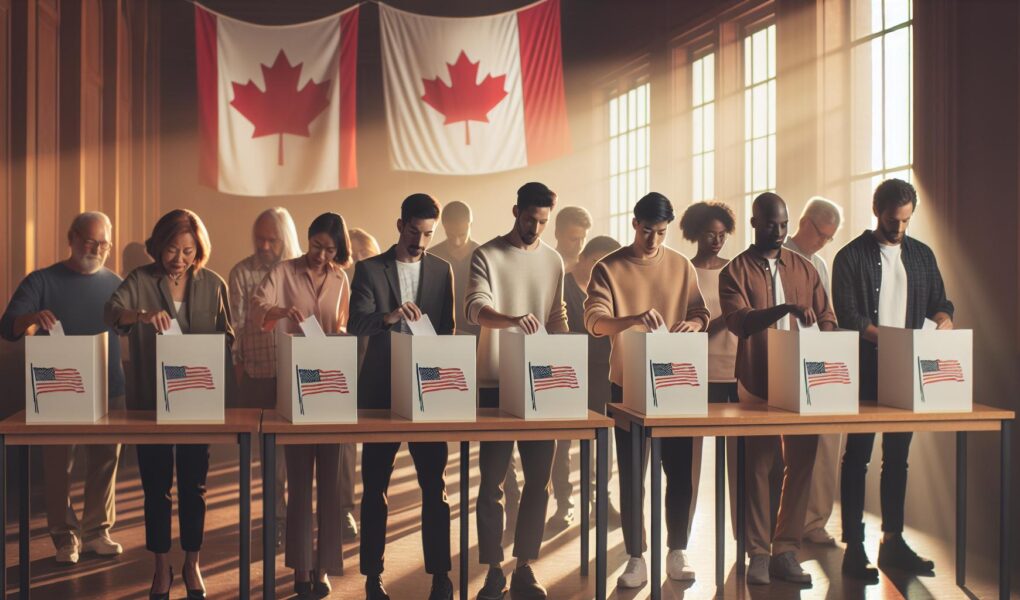
What if Canadians had too choose between Democrats and Republicans in a U.S.-style election? This intriguing question invites us to explore how CanadaS political landscape might shift if faced with familiar American party dynamics. Understanding this hypothetical scenario sheds light on Canadian voters’ priorities, values, and how external influences like U.S.politics shape their choices. With recent Canadian elections heavily influenced by U.S. trade disputes and political rhetoric, imagining such a ballot can reveal deeper insights into cross-border political impacts and voter behavior.Whether you’re curious about canada’s political identity or interested in teh broader effects of globalization on elections, this thought experiment offers a fresh perspective on democracy north of the border-and why it matters to both Canadians and their southern neighbors. Dive in to discover how Canada’s unique issues might align-or clash-with the American party divide.
Table of Contents
- Canada’s Political Landscape Compared to US Parties
- Key Differences Between Canadian and American Electoral Systems
- Which Canadian Policies Align with Democrats or republicans?
- Demographic Trends: Who Would Vote Which party?
- Regional Voting Patterns: East vs. West vs.North Canada
- The Role of Political Ideology in a US-Style Canadian Ballot
- Impact of Social Issues on Canadian Voter Preferences
- Economic Priorities and Party Alignment Comparison
- How Canadian Media Portray US Political Parties
- Potential Challenges of Adopting a US-Style ballot in Canada
- Predicting the Outcome: Would Canada Lean Democrat or Republican?
- What Canadian Voters Really Think About US Political Parties
- Q&A
- Q: how would Canadian regional differences influence voting on a US-style ballot?
- Q: Why might Canadian voters react differently to US-style party campaigns?
- Q: What role would Canadian social policies play in Democrat vs. Republican alignment?
- Q: How might voter turnout in Canada change if a US-style ballot was implemented?
- Q: What challenges would arise from implementing American voter ID laws in Canada?
- Q: How do Canadian economic priorities compare to Democratic and Republican platforms?
- Q: would canadian political ideology support a two-party system like in the US?
- Q: How might Canadian voters’ perception of US politics influence their choices on a US-style ballot?
- In Summary
Canada’s Political Landscape Compared to US Parties
Canada’s political scene, while sharing some broad ideological themes with the United States, presents a unique tapestry that would not translate neatly onto a US-style partisan ballot.Unlike the binary Democrat-Republican framework dominating American politics, Canada’s multiparty system includes the Liberal Party, Conservative party, New Democratic Party (NDP), Bloc Québécois, and the Green Party, each with distinct platforms reflecting regional, cultural, and economic differences across the country.
A few key differences set Canada apart. Canadian political parties often operate with a more centrist approach, especially relative to the US’s polarized landscape. Such as, the Liberal Party blends progressive social policies with pragmatic economic management, somewhat analogous to the US democrats, but generally more moderate on fiscal issues. The Conservative Party in Canada shares some ideological leanings with US Republicans,particularly on economic matters and skepticism toward expansive government programs,yet canadians tend to support stronger public healthcare and social safety nets across the political spectrum.
- political Diversity: Canada’s multiparty system encourages coalition-building and compromises rather than winner-takes-all politics, fostering a more collaborative political culture.
- Policy Priorities: Unlike the US parties where issues like gun rights starkly divide voters, Canadian parties largely agree on universal healthcare, with debates focusing more on funding levels and delivery.
- Regional Portrayal: Canada’s political loyalties reflect geography-Quebec has a distinct nationalist Bloc québécois,while Western provinces show stronger conservative leanings,making national party strategy more complex.
Thinking through how Canadian parties would align on a US-style Democratic-Republican spectrum requires nuance. Socially progressive policies like climate action, Indigenous rights, and multiculturalism resonate across many Canadian parties, positioning the country more to the “left” internationally than the US electorate overall-even many Conservatives endorse policies that US Republicans might oppose. Thus,if Canadians were to vote in a binary system,it is likely many who support the NDP or even the Liberals would lean Democrat,while Conservative supporters might align with Republicans,but with notable distinctions on social policy and government services.
Practical Implications for Canadian Voters
For Canadians imagining a US-style ballot, understanding these differences is crucial.Voters might intuitively seek parallels with US parties, but would face challenges reconciling Canada’s political consensus-driven values with the more polarized US system. Canadian political campaigns emphasize policy depth and local issues over national partisan identity, suggesting that a US-style partisan ballot could oversimplify the electorate’s preferences and reduce voter engagement. In practice, many Canadians might find themselves voting “Democrat” by default, but with a stronger expectation for government involvement in social programs and environmental stewardship.
Canada’s political landscape highlights how history, culture, and governance structures shape electoral behavior. While Canada and the US share close economic and security ties, their political systems reflect fundamentally different approaches to democracy and policy-making. This makes the question of “Would Canada vote democrat or Republican?” an invitation to explore these broader contrasts rather than a straightforward electoral prediction.
Key Differences Between Canadian and American Electoral Systems
Elections in Canada and the United States both form the backbone of their democratic systems, yet they operate within fundamentally different frameworks that shape voter experience and political outcomes in distinct ways. Canada’s electoral process employs a first-past-the-post voting mechanism similar to the US,where the candidate with the most votes in each district wins.However, the political landscape in Canada is characterized by a multiparty system that offers voters a wider range of choices beyond just two dominant parties. This variety promotes nuanced representation,coalition building,and frequently enough mandates cross-party cooperation in governing-features that contrast sharply with the predominantly two-party system in the US.
One of the most striking differences lies in how political representation and government formation are structured. In Canada, the party that secures the most seats in the House of Commons forms the government, and its leader becomes Prime Minister. This contrasts with the US, where the executive branch is elected separately from the legislative, and the Presidency is a direct result of an electoral college vote rather than parliamentary support. As Canadian elections typically feature multiple parties such as the Liberal Party, conservative Party, New democratic party, Bloc Québécois, and Green Party, voters can express specific regional and ideological preferences more freely than in the US two-party context. This leads to a more fragmented but arguably more representative legislature.
- Electoral Districts and Voting: Both countries divide the nation into single-member districts, but Canada’s smaller population and more numerous electoral districts support better local representation and engagement.
- Voter Accessibility and Education: Elections Canada plays an active role in educating voters about their rights, registration, and voting procedures, improving access and reducing barriers-efforts that sometimes lag in parts of the US electoral system.
- Electoral Cycles and Timing: Canada’s elections are often called flexibly within a maximum term, allowing for quicker responses to political shifts, whereas US elections occur on fixed schedules.
Canadian politics’ multiparty nature also influences how voters approach elections. Instead of framed choices between just “Democrat” or “Republican,” Canadian voters often weigh multiple parties with overlapping ideological positions but different emphases on social programs, climate policies, or regional interests. This diversity encourages strategic voting, coalition-building, and compromises, wich can dilute extreme polarization present in american politics.For exmaple, while American political debates include highly divisive topics like gun ownership, Canadian parties largely agree on core issues such as universal healthcare, focusing debates instead on implementation details and funding mechanisms.
Practical Takeaways for Understanding Voter Behavior
Imagining Canada adopting a US-style ballot simplifies voter choices but risks erasing significant political distinctions. Canadian voters may default toward parties resembling the Democrats or Republicans, but such a shift would flatten the country’s rich spectrum of political voices, including the significant presence of socially progressive or regional parties like the NDP or Bloc Québécois.Moreover, canada’s cultural and political consensus on social welfare and inclusivity means that a simple binary ballot could alienate voters who currently find representation across multiple parties. Understanding these differences helps frame the complexities behind why a direct comparison or transplant of electoral systems would be challenging and perhaps problematic.
Ultimately, while the US and Canadian systems share surface similarities-district-based elections, first-past-the-post voting-they foster very different political cultures and voter behaviors shaped by history, societal values, and governance structures. This divergence explains why the question “Would Canada vote Democrat or Republican?” cannot be answered merely by overlaying US political categories on Canadian voters, but rather requires appreciating how systemic differences influence political identity and choice[[1]](https://www.elections.ca/visit/over_e.html)[[2]](https://en.wikipedia.org/wiki/Canadian_electoral_system).
Which Canadian Policies Align with Democrats or republicans?
Canada’s political policies reveal an intriguing spectrum that overlaps in some respects with U.S. democratic and Republican platforms, yet diverges meaningfully in others due to distinct national contexts, social values, and governance traditions. While Canadian voters might find echoes of American liberal or conservative politics in their own parties’ stances, the nuances are essential for anyone imagining how a US-style ballot would translate north of the border.
For instance, Canadian parties emphasize universal healthcare-a foundational value deeply entrenched across the political spectrum-something that aligns more clearly with the US Democratic agenda advocating for expanded public health coverage. The Liberal Party and the New Democratic Party (NDP) champion robust social welfare programs, climate action, and inclusive immigration policies, paralleling many Democratic priorities. In contrast,the Conservative Party advocates for fiscally conservative policies,including reducing government expenditures and promoting free-market principles,which resemble many Republican economic arguments,especially on balancing budgets and limiting government intervention.Though, Canadian Conservatives generally accept social policies that would be more centrist by US Republican standards, reflecting Canada’s broader political consensus on issues like gun control and healthcare.
Comparing Key policy Areas
- Economic Policy: Canadian Conservatives prioritize deficit reduction and cutting support for corporations, a position akin to Republican calls for reduced government spending. The Liberals and NDP emphasize investments in social infrastructure and equitable wealth distribution, mirroring Democratic economic philosophies.
- Healthcare: Universal public healthcare in Canada is a non-negotiable entitlement across most parties, sharply contrasting with the US Republican approach which often resists expanding government healthcare programs.
- Environmental Policy: Progressive Canadian parties push for aggressive climate action similar to Democrats, while Conservatives tend toward measured approaches balancing economy and habitat-less polarized than US party divides.
- Trade and Protectionism: Interestingly,some Canadian parties like the bloc Québécois mandate restrictions on U.S. company participation in government contracts if Canadian workers are available,signaling a form of economic nationalism that doesn’t fall neatly into American partisan categories.
This nuanced alignment means that if Canadian voters had to choose between a ”Democrat-like” or “Republican-like” party on a US-style ballot, many might find neither fully representative.unique Canadian priorities-like multiculturalism, Indigenous reconciliation, and a generally more interventionist government approach to social programs-are rarely captured in the US binary framework. Moreover, cross-party consensus on many social issues, such as LGBT rights or gun regulation, would position Canadian conservatives frequently enough to the left of US Republicans, complicating any straightforward analogy.
Understanding these distinctions helps highlight why Canadian political identities don’t map simply onto American partisan lines. For voters accustomed to a multiparty system offering finely tuned ideological and regional representation, compressing options into a two-party schema risks oversimplifying or distorting Canadian political values and preferences. This insight is key for anyone exploring whether Canada would lean “Democrat” or “Republican” today, revealing instead a uniquely Canadian political fabric shaped by its own social, cultural, and historical forces.
Demographic Trends: Who Would Vote Which party?
Voter participation patterns reveal intriguing demographic divides that would heavily influence how Canadians might align in a hypothetical US-style two-party system. Youth engagement, as a notable example, has historically been lower than other age groups, with voter turnout hovering around 38.8% among those aged 18 to 24 in the 2011 election and slightly higher in recent years, reaching about 54% in 2019 according to Elections Canada data. This younger cohort tends to lean toward progressive policies emphasizing climate action, social inclusion, and robust public services, aligning more closely with a “Democratic” profile if forced into US-style partisan categories. Mobilizing this demographic remains a key challenge but could decisively shape outcomes given their distinct priorities and growing population share[[1]](https://www.conferenceboard.ca/hcp/voter-turnout-aspx/)[[3]](https://www.statcan.gc.ca/hub-carrefour/quality-life-qualite-vie/good-governance-saine-gouvernance/voter-turnout-participation-electorale-eng.htm).
conversely, older Canadians-who demonstrate notably higher turnout rates-often display more varied preferences across the political spectrum. Many lean towards fiscally conservative policies that prioritize economic stability and prudent government spending, traits often associated with US Republicans. Though, their support for policies like universal healthcare and gun control diverges from typical Republican stances, presenting a uniquely Canadian blend of conservative and centrist outlooks. This demographic’s voting behavior is also influenced by regional factors and historical political loyalties, complicating any direct transposition onto US party lines.
Immigration and Diversity Impact
Moreover, Canada’s increasing multicultural composition reshapes voter tendencies in ways that do not neatly map onto US party allegiances. Immigrant communities disproportionately support parties advocating inclusive immigration, multiculturalism, and social equity-positions paralleling the US Democratic platform. These voters emphasize economic chance and social justice, frequently enough stemming from their experiences and aspirations in Canadian society. A US-style ballot would likely see these communities gravitating toward the “left” side,reinforcing progressive coalitions at urban and suburban levels.
Socioeconomic Status and Geographic splits
- Income Levels: Lower- and middle-income Canadians tend to support parties pushing extensive social welfare and public infrastructure investments, akin to Democratic policy preferences.
- Employment Sectors: Workers in unionized industries or public sectors frequently enough endorse progressive parties,whereas those in resource-based or entrepreneurial sectors may lean toward fiscally conservative options.
- Urban vs. Rural: Urban populations commonly align with socially progressive, environmentally conscious policies, while rural voters frequently prioritize economic freedom and limited regulation.
The complex overlay of these demographic factors means that any Canadian voter’s party choice would reflect not only national identity but also local economic realities and cultural values. While younger,urban,and immigrant voters might cluster toward a “Democrat-like” option,older and rural voters might find closer affinity with “Republican-type” policies,albeit with Canadian distinctions such as acceptance of healthcare universality and gun control. The result would be a nuanced electoral map much less polarized than in the United States, emphasizing consensus over conflict.
| Demographic Group | Likely US-Style Party Alignment | Canadian Political Tendencies |
|---|---|---|
| Younger Voters (18-34) | Democrat | Progressive, climate-focused, socially inclusive |
| Older Voters (55+) | Republican (with caveats) | Conservative on economy, centrist on social policies |
| Immigrant and Multicultural Communities | Democrat | Pro-immigration, social equity, inclusive policies |
| Rural and Resource-Based Regions | Republican | economically conservative, pro-market, emphasizing local jobs |
| Urban Middle and Working Class | Democrat | Supportive of social programs, labor rights |
understanding these demographic trends highlights how Canadian voters would navigate a simplified partisan landscape. Rather than a strict binary divide, Canadians exhibit a patchwork of allegiances shaped by age, background, and geography, underscoring the challenge of translating Canadian politics into the US’s polarized two-party framing. Practical takeaway: any attempt to portray Canada as a simple “blue” or “red” country overlooks the rich diversity of voter motivations and the blended political culture that defines the nation.
Regional Voting Patterns: East vs. West vs.North Canada
Canada’s vast geography is matched by its diverse political landscape, where regional identities deeply shape voter preferences. Imagining a US-style ballot, the sharp contrasts between the East, West, and North become key to predicting whether Canadians would lean “Democrat” or “Republican.” these regional divides stem not only from economic foundations but also from historical allegiances and cultural values, painting a multifaceted electoral map.The eastern provinces-including Atlantic Canada and Quebec-tend to gravitate toward policies that prioritize social welfare, healthcare, and community support systems, aligning more naturally with a Democratic-style platform. For example, Quebec’s distinct cultural identity and its emphasis on progressive social policies would see many voters favor candidates focused on inclusivity and economic equality.Atlantic provinces, with their reliance on government-supported industries and social programs, frequently enough lean toward parties championing robust public services and protections for workers. this region’s longstanding affinity for social democratic and liberal ideals suggests Democratic alignment would be strong if presented with a US two-party choice.
In stark contrast,much of Western canada embodies a more economically conservative ethos shaped by resource-based economies and entrepreneurial independence,hinting at a Republican-style leaning. Provinces such as alberta and Saskatchewan are heavily invested in oil, agriculture, and natural resources, driving local voters to prioritize economic freedom, less regulation, and lower taxes. Here, skepticism of federal intervention and a desire for regional autonomy resonate powerfully, echoing themes familiar to Republican constituencies in the US. Still,this doesn’t translate to wholesale adoption of all american conservative stances-Canadians in the West often maintain support for universal healthcare and moderate social policies-highlighting a unique regional blend.
The North’s Unique Political Voice
Canada’s Northern territories-Yukon, Northwest Territories, and Nunavut-introduce another dynamic layer. Sparse populations, geographical isolation, and a strong Indigenous presence shape a distinctive political culture.Voters prioritize issues like Indigenous rights, environmental stewardship, and sustainable progress. Many Northern residents would likely lean toward policies emphasizing social equity and environmental protection, aligning somewhat with Democratic platforms but driven by highly localized concerns. The US-style Republican-Democrat dichotomy struggles to capture this nuanced regional reality.
Practical Implications for a US-Style Ballot
- Regional Economic Priorities: Campaigns would need to tailor economic messages distinctly for each region-embracing resource development and economic freedom in the West, social welfare and healthcare in the East, and Indigenous self-determination in the North.
- Policy Messaging: Parties adopting US-style frameworks must recognize the middle ground Canadians frequently enough occupy, avoiding overly polarized rhetoric to appeal across diverse regional preferences.
- Voter Engagement: regional media and cultural outlets would play a pivotal role in framing party platforms within local contexts,a strategy critical to winning support in Canada’s patchwork political terrain.
| Region | Economic & Social focus | likely US-Style Party Alignment |
|---|---|---|
| East (Atlantic Canada,Quebec) | Social programs,healthcare,community support | Democrat |
| West (Alberta,Saskatchewan,Manitoba) | resource economy,economic freedom,regional autonomy | Republican |
| North (yukon,NWT,nunavut) | Indigenous rights,environmental sustainability,local governance | Democrat (with regional nuances) |
Ultimately,Canada’s regional voting patterns reveal a sophisticated electorate whose preferences defy simple classification. While the East’s social-progressive leanings contrast with the West’s market-oriented outlook, the North’s priorities underscore the importance of local context. Any US-style ballot would need to reflect these rich regional distinctions to accurately capture how Canadians might cast their votes in a two-party system.
The Role of Political Ideology in a US-Style Canadian Ballot
Political ideology in Canada does not fit neatly into the binary framework so familiar to American voters. Unlike the often polarized U.S. system, Canadian political beliefs frequently embody a blend of economic and cultural values that cross conventional left-right lines. This nuanced reality becomes especially critically important to understand when imagining a US-style ballot, as it highlights the challenges of mapping Canadian voters onto a strict Democrat-Republican dichotomy.
Many Canadians concurrently hold progressive economic views alongside more conservative cultural attitudes, or vice versa. For instance, a significant segment identifies as economically progressive yet culturally moderate or cautious, reflecting concerns about economic inequality while valuing community traditions and social cohesion. This mixing of ideological impulses means that simplistic labels like “liberal” or “conservative” cannot capture the complexity of voter preferences across regions, demographics, or issue areas. political parties modeled after U.S. counterparts would need to craft messaging that respects this tension rather than forcing voters into rigid categories[3].
Adapting to Mixed Ideologies: Strategies for Campaigns
- Embrace nuance in economic and cultural issues. Campaigns should recognize that a portion of the electorate values social safety nets and public healthcare while also prioritizing fiscal responsibility and regional autonomy. Tailoring messages that bridge these priorities builds broader appeal.
- Focus on local contexts and values. Political ideology in Canada often reflects regional histories-such as quebec’s emphasis on cultural identity and social democracy or Alberta’s focus on free enterprise and skepticism of federal control. Understanding these nuances prevents alienating key voter blocks.
- De-emphasize polarized rhetoric. Canadians generally favor less divisive politics compared to the U.S. Overly confrontational or identity-driven messaging risks disengaging moderate voters who occupy the ideological middle ground.
Ideology Beyond the Left-Right Spectrum
Where American political ideology tends to be mapped linearly from liberal to conservative, Canadian attitudes operate on multiple dimensions simultaneously. Cultural and economic beliefs often diverge within the same individual or community, making a two-axis or even multidimensional approach necessary. Such as, many Canadians support universal healthcare (a traditionally left-leaning economic policy) but hold more conservative views on immigration or crime. This duality complicates the adoption of a US-style ballot, where ideology is tightly bound to party identity.
| Dimension | Typical Canadian Voter perspective | How It Challenges US-Style Mapping |
|---|---|---|
| Economic Policy | Supports social programs, public services, with some advocating fiscal prudence | not always aligned with strict free-market or anti-government positions |
| Cultural issues | Varying degrees of traditionalism, multiculturalism, and regional identity emphasis | Differ from U.S. culture war divides, frequently enough less polarized |
| Regional Values | East favors social democratic frameworks; West values economic freedom; North prioritizes Indigenous rights | Regional divergence complicates a single two-party framework |
In sum, political ideology in Canada is best viewed as a fluid and intersecting spectrum. Any effort to translate Canadian electoral dynamics into a US-style ballot system must appreciate that voters rarely conform to strictly Democratic or Republican identities. Those crafting party platforms or campaign strategies would benefit from acknowledging the coexistence of progressive and conservative impulses, tailoring appeals to Canada’s unique blend of regional, cultural, and economic priorities. This recognition can foster more inclusive political engagement and reflect Canadian realities even within a simplified partisan framework.
Impact of Social Issues on Canadian Voter Preferences
Social issues occupy a significant and sometimes subtle role in shaping Canadian voter preferences, reflecting values that don’t always align neatly with American political fault lines. Unlike the U.S., where culture wars often dominate electoral discourse, Canadians tend to approach social debates with an emphasis on community harmony, inclusivity, and pragmatic policy solutions. Issues such as immigration, Indigenous rights, multiculturalism, and the accommodation of religious and cultural diversity frequently influence voter behavior, but they rarely polarize public opinion to the degree seen south of the border.
For example, while Canadian voters generally support immigration as a positive force for economic growth and cultural enrichment, there is also a strong current of cautiousness regarding integration and local job markets. This reflects a nuanced outlook that many Canadian parties attempt to address without alienating broad swaths of the electorate. Similarly, Indigenous reconciliation is a uniquely Canadian social issue with far-reaching electoral importance, particularly in regions with significant indigenous populations such as the North and parts of the West. Political parties’ stances on implementing the recommendations of the Truth and Reconciliation Commission, land rights, and equitable resource distribution can meaningfully sway voter support in these areas.
Key Social Issues and Voter Alignment
- Multiculturalism and religious accommodation: Canadians generally endorse policies promoting cultural diversity, yet there remain debates around religious symbols in public institutions, which influence voter attitudes in subtle but important ways.
- Public safety and crime policy: Even though concerned about crime,many voters favor rehabilitation-focused approaches over punitive measures,contrasting with the tough-on-crime rhetoric frequently enough associated with some U.S. factions.
- LGBTQ+ rights and equality: Broad support for LGBTQ+ protections remains consistent across Canadian political parties, with fewer partisan divisions than in the U.S., making this a less divisive electoral issue.
- Environmental justice as social equity: Climate change policies often intersect with Indigenous rights and community well-being, with voters increasingly expecting parties to address these issues in tandem.
Addressing these social priorities requires Canadian political parties to integrate values of social cohesion and fairness into their platforms, balancing progressive ambitions with respect for tradition and regional identities.This can conflict with the binary ideological positioning characteristic of U.S. parties. If Canada adopted a U.S.-style ballot, many voters might find themselves caught between parties that do not fully reflect their composite views on social issues, highlighting the potential limitations of a strict Democrat-Republican framework.Understanding this complexity helps explain why Canadian elections involve a multiplicity of parties that cater to varying combinations of social and cultural attitudes, allowing voters to express preferences without being pigeonholed into strictly “left” or “right” social positions. Such diversity may serve as guidance for any political entity seeking to engage Canadian voters in a US-style electoral context: messaging must be multidimensional, respectful of social nuance, and avoid the zero-sum, identity-driven politics common in American campaigns.
Economic Priorities and Party Alignment Comparison
Economic debates in canada often diverge substantially in tone and focus from those in the U.S., making a direct alignment with either democrats or Republicans challenging. While both countries grapple with issues like taxation,public spending,and economic growth,the Canadian political landscape generally features broader acceptance of government intervention in social programs and a stronger emphasis on collective economic welfare compared to the American emphasis on market-driven solutions and limited government.
Canada’s major parties tend to occupy distinct economic philosophies that blend elements seen in both U.S. parties but with unique national priorities. For instance, the Liberal Party often champions a centrist approach, advocating for strategic investments in social infrastructure such as healthcare and education alongside support for innovation and trade. The Conservative Party, somewhat akin to the Republicans, emphasizes fiscal restraint, lower taxes, and policies favorable to business and natural resource sectors, particularly in Western Canada. The New Democratic Party (NDP), comparable in some ways to the progressive wing of the Democratic party, strongly promotes wealth redistribution, expansive social spending, and a green economy transition.
Economic Priorities: Divergence and Overlap
- Healthcare and Social Spending: Unlike the polarized U.S. debate on universal healthcare, most Canadian parties agree on maintaining and expanding the public healthcare system, a value strongly embedded in the electorate. This consensus would likely place Canadian voters of various stripes more consistently within what Americans might see as ‘left of center’ on this issue.
- Fiscal Policy and Taxation: Canadians are generally more accepting of progressive taxation, including higher corporate and top marginal tax rates, as a trade-off for social services. This contrasts with the Republican emphasis on cutting taxes to stimulate growth.
- Natural Resources and Economic Development: Resource-rich provinces like Alberta lean toward conservative economic policies that promote energy exports and less regulation, aligning somewhat with Republican priorities but tempered by Canadian environmental standards and Indigenous rights considerations.
- Trade and Globalization: Canada’s economy is highly export-dependent with a pro-trade consensus across parties, although the approach to trade deals and relations, particularly with the U.S., sees nuanced debate.Democrats and Republicans in the U.S. are more sharply divided on trade, which could complicate Canadian voter mapping onto U.S. parties.
| Economic issue | Typical Canadian Party Stance | Closest U.S.Party Parallel |
|---|---|---|
| Universal Healthcare | Broad support; public system expansion | Democrats |
| Taxation | Progressive tax acceptance; moderate to high rates | Democrats (general) |
| Resource Extraction and Environment | Mixed; Conservatives favor less regulation, Liberals and NDP more environmentally cautious | Republicans / Democrats split |
| Trade Policy | Pro-trade across parties; focus on diversification | Divided Democrats and Republicans |
Understanding these nuances helps clarify how Canadian economic priorities mapped onto a U.S.-style ballot could blur customary American party lines. Many Canadian voters support a blend of policies – fiscal pragmatism combined with strong social safety nets – that neither U.S. party fully encapsulates. For political strategists and pollsters,recognizing this hybrid preference is key: messaging should emphasize practical economic outcomes and social protections rather than strict ideological purity.ultimately,if Canadians were presented with a Democrat-Republican binary,their vote might hinge less on party labels and more on specific economic issues relevant to their region and social context. This complexity suggests any transposition of U.S.-style ballot structures into Canada would require significant adaptation to accurately reflect Canadian economic values and voter expectations.
How Canadian Media Portray US Political Parties
Canadian media coverage of U.S. political parties often serves as a lens not only into American politics but also reflects Canada’s own political values and concerns. From election cycles to policy debates, Canadian outlets tend to highlight the contrasts between Democrats and Republicans, frequently emphasizing the ideological polarization and cultural conflicts that define the American landscape. This portrayal shapes Canadian public perceptions by underscoring both the strengths and pitfalls of the U.S. system, providing valuable context for readers curious about how a similar two-party dynamic might play out north of the border.One notable characteristic is the Canadian media’s generally critical but nuanced tone toward U.S. parties.Coverage frequently points to the Democratic party as broadly progressive, aligning with Canadian social priorities such as universal healthcare, climate action, and social justice-values deeply embedded in Canadian politics. Conversely, Republican policies are often depicted as more conservative, emphasizing limited government and market-driven approaches, which resonate only partially with Canadian conservative viewpoints, especially given Canada’s broader acceptance of government involvement in social programs. Canadian outlets highlight instances where extreme factions within U.S. parties-such as the far-left of the Democrats or the populist right of the Republicans-exacerbate polarization, offering both cautionary lessons and points of contrast for Canadian readers.
Media Framing and Public Understanding
Canadian news organizations frequently use U.S. political developments as a comparative framework, enabling readers to evaluate similar issues domestically. For example, coverage around healthcare debates in the U.S. frequently enough underscores Canada’s universal healthcare system as a point of national pride and political consensus. This approach not only informs but also helps Canadians contextualize their own political debates in contrast with the often harshly partisan U.S. environment. Moreover, the Canadian press tends to scrutinize U.S. trade policies, environmental legislation, and social turmoil (such as gun control disputes and racial justice protests), which indirectly shapes how Canadians might view the practicality or implications of adopting a U.S.-style partisan ballot.
- Balanced reporting: Most mainstream Canadian media outlets strive for balanced coverage, presenting both criticisms and commendations of U.S. parties to avoid overly simplistic portrayals.
- Editorial perspectives: Editorials and analysis pieces often provide deeper dives into how U.S. party ideologies align or clash with Canadian values, creating an informative dialog rather than mere reporting.
- Focus on impact: Stories commonly emphasize how U.S. political trends influence Canada, such as trade negotiations, immigration policies, and cross-border security, offering readers insight into real-world consequences.
Practical Takeaways for canadian Readers
For Canadians imagining a U.S.-style ballot, understanding media portrayals of American parties is essential. It reveals the complexity behind the two-party system-its appeals and limitations-and highlights the potential challenges Canada might face should it adopt such a binary political structure. Canadian voters can benefit from recognizing how deeply cultural context shapes party platforms and media narratives.
To navigate this landscape effectively:
- Question simplifications: Be aware that media portrayals may accentuate stereotypes about U.S. parties; digging deeper into specific policy nuances helps avoid surface-level assumptions.
- Contextualize issues: Compare U.S.political debates with Canadian counterparts to grasp where values converge or diverge.
- Engage with diverse sources: Following multiple Canadian and international news outlets provides a broader understanding, reducing the risk of echo chambers.
By critically engaging with Canadian media coverage of U.S. politics, readers can better grasp how these portrayals might influence Canadian attitudes toward a Democrat-Republican style ballot and what lessons Canada’s political system might draw from its southern neighbour’s experiences.
Potential Challenges of Adopting a US-Style ballot in Canada
Canada’s political culture and electoral framework have evolved with characteristics that differ dramatically from the U.S. system,making the wholesale adoption of a U.S.-style ballot far from straightforward. One immediate challenge lies in reconciling Canada’s historically multiparty system-which accommodates a broad spectrum of voices from left to right-with the entrenched American two-party dynamic. A shift to a ballot dominated by Democrats and Republicans would risk oversimplifying nuanced canadian political identities and marginalizing smaller parties that currently play pivotal roles in shaping policy and regional representation.
Structural and Cultural Barriers
Canada’s use of proportional representation in several provinces, along with first-past-the-post federally, fosters different strategic voting behaviors than those seen in the U.S.The heavily polarized nature of American electoral contests frequently enough pressures voters into binary choices, while Canada’s system encourages coalition-building and compromises among multiple parties. Forcing voters onto a strict two-party ballot risks alienating Canadians who identify with social democratic, environmentalist, or regionalist parties-groups without direct equivalents in the U.S. This could reduce voter engagement and complicate representation, particularly in diverse regions where political priorities vary widely.
Additionally, Canadian political culture emphasizes consensus and pragmatic policy solutions over ideological brinkmanship, which is often a hallmark of U.S. elections. Adopting U.S.-style ballot politics could inadvertently import a heightened level of polarization, contributing to voter fatigue and disenfranchisement. The experience of Bill C-23, the contentious Fair Elections Act introduced by the Harper government, highlights potential pitfalls of attempting to mimic U.S.-style electoral regulations that focus on voter ID and suppressing certain voting mechanisms, which have faced criticism for limiting accessibility and discouraging participation[[1]](https://www.vice.com/en/article/the-harper-government-wants-to-bring-american-style-voter-id-laws-to-canada/)[[2]](https://www.bbc.com/news/world-us-canada-58589809).
Practical Considerations and Voter Impact
- Voter Accessibility: Canada historically ranks higher in voter turnout partly due to more accessible voting options such as advanced voting days, mail-in ballots, and flexible identification requirements. Replicating U.S. voter ID laws could introduce barriers that disproportionately affect marginalized communities.
- Regional Disparities: Political views in Canada differ sharply across the East, West, and Northern regions, with strong movements such as Western alienation that do not neatly correspond to American party lines. A rigid two-party ballot risks ignoring these regional distinctions.
- media and Public Perception: Canadian media often portray U.S. political parties through a critical lens, highlighting polarization and gridlock. This framing shapes Canadian skepticism toward adopting a similar system wholesale.
Learning from U.S. Experiences
While certain aspects of U.S. electoral reforms-like emphasis on early voting or mail-in ballots-offer positive lessons, Canada must guard against the unintended consequences seen south of the border. U.S.voter suppression tactics,such as strict voter ID laws or the elimination of practices like vouching,have contributed to disenfranchisement in vulnerable communities. Canada’s attempts with the Fair Elections Act revealed how such changes can erode inclusivity[[1]](https://www.vice.com/en/article/the-harper-government-wants-to-bring-american-style-voter-id-laws-to-canada/)[[2]](https://www.bbc.com/news/world-us-canada-58589809). Any move toward a U.S.-style ballot must be carefully adapted to Canadian realities, ensuring that innovation does not come at the cost of democratic participation.
| Potential Challenge | U.S. Context | Canadian Concern |
|---|---|---|
| Two-Party Dominance | Political system largely binary | Marginalizes smaller parties and regional interests |
| Voter ID Laws | Restrictive policies linked to lower turnout | Could reduce accessibility, especially for marginalized groups |
| Polarization | High ideological division | Conflicts with Canada’s preference for consensus politics |
| Election Administration | Varied and state-dependent rules | Canada’s federally run elections promote consistency and inclusivity |
By navigating these challenges with care and context, Canadians can appreciate both the practical and cultural obstacles in adopting a uniquely American ballot model. Thoughtful reforms tailored to Canadian values and electoral traditions are more likely to enhance, rather than hinder, democratic engagement.
Predicting the Outcome: Would Canada Lean Democrat or Republican?
Canada’s political temperament exhibits distinctive traits that would likely influence how its electorate might align on a hypothetical U.S.-style two-party ballot. While it might very well be tempting to simply map Canadian voter preferences onto the American Democrat-Republican divide, the reality is far more complex. Canada’s history of multiparty engagement, combined with its diverse social values and regional perspectives, suggests a more nuanced distribution of support that doesn’t cleanly match U.S. party platforms.
One critically important factor is that Canadian voters tend to favor policies that blend social liberalism with pragmatic economic approaches. This frequently enough aligns more closely with the Democratic Party’s emphasis on social welfare, environmental regulation, and inclusive immigration policies than the Republican Party’s conservative stances.For example, Canada’s universal healthcare system and stronger social safety nets resonate with core Democratic values. Moreover, Canadian attitudes toward climate change and Indigenous rights align with progressive policy priorities that would find their home within the Democratic camp on a U.S.-style ballot.
Regional and Demographic Divides Would Shape the Landscape
However, regional and cultural diversity within Canada would create significant variation in party support. The Western provinces, long marked by sentiments of “Western alienation” and economic nationalism, might gravitate toward Republican-style platforms emphasizing resource development, smaller government, and fiscal conservatism. In contrast, urban centers in Ontario and Quebec-with their multicultural populations and progressive tendencies-would likely bolster Democratic support. The Northern territories,with their unique Indigenous populations and governance concerns,might find neither U.S. party fully captures their priorities, possibly tending toward candidates with stronger commitments to local autonomy and social programs.
Demographically, younger Canadian voters tend to be socially progressive, supporting policies around gender equality, LGBTQ+ rights, and environmental sustainability-issues closely associated with Democrats. Older and rural voters might resonate more with conservative or Republican values, especially concerning gun rights and economic freedoms. Yet, even these divisions are less polarized than in the U.S., reflecting Canada’s political culture that prizes consensus and moderate policy shifts.
Practical Implications and Voter Behavior
- Multiparty Legacy: Canadian voters’ familiarity with multiple parties means they might feel constrained by a strict two-party choice, potentially leading to voter disengagement or tactical voting that muddies clear Democrat-Republican outcomes.
- Policy Alignment: While many Canadians would lean Democrat due to shared social values, distinct conservative traditions, especially in resource-rich provinces, would give Republicans solid regional bases.
- Issue-Specific Voting: Canadian voters often prioritize pragmatic policies over ideological purity. As such, swing votes might depend less on party labels and more on concrete positions related to healthcare, the economy, or Indigenous affairs.
| Factor | Likely Canadian Leaning | Notes |
|---|---|---|
| Social Welfare & Healthcare | Democrat | Strong support for universal healthcare and social safety nets |
| Energy & Resource Policy | Republican (West), Democrat (East) | Western provinces favor resource exploitation; Eastern provinces emphasize climate change |
| Multiculturalism & Immigration | democrat | Generally pro-immigration and diversity policies |
| Gun Control | Democrat | Stricter gun laws widely supported compared to U.S. |
| Indigenous rights & Autonomy | Mixed/Independent | Complex regional issues may not align neatly with U.S. parties |
Ultimately, Canada would likely lean more Democratic overall if forced to choose between the two major U.S. parties, reflecting its progressive social policies and community-focused governance style. Nonetheless, significant Republican pockets would persist, especially where economic conservatism and regional identity drive voter sentiment. Such dynamics highlight the inherent challenge of transplanting U.S.-style ballots to Canada-a country whose electoral behavior thrives on nuance,diversity,and coalition politics rather than stark ideological binaries.
What Canadian Voters Really Think About US Political Parties
Canada’s electorate generally views U.S. political parties through a lens colored by their own political culture-one that values moderation, social welfare, and multiculturalism. While many Canadians admire the Democratic Party’s emphasis on social justice, environmental policies, and universal healthcare-issues that resonate strongly with Canadian values-they often approach the Republican Party with more caution, especially given its association with divisive social debates and less government intervention in social programs.This nuanced perspective means Canadians do not adopt a simple Democrat-or-Republican ‘team’ mentality but rather assess U.S. parties based on how their policies align or clash with Canadian priorities.
Many Canadians appreciate the Democratic Party’s push for inclusivity and climate action,seeing parallels with their own national commitments. However,they also recognize the complexities within the Republicans’ platform,especially in resource-rich provinces like Alberta and saskatchewan,where economic conservatism and advocacy for industries like oil and gas find sympathy. Yet, these supporters typically distinguish Canadian conservatism-which frequently enough embraces a social safety net and healthcare-from the U.S. Republican ideals, which can seem more polarized. This highlights an important insight: Canadian voters tend to view American party positions in shades of gray rather than black and white,appreciating pragmatism over ideological extremes.
Unique Canadian Perspectives on U.S. Political Dynamics
- Influence of Media Representations: Canadian media frequently portray U.S. politics as more polarized and partisan than their own system, influencing public perception to be somewhat wary of the intensity and divisiveness of U.S. party politics.
- Cross-Border Issue Awareness: Topics like trade, border policy, and environmental cooperation are top of mind, leading Canadians to show keen interest in how parties from both sides of the border might impact these relations. Such as, Republican rhetoric on tariffs or immigration can cause concern among Canadians given their economic and social implications.
- Voter Engagement: Canadians might potentially be more critical or skeptical of U.S. political campaigns and leadership styles, reflecting a comparative preference for consensus-driven governance and less personality-driven politics.
Practical Takeaways for Understanding Canadian Views
| Aspect | Canadian Perspective | Implication |
|---|---|---|
| Social Policy | Generally aligns with Democrats’ support for healthcare and equality | positive perception of U.S.Democrats as akin to Canadian liberal values |
| Economic Policy | Mixed; Western provinces show Republican sympathies for fiscal conservatism | Recognition that Canadian economic interests are regionally diverse |
| Political Style | Preference for measured, less confrontational politics over U.S. partisan battles | Critical view of U.S. hyper-partisanship, especially during election cycles |
| Cultural Issues | More progressive; wary of conservative U.S. stances on issues like gun rights | Potential disconnect with Republican social policies |
Understanding Canadian perspectives on U.S. political parties provides valuable insight into how Canadians might approach a hypothetical U.S.-style ballot at home. It underscores the fact that while ideological similarities exist-especially between Canadian liberals and American Democrats-the broader Canadian political culture would likely challenge rigid party lines, instead fostering a uniquely canadian approach grounded in pragmatism, regional diversity, and a preference for social cohesion.
Q&A
Q: how would Canadian regional differences influence voting on a US-style ballot?
A: Canadian regional diversity would significantly shape voting patterns on a US-style ballot. For example, Western provinces might lean more conservative, similar to Republican support, while Eastern Canada and urban centers could favor more progressive candidates akin to Democrats.Understanding these patterns helps predict how Canadian demographics translate in a US-style election. See Regional Voting Patterns for detailed insights.
Q: Why might Canadian voters react differently to US-style party campaigns?
A: Canadian voters tend to prioritize consensus-building and policy nuance, so US-style campaign strategies focused on polarization may not resonate as strongly. This affects engagement with Democrat or Republican platforms,emphasizing why Canadian political culture shapes voter response distinctly. Explore How Canadian Media Portray US Political Parties for context.
A: Canadian social policies, like universal healthcare and stronger social safety nets, align more closely with Democratic ideals, making them a natural fit for voters leaning left. Conversely, more market-driven or traditionalist views could align with republican values, though these are less prevalent in Canada. See Impact of Social Issues on Canadian Voter Preferences for more.
Q: How might voter turnout in Canada change if a US-style ballot was implemented?
A: Voter turnout could initially decrease due to the complexities and partisanship of a US-style ballot, which contrasts with Canada’s more accessible systems like mail-in voting and early voting.However, turnout could stabilize if reforms maintain Canadian voter-amiable practices, detailed in Key Differences Between Canadian and American Electoral Systems.
Q: What challenges would arise from implementing American voter ID laws in Canada?
A: Introducing US-style voter ID laws in Canada could lead to voter suppression concerns and reduced accessibility,as Canada traditionally has more inclusive voter identification procedures. This may particularly impact marginalized communities. For background on this issue, see discussions about the Fair Elections Act and its effects.
Q: How do Canadian economic priorities compare to Democratic and Republican platforms?
A: Canadian economic priorities generally emphasize balanced growth, social welfare, and environmental sustainability, aligning more with democratic economic policies. Republican priorities like deregulation and tax cuts may appeal to some regions but generally less so nationally. Check Economic Priorities and Party Alignment Comparison for a full overview.
Q: would canadian political ideology support a two-party system like in the US?
A: Canadian political ideology and history favor multi-party representation, making a strict two-party system challenging to establish. Canadians frequently enough support diverse parties beyond a simple Democrat-Republican binary, reflecting their complex political landscape. Refer to The Role of Political Ideology in a US-Style Canadian Ballot for full analysis.
Q: How might Canadian voters’ perception of US politics influence their choices on a US-style ballot?
A: Canadians’ perceptions, often shaped by media and cultural differences, could lead to skepticism toward US party extremes, influencing them to favor moderate or centrist candidates over polarizing figures. Understanding this is key when imagining a US-style ballot. See What Canadian Voters Really Think About US Political Parties for related insights.
For deeper exploration of these topics, consider revisiting the sections on Canadian political ideology and regional voting patterns to better understand the nuances. Keep engaging with our content to stay informed on how electoral systems shape voter behavior across borders.
In Summary
Exploring how Canadian voters might align in a US-style Democrat vs. Republican ballot uncovers intriguing insights about political culture and voter values unique to Canada. By imagining this scenario, we gain a fresh perspective on the contrasts and similarities between these neighboring democracies, helping us better understand voter behavior and potential election outcomes. If you’re curious about how electoral systems shape political landscapes, don’t miss our in-depth analysis of Canada’s political parties and the impact of electoral reforms.
Ready to dive deeper? Explore related topics like comparative politics and discover tools to track evolving voter trends. join our newsletter for the latest updates and expert commentary, or share your thoughts below to spark this conversation further.Understanding whether Canada would vote Democrat or Republican fuels ongoing debate-and your voice is key to enriching it. Stay engaged and keep exploring to uncover what future elections might really look like in Canada’s changing political scene.
Get our latest guides, news, and insights highlighted in your Google Search & AI Overviews.