

Votes of no confidence are rare but pivotal moments in Canadian politics,signaling a test of a government’s hold on power. The last notable such vote occurred recently, wiht Prime Minister Justin Trudeau’s government surviving multiple no-confidence motions tied to critical issues like affordable housing, rising living costs, and public safety. For Canadians, these votes matter because they reveal the fragile balance of political support in Parliament and can trigger significant changes or elections. Understanding when and why these votes happen sheds light on the dynamics shaping Canada’s leadership and policy directions.In this recap,we explore the details of the latest political showdown,what it means for governance,and why staying informed about these events helps citizens grasp the pulse of their democracy. As the country faces ongoing challenges, knowing how these confidence votes unfold offers insight into the stability-or volatility-of Canadian politics today, making it essential reading for anyone invested in the nation’s future. [2][3]
Table of Contents
- Understanding Votes of No Confidence in canada
- The Most Recent Vote of No Confidence Explained
- Key Political Players Behind the last Vote
- historical Impact of No Confidence Votes in Canada
- how Votes of No Confidence Shape Canadian Governments
- Procedures and Consequences Following a No Confidence Vote
- Public and Media Reactions to Canada’s Political showdowns
- Comparing No Confidence Votes: Canada vs. Other Democracies
- What the last Vote Means for Future Canadian Politics
- FAQ
- Q: How do opposition parties trigger a vote of no confidence in Canada?
- Q: What are the immediate political effects if a no confidence vote passes in Canada?
- Q: Why do minority governments face more no confidence votes in Canada?
- Q: How does the Canadian political system compare with other democracies regarding no confidence votes?
- Q: What role do smaller parties like the NDP play in no confidence votes?
- Q: How often have no confidence votes led to early elections in Canadian history?
- Q: What strategies do governments use to survive upcoming no confidence motions?
- Q: What are the long-term political implications of surviving a no confidence vote in canada?
- To Conclude
Understanding Votes of No Confidence in canada
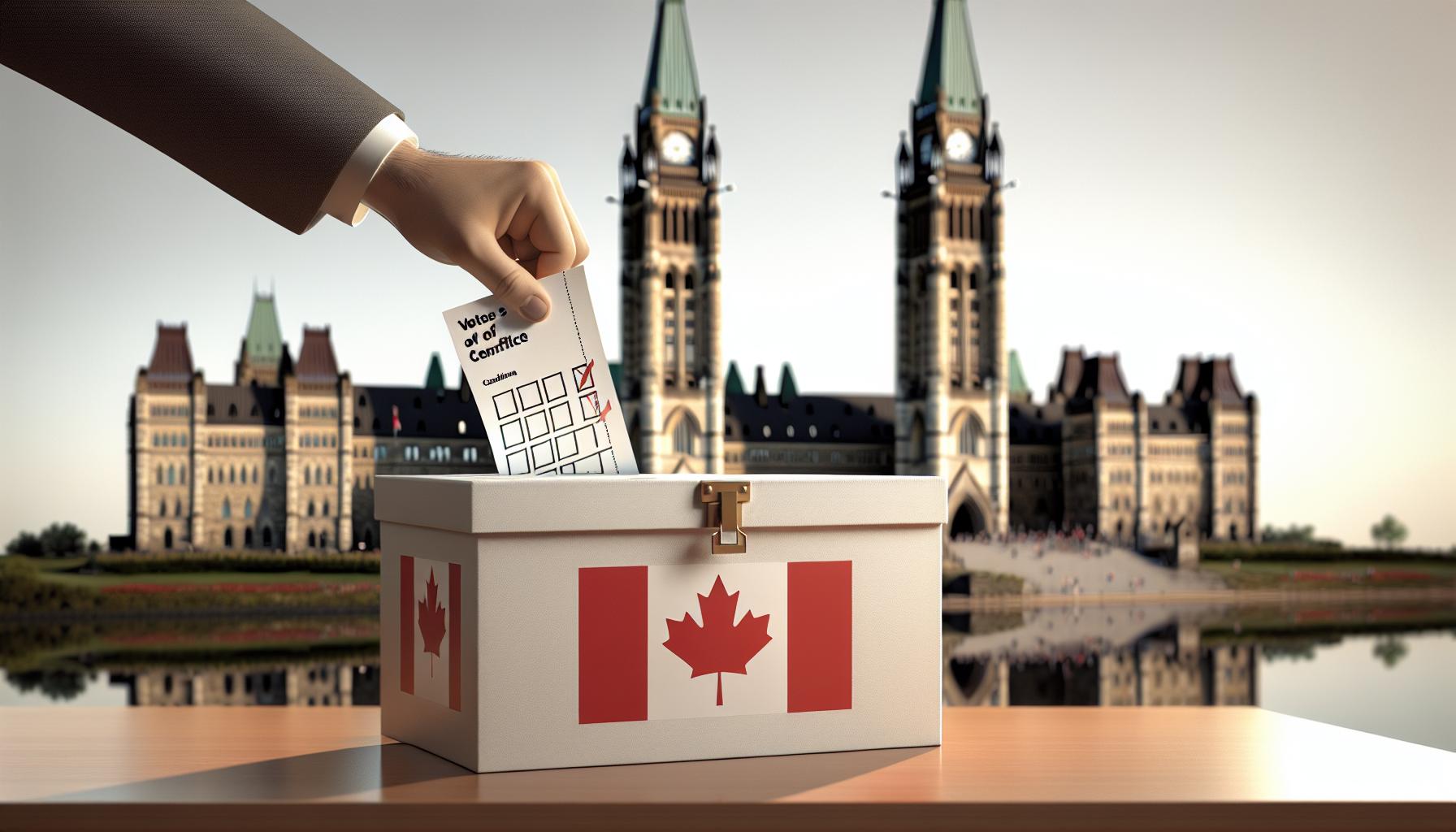
Votes of no confidence are among the most pivotal moments in Canadian parliamentary politics, acting as a formal mechanism through which elected representatives express their trust-or lack thereof-in the sitting government. Far from being merely symbolic, these votes can trigger fundamental changes, including the fall of a government or the calling of an election. They are most frequently enough used by the opposition to challenge the government’s legitimacy or to capitalize on political vulnerabilities, especially in minority parliament situations where the ruling party does not hold a clear majority.
At its core, a no-confidence vote asks members of Parliament to decide if they continue to support the Prime Minister and the governing party’s ability to lead. If the government fails to secure a majority, it indicates a loss of parliamentary support, presenting an urgent need for political change.This process underscores the accountability inherent in Canada’s Westminster-style democracy, where governments must consistently maintain the confidence of the House of Commons to govern effectively. For voters and political watchers alike, understanding this process is crucial, as it directly influences national policies, stability, and governance.
How No Confidence Votes Work in Practice
- Triggering a Vote: These votes can be initiated by opposition parties or,particularly in minority governments,may arise as a result of failed key legislation identified as confidence measures,such as budgets or critical policy bills.
- Vote Outcome: A majority vote in favor of no confidence forces the government to resign or request the Governor General to dissolve Parliament, leading to a general election. Conversely, survival affirms the government’s mandate to continue its term.
- Minority vs.Majority Governments: In minority situations, governments must negotiate support from other parties to ensure survival, resulting in more collaborative politics or occasional political deadlock.
By grasping the nature and implications of these votes, citizens gain insight into how Canadian democracy balances stability with responsiveness. Practically, voters should watch for confidence-related debates as they often serve as early signals of upcoming political shifts or elections, allowing them to stay informed and engaged.
Understanding votes of no confidence also equips readers to better interpret news cycles and political rhetoric, especially during turbulent legislative sessions. For instance, recent repeated votes against Prime Minister Justin Trudeau’s government highlight how opposition strategies leverage these measures to apply pressure and test the government’s resilience in Parliament, often shaping both public discourse and legislative priorities [[1]](https://www.barrons.com/news/canada-s-trudeau-survives-third-no-confidence-vote-954145c4?gaa_at=eafs&gaa_n=AWEtsqfO0oaRdMd5Xq4jMyVVhW-VaymRll5ecKzUaspHefivwi9uZ_n_AVlb&gaa_ts=69057fac&gaa_sig=I-ZYDm9_uVWSt-hJCwsrIFRnldql-n5pEHuHUOeIG4K4pGlwl6ygjUDXO79VFAz9_y5fBuSSuFdQy9RCoziD2Q%3D%3D). Being aware of this dynamic enriches electoral participation and fosters a deeper appreciation for the checks and balances operating within Canada’s parliamentary system.
The Most Recent Vote of No Confidence Explained

One of the most dramatic moments in recent Canadian politics occurred when Prime Minister Justin Trudeau’s government faced a no-confidence vote that tested the durability of his minority governance. This latest challenge, driven primarily by the opposition Conservatives, centered around pressing national issues including affordable housing, the high cost of living, and concerns over crime – all hot-button topics that resonate deeply with Canadians today. Despite the intensity of the debate and the political stakes, Trudeau successfully survived the motion, demonstrating his government’s ability to maintain crucial parliamentary support even under sustained pressure.
This vote was emblematic of the strategic use of confidence motions in minority governments, where the ruling party does not hold a guaranteed majority and thus must carefully manage alliances and negotiations. Trudeau’s survival was in large part due to the backing of the New Democratic Party (NDP), whose leader Jagmeet Singh made clear that his party would not endorse the Conservative motion. This alliance underscores how minority governments often have to form tactical agreements with smaller parties to remain in power and continue governing effectively, highlighting the collaborative yet delicate nature of Canadian parliamentary democracy [[1]](https://www.bbc.com/news/articles/cp8mzgr300ko).
Key Factors Behind the vote’s Outcome
- Opposition’s Aim: The opposition Conservatives tabled the no-confidence motion as a political tool to spotlight and challenge the government’s perceived shortcomings on key public concerns, attempting to galvanize wider disapproval and force an election.
- Government’s Response: Trudeau’s Liberals leveraged their partnership with the NDP, combining political negotiation with messaging that emphasized ongoing commitment to improving Canadians’ lives, particularly seniors’ welfare as evidenced by their support for NDP seniors’ legislation.
- Minority Government Dynamics: This vote exemplified how minority governments must continuously build consensus beyond their own caucus,navigating shifting allegiances and public opinion to sustain their mandate.
For citizens following parliamentary developments,this recent vote is a vivid illustration of how no-confidence motions can serve as both a constitutional mechanism and a political strategy. While it did not topple the government,it sent a clear signal that key opposition parties remain vigilant and ready to leverage parliamentary tools to hold the government accountable. Watching these political maneuvers offers valuable insight into how Canada’s democracy balances government stability with accountability and responsiveness to public concerns.
Key Political Players Behind the last Vote
The last no-confidence vote in Canada showcased a dynamic interplay among several influential political figures,each bringing their own motivations and strategies to the parliamentary showdown. At the heart of the confrontation was Prime Minister Justin Trudeau, whose Liberal government has been navigating the complexities of minority governance as the 2021 federal election. Trudeau’s leadership faced significant scrutiny as opposition parties seized on pressing issues like affordable housing, the rising cost of living, and public safety concerns, all of which directly impact Canadians’ daily lives. His ability to secure backing from key allies was crucial in maintaining power during this politically charged period.
Opposition leader Pierre Poilievre and the Conservative Party played a central role in initiating the no-confidence motion, capitalizing on widespread voter dissatisfaction in certain segments. Poilievre’s strategy was clear: rally support around a motion that painted the Trudeau government as disconnected from Canadians’ realities while pressing for an electoral mandate to replace the incumbent administration. The conservatives aimed to use the confidence vote as both a tactical lever to destabilize the current government and a platform to amplify their policy alternatives on economic and social issues.
A pivotal figure in this political chess game was Jagmeet Singh, leader of the New Democratic Party (NDP), whose party holds a balance of power in the minority parliament. Singh’s decision to withhold support for the Conservative motion was informed by a nuanced assessment of both policy priorities and political stability. By aligning with the Liberals,the NDP not only helped preserve the government but also secured commitments on key legislative proposals,such as seniors’ welfare. This alliance highlights the critical role smaller parties play in Canada’s parliamentary system, especially during no-confidence votes, where their endorsement can determine the government’s survival.
- justin Trudeau (Liberal Party): Incumbent Prime Minister, focused on maintaining a coalition with the NDP to support ongoing legislative agendas.
- Pierre Poilievre (Conservative Party): Opposition leader driving the no-confidence motion to challenge the government’s handling of urgent national issues.
- Jagmeet Singh (New Democratic Party): Crucial smaller party leader whose backing prevented the government from falling and secured influence on policy matters.
For observers and participants in Canadian politics,this episode offers a valuable example of how leadership strategies,party negotiations,and issue framing converge in confidence votes. Understanding the motivations and calculations of each political player involved can deepen appreciation for the delicate balance minority governments must strike to remain effective, particularly amid public pressure and opposition challenges. This dynamic also illustrates the importance of coalition-building and compromise in ensuring both governmental stability and responsiveness to citizen concerns [[1]](https://www.bbc.com/news/articles/cp8mzgr300ko).
historical Impact of No Confidence Votes in Canada
No-confidence votes have punctuated Canadian parliamentary history as critical junctures that expose the fragility and resilience of governance in a minority or deeply divided political context. Far from being mere procedural formalities, these votes have repeatedly reshaped the nation’s political landscape by triggering elections, shifting party strategies, and influencing public trust. The lasting impact of these moments goes beyond the immediate fate of a government, frequently enough setting precedents that affect future parliamentary conduct and coalition dynamics.
Historically, no-confidence votes have functioned as a powerful accountability mechanism within Canada’s Westminster-style democracy. For example, the 1979 no-confidence vote that brought down Joe Clark’s Progressive Conservative minority government abruptly ended his short tenure and lead to Pierre Trudeau’s return to power. This illustrates how such votes can serve as critical tests of a government’s ability to command majority support and maintain unity among diverse parties. More recently, in times of tight parliamentary margins, smaller parties like the new democratic Party (NDP) have wielded disproportionate influence by choosing whether to support or oppose the ruling government, effectively controlling its survival. This dynamic underscores a key lesson: in Canada’s minority governments, political survival often hinges on delicate negotiation and coalition-building rather than sheer numerical dominance.
- Precedent-setting Influence: Many no-confidence votes have established legal and constitutional norms regarding government dissolution and election timing,clarifying processes for future political crises.
- Coalition and Minority Strategy: The survival or fall of minority governments through confidence motions has encouraged parties to craft more collaborative approaches,often leading to formal or informal alliances.
- Public Engagement: These votes tend to heighten public awareness and discourse around government accountability and performance, motivating voters and shaping political narratives.
Understanding the historical impact of no-confidence votes also provides practical guidance for today’s political actors and informed citizens. Governments facing such challenges must strategize beyond immediate vote counts, focusing on policy compromises and messaging to retain critical support. For voters, awareness of past no-confidence triggers and outcomes offers perspective on how these parliamentary tools influence policy direction and democratic stability. Recognizing the broader implications of these votes empowers citizens to better evaluate political maneuvering and hold leaders accountable for their governance.
| Year | Government | Result | Impact |
|---|---|---|---|
| 1979 | Joe Clark (PC) | Government fell | Triggered federal election; Trudeau returned |
| 2005 | Paul Martin (Liberal) | Government fell | prompted early election; Conservatives took power |
| 2023-2025 | Justin trudeau (Liberal) | Government survived multiple attempts | Highlighted coalition strength and minority resilience |
By placing the latest no-confidence vote within the continuum of Canadian political history, it becomes evident how such votes reflect both continuity and change. These events offer valuable lessons about the interplay between parliamentary rules, party strategy, and constitutional governance, illuminating why no-confidence votes remain pivotal moments of political drama and transformation in Canada’s democracy.
how Votes of No Confidence Shape Canadian Governments
Votes of no confidence do far more than threaten a government’s immediate survival; they actively shape the way Canadian governments operate and strategize, especially in minority or coalition contexts. These votes act as pivotal pressure points that compel governments to maintain careful alliances, promote policy responsiveness, and prioritize broad-based negotiation skills over unilateral decision-making. For example, the numerous no-confidence attempts faced recently by Justin Trudeau’s Liberal government have underscored the necessity of cultivating effective partnerships with smaller parties like the NDP, whose support often becomes decisive in sustaining government stability[[[2]](https://www.barrons.com/news/canada-s-trudeau-survives-third-no-confidence-vote-954145c4)[[[3]](https://www.bbc.com/news/articles/cp8mzgr300ko). This dynamic encourages governments to craft policy agendas that can garner cross-party appeal, melding ideological differences into pragmatic solutions.
Strategic Adaptation within Minority Governments
Minority governments operate under a constant cloud of uncertainty,where every legislative move is assessed not just on policy merits but on its political viability with other parties.Votes of no confidence sharpen this reality by holding governments accountable for both their legislative priorities and their relational capital in the House of Commons. Consequently, governing parties often embrace a more conciliatory tone, actively negotiating amendments or incorporating opposition priorities to avoid the risks associated with confidence motions. this environment fosters a culture of collaboration, albeit one born out of necessity, where compromise becomes a tool for survival rather than just an ideal.
Practical lessons from Recent Confidence votes
Recent votes in the Canadian Parliament illustrate practical steps governments take to withstand confidence challenges:
- Building Formal and informal Alliances: Governments often negotiate confidence-and-supply agreements or other arrangements to secure the necessary votes without forming full coalitions.
- Responsive Policy-making: Signs of responsiveness-such as incorporating opposition agenda points or adjusting budget priorities addressing cost-of-living, housing, or public safety-can sway uncertain members.
- Managing Public Messaging: Governments refine interaction strategies to frame confidence votes not just as political battles but as moments for public accountability and trust-building.
These actions demonstrate a clear recognition that surviving a no-confidence vote requires more than mere vote counting; it involves nuanced political engagement and active governance that respects both parliamentary norms and public expectations.
Long-Term Influence on Parliamentary Culture
Beyond immediate consequences,repeated confidence challenges contribute to shaping Canada’s parliamentary culture. They reinforce the principle that governments must consistently command the House’s confidence to govern effectively, thereby legitimizing the role of smaller parties and encouraging institutional mechanisms for dispute resolution. Over time, this fosters a political environment where negotiation, rather than confrontation alone, becomes the norm. It also sets precedents that influence future governments’ behavior, encouraging them to remain vigilant about their parliamentary standing and to proactively engage with diverse political voices.
| Aspect | Effect on Government Behavior |
|---|---|
| Policy Development | More inclusive and consensus-oriented to secure cross-party support |
| Interparty Relationships | Increased negotiation and coalition-building efforts |
| Public Communication | Strategic framing of confidence votes as tests of legitimacy and accountability |
| Parliamentary Norms | Strengthened emphasis on maintaining House confidence and minority government resilience |
In sum, votes of no confidence go well beyond triggering immediate political crises; they actively mold how Canadian governments approach leadership, collaboration, and public accountability. Recognizing this multifaceted impact helps citizens and political actors alike understand why these parliamentary mechanisms remain essential pillars of Canada’s democratic fabric.
Procedures and Consequences Following a No Confidence Vote

A vote of no confidence in Canada’s Parliament marks a critical juncture, triggering a well-defined series of procedural steps that have profound political implications. When a government fails to secure the confidence of the House of Commons, it effectively signals a loss of parliamentary legitimacy, which typically leads to either the resignation of the government or the dissolution of parliament. This mechanic ensures that the executive remains answerable to elected representatives, maintaining the fundamental democratic principle of responsible government.
Upon such a vote, the governor General – Canada’s representative of the Crown – plays a pivotal constitutional role. Traditionally, the Governor General may invite the leader of the opposition or another viable party leader to form a government if they can command the confidence of the House. Alternatively, the Governor General may dissolve Parliament on the Prime Minister’s advice, leading to a general election. This decision balances democratic continuity with the practical realities of parliamentary arithmetic, where minority governments often require cross-party cooperation to maintain their mandate.
Practical Implications and Tactical Responses
Governments facing confidence votes often engage in intense behind-the-scenes negotiations, seeking to shore up support through legislative concessions or formal confidence-and-supply agreements.The recent no-confidence votes against Prime Minister Justin Trudeau’s government exemplify this dynamic, where survival depended on bridging policy demands with the New Democratic Party (NDP) and other smaller groups. These interactions often include:
- Negotiating Priority Legislation: Governments may accelerate or modify bills or budgets flagged as confidence matters to satisfy opposition concerns.
- Timing Political Decisions: Choosing whether to fight the motion or preempt it via dissolution can be a strategic art motivated by public opinion and parliamentary composition.
- Managing Public Messaging: Framing the stakes of a vote of confidence to the electorate is crucial, frequently enough highlighting the government’s vision for stability or contrasting it against opposition alternatives.
These tactical behaviors underscore that votes of no confidence are more than procedural hurdles; they test a government’s ability to steward alliances and respond to shifting political landscapes.
Consequences Beyond the Vote
The aftermath of a no-confidence vote goes beyond immediate government survival. A successful vote can precipitate an election that reshapes the political map, alters party dynamics, and influences policy directions. Even when a government survives, repeated confidence challenges often prompt internal recalibrations, risk-averse legislative agendas, and increased outreach to opposition members. For instance, survival of the latest no-confidence motions against the Trudeau administration has underscored the fragile nature of minority governance and the premium placed on ongoing coalition-building [[1]](https://www.lemonde.fr/en/international/article/2024/09/26/canada-pm-trudeau-survives-no-confidence-vote-remains-on-thin-ice_6727279_4.html)[[[2]](https://www.barrons.com/news/canada-s-trudeau-survives-third-no-confidence-vote-954145c4).
| Event | typical Outcome | Impact on Government Strategy |
|---|---|---|
| Vote of No Confidence Passed | Government resignation or parliamentary dissolution and elections | Potential leadership change, re-election campaigns, policy overhaul |
| Vote of No Confidence Defeated | government continues in office | More cautious policy-making, reinforced alliances, public reassurance efforts |
Understanding these procedures and outcomes equips citizens, political observers, and stakeholders with a clearer view of how no-confidence votes shape governance and democratic accountability in Canada.
Public and Media Reactions to Canada’s Political showdowns

The recent vote of no confidence against Prime Minister Justin Trudeau’s government ignited a flurry of activity not only within the halls of Parliament but also across Canadian media and among the public. Such political showdowns tend to capture national attention, as they spotlight the precarious balance of power inherent in a minority government. Media outlets quickly analyze every angle-from political maneuvers to policy implications-crafting narratives that influence public understanding and engagement with the democratic process. The heightened coverage often serves as an unofficial barometer of public sentiment,reflecting broader concerns about governance,stability,and future direction.
Media Narratives and Public Sentiment
News organizations and political commentators commonly zero in on the drama of confidence votes, highlighting the stakes involved and the strategies of key political players. For instance, the latest no-confidence motion against Trudeau was framed in many quarters as a critical test of leadership amid challenges like housing affordability and crime-issues resonating deeply with voters. Concurrently, the media’s role in contextualizing opposition party tactics, such as the NDP’s decision to support the government despite Conservative pressure, helps the public interpret the importance beyond simple victory or defeat. understanding these dynamics can definitely help citizens critically assess headlines and soundbites rather than being swayed by partisan spins.
How Citizens Can Engage constructively
In times of political turbulence, public reactions often range from frustration to active participation. For individuals seeking to stay informed and involved, it’s vital to:
- Consult diverse news sources: Engage with multiple perspectives to grasp the full political landscape rather than relying on a single outlet.
- Focus on policy impacts: Consider how the outcomes of such votes affect concrete issues like healthcare, housing, and economic stability.
- Participate in dialog: Use community forums, social media, and civic groups to discuss and share insights, helping foster a more nuanced public discourse.
This proactive approach not only deepens understanding but also encourages a healthier democratic culture, where voters hold decision-makers accountable with informed expectations.
Lessons from Media Coverage Patterns
The extensive spotlight during confidence votes reveals the power of media framing in shaping political narratives. Such as, framing a no-confidence vote as merely a “political stunt” risks trivializing critical democratic processes, while emphasizing it as a litmus test for government legitimacy can raise public awareness about parliamentary accountability.Recognizing these framing choices equips readers to critically navigate information and avoid knee-jerk reactions. additionally, journalists’ focus on behind-the-scenes negotiations highlights the complexity of minority governance, putting a human face on the often opaque procedural battles that determine Canada’s political fate.
Ultimately, public and media reactions during such showdowns underscore the vital connection between parliamentary processes and citizen engagement, illustrating democracy in action at its most visible and consequential moments[[[3]](https://www.bbc.com/news/articles/cp8mzgr300ko) [[1]](https://www.canada.ca/en/privy-council/corporate/transparency/briefing-documents/prime-minister-2025/opening-parliament.html).
Comparing No Confidence Votes: Canada vs. Other Democracies

Votes of no confidence are pivotal moments that test the stability and legitimacy of governments worldwide, but the way they function can vary significantly between countries. In Canada,these votes are deeply embedded in the parliamentary system and often reflect the delicate balance required in minority governments,like the recent challenges faced by Prime minister Justin Trudeau’s administration. Unlike some other democracies where no confidence votes might be rarer or purely ceremonial, in Canada they carry real consequences that can swiftly trigger elections or force government reconfigurations.
One key difference lies in the frequency and political context surrounding no confidence motions. In Canada’s Westminster-style parliamentary system, minority governments depend heavily on the cooperation of smaller parties or opposition blocs; therefore, no confidence votes tend to be more common, serving as a practical check on government performance. For example, the recent third no-confidence vote against Trudeau’s minority government underscores how opposition parties can leverage parliamentary tools to influence policy and governance without promptly dissolving Parliament or creating election campaigns[[1]](https://www.barrons.com/news/canada-s-trudeau-survives-third-no-confidence-vote-954145c4). By contrast, countries with presidential systems, such as the United States, do not use no-confidence votes as a mechanism to remove the executive, which is instead subject to impeachment processes-reflecting a more separated powers structure.
Systemic Differences That Matter
- Parliamentary vs. Presidential Systems: Parliamentary democracies like Canada, the UK, and Australia leverage confidence votes as critical accountability tools where the executive is directly accountable to the legislature. In presidential democracies, like the US or brazil, executives are typically fixed-term and removed only through impeachment, making no confidence votes non-existent.
- Coalition Dynamics: Countries with multiple parties and proportional portrayal,such as Germany or the Netherlands,often see frequent coalition negotiations and confidence votes,sometimes resolving by policy concessions rather than elections.Canada’s first-past-the-post system combined with minority parliaments creates a somewhat distinctive environment where confidence votes become intense political gambits.
- Consequences of a Failed Vote: In Canada, a successful no confidence vote traditionally leads to either the resignation of the government or a dissolution of Parliament followed by new elections.In contrast, some systems allow choice coalitions to form without triggering elections, providing a way to avoid voter fatigue while maintaining government stability.
These differences offer Canadian voters and observers practical insights into the nature of political accountability in their country. if you seek to understand what a no confidence vote means for canada compared to other places, consider how the vote serves both as a barometer of political stability and as a procedural tool to either renew or reshape governance. Recognizing that Canada’s use of confidence votes is more active and consequential highlights why such votes capture national attention and can impact everyday policy areas-from economic strategy to social programs.
understanding this international perspective also equips citizens to better evaluate media framing and political discourse surrounding confidence votes. When Canadian media portray these votes as fraught with risk or political brinkmanship, comparing them with similar proceedings internationally can temper perceptions, showing a balance between political contestation and democratic process. This awareness empowers readers to discern not just who wins or loses a vote, but the broader implications for democratic health and government responsiveness.
| Aspect | Canada | United Kingdom | United States |
|---|---|---|---|
| Government System | Parliamentary (Westminster) | Parliamentary (Westminster) | Presidential (Separation of Powers) |
| Frequency of No Confidence Votes | Occasional, especially under minority governments | Occasional, similar parliamentary context | None (impeachment used instead) |
| Outcome of Successful vote | Government resignation or election | Government resignation or election | Not applicable |
| Role in Political Stability | High; key check on minority governments | High; key check on minority governments | Low; no confidence motion not used |
By grasping these cross-national contrasts, Canadians can appreciate the unique pressures and democratic safeguards their system offers, making no confidence votes both a tool of political accountability and a reflection of the evolving will of Parliament and the electorate. This depth of understanding makes it easier to see recent no confidence votes not just as partisan battles but as integral components of Canada’s broader democratic health[[[2]](https://www.lemonde.fr/en/international/article/2024/09/26/canada-pm-trudeau-survives-no-confidence-vote-remains-on-thin-ice_6727279_4.html).
What the last Vote Means for Future Canadian Politics
The recent survival of Prime Minister Justin Trudeau’s government amid multiple no-confidence votes signals a continued period of political fragility but also resilience within Canada’s parliamentary system. These recurring confidence challenges illustrate a climate where minority governments must carefully negotiate and maintain alliances, frequently enough with smaller parties like the NDP, to avoid triggering elections. For Canadians, this ongoing political tightrope walk means that future governance will likely involve more strategic collaboration, policy compromises, and heightened sensitivity to opposition pressures.
Moving forward, political actors in Canada must recognise that no-confidence votes are more than symbolic gestures-they serve as real tests of government legitimacy and can shape legislative priorities. Governments operating in minority or near-minority contexts will increasingly need to engage in active dialogue and coalition-building,ensuring that key policy initiatives address the concerns that opposition parties and the electorate raise. This dynamic could foster a more inclusive governmental approach but might also slow decision-making processes,emphasizing consensus over unilateral agendas.
Practical Implications for Political Strategy
- Heightened negotiations: Expect intensified bargaining with opposition parties to secure vital votes on legislation and budgets, making political pragmatism essential.
- Policy Responsiveness: Governments might prioritize popular, broadly supported policies to reduce the likelihood of confidence challenges linked to public dissatisfaction.
- Media and Public Engagement: managing public perception will be crucial, as no-confidence votes attract significant media attention that can influence voter sentiment and party standings ahead of future elections.
The emphasis on survival through multiple no-confidence votes also redefines how Canadians and observers should interpret political stability. Rather of viewing such votes strictly as signs of imminent government collapse, they can be understood as pressure valves within the system that encourage accountability and constant refinement of leadership approaches. This phenomenon enriches Canadian democracy by fostering transparency and ongoing responsiveness to public and parliamentary scrutiny.
In essence, the recent vote outcomes suggest that while political uncertainty may persist, they also provide opportunities for renewal and adjustment, allowing governments to recalibrate their strategies without immediate disruption. For voters and policymakers alike, staying informed about these dynamics empowers more nuanced engagement-whether it’s advocating for policy shifts, supporting coalition initiatives, or preparing for the timing and context of upcoming elections[[[2]](https://www.bbc.com/news/articles/cp8mzgr300ko)[[[3]](https://www.barrons.com/news/canada-s-trudeau-survives-third-no-confidence-vote-954145c4).
FAQ
Q: How do opposition parties trigger a vote of no confidence in Canada?
A: Opposition parties typically trigger a vote of no confidence by introducing a formal motion in the House of Commons,challenging the ruling government’s legitimacy. This motion forces a parliamentary vote that can lead to a government collapse if passed. For deeper insight, see the section on *Procedures and Consequences Following a No Confidence Vote* in the main article.
Q: What are the immediate political effects if a no confidence vote passes in Canada?
A: If a vote of no confidence passes, the government must resign or request the Governor General to dissolve Parliament, triggering a federal election. this process ensures democratic accountability and can shift power dynamics quickly. Learn more in *How Votes of No Confidence Shape canadian Governments*.
Q: Why do minority governments face more no confidence votes in Canada?
A: Minority governments lack a majority in Parliament, making them more vulnerable to no confidence votes because opposition parties can unite to challenge them. This dynamic creates a fragile balance, frequently enough leading to political instability and frequent challenges. Explore this in *The Most Recent Vote of No Confidence Explained*.
Q: How does the Canadian political system compare with other democracies regarding no confidence votes?
A: Canada’s Westminster-style system allows for relatively straightforward no confidence motions to remove governments, similar to the UK, but differs from presidential systems like the U.S. where no votes of confidence don’t exist. For detailed parallels, check *Comparing No confidence Votes: Canada vs.Other Democracies*.
Q: What role do smaller parties like the NDP play in no confidence votes?
A: Smaller parties frequently enough hold the balance of power in minority parliaments and can decide the fate of confidence votes by supporting or withdrawing support from the government, as seen in the recent vote after the NDP’s withdrawal. Read more in *Key Political Players Behind the Last Vote*.
Q: How often have no confidence votes led to early elections in Canadian history?
A: No confidence votes have historically led to early elections several times, particularly during periods of minority governments. These votes ensure government accountability but also contribute to political cycles.Review the *Historical Impact of No Confidence Votes in Canada* for examples.
Q: What strategies do governments use to survive upcoming no confidence motions?
A: Governments frequently enough negotiate with opposition or smaller parties, make policy concessions, or call for public support to survive no confidence motions. Effective communication and alliance-building are key strategies highlighted in *Public and Media Reactions to Canada’s Political Showdowns*.
Q: What are the long-term political implications of surviving a no confidence vote in canada?
A: Surviving a no confidence vote can temporarily stabilize a government but usually signals underlying vulnerabilities that impact public trust and future political negotiations. This influences government strategy and election timing, discussed in *What the Last Vote Means for Future Canadian Politics*.
—
*For more detailed explanations and context, explore the full sections in the main article.Stay informed on Canada’s political landscape as these dynamics continue to unfold.*
To Conclude
Understanding the last vote of no confidence in Canada offers valuable insight into the country’s political dynamics and governance stability. If you’re curious about how such political events influence Canadian policy or want to explore other pivotal moments in Canada’s parliamentary history, be sure to check out our in-depth analyses on Canadian political milestones and government accountability mechanisms. Staying informed about these critical events empowers you to grasp the broader implications for Canada’s future.
Don’t miss out on our newsletter for timely updates on political developments and expert commentary that keeps you ahead of the curve. If you have questions or perspectives on recent parliamentary votes, join the conversation in the comments below-we value your insights and encourage lively, respectful discussion. For deeper exploration, our resources on parliamentary procedure and political strategy will guide you through complex topics with clarity and confidence, helping you navigate Canada’s evolving political landscape with authority.


