

Canada’s political landscape is buzzing with speculation about a possible vote of no confidence-a parliamentary motion that could dramatically reshape the country’s leadership. Understanding what triggers such a vote and its potential consequences is crucial for anyone interested in Canadian politics or how governance stability impacts everyday life.With national debates and global uncertainty in the background, this topic connects deeply to citizens’ concerns about political accountability and government direction. Whether you’re a casual observer or a political enthusiast, exploring the rumors around a vote of no confidence offers valuable insight into how power shifts might unfold. Dive in as we separate fact from fiction and examine what this significant parliamentary action could mean for Canada’s future.
Table of Contents
- Understanding the Vote of No Confidence Explained
- Historical Precedents of Canadian No Confidence Votes
- Current Political Climate and Key Players Involved
- Legal Procedures Behind a Vote of No Confidence
- Potential Triggers for a No confidence Motion Today
- impact of a No Confidence Vote on Canadian Governance
- How Political Rumors Influence Public Perception
- Media’s Role in Amplifying no confidence Speculation
- Comparing Canada’s Process with other Democracies
- Possible Outcomes if a Vote of No Confidence Passes
- Public opinion and Polls Regarding Government Stability
- Preparing for Election Scenarios Post No Confidence
- FAQ
- Q: How can rumors about a vote of no confidence impact Canadian politics even if no vote occurs?
- Q: What role do opposition parties play in triggering a vote of no confidence in Canada?
- Q: Why might a government choose to avoid calling a confidence vote even amid political pressure?
- Q: How does a vote of no confidence influence Canada’s international relations and economy?
- Q: What signs in parliamentary debates or government actions suggest an impending no confidence vote?
- Q: Can a vote of no confidence in Canada be called unexpectedly, or is it usually preceded by clear warnings?
- Q: How do political rumors about a no confidence vote spread,and how can citizens verify their accuracy?
- Q: What impact do public opinion polls have on decisions related to a no confidence vote in canada?
- in Summary
Understanding the Vote of No Confidence Explained
A vote of no confidence is one of the most potent parliamentary tools available to legislators, capable of dramatically reshaping a government’s trajectory. At its core, this vote serves as a formal expression that the current government no longer commands the support of the majority in the House of Commons. Unlike regular elections, which are scheduled and predictable, a no confidence vote can be called at any moment political tensions reach a boiling point, introducing an element of unpredictability and urgency into the political landscape.Understanding how this mechanism works requires recognizing its role in maintaining the principle of responsible government. When a government loses confidence, it essentially signals that it cannot effectively govern, whether due to poor leadership, scandal, policy failures, or shifting alliances within the legislature. In practical terms, a prosperous no confidence vote compels the Prime Minister to either resign or request the Governor General to dissolve Parliament, triggering a federal election.This process underscores a foundational aspect of canadian democracy: that the executive branch must continuously retain parliamentary support to remain in power.
How Does a Vote of No Confidence Function in Practice?
It begins with a motion, typically introduced by the opposition or dissenting members within the governing party, explicitly stating that the House has lost confidence in the government. While any motion can theoretically serve as a no confidence motion, there are two main types most commonly recognized:
- Explicit Motions: A direct statement declaring no confidence in the government.
- Implicit Motions: Often linked to critical votes on budgets (supply bills) or major legislative priorities, where defeat effectively signals no confidence.
If the House votes against the government by a majority, the consequences are immediate and constitutional. The government either steps down or triggers an election, allowing voters to decide the next course. This structure ensures that the executive branch remains accountable to elected representatives and, by extension, to the Canadian public.
Why It Matters to Canadians Today
For everyday citizens, understanding this process is crucial because the outcomes of no confidence votes influence policy direction, political stability, and the timing of elections. In times of political uncertainty or minority governments, rumors of looming no confidence motions are often rife, fueling public debate and media speculation. Recognizing the formal criteria and political realities behind these votes helps Canadians better interpret political developments and evaluate the credibility of such rumors.
In short, a vote of no confidence is more than just parliamentary procedure-it is a powerful democratic check designed to keep government leadership responsive, accountable, and aligned with the will of elected representatives. By grasping this, voters can stay informed about how their governance might change before the next scheduled election, empowering them to engage with political events thoughtfully and proactively.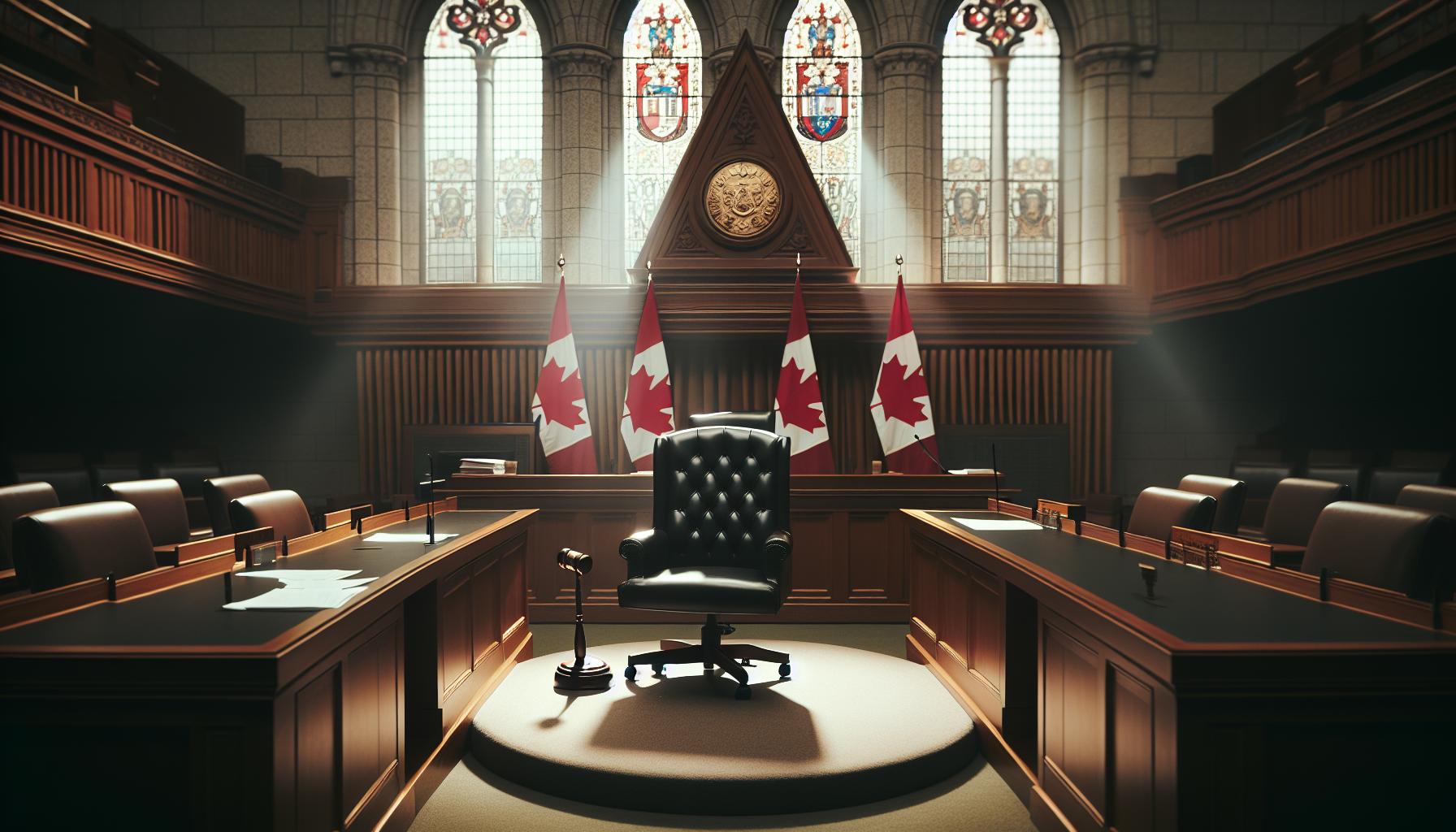
Historical Precedents of Canadian No Confidence Votes
Few parliamentary actions in Canadian history have wielded as much immediate political outcome as a successful vote of no confidence. This mechanism, while infrequent, has punctuated Canada’s political timeline with moments that forced sudden elections, shifts in leadership, and changes in policy direction-demonstrating the true power of parliamentary accountability in action. Understanding these precedents equips citizens and observers with insight into how no confidence votes have shaped governance and underlines the seriousness behind current political rumors about such motions.
Throughout Canada’s political history, no confidence votes have frequently enough arisen during periods of fragile minority governments or intense partisan conflict. For example, the 1979 no confidence vote that toppled the Progressive Conservative minority government under Joe Clark remains one of the most pivotal. After clark’s government lost a budget vote-an implicit vote of no confidence-it triggered a federal election that returned Pierre Trudeau’s Liberals to power. This event showcased how contentious fiscal decisions and a lack of parliamentary majority can create vulnerability for a government, a dynamic that persists in minority government situations today.
More recently, Canadian Prime Minister Justin Trudeau’s minority government survived multiple no confidence motions, illustrating the delicate balancing acts leaders face in maintaining support. Between 2023 and 2024, Trudeau’s government fended off at least three separate no confidence votes, underscoring the opposition’s strategy to challenge his leadership amid declining approval ratings, and highlighting the role of allied parties such as the NDP who choose whether to support or oppose these motions based on policy alignments [[1]](https://www.readersdigest.ca/culture/vote-of-no-confidence/) [[2]](https://www.youtube.com/watch?v=2xMrOIs2qMc) [[3]](https://www.bbc.com/news/articles/c93pg0gnkvxo). This recent string of votes illuminates how no confidence motions can become tactical tools not onyl to unseat governments but to leverage political negotiations.
Lessons from History
- minority governments are most vulnerable: Without an outright majority, governments must negotiate and compromise; failing to do so increases the risk of losing confidence.
- budget and supply votes matter greatly: While some motions explicitly call for no confidence, budgets and key supply bills often function implicitly as confidence tests-their defeat typically triggers government collapse.
- Opposition strategy influences timing: Opposition parties carefully weigh when to introduce no confidence motions, often considering public opinion and political stability to maximize impact.
- Alliances with third parties are crucial: In a fragmented House of commons, securing or losing the support of smaller parties can be the difference between survival and being unseated.
Understanding these historical lessons not only sheds light on why no confidence motions arise but also guides citizens in interpreting current political maneuvers and rumors. They reveal that while dramatic, no confidence votes are often the culmination of longstanding parliamentary dynamics rather than sudden outbursts, emphasizing the importance of following both the political discourse and underlying policy battles in Ottawa.
Current Political Climate and Key Players Involved
Political tension in Canada’s current federal landscape is palpable, shaped by a minority government that must continuously navigate a complex web of alliances and opposition pressures. The survival of Prime Minister Justin Trudeau’s administration, having endured multiple votes of no confidence between 2023 and 2024, underscores the precariousness of governing without a clear majority in the House of Commons. This ongoing challenge shapes the strategic behavior of both government and opposition parties, making each parliamentary session a potential battleground for political survival or upheaval.
At the heart of this delicate balance are several key players whose decisions and alliances critically affect the government’s stability. Prime Minister trudeau and his Liberal Party rely heavily on the support of the New Democratic Party (NDP), lead by Jagmeet Singh, whose cooperation has historically been decisive in fending off no confidence motions. The NDP’s willingness to negotiate and collaborate on specific policy priorities frequently enough determines whether the government can secure the necessary votes to stay in power. On the opposition front,the Conservative Party aggressively capitalizes on issues like affordable housing,cost of living,and public safety to rally support for no confidence motions,tho success depends on enticing smaller parties and the NDP’s stance.
Understanding the motivations and agenda of these political actors helps citizens interpret why rumors about votes of no confidence surface and evolve. Such motions are not merely expressions of dissent but tactical tools used to exert pressure, prompt concessions, or set the legislative agenda. In a fragmented parliament, even minor shifts in party support can tip the scales, making the roles of smaller parties and independent MPs especially significant. For voters and observers, paying attention to public statements, party negotiations, and parliamentary debates offers insight into whether a no confidence vote is looming or if the government is maneuvering to maintain its foothold.
Key Political Influences and Practical Considerations
- Coalition dynamics: The interplay between Liberals, NDP, and smaller parties like the Bloc Québécois shapes confidence outcomes.
- Opposition strategy: Conservatives and othre opposition parties time no confidence motions to maximize political leverage, especially when public dissatisfaction is high.
- Issue focus: Economic pressures, housing affordability, and crime rates form the core disputes fueling debates over government legitimacy.
- Public messaging: Leaders use votes of no confidence as platforms to appeal to voters and frame narratives ahead of possible elections.
By grasping these dynamics,readers gain a clearer picture of the political chessboard beyond surface rumors,enabling more informed judgment on the stability and direction of Canada’s current government.[1] [2] [3]
Legal Procedures Behind a Vote of No Confidence
A vote of no confidence is one of the most significant parliamentary procedures in Canadian governance, serving as a formal mechanism through which the House of Commons can express its disapproval of the sitting government. What makes this process compelling is both its straightforward legal basis and the nuanced political context that surrounds it. At its core, a no-confidence motion initiates a critical test of the government’s legitimacy and ability to command the support of a majority of Members of Parliament (mps). When passed, it can swiftly alter the country’s political landscape, triggering either the resignation of the Prime Minister and cabinet or a general election.
Legally, a no-confidence vote can take several forms. It might arise explicitly through a formal motion stating “That this House has no confidence in the government,” or implicitly via defeats on key government business-such as the federal budget, major legislation, or the Speech from the Throne. The Canadian parliamentary system does not require any special procedure to introduce such a motion; any MP can propose it, typically led by an opposition party aiming to challenge the current administration. The Speaker of the House then manages the debate and facilitates the vote, which follows standard parliamentary voting rules.
steps and Practical Aspects of the Procedure
- Introduction: A motion of no confidence is tabled, often accompanied by a statement outlining the government’s alleged failings.
- Debate: MPs debate the motion in the House of commons, providing both government and opposition perspectives. This period is crucial for rallying support or mounting a defence.
- Voting: A simple majority (more than half of MPs present) is required for the motion to pass. The vote is usually conducted by a show of hands or electronic means, depending on the parliamentary setup.
- Consequences: Should the motion be successful, the Prime Minister typically must either resign or request the Governor General to dissolve Parliament, leading to a federal election.
Beyond the formalities,the timing and context of such votes are precisely calculated. Such as,opposition parties might file motions during periods of low government popularity or amid controversies,amplifying political pressure. Conversely, governments frequently enough seek to avoid these votes by negotiating with potential allies or pre-emptively calling elections themselves to renew their mandate before a confidence defeat occurs. A recent illustration involved Prime Minister Justin Trudeau, who survived multiple no-confidence motions despite opposition parties’ aggressive attempts to challenge his leadership-a testament to how complex and strategic these legal procedures can be in practice[[1]](https://www.bbc.com/news/articles/c93pg0gnkvxo) [[3]](https://www.theguardian.com/world/2024/oct/01/justin-trudeau-confidence-vote-house-commons).
Understanding Implicit Confidence Tests
Not all no-confidence events are direct motions. Defeats on critical legislative items are interpreted as confidence losses. Such as, failure to pass the budget (a money bill) is traditionally considered a loss of confidence because it signals that Parliament does not support the government’s fiscal agenda.This indirect path frequently enough provides the government with some tactical adaptability in managing parliamentary support without facing a direct challenge.
| Type of Confidence Test | Description | example |
|---|---|---|
| Explicit No-confidence Motion | A formal motion directly stating no confidence in the government. | Opposition motion led by Conservative Party against Trudeau’s government. |
| Implicit via Key Legislation | Loss of vote on budgets,supply bills,or throne speech. | Failure to pass the federal budget due to opposition votes. |
These legal mechanisms ensure that governments remain accountable and responsive to the evolving will of Parliament, balancing stability with democratic oversight. For citizens and observers,knowing these procedural details helps clarify when political rumors about impending no-confidence votes have a legal foundation or are primarily strategic posturing.
Advice for Observing the Process
If you’re following political developments and want to gauge the likelihood or implications of a no-confidence vote, keep an eye on:
- Parliamentary calendar and order papers: Official notices of intended motions can signal upcoming votes.
- Party press releases and statements: They often prepare the public and their supporters ahead of time.
- Key votes on government priorities: Defeat on major bills can indicate a de facto loss of confidence.
Understanding these legal procedures arms you with a clearer lens to interpret Canadian political news and rumors,distinguishing between tactical brinkmanship and genuine parliamentary crises.
Potential Triggers for a No confidence Motion Today
The decision to initiate a vote of no confidence frequently enough hinges on a combination of political calculation and real grievances. In today’s Canadian political landscape, several tangible issues provide fertile ground for such motions. Pressing public concerns-like affordable housing shortages, the rising cost of living, and crime rates-are frequently spotlighted by opposition parties aiming to portray the governing party as disconnected or ineffective. For example, recent no-confidence motions against Prime Minister Justin Trudeau’s government explicitly cited failures in these areas, seeking to leverage public dissatisfaction into parliamentary leverage[[1]](https://www.bbc.com/news/articles/cp8mzgr300ko).
However, beyond public policy controversies, shifts in inter-party alliances or the withdrawal of support from crucial partners can serve as significant triggers. Canada’s minority governments,such as Trudeau’s,rely heavily on cooperation agreements-like the one with the NDP-to secure parliamentary confidence. Should these alliances fracture due to disagreements on legislation or broader strategic goals, the risk of a no-confidence vote rises considerably.Opposition parties are also known to time their motions to maximize pressure, often waiting for moments when the government’s popularity dips in public opinion polls or amidst political scandals.
practical Triggers and Strategic Timing
- Key Legislative Defeats: Failure to pass crucial bills-especially budgets or supply bills-can implicitly trigger a confidence crisis without a formal motion. Governments usually prioritize avoiding such defeats to prevent automatic loss of confidence.
- Political Scandals or Controversies: Allegations of misconduct or mismanagement highly increase the likelihood of opposition parties tabling no-confidence motions, aiming to capitalize on erosion of public trust.
- shifts in Opposition Dynamics: Opposition parties may coordinate or distance themselves strategically, with internal changes or leadership transitions influencing the timing of confidence challenges.
- Electoral Calculus: Sometimes opposition parties push for votes during periods they assess the governing party is weakest, hoping to force either a government reshuffle or an election on favourable terms.
Real-world Examples and Advice for Observers
In recent months,Trudeau has weathered multiple no-confidence votes despite vigorous Conservative challenges-largely due to maintaining the support of the NDP. Political watchers keen on forecasting no-confidence scenarios should monitor official parliamentary announcements, but also subtler signals such as public statements from coalition partners and responses to hot-button issues like housing and crime. Understanding that some triggers may be less about immediate failings and more about strategic opportunities helps observers distinguish between genuine crises and tactical maneuvers.
By staying attentive to these factors, citizens can better discern when rumors of impending no-confidence votes carry weight and when they serve as political theater-critical knowledge in navigating today’s frequently enough turbulent Canadian parliamentary politics[[1]](https://www.bbc.com/news/articles/cp8mzgr300ko) [[3]](https://www.barrons.com/news/canada-s-trudeau-survives-third-no-confidence-vote-954145c4).
| Potential Trigger | Description | Recent Example |
|---|---|---|
| Public Policy Failures | Critical issues like affordable housing and crime used to challenge government legitimacy. | Conservative no-confidence motions citing government failings in these areas. |
| Loss of Confidence from Coalition Partners | Withdrawal of support from minority government allies destabilizing parliamentary majority. | NDP signaling refusal to support certain opposition motions against Liberals. |
| Defeat on Key legislation | Failure to pass budgets or supply bills implying loss of confidence. | Threatened defeat on federal budgets during heated parliamentary sessions. |
| political Scandals | Controversies or misconduct allegations weakening government standing. | Past no-confidence motions timed around scandals or leadership disputes. |

impact of a No Confidence Vote on Canadian Governance
Few parliamentary actions carry as much weight or political consequence as a successful vote of no confidence. In Canada’s democratic system,such a vote does more than merely express disapproval-it can fundamentally alter the nation’s governance trajectory,forcing either the resignation of the sitting government or the call for a federal election. The ripple effects of this event extend beyond political headlines,impacting policy continuity,party dynamics,and public trust in government institutions.
When a government loses a no-confidence vote, it effectively signals that the elected representatives no longer endorse its mandate to govern. This outcome triggers immediate constitutional and political consequences. Typically, the Prime Minister must either resign, enabling the Governor General to invite another leader who might command the confidence of the house, or advise the dissolution of Parliament to pave the way for a general election. This mechanism ensures that accountability is maintained and that the executive remains responsive to parliamentary will, reinforcing democratic checks and balances.
Governance disruptions and Transitional Challenges
A no-confidence vote can induce significant short-term disruptions. Policy implementation often grinds to a halt as governmental focus shifts towards managing the political fallout and gearing up for potential elections. For example, ongoing budget negotiations or legislative priorities may be postponed or lose momentum, impacting sectors reliant on timely government decisions. Minority governments, like Justin Trudeau’s recent Liberal administration, tend to be especially vulnerable, as maintaining stable coalitions is crucial to passing legislation and securing confidence votes. Despite facing multiple no-confidence challenges, Trudeau’s government has so far navigated these crises largely by retaining critical support from partners like the NDP[[2]](https://www.firstpost.com/explainers/canada-pm-justin-trudeau-survives-first-no-confidence-vote-why-his-liberal-government-still-not-secure-13819181.html).
Beyond domestic policy disruptions, the political climate following a no-confidence loss can be unstable and uncertain.Opposition parties may jockey for position, leveraging the crisis to gain influence or to push for leadership changes. At the same time, governing parties confront internal pressure to rebrand or reorganize to regain public confidence.This environment can breed legislative gridlock until a new government is installed, potentially eroding public faith in political institutions if protracted.
Long-Term Political and Public Implications
The broader impact of such a vote frequently enough extends to public perception and political narratives. A government’s failure to maintain confidence may fuel narratives of incompetence or division, which opposition parties exploit to galvanize voter support. Conversely, governments that survive no-confidence motions-even narrowly-may gain a temporary boost, presented as having overcome a significant test of legitimacy. The media plays a key role here,often amplifying rumors and speculation around confidence votes,shaping public opinion and political momentum before the parliamentary event itself unfolds.
For voters and political observers, understanding these dynamics is essential. A no-confidence vote is not simply a parliamentary formality; it signals a pivotal juncture with tangible consequences-from the immediate threat of an election to the reshaping of alliances and policy priorities. Citizens interested in Canada’s political stability should monitor how leaders manage parliamentary support, the cohesion of minority government coalitions, and public responses to ongoing policy challenges, as these factors collectively determine the likelihood and impact of such votes.
- For politicians and parties: Maintaining open interaction with coalition partners and managing legislative priorities carefully can prevent surprise confidence losses.
- For voters: Engaging with credible sources and following parliamentary developments closely can help distinguish between mere political posturing and genuine shifts in governance.
- For media and analysts: Responsible reporting that contextualizes rumors without sensationalizing contributes to an informed electorate and reduces unnecessary political instability.
In essence, a no-confidence vote is a powerful constitutional tool that upholds parliamentary democracy but also brings significant governance challenges. Navigating its consequences requires strategic foresight, political resilience, and an informed public to ensure Canada’s government remains effective and accountable in the face of shifting political tides.
How Political Rumors Influence Public Perception
Political rumors surrounding votes of no confidence have a profound impact on how the public perceives government stability and effectiveness. A single whisper or speculative media report can escalate into widespread speculation, shaping voter attitudes and even influencing parliamentary behaviour before a formal vote takes place. The uncertainty bred by such rumors tends to magnify public anxiety, frequently enough creating an atmosphere where facts and political realities blur with conjecture and suspicion.
The power of political rumors lies in their ability to fill informational gaps. When official communications are limited or delayed, citizens naturally turn to informal sources such as social media chatter, insider leaks, or partisan commentary. These narratives might emphasize internal party discord, possible defections, or alliances shifting behind closed doors, all of which cast doubt on a government’s ability to maintain confidence.Such speculation can pressure political actors, sometimes provoking pre-emptive actions or defensive positioning within parties as they work to manage both perception and parliamentary strategy.
- Seek reliable and diverse sources: Cross-check rumors against multiple reputable news outlets and official statements to better discern factual developments from political spin.
- Understand the incentives behind leaks: Recognize that leaks often serve strategic purposes-whether to destabilize an opponent or rally internal factions-rather than merely inform the public.
- Maintain critical thinking: Question the timing and origin of rumors, especially when they surface at pivotal moments such as budget discussions or key legislative deadlines.
Political rumors also have the unintended effect of shaping the media agenda. Journalists may feel compelled to “report on the story” even when hard evidence is lacking, amplifying uncertainty and heightening public interest. This cycle can transform speculation into perceived inevitability, nudging public opinion closer to the expectation of a no-confidence vote regardless of actual parliamentary arithmetic. Consequently,political leaders must address rumors proactively with clear,timely communication to reinforce transparency and maintain legitimacy.
One notable example from recent Canadian political history includes moments when opposition parties hinted at no-confidence intentions during budget debates, triggering waves of speculation. While some motions did materialize, others remained mere rumors, yet both scenarios influenced public discourse, prompting political actors and observers alike to reassess the government’s resilience and likely next steps.
Ultimately, understanding how political rumors circulate and affect perceptions empowers voters to remain informed without falling prey to misinformation or undue pessimism. Awareness of the strategic dynamics behind rumor spreading can definitely help citizens better appreciate the complexities of confidence politics and the importance of measured responses during such tumultuous periods.
Media’s Role in Amplifying no confidence Speculation
The media’s role in shaping public discourse around a vote of no confidence is both powerful and complex. News outlets and journalists often find themselves walking a fine line between reporting emerging political developments and unintentionally amplifying speculative narratives. Because no-confidence votes carry significant consequences for government stability, media coverage can quickly escalate rumors into perceived inevitabilities, influencing public sentiment and political behavior even before an official motion appears in parliament.In an environment rife with uncertainty, media organizations may focus heavily on leaks, insider information, and opposition party statements that hint at governmental vulnerability. This can create a feedback loop where speculation drives coverage, and coverage further fuels speculation. For example, during times when opposition parties express dissatisfaction or threaten to push a no-confidence motion-such as opposition Conservatives signaling plans to challenge Prime Minister Justin Trudeau’s government-media coverage tends to highlight these tensions in vivid detail, emphasizing potential outcomes and political drama [[2]](https://www.bbc.com/news/articles/c93pg0gnkvxo). While this coverage keeps the public informed, it can also blur the lines between fact and conjecture.
- evaluate Source Credibility: Distinguish between official statements, verified reports, and opinion pieces. Reliable media often corroborate political rumors with multiple sources before reporting.
- Watch for Sensationalism: Headlines or reports emphasizing “imminent” or “certain” no-confidence votes should be scrutinized, as their intent may be to boost engagement rather than convey certainty.
- Follow Official Channels: Government press releases and parliamentary records provide authoritative updates that can balance informal or speculative media narratives.
Real-world examples reflect this dynamic vividly. In recent Canadian political history, speculations around no-confidence votes have rippled through media cycles, particularly during contentious budget debates or amid fractured opposition coalitions.Sometimes these reports prompt political actors to clarify their positions publicly or adjust parliamentary strategies to manage perceptions. In other cases, the anticipation generated by media coverage alone influences how voters and party members view the government’s strength, potentially shaping electoral strategies well before a formal vote.
Ultimately,the media acts as both informer and amplifier.Readers benefit from approaching coverage of no-confidence speculation with a critical eye and a demand for evidence-backed reporting. By doing so, the public can separate political theater from political reality, preserving a clear understanding of governance processes even in times of heightened political tension.
Comparing Canada’s Process with other Democracies
Few parliamentary mechanisms are as decisive-and as intriguing-as the vote of no confidence. Canada’s system, while sharing roots with other parliamentary democracies, has its distinctive features that affect how and when such motions can shape government stability. Understanding these nuances helps demystify political rumors and clarifies what a no-confidence scenario realistically entails here compared to other countries.
Canada operates under a Westminster-style parliamentary system inherited from the UK, meaning that the government must maintain the confidence of the House of Commons to stay in power. However, the approach to no-confidence motions in Canada often emphasizes procedural clarity and restraint. Unlike some nations where no-confidence votes might be frequent tools of opposition strategy, Canada’s political culture tends toward stability, with governments generally surviving these motions unless faced with significant and broad opposition.
Key Differences in Procedure and Political Culture
- Initiation and Thresholds: In Canada, any member of Parliament can introduce a motion of no confidence, but tradition dictates that such motions should be serious and based on substantive issues like budgets or critical government policies. In contrast, countries like Italy or Spain may experiance more frequent confidence challenges due to fragmented party systems or coalition volatility.
- impact of Party Discipline: Canadian political parties typically exercise strong party discipline, which helps prevent defections during votes of confidence. This contrasts with countries where looser party control might allow more frequent success in bringing down governments through no-confidence votes.
- Timing and Triggers: Certain parliamentary votes, such as the budget or a throne speech, automatically carry confidence implications in Canada, which streamlines processes and reduces ad hoc challenges. Other nations may have less formalized triggers, potentially resulting in more unpredictable government collapses [[2]](https://fiveable.me/key-terms/introduction-comparative-politics/no-confidence-votes).
Lessons from Comparative Practices
Looking globally, some democracies incorporate additional mechanisms that influence how no-confidence votes unfold.For example:
| Country | Unique Feature | Effect on Government Stability |
|---|---|---|
| United Kingdom | No-confidence motions require a simple majority; if passed, the government must resign or seek a dissolution | Relatively straightforward but rarely used due to political norms |
| Germany | Constructive vote of no confidence – opposition must propose a new chancellor to replace the current one | Promotes stability by preventing government vacuums |
| India | Simple majority no-confidence motions; frequent due to multiparty coalitions | Higher political volatility, but often managed through coalition building |
Canada’s system aligns more closely with the UK’s tradition but without a formal constructive vote. This means that while a no-confidence vote can topple a government, there is no immediate requirement for an alternative government to be presented, which sometimes leads to calling a general election.
Practical Advice for Watching Political Rumors
For those tracking political rumors around no-confidence votes, it helps to:
- Understand the context: Recognize whether looming parliamentary votes are routine confidence matters (like budgets) or extraordinary challenges.
- Follow party cohesion cues: Strong party discipline typically signals lower chances of surprise government collapse.
- Compare with global precedents: While dramatic collapses happen elsewhere, canada’s parliamentary culture and legal framework favor continuity.
By appreciating these distinctions, readers can better gauge the plausibility behind media speculation or opposition threats and understand that while no-confidence votes are serious tools, their deployment and consequences vary widely across democracies. Canada’s combination of tradition, procedure, and political culture generally cushions it against frequent or unexpected government toppling, even amidst vigorous political debate.
Possible Outcomes if a Vote of No Confidence Passes
Few parliamentary actions carry as much weight and consequence as a successful vote of no confidence. In Canada,when such a vote passes,it signals a clear message: the governing party no longer holds the majority support of the House of Commons. This political crossroads triggers a constitutional response with several distinct pathways that directly affect the country’s governance and political future.
Immediately following a passed no-confidence motion, the Prime Minister typically faces two primary options. The first is to resign, allowing the Governor General the prospect to invite another political leader who may command the House’s confidence to form a government. Alternatively, the Prime Minister may advise the Governor General to dissolve Parliament, leading to the calling of a federal election. In practice, given Canada’s parliamentary norms, dissolutions and subsequent elections are the more common outcome, marking a significant moment for political renewal and voter engagement.
What Happens During the Transition?
Between the vote and either the formation of a new government or the election, a caretaker government takes charge. This government operates with limited powers, maintaining day-to-day functions but refraining from major policy decisions or appointments. Understanding this phase is crucial for citizens,as it underlines a temporary period of political uncertainty and restrained governance. During this period, political parties frequently enough intensify negotiations, seeking to build coalitions or agreements that could avoid an election or shape the post-election landscape.
Broader Implications for Democracy and Stability
A passed confidence vote doesn’t just represent a procedural shift; it reshapes the political atmosphere nationwide. Elections prompted by no-confidence votes often serve as referendums on the incumbent government’s policies and leadership style. They can lead to significant changes in party dynamics, coalition-building efforts, and public discourse around pressing national issues. For voters and political observers, it’s a moment of heightened engagement and potential volatility, but also opportunity.
As a notable example, recent Canadian political history shows that minority governments frequently enough survive confidence challenges by securing support from smaller parties, but when such collaborations fail, election calls provide a democratic reset. This dynamic reinforces the importance of negotiation skills and alliances within Canada’s parliamentary system-elements that voters should watch closely amid confidence-related rumors and developments.
Practical Advice for Following Developments
- Watch official parliamentary proceedings: Pay attention to the context around key votes-budgets and throne speeches are common confidence motions and highly indicative of government stability.
- Monitor party statements and alliances: shifts in party cohesiveness or public endorsements from smaller parties can signal whether a government might weather or fall to a no-confidence vote.
- Stay informed about the Governor General’s role: Their decisions post-vote, whether to dissolve Parliament or invite another leader, are pivotal and guided by constitutional conventions and political realities.
Understanding these processes and outcomes equips citizens with clarity, helping to distinguish serious political shifts from mere speculation and to anticipate the real consequences that a passed no-confidence vote brings to Canadian governance and democracy.

Public opinion and Polls Regarding Government Stability
Public sentiment often serves as a bellwether for the stability of a government, especially when whispers of a vote of no confidence start to circulate. Polls reveal not only how Canadians perceive their leaders but also how ready they might be to embrace a change in governance. In recent months, surveys have highlighted fluctuating trust levels in Prime Minister justin trudeau’s administration, particularly around pressing issues such as housing affordability, inflation, and public safety.Yet, despite persistent criticisms and Conservative attempts to push no-confidence motions, Trudeau’s Liberals continue to maintain a degree of support-largely due to strategic alliances, notably with the NDP-which acts as a crucial buffer against outright parliamentary defeat[[1]](https://www.bbc.com/news/articles/cp8mzgr300ko).
Dissecting the Poll Trends
Polling data often shows Canadians split on whether a vote of no confidence is a prudent step or a destabilizing ploy. Key demographic groups-such as seniors, urban versus rural voters, and younger electorates-exhibit varied levels of confidence in the current government’s capacity to manage national challenges. Such as, mixed reactions to policies affecting seniors have led to targeted Conservative motions aimed at swaying that voter segment, although such efforts have yet to translate into majority parliamentary support[[1]](https://www.bbc.com/news/articles/cp8mzgr300ko). Understanding these nuances is essential for voters who want to grasp why certain parties might press or resist confidence motions.
How to Interpret Polls Amid political Rumors
While polls provide snapshots of public opinion, they should be viewed as part of a broader political landscape rather than definitive predictors of outcomes. Political rumors about impending confidence votes frequently enough spike interest and speculation, influencing not just voter sentiment but also the behavior of party members and coalition partners. Citizens looking to make sense of these developments should assess polls alongside other factors such as government stability metrics, party cohesion signals, and official parliamentary proceedings. This holistic approach helps differentiate fleeting political posturing from genuine threats to governance.
- Examine trend consistency: Look beyond single polling instances; consistent patterns over weeks offer a clearer sense of public mood.
- Consider regional and issue-specific data: Localized polls and those focusing on specific policy areas provide richer insight into government approval.
- Be cautious of bias and methodology: Check the poll sources, question framing, and sample sizes to ensure reliability.
Ultimately, while polls frequently reveal a government’s current standing in the eyes of the public, the parliamentary arithmetic and political alliances often play the definitive role in whether a no-confidence vote is successful or not. Citizens staying informed through credible polls and official updates can better understand the government’s real prospects of survival amid the ongoing political flux[[2]](https://www.youtube.com/watch?v=2xMrOIs2qMc)[[3]](https://www.barrons.com/news/canada-s-trudeau-survives-third-no-confidence-vote-954145c4?gaa_at=eafs&gaa_n=AWEtsqfRBlyoiPNROX_QVdEs3N0-YYWNzJeRVm3I50r-BeVNrX7VQJhGQdRz&gaa_ts=690346d4&gaa_sig=HdA13uNBPrcDh1VbcoL8GETnjgqbzYtJEElowdIQjjMQ3s6pij_1Wsl_6S0IPRloB7DCv3WYAdJqe4erT7wovQ%3D%3D).
Preparing for Election Scenarios Post No Confidence
The prospect of an election following a vote of no confidence can trigger a cascade of strategic preparations among political parties, candidates, and voters alike.Understanding what unfolds in the aftermath helps citizens navigate the uncertainty and grasp the steps leading up to a potential new mandate for Canada’s government. Elections triggered by no-confidence votes typically come with compressed timelines, requiring swift mobilization from all stakeholders.
Political parties must rapidly pivot from legislative governance to campaigning mode. This involves consolidating messaging that addresses perceived governmental weaknesses exposed by the no-confidence motion.Party leaders often seize this moment to reframe their vision for the country, emphasizing stability, renewal, or reform depending on public sentiment. simultaneously occurring, candidates intensify outreach efforts to key constituencies, focusing on regional issues heightened by the no-confidence context such as economic pressures, healthcare, or social policy effectiveness.
For voters, these scenarios underscore the importance of staying informed about the implications that no-confidence votes carry beyond immediate parliamentary effects. Canadian electorates should watch for newly proposed party platforms and evaluate candidates’ readiness to tackle pressing national challenges. Being proactive in understanding election timelines and requirements-such as voter registration updates and polling station information-is vital to ensure full participation when the election writ is dropped.
Key Considerations for Election Preparedness
- Follow official announcements closely: The Prime Minister, in consultation with the Governor General, sets the date for an election, which must occur within a limited timeframe after a no-confidence vote.
- Assess party alliances and coalitions: Post no-confidence, shifting alliances may form, so tracking which parties collaborate or compete is crucial for anticipating election outcomes.
- Engage with non-partisan election resources: Organizations such as Elections Canada provide thorough and impartial information about voting procedures and deadlines.
- Prepare for rapid political shifts: Given the potentially unpredictable nature of post-no-confidence elections, flexibility in understanding new policy proposals or political dynamics benefits voters and stakeholders alike.
Real-world examples from recent Canadian politics highlight how leaders overcome no-confidence tests and gear up for elections. For instance, Prime Minister Justin Trudeau’s government survived multiple no-confidence motions but maintained an active dialog with key allies like the NDP to prevent election calls in turbulent times[[1]](https://www.readersdigest.ca/culture/vote-of-no-confidence/)[[2]](https://www.youtube.com/watch?v=2xMrOIs2qMc). These political maneuvers demonstrate how the parliamentary system allows for both stability and responsiveness, enabling the electorate to reset the government’s direction if desired.
Ultimately, preparing for post-no-confidence election scenarios empowers voters and political actors to respond effectively once the parliamentary process crystallizes into an electoral contest. Awareness and engagement throughout this transition play a crucial role in shaping Canada’s democratic resilience and the legitimacy of its governing mandate.
FAQ
Q: How can rumors about a vote of no confidence impact Canadian politics even if no vote occurs?
A: Rumors about a vote of no confidence can heighten political uncertainty and influence public perception, often pressuring parties to clarify positions or negotiate compromises. Such speculation may affect government stability and voter confidence, making it critically important to monitor official parliamentary communications and news updates for accurate information. For deeper insights, see the article’s section on How Political rumors Influence Public Perception.
Q: What role do opposition parties play in triggering a vote of no confidence in Canada?
A: Opposition parties can initiate a motion of no confidence when they believe the government has lost parliamentary support. Their cooperation is crucial, especially under a minority government. Understanding the dynamics among opposition leaders can help predict the likelihood of such a motion. Learn more in the article’s Potential Triggers for a No Confidence Motion Today section.
Q: Why might a government choose to avoid calling a confidence vote even amid political pressure?
A: Governments may avoid a confidence vote to prevent political destabilization or if they anticipate losing. Instead, they might seek dialogue with opposition parties or delay controversial decisions. This strategy aims to maintain power while managing political risks effectively,as explained in the article’s Impact of a No Confidence Vote on Canadian Governance.
Q: How does a vote of no confidence influence Canada’s international relations and economy?
A: A successful vote of no confidence can signal political instability, potentially impacting investor confidence and diplomatic relations. Markets might react cautiously to uncertainty. Governments frequently enough work to reassure both domestic and international audiences to minimize economic disruption. Explore this further in the section on Possible outcomes if a Vote of No Confidence Passes.
Q: What signs in parliamentary debates or government actions suggest an impending no confidence vote?
A: Early indicators include increasing opposition criticism, government defeats on key bills, or coalition disagreements. Monitoring parliamentary debates and votes helps anticipate a potential vote of no confidence. Staying informed through reliable news and the article’s Current Political Climate and Key Players section enhances awareness.
Q: Can a vote of no confidence in Canada be called unexpectedly, or is it usually preceded by clear warnings?
A: While rare, a vote of no confidence can be called unexpectedly, but it is usually preceded by political tensions and negotiation breakdowns. Being alert to shifts in party alliances or failed government initiatives provides clues to impending motions. Refer to Legal Procedures Behind a Vote of No Confidence for procedural context.
Q: How do political rumors about a no confidence vote spread,and how can citizens verify their accuracy?
A: Rumors typically spread via social media and partisan commentary,often distorting facts. Citizens should verify claims through official parliamentary records, reputable news sources, and direct statements from party leaders. The article’s Media’s role in Amplifying No Confidence Speculation section offers useful strategies for discerning fact from fiction.
A: public opinion polls can influence political strategy by reflecting voter support or dissatisfaction, potentially encouraging or deterring opposition parties from pursuing a no confidence vote. Tracking polls alongside political developments helps contextualize government stability. The Public Opinion and Polls Regarding Government Stability section provides detailed analysis.
for more detailed answers, explore the linked sections within our article on Will There Be a Vote of No Confidence in Canada? Political Rumors Examined and stay updated with the latest political news for a comprehensive understanding.
in Summary
Understanding the evolving landscape of Canadian politics and the possibility of a vote of no confidence is crucial for staying informed and engaged. While rumors often swirl in political circles, our analysis helps clarify the facts, empowering you to navigate these developments confidently.To deepen your insight, explore our detailed breakdown of Canadian parliamentary procedures and recent political shifts, which can offer further context and clarity.
Don’t miss out on timely updates-subscribe to our newsletter for the latest analyses on Canada’s political climate and related topics like government stability and election forecasts. If you have questions or perspectives on the potential vote of no confidence, share them in the comments below; your engagement enriches the conversation for everyone. For those interested in a broader view, check out our articles on political accountability and the role of opposition parties, linking you to essential tools and resources for understanding political dynamics in Canada. Stay informed, stay involved, and keep exploring with us.


