Did you know that to cast your ballot in Canadian elections, you need to present valid identification? Understanding which IDs are accepted is crucial not only to ensure your voice is heard but also to avoid surprises on voting day. Whether you’re a first-time voter or returning to the polls, knowing the specific documents you can use-like a voter data card combined with a supporting document showing your name and current address-can make the process smooth and stress-free. This guide breaks down exactly what forms of identification Elections Canada accepts, including commonly overlooked options, so you can be fully prepared and confident when you vote. Keep reading to find out which IDs guarantee your spot in shaping Canada’s future.
Table of Contents
- Do You Need ID to Vote in Canada? Understanding the Basics
- Comprehensive List of Accepted Voter ID Documents
- How to Prove Your Identity and Address at the Polls
- Exceptions and Special Cases for Voter Identification
- How to Obtain Valid ID If You Don’t Have One
- Common Issues and How to Avoid ID Problems on Election Day
- understanding voter Identification Rules by Province and Territory
- Step-by-Step Guide to Registering and Voting with ID
- Tips for First-Time Voters: What ID to Bring
- Impact of Voter ID Requirements on Accessibility and Inclusion
- Faq
- Q: Can expired ID be used to vote in Canadian elections?
- Q: What documents can be combined to prove identity and address for voting?
- Q: Are electronic or digital ID documents accepted for voting identification in Canada?
- Q: How do voter ID requirements differ between Canadian provinces and territories?
- Q: What should I do if I don’t have any ID that shows my current address for voting?
- Q: Can someone else vouch for my identity if I don’t have accepted ID on election day?
- Q: Are student ID cards accepted as valid voter ID in Canada?
- Q: Why is it critically important for ID documents to have printed names and addresses for voting?
- Wrapping Up
Do You Need ID to Vote in Canada? Understanding the Basics
canadian elections embrace a practical and inclusive approach to voter identification, ensuring that while proof of identity is necessary, the process remains accessible to as many eligible voters as possible. Most voters will indeed need to present some form of identification at the polls, but the system recognizes a variety of documents that can serve this purpose, reflecting the diverse realities of residents across the country. Whether you are voting federally, provincially, or municipally, understanding what types of ID are acceptable-and the flexible ways in which identity and address can be proven-helps to avoid surprises on election day.
Unlike some countries with very strict photo ID requirements, Canada allows voters to prove their identity and address using a combination of documents under diffrent options.For example, presenting one government-issued ID bearing both your name and current address is typically sufficient.If you don’t have a single document with both pieces of information, showing two pieces of ID-one with your name and another proving your address-will work just as well. This versatility benefits people who may not carry photo ID, such as seniors or youth, or those who recently moved and haven’t updated all their documents yet. Additionally, some exceptions and accommodations exist, such as allowing a voter to be vouched for by another elector in the community under certain circumstances, ensuring the system respects various life situations.
- Examples of acceptable ID combinations include: a driver’s license,health card with address,utility bills,bank statements,or government-issued cards like a canadian Forces identity card.
- Handwritten information is usually not accepted, but there are specific exceptions, such as statutory declarations or confirmation of residence forms that may be completed by hand in some provinces like British Columbia.
- Vouching systems exist, allowing one voter to attest to the identity and residency of another voter who lacks ID, providing an notable safety net for inclusion.
For anyone concerned about not having proper identification on election day, the key advice is to prepare in advance by checking the specific rules of your province or territory. Provincial election websites, like elections BC, Elections Ontario, or Elections Canada federally, provide detailed accepted lists and guidance. Knowing these details upfront prevents unnecessary stress and ensures every eligible Canadian can confidently exercise their democratic right without facing barriers at the polling station.
Practical Tips to stay Ready
- Keep your most current government-issued ID handy with your updated address.
- if you have recently moved, consider updating your address on your health card, driver’s license, or through utility bills in time for the election.
- Familiarize yourself with substitution options such as having someone vouch for you if you lack standard documentation.
Understanding these foundational pieces helps demystify the voting process and empowers all Canadians to participate fully and effectively in elections nationwide.
Comprehensive List of Accepted Voter ID Documents
Millions of Canadians rely on a diverse range of documents to establish their right to vote, illustrating the inclusivity and flexibility of Canada’s electoral system. Unlike jurisdictions with rigid photo ID mandates, Canadian elections empower voters to prove their identity and address through various combinations of official documentation. This approach ensures accessibility for individuals from all walks of life, including those who may not possess standard photo ID or have recently changed addresses.
Most people find that a single government-issued ID displaying both their name and current address is all they need. Common examples include a driver’s license or a provincial health card that has an updated address. However, if you don’t have one document with both pieces of information, the system allows you to present two separate pieces of ID-one proving your identity with your name, and another confirming your current address. This dual-document option can be especially helpful for youth who may have student cards and utility bills, or seniors who no longer drive but have choice official documents.
- Government-issued photo ID such as a driver’s license, Canadian Forces identity card, or employee ID with your name and photo.
- Health cards and provincial or territorial government-issued cards bearing your name and current address.
- Documents showing your address, like a recent utility bill, bank statement, or credit card/banking statement.
- Student ID cards combined with proof of address documents for younger voters.
In addition, elections Canada accepts expired ID, as long as it still clearly shows your name and current address, which adds another layer of flexibility. It’s important to note that printed electronic versions of documents (like e-statements or e-invoices) are valid either in physical or digital form,so long as the identifying details are legible and unaltered. However, handwritten information or manually added addresses are generally not accepted, except in special cases where statutory declarations or confirmation forms are permitted by provincial rules.
examples of Accepted ID
| Type of Document | Details |
|---|---|
| driver’s License | Must show name and current address |
| Health Card | Accepted if issued by your province or territory; updated address needed |
| Bank statement or Credit Card Statement | Printed or digital versions accepted, must include name and current address |
| Utility Bill (e.g., electricity, water) | Recent bill showing name and address |
| Student ID Card | Used alongside a document proving your address |
| Canadian Forces Identity Card | Valid government-issued photo ID with name and address |
By recognizing a wide variety of documents, the system reduces barriers for voters who may have lost or do not normally carry customary photo identification. This practical inclusiveness not only encourages higher voter turnout, it reflects Canada’s commitment to making democracy accessible to all eligible citizens.
Practical Advice
- Check the address: If you’ve recently moved, update your address on your primary government ID or be ready to show multiple documents together.
- Keep your documents organized: Bringing a combination of ID and proof of address documents can prevent surprises at the polling station.
- Know the exceptions: Certain accommodations exist for people who cannot provide ID, like being vouched for by another elector.
Understanding these options before election day can save you time and stress, ensuring your participation in Canadian democracy is as smooth as possible. For the most current and detailed list of acceptable documents,always check the official Elections Canada website or your provincial or territorial election authority.
How to Prove Your Identity and Address at the Polls
Navigating voter identification at the polls is often simpler than many expect, thanks to Canada’s flexible system designed to accommodate a wide array of documents. Voters can prove both their identity and their current address with either one comprehensive piece of government-issued ID that includes both name and address, or a combination of two pieces of ID-one showing their name and the other showing their current address. This system recognizes that not everyone carries or has access to a government-issued photo ID with their current address,making the voting process accessible for as many eligible Canadians as possible.
In practice, this means if you have a driver’s license or a provincial health card that lists your current address, you only need to present that one document at the polling station. However, if your photo ID doesn’t show your address (say, a student ID or employee card), you can pair it with a recent utility bill, bank statement, or credit card statement that verifies where you live. This option is especially helpful for students, seniors, and new residents who may not have updated their primary IDs after moving. Importantly, Elections Canada also accepts expired IDs as long as the document clearly shows your name and current address, which gives voters additional flexibility if renewal deadlines have slipped[[[3]](https://www.elections.ca/content.aspx?section=vot&dir=ids&document=index&lang=e).
What Counts as Acceptable ID?
- One piece of ID with your photo, name, and current address: motorists’ licenses, Canadian Forces ID cards, or government-issued health cards with updated addresses are typical examples.
- Two pieces of ID: one with your name (like an employee ID or student card) plus another showing your current address (a utility bill, bank statement, or credit card/banking statement usually qualifies).
- digital and printed versions: electronic copies of accepted documents can be shown on a smartphone or printed out, provided that they’re legible and unaltered.
| Document Type | Requirements |
|---|---|
| Driver’s license | Name and current address printed |
| Provincial Health Card | Must be from your province/territory and show your name and address |
| Utility Bill | Recent bill with name and address (electricity, water, gas) |
| Bank Statement or Credit Card Statement | Printed or electronic versions acceptable, must include name and current address |
| Student ID Card | Use with separate proof of address |
| Canadian Forces Identity Card | With name and current address |
Tips for a smooth Experience at the Polls
To avoid any last-minute issues, it’s wise to check that your documents meet the accepted criteria well before election day. If you’ve recently moved, make sure your address is accurate on your primary government ID, or prepare a supporting document like a utility bill. Organizing your identification ahead of time reduces stress and speeds up the voting process for everyone.
Additionally, it’s worth noting that handwritten addresses or labels added manually to documents are generally not accepted, so ensure your proof of address is an official publication from a recognized source.In cases where a voter cannot provide acceptable ID, Canadian election officials often offer alternative options, such as being vouched for by another elector, but having the proper identification on hand creates the smoothest path to voting participation[[[2]](https://liberal.ca/voting-id-requirements/)[[[3]](https://www.elections.ca/content.aspx?section=vot&dir=ids&document=index&lang=e).By understanding these details and preparing accordingly, voters can confidently approach the polls with valid proof of identity and address, ensuring their fundamental right to vote is exercised without unnecessary obstacles.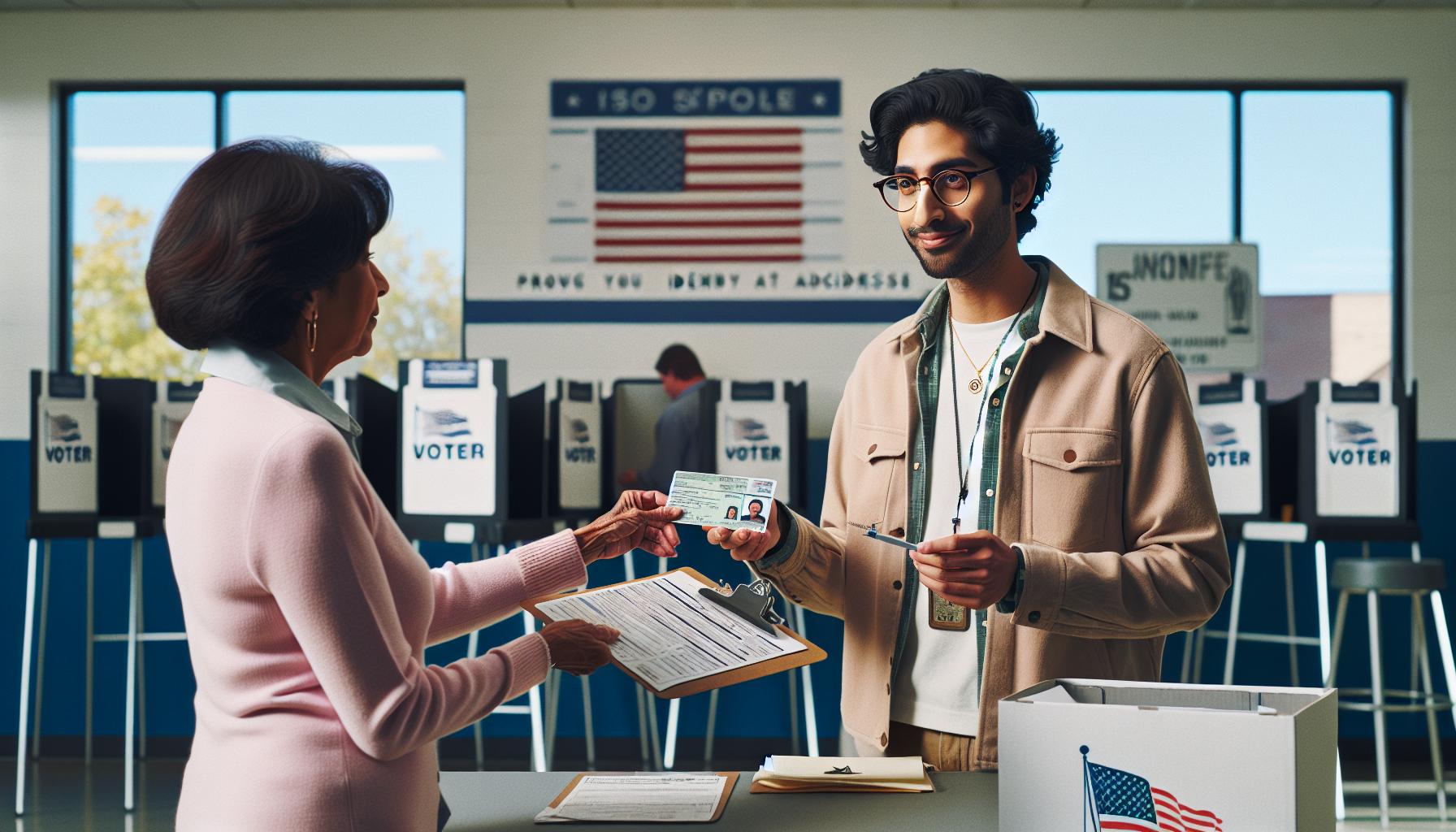
Exceptions and Special Cases for Voter Identification
Many voters might not realize just how accommodating Canada’s election system is when it comes to proving identity at the polls. While the standard approach is to present either a single piece of government-issued ID displaying both your name and current address, or two pieces combining to show these details, there are critically important exceptions and special situations that make voting accessible to almost everyone-even those without typical forms of ID. understanding these exceptions is key to ensuring no eligible voter is turned away.
One critically important accommodation is the ability for voters who lack traditional ID to rely on a vouching system. If you forget your ID or don’t have any accepted documents,you can still vote if someone “vouches” for you at the polling station. This requires another elector-someone who is already registered and has valid ID- to confirm your identity and address. This option helps individuals who may be experiencing homelessness or those who have recently moved and haven’t updated their identification. Election officials are trained to assist voters in this scenario,preserving accessibility while maintaining the integrity of the voting process.
Additionally, some voters may face challenges because their identification documents do not display their current address, especially for those living in transient or communal housing. In such cases, a wide range of government-issued documents that include a name and address can be used alongside other pieces of ID, supporting the flexible approach. such as:
- Voter Information Card: If you have one, this card can often be paired with another ID showing your name, even if it lacks an address.
- Documents issued by courts or other government agencies: For individuals in unique legal or administrative situations, these papers may fulfill the requirement.
Elections Canada and provincial authorities also recognize electronic versions of documents like utility bills or bank statements as valid, provided they are original (emailed e-statements on your phone or printed copies are acceptable) and clearly show your name and address-opening up options for voters who rely on digital correspondence.
Special Provisions for Remote and Indigenous Communities
some areas, especially remote northern communities and indigenous voters, face logistical challenges with standard forms of ID. election officials work closely with these communities to ensure voting rights are upheld, frequently enough providing mobile polling stations or allowing alternative ID arrangements. For example, community leaders or band office officials may facilitate identification verification when conventional documentation is scarce.
What to Do If Your ID is Expired or Incomplete
In a practical demonstration of flexibility, even expired government-issued ID is accepted, as long as it shows your name and current address accurately. This is a crucial detail that alleviates pressure on voters who may have missed renewal deadlines or face delays in receiving updated documentation.
| Situation | What You Can Do |
|---|---|
| no ID at all | Get vouched for by another registered voter at your polling station. |
| ID without current address | Bring a supporting document like a utility bill or bank statement showing your current address. |
| Expired ID | Bring the expired government-issued ID plus another document with your address if needed. |
| Remote or Indigenous voters | Utilize mobile polling stations or local community support for alternative ID verification. |
By familiarizing yourself with these exceptions,voters in less common situations can still approach the polls with confidence. Being prepared with any available documentation, understanding your options for vouching, and arriving at your polling station ready to explain your circumstances can prevent unnecessary barriers. This commitment to inclusivity reflects Canada’s dedication to ensuring every eligible citizen’s voice is heard.
How to Obtain Valid ID If You Don’t Have One
Many people assume that obtaining valid identification is a complicated hurdle, but Canada’s election system offers practical routes to help those without standard ID still participate in the democratic process.Whether you’ve misplaced your documents, recently moved, or face challenges in acquiring government-issued ID, there are accessible steps and supports that can get you ready for voting day.
Begin by assessing which identification documents you may already possess. Often, less obvious forms such as expired health cards, student ID cards, or government-issued letters can serve as part of your ID requirements, especially when paired with proof of address like a utility bill or bank statement. Remember, Elections Canada accepts electronic versions of these documents too-showing an emailed utility bill or bank statement on your phone can fulfill the address requirement, provided your name and current residence are clearly visible. This flexibility opens doors for voters relying on digital dialog or those who haven’t updated physical documents yet.
Steps to Getting Official ID for Voting
If you need formal identification, the typical route is to obtain a government-issued ID that includes both your name and current address. Here are key approaches to consider:
- Apply for a Provincial or Territorial ID card: these cards often serve as accessible and affordable alternatives to driver’s licences.Check with your local Service Canada or provincial ministry website for request procedures, required documents, and fees.
- Request a birth certificate or citizenship card: These may be necessary starting points, as many government-issued IDs require foundational proof of identity. Provincial vital statistics agencies handle these requests.
- Use your health card: In many provinces, health cards are accepted at the polls when paired with a document showing your address. It might already be valid even if expired, depending on your jurisdiction.
- Utilize your voter information card: While not always sufficient on its own without address, it can support your identification when combined with another piece showing your name.
Alternative Solutions for Those Without Traditional ID
For individuals who encounter barriers in obtaining government-issued ID-such as people experiencing homelessness, Indigenous voters in remote communities, or those recently displaced-Canada’s voting system includes the option to be vouched for by another elector. This means you can bring a trusted voter who knows you,has valid ID,and can confirm your identity and address at the polling station. In many Indigenous or northern communities, local officials or band office representatives may assist in facilitating this process, thereby reducing the need for multiple official documents.
Using this provision effectively involves:
- Arranging ahead of the election with a willing voter who meets the ID requirements.
- Contacting your local election office or community institution for advice and support if you’re unsure how to find someone to vouch for you.
- Preparing any supportive documents you do have, even if incomplete, to ease verification.
| Type of Voter | Recommended Action |
|---|---|
| No government-issued ID | Vote with a vouching elector who can confirm your identity and address. |
| Expired ID or missing address | Bring expired ID plus a document like a utility bill or bank statement for proof of address. |
| New to an area with no updated ID | Use voter information card combined with other ID, or arrange for vouching if necessary. |
| Remote or Indigenous community voter | Connect with local election officials or community leaders for alternative ID verification methods. |
Persistence and early preparation are key. Many provinces offer straightforward online resources and service centres to assist you in acquiring ID, often at minimal or no cost. If you begin the process well before election day, you increase your chances of securing valid documents in time. Most importantly, remember that the voting system’s accommodations exist as your right to vote is protected and prioritized, regardless of your current ID status.
By proactively exploring these options and reaching out to election officials or community organizations, you’ll be empowered to participate fully in Canada’s elections, no matter your identification challenges.
Common Issues and How to Avoid ID Problems on Election Day
One of the most common stumbling blocks voters face on election day involves identification requirements-not because the process is inherently complex, but often due to preventable oversights or misinformation. Simple preparation and an understanding of the accepted ID types can significantly ease your voting experience and prevent unnecessary stress at the polls. For example, many voters mistakenly assume that only certain government-issued documents like driver’s licences are accepted, missing the fact that Elections Canada also accepts a wide range of ID combinations, including expired cards paired with a proof of address like a utility bill or bank statement-either printed or displayed electronically on a mobile device. Knowing these options can save time and reduce anxiety when you check in to vote.
To avoid last-minute surprises, always double-check that your ID clearly shows your full name and current address where applicable. If you plan to use two pieces of ID, ensure at least one includes your name and another your address-both must be printed, not handwritten. Remember, electronic versions are valid if they meet these criteria, so don’t hesitate to bring a scanned or emailed bill on your phone if you don’t have physical copies handy.Also,be aware of possible issues with outdated or incomplete addresses,especially if you’ve recently moved. In these cases, carrying your voter information card and another form of ID can make all the difference. If your ID lacks the current address, pairing it with a recent utility bill or bank statement usually resolves the problem.
What to Do If Unexpected ID Problems Arise
Sometimes, even careful planning can’t prevent ID issues entirely. Polling stations are equipped to assist voters who encounter problems verifying their identity. One such solution is the provision allowing another voter to vouch for you, confirming your identity and address in place of traditional documentation. This is particularly helpful for individuals without government-issued ID, those experiencing homelessness, or voters in remote indigenous communities. To take advantage of this option smoothly, arrange beforehand with a trusted elector who meets the ID requirements. Additionally, poll workers may refer you to local election offices for assistance or provide provisional ballots depending on your situation.
Practical tips to Minimize Issues
- Check your voter information card ahead of voting day; it frequently enough contains crucial details about your polling station and can be used alongside other ID.
- Prepare multiple ID options so you can quickly provide acceptable proof without scrambling.
- Update your address as soon as you move to avoid confusion or rejection of ID at the poll; you can register or update your info at the polling station on election day if needed.
- Contact local election offices early if you anticipate challenges-many offer tailored advice and resources specific to your region.
By planning ahead and understanding the flexibility built into Canada’s voter ID rules, you can enter the voting booth confidently, knowing you’ve met all requirements.This preparation not only reduces wait times but strengthens your voting rights, ensuring smooth participation regardless of your ID circumstances.
understanding voter Identification Rules by Province and Territory
Voting rules across Canada share a common purpose: ensuring that every eligible voter can confidently prove their identity and address to participate in democracy.However,the specifics of acceptable identification vary between provinces and territories,reflecting local administrative practices and legal frameworks. This patchwork means voters shoudl familiarize themselves with their jurisdiction’s unique requirements well before election day to avoid surprises.
For federal elections, Elections Canada offers a flexible two-option system: a single piece of government-issued ID bearing your photo, name, and current address, or two pieces of ID where one shows your name and the other your address. importantly, this includes a broad range of documents, such as a health card, student ID, utility bills, and even expired identification-provided that the information is current and clearly printed.This flexibility extends to electronic versions displayed on your smartphone, facilitating convenience and accessibility [[1]](https://liberal.ca/voting-id-requirements/),[[[2]](https://www.elections.ca/content.aspx?section=vot&dir=ids&document=index&lang=e).
Provincial and territorial regulations add additional layers. Such as, Ontario requires either a voter information card plus one piece of ID with your name or a single government-issued document showing both your name and home address.Documents can include provincial health cards (if they display an address), driver’s licenses, or even court-issued certifications, illustrating accommodations for diverse voters[[[3]](https://www.elections.on.ca/en/voting-in-ontario/id-to-vote-in-provincial-elections.html). Other provinces follow similar patterns but may differ on which documents count or in how they verify identity on election day. Some territories have additional provisions recognizing the unique circumstances of residents in remote or Indigenous communities,including allowing someone to vouch for a voter’s identity if standard ID is lacking.
- Review your local election authority’s website well before voting day. They often provide comprehensive checklists and updates tailored to your region.
- Update your address promptly in the local voter registry to ensure your voter information card and ID documents remain valid for your current polling location.
- Collect a variety of acceptable IDs where possible, such as combining a student card with a utility bill, to meet dual ID requirements without stress.
- Plan ahead if you live in more remote or Indigenous communities-know if special vouching options or additional assistance is available, which differs from region to region.
| Province/Territory | Key voter ID requirements | Examples of Acceptable Documents |
|---|---|---|
| Federal (All Canada) | one government-issued ID with photo, name, current address OR two pieces of ID: one with name, one with address | Driver’s licence, health card, utility bill, voter information card, student ID (including expired if current info) |
| Ontario | Voter info card + ID with name OR ID with name & address | Health card, driver’s licence, court-certified documents |
| British Columbia | Government-issued photo ID with address or voter card + additional ID to prove address | BC Services Card, utility bill, student card |
| Nunavut & Northwest Territories | similar to federal rules with additional provisions for vouching due to remote communities | Government ID, local ID cards, vouching allowed |
Understanding these nuances can empower you to enter the voting booth prepared and calm. The key takeaway is that while the overall framework aiming to verify identity and address is common, specific documents accepted and processes may vary – so early research and preparation tailored to your province or territory is the smartest approach. This ensures your vote is counted without delay or complication, reinforcing the strength and accessibility of canada’s democratic process.
Step-by-Step Guide to Registering and Voting with ID
Casting your ballot in Canada is a straightforward process when you understand the necessary steps related to identification and registration. One engaging fact to note: you don’t always need to pre-register to vote in federal or many provincial elections, but having your identification ready is critical to a smooth experience at the polls. The identification rules are designed to confirm both who you are and where you live, thereby ensuring your vote is valid and your voice is heard.
begin by confirming your eligibility, which typically requires Canadian citizenship, residency in the voting area, and being at least 18 years old on election day. If you’re eligible but unsure whether you are registered, most provinces and elections Canada maintain online tools where you can verify or update your registration status. If this is your first time voting or you’ve recently moved,updating your address early avoids headaches on election day.
Gathering Your Accepted Identification
To satisfy ID requirements, you’ll either need one piece of government-issued photo identification that includes your current address or two pieces of ID-one with your name and another showing your address.Many people find that a driver’s licence serves perfectly as a single ID document, but alternatives like provincial health cards with addresses, student IDs combined with utility bills, or even a voter information card plus another supporting document can work as well. For example, in Ontario, bringing your voter information card along with one piece of ID that has your name suffices; elsewhere, you might need a single document with both your name and address printed clearly [[1]](https://www.elections.on.ca/en/voting-in-ontario/id-to-vote-in-provincial-elections.html),[[[2]](https://www.elections.ca/content.aspx?section=vot&dir=ids&document=index&lang=e).
if you don’t have the required ID, don’t panic. Certain jurisdictions allow another registered voter to vouch for your identity and address, which can be a lifesaver, especially for youth, seniors, Indigenous voters, or residents of remote areas without easy access to government-issued documents.
At the Polls: Confirming Identity and Casting Your Vote
When you arrive at your polling station, election officials will first ask to confirm your identity with your chosen ID. If you are using two pieces of ID,be prepared to present both. Your name will then be checked against the voter registry (or added if you’re registering on the spot). If your ID or registration isn’t immediately clear, officials may ask additional questions or request a voter voucher.
Once your identity is validated, election workers will mark you off the voter list and provide a ballot.From there, it’s just a matter of making your selections and submitting your ballot as directed – easy and empowering! Remember, poll staff are trained to assist if you have any questions or require accommodations, so don’t hesitate to ask.
Practical Tips to Prepare
- Check and update your voter registration status online well before election day.
- Assemble and carry acceptable ID documents ahead of time to avoid last-minute scrambles.
- Understand vouching options if you lack traditional ID-bringing a willing and registered voter who can vouch for you might be your best backup plan.
- Reload on polling station locations and hours of operation so you allocate enough time for the process.
- Stay informed about specific provincial or territorial rules, especially if voting outside urban centres.
By taking these steps early, you’ll enter the voting booth with confidence, knowing you’re equipped to participate fully in Canada’s democratic process. With clear ID and registration procedures, the goal is to make voting accessible and welcoming for all eligible Canadians.
Tips for First-Time Voters: What ID to Bring
Many first-time voters don’t realize that bringing the right identification to the polls is one of the most critically important steps to casting a accomplished ballot in Canada. Unlike other processes where a single form of ID might suffice, voter ID rules emphasize confirming both your identity and your current address, which helps keep elections secure and ensures every vote counts. For newcomers to voting, understanding exactly what documents to bring can remove a lot of the anxiety surrounding election day.
While a driver’s licence with your current address is often the easiest option, not everyone has one.That’s why canadian elections allow flexibility-either one government-issued photo ID showing your name and address, or two pieces of ID where one shows your name and the other proves your address. Examples of accepted documents include provincial health cards, student IDs, credit cards paired with utility bills, or a voter information card combined with another supporting document. Ontario,for instance,permits first-time voters to use their voter information card plus one piece of ID with their name [[1]](https://www.elections.on.ca/en/voting-in-ontario/id-to-vote-in-provincial-elections.html),[[[2]](https://www.elections.ca/content.aspx?section=vot&dir=ids&document=index&lang=e).
Strategies to prepare Your Identification
- Double-check your documents ahead of time: Don’t wait until the day of the election. Verify that your ID is valid and shows your current address clearly.
- Gather two forms of ID if you don’t have one with both name and address: For example, a student ID card plus a recent bank statement or utility bill can work together to satisfy requirements.
- Consider alternative options if lacking traditional ID: Some jurisdictions allow you to be vouched for by another registered voter who can confirm your identity and address – a vital backup for young voters or those without typical government-issued ID.
- bring your voter information card: It enhances the verification process and may reduce the number of additional documents needed.
Many first-time voters are also reassured to know that expired ID can sometimes be accepted, provided it clearly displays your name and current address. This helps if your documentation is in transition or you’re waiting on a replacement. Additionally, reaching out to local election offices before voting day can clarify any special allowances or exceptions, particularly for indigenous voters, students living away from home, or people in rural communities.
By preparing your ID strategy early, you’ll avoid last-minute stresses and enter the polling station ready to make your voice heard. Remember, election officials are trained to assist and accommodate all voters, so if you run into any issues with your identification at the polls, don’t hesitate to ask for help. After all, voting is your right-and being prepared with the correct documents makes sure nothing stands between you and your ballot.
Impact of Voter ID Requirements on Accessibility and Inclusion
It’s important to recognize that while voter ID requirements play a critical role in safeguarding the integrity of Canada’s elections, they also pose unique challenges for accessibility and inclusion. For many voters-especially those with disabilities, seniors, Indigenous peoples, newcomers, or individuals experiencing housing instability-obtaining or presenting acceptable ID can be a barrier that risks disenfranchisement. Fortunately, Canadian election authorities have built in safeguards and flexible options to help ensure no eligible voter is left out.
Many provinces and federal elections provide alternatives beyond the standard photo ID with an address, such as accepting two pieces of ID where one shows the name and the other proves the address.Additionally, provisions exist to allow voters to be vouched for by another registered elector, which can be a lifeline for those who may lack traditional ID. For example,voters living with disabilities or in remote communities frequently enough benefit from these accommodations. In British Columbia, an accessibility committee actively works to remove physical, attitudinal, and systemic barriers for voters, recognizing that accessibility is not just about physical ramps but also about flexible voting processes and voter support services [[1]](https://elections.bc.ca/2024-provincial-election/ways-to-vote/voting-accessibility/).
Practical Solutions That Enhance Voting Inclusion
- Bringing a translator or a helper: Election guidelines explicitly welcome voters to bring a translator or interpreter to assist them at the polling station, which is essential for newcomers or people with communication disabilities.
- Accessible voting systems and training: Election officials receive specialized training to assist voters who encounter difficulties with ID or other barriers, ensuring staff can provide patient, respectful support.
- Early voter registration and education: Outreach programs targeted at underrepresented groups help clarify what documents are needed and how to obtain them well before election day, reducing confusion and stress.
overcoming Real-World Barriers
For voters who may lack a fixed address, such as those experiencing homelessness or living in transitional housing, proving a current residential address presents a significant challenge. In such cases, alternative documents like a correspondence address, a letter from a shelter, or even a registered voter’s declaration might potentially be accepted. Moreover, individuals with sight loss or other disabilities might face difficulties physically locating or reading their ID; accessible formats and assistance options can make a meaningful difference in these scenarios.
The key takeaway is that voter ID requirements in Canada are designed with inclusivity in mind, balancing the need for secure elections with practical accommodations. If you or someone you know faces challenges with ID documentation, contacting local election offices ahead of time is a crucial step to learn about available options and supports. The overall goal is to empower every eligible Canadian to participate fully in democracy, ensuring that identification processes do not become a barrier but a gateway to voting rights.
| Barrier | Common solutions | Example |
|---|---|---|
| No government-issued photo ID | Use two pieces of ID (one with name, one with address) or a vouching system | Student ID + Utility bill; Vouched for by registered voter |
| Disability-related challenges | Bring a helper, accessible voting tools, staff assistance | Audio ballots, magnifiers, trained election officials |
| Lack of fixed address | Accept shelter letters or declaration by another voter | Letter from homeless shelter as proof of address |
| Language barriers | Bring a translator or interpreter to the polling station | Family member or volunteer interpreter |
Faq
Q: Can expired ID be used to vote in Canadian elections?
A: Yes, expired ID can be used to vote in Canada as long as it shows your name and current address clearly and accurately. This flexibility helps voters who may not have updated documents. For more details on accepted documents, see the accepted voter ID list section.
Q: What documents can be combined to prove identity and address for voting?
A: To prove identity and address, you can present two pieces of ID: one with your name and another with your current address. Such as, a voter information card plus a utility bill. Both must have printed, not handwritten, details for acceptance. Check the comprehensive list for approved combinations.
Q: Are electronic or digital ID documents accepted for voting identification in Canada?
A: Yes, Elections Canada accepts electronic documents such as e-statements or e-invoices shown on a mobile device or printed. They must display your name and address clearly and must not be altered by hand. This modern option is useful for easy access to ID.
Q: How do voter ID requirements differ between Canadian provinces and territories?
A: Voter ID rules vary by province and territory, with some accepting handwritten address proof and others requiring stricter ID. For example,British Columbia allows handwritten statutory declarations,while most jurisdictions require printed documentation. See our provincial voter ID rules section for specifics.
Q: What should I do if I don’t have any ID that shows my current address for voting?
A: If you lack ID with your current address, you can bring one piece of government-issued ID plus an attestation from another voter in your riding (voucher). This voucher must confirm your address. Review the exceptions section for detailed steps to avoid voting delays.
Q: Can someone else vouch for my identity if I don’t have accepted ID on election day?
A: Yes,a trusted individual,such as a relative or an authoritative caregiver,may vouch for your identity if you lack ID. They must complete a sworn declaration confirming your residency.This option helps voters without standard identification.
Q: Are student ID cards accepted as valid voter ID in Canada?
A: Student ID cards can be accepted if combined with another document showing your current residential address. For example, pairing your student ID with a utility bill satisfies the voter ID requirements. Confirm acceptable ID combos in the accepted documents list.
Q: Why is it critically important for ID documents to have printed names and addresses for voting?
A: Printed names and addresses ensure the authenticity of your voter ID and prevent fraud. Handwritten information is generally not accepted unless specifically allowed, such as statutory declarations. For security and compliance, use only official, printed ID documents.
For further details on accepted voter ID and voting processes, explore our full guide sections on proving identity and address at the polls and exceptions for voter identification** to be fully prepared for election day.
Wrapping Up
Understanding the accepted ID requirements to vote in Canada is essential to ensure your voice is heard in every election. By preparing the right documents ahead of time, you can confidently participate without delays or issues on voting day. If you’re unsure which forms of identification qualify or want to explore additional voting tips, be sure to check out our detailed guide on [Canadian Voting Rights and procedures] and [How to Register to Vote in Canada] for comprehensive support.Ready to take the next step? Sign up for our newsletter to stay updated on important election dates, document changes, and helpful voter resources. If you have questions or experiences to share about voting ID in Canada,please join the conversation in the comments below or share this article to help others prepare. Ensuring you have the right ID is a simple step that secures your participation-don’t wait until election day to confirm your documents!