
Electoral Process and Voting
Electoral Process and Voting represents constitutional electoral law and democratic franchise governance that defines the statutory lifecycle of elections, candidate certifications, voting franchise rights, and ballot administration to ensure constitutional legitimacy, democratic mandate enforcement, and universal civic enfranchisement.
Foundational Pillars & Key References
CORE STATUTORY GUIDE
Elections Canada Registering to Vote: Essential Steps You Must Follow
Comprehensive civic guide examining elections canada registering to vote: essential steps you must follow, detailing administrative requirements, statutory benchmarks, and procedural compliance for engaged citizens.
PROCEDURAL ANALYSIS
Commissioner of Canada Elections: Understanding Their Vital Role in Democracy
Comprehensive civic guide examining commissioner of canada elections: understanding their vital role in democracy, detailing administrative requirements, statutory benchmarks, and procedural compliance for engaged citizens.
LEGISLATIVE PROTOCOL
Elections Canada Voter Registration: How to Register Easily
Comprehensive civic guide examining elections canada voter registration: how to register easily, detailing administrative requirements, statutory benchmarks, and procedural compliance for engaged citizens.
Administrative Jurisprudence & Statutory Architecture
The electoral process is the constitutional mechanism that converts popular sovereignty into legislative authority. Encompassing pre-writ registration, nomination petitions, polling operations, and post-election certification, this framework ensures universal suffrage and procedural fairness. Election acts dictate strict timelines for election writs, enforce non-interference around polling sites, and govern the legal standards for provisional, advance, and mail-in ballots.
Democratic accountability requires an ongoing calibration between institutional authority and public scrutiny. In modern constitutional governance, procedural standards are reinforced by statutory oversight bodies, judicial review standards, and strict administrative law precedents. Understanding these parameters empowers citizens, advocacy organizations, and legal scholars to engage with government entities transparently, effectively, and with verified legal standing.
| Governance Area / Domain | Constitutional Attribute | Procedural Standard & Value |
|---|---|---|
| The Election Writ Lifecycle | Constitutional Calling | Formal dissolution of parliament, issuance of election writs by the Crown or executive, and set campaign durations. |
| Voter Identification & Attestation | Franchise Validation | Statutory identification tiers balancing fraud prevention against anti-disenfranchisement principles. |
| Nomination & Candidate Vetting | Ballot Access Standards | Signatory petition thresholds, financial deposits, and non-partisan eligibility certifications for candidates. |
| Provisional & Special Ballots | Fail-Safe Voting Access | Legal mechanisms ensuring electors facing registration disputes can cast ballots subject to post-poll verification. |
Data Matrix Source: Codified Administrative Guidelines, Standing Orders, and Published Statutory Reviews cataloged by the Civil Procedure & Statutory Telemetry Desk.
Curated Research Directory & Topic Clusters
Statutory & Procedural Guides
Constituent & Advocacy Telemetry
Frequently Asked Questions
What happens from the moment an election writ is issued?
The issuance of the writ legally dissolves parliament, suspends legislative sittings, triggers statutory campaign finance restrictions, and transfers administrative control to the Chief Electoral Officer.
What identification standards apply at polling stations if a voter lacks photo ID?
Statutes typically provide alternative proof-of-identity tiers, including two pieces of secondary ID with matching addresses, or voter vouching/attestation under legal oath.
How do advance voting and special ballots maintain ballot box chain-of-custody?
Special ballots are sealed in double-envelope tamper-evident security packaging, audited against voter registries, and stored in secure facilities under dual-custody verification.
Authored & Maintained by: Civil Procedure & Statutory Telemetry Desk
Notice: This research synthesis and structural taxonomy models published statutory codes, administrative regulations, and parliamentary procedure for informational and civic planning purposes only. It does not provide certified legal, parliamentary, or governmental counsel. For definitive rulings or case advice, consult an actively licensed attorney or official parliamentary officer in your jurisdiction.
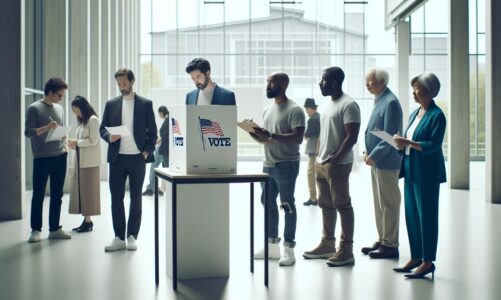

Is It Mandatory to Vote in Canada? Understanding Your Duty

Does Canada Have Voter ID Laws? What Voters Must Provide

First Nations Election Act: Secrets Unveiled – Must-Read!

Can You Lose Your Right to Vote in Canada? Key Disqualifications
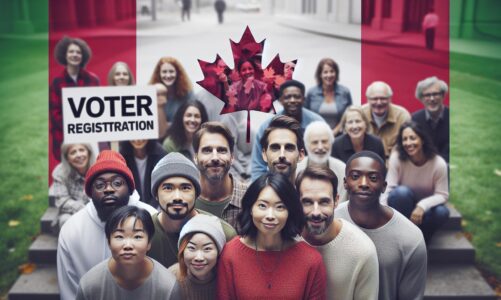
Am I Registered to Vote in Canada? Quick Check Guide Inside

How to Vote for American Idol from Canada? Voting Guide
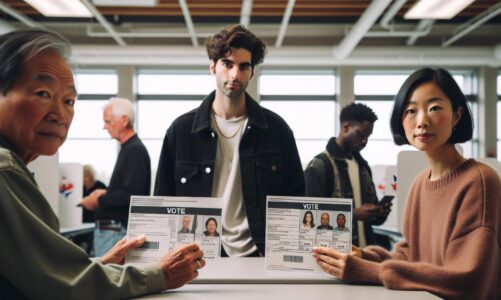
Do You Need ID to Vote in Canada? Accepted Documents List

Can International Students Vote in Canada? Your Essential Guide

Why Do Farmers Vote Conservative in Canada? Exploring Their Leanings
Comparison & Specifications: Electoral Process and Voting
| Statutory Guide / Topic | Governing Framework & Scope | Procedural Mechanism | Civic & Legal Application |
|---|---|---|---|
| Elections Canada Registering to Vote: Essential Steps | Canada Elections Act (S.C. 2000, c. 9, Part 4); National Register of Electors | 18+ age threshold, citizenship attestation, and 2-piece address verification | Federal general elections, by-elections, and statutory referendums |
| Commissioner of Canada Elections: Role in Democracy | Canada Elections Act (ss. 509–549); 10-year non-renewable mandate | Administrative monetary penalties (up to $5,000 individual / $25,000 entity) | Investigating statutory election contraventions and enforcing voting integrity |
| Elections Canada Voter Registration: How to Register | Online Voter Registration Service & CRA income tax opt-in checkbox | Driver's licence number or provincial photo ID cross-matching within 24–72 hours | Pre-writ and writ-period elector enrollment before the 6:00 PM Tuesday deadline |
| Deadlines for Updating Voter Registration Information | Day 6 before polling day (6:00 PM local time) for advance revision | Voter Information Card (VIC) dispatch within 14 days of writ issue | Residential address updates and polling division reassignments |
| Proxy Voting in Canadian Elections: Essential Guide | Provincial and territorial electoral statutes (Yukon, Nunavut, PEI, Nova Scotia) | Signed proxy certificate appointing 1 eligible elector per polling division | Absentee elector representation where special mail-in ballots are unavailable |
| Canadian Election Seat Projections: What to Expect | 338 to 343 House of Commons electoral districts; 172-seat majority threshold | Single-member plurality (First-Past-The-Post) riding-level vote aggregation | Modeling parliamentary majority, minority confidence, and regional swing margins |
| How to Vote in Canadian Election from Abroad | International Register of Electors (Canada Elections Act, Part 11); Frank v. Canada (2019) | Special ballot kit application submitted before 6:00 PM EST on Day 6 prior to polling | Non-resident Canadian citizens casting federal ballots by international courier |
| Requirements for First-Time Voters in Canada | 3-tier Elections Canada ID schedule (1 photo ID, 2 address documents, or vouching) | Statutory written solemn declaration witnessed by 1 registered elector in the same poll | Onboarding 18-year-old and newly naturalized electors at advance or ordinary polls |
Institutional Research Desk: Civil Procedure & Statutory Telemetry Desk — Notice: This calculation engine and statutory comparison matrix models published statutory formulas and regulatory codes for informational and planning purposes only. It does not provide certified legal, medical, veterinary, tax, or engineering advice. For definitive rulings, consult an actively licensed professional in your jurisdiction.
Frequently Asked Questions (Electoral Process and Voting)
What are the statutory eligibility requirements to vote in a Canadian federal election?
Under Section 3 of the Canada Elections Act (S.C. 2000, c. 9), an elector must hold Canadian citizenship, attain 18 years of age on or before polling day, and establish ordinary residence within one of Canada's 343 federal electoral districts.
How many identification documents are required at an Elections Canada polling station?
Elections Canada requires either 1 government-issued photo identification card displaying your current name and residential address, or 2 authorized non-photo documents where at least 1 document verifies your physical address within the assigned polling division.
When is the statutory deadline to register for a special mail-in ballot in Canada?
Electors applying for a special mail-in ballot under Part 11 of the Canada Elections Act must submit their registration before 6:00 PM local time on the 6th day preceding ordinary polling day to guarantee ballot counting.
How can an elector without residential address documents vote on election day?
An unregistered elector lacking address documentation may complete a statutory solemn declaration at their assigned polling station if 1 registered voter residing in the same polling division presents valid identification and vouches in person.