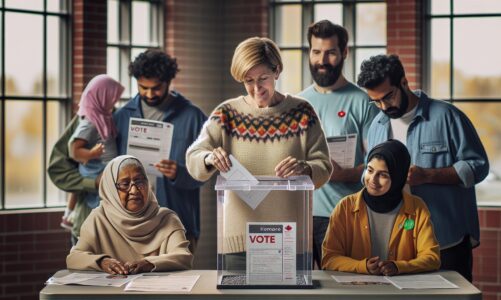
Did you know that federally incarcerated individuals in Canada retain the right to vote, a policy unique compared to many other countries? This fact opens up an crucial dialogue about whether prisoners should have a voice in shaping laws and leadership, despite their incarceration. understanding the pros and cons of allowing prisoners to vote touches on broader issues of justice, rehabilitation, and democratic inclusion-topics that affect our society as a whole. Whether your curious about the fairness of this policy or concerned about its impact on elections and social reintegration, exploring this debate offers valuable insights into how democracy works behind prison walls. As you read on, you’ll discover the key arguments on both sides, helping you form an informed opinion on this complex and frequently enough misunderstood issue.
Table of Contents
- Understanding Voting Rights and Prisoners in Canada
- Key Arguments Supporting Prisoner Voting Rights
- Major Concerns and Opposing Views on Prisoner Voting
- Comparing Canada’s Policies with Other Democracies
- Impact of Prisoner Voting on Canadian Elections
- Legal Framework Governing Prisoner Voting Rights
- Social and Ethical Implications of Allowing Prisoner Votes
- Addressing Common Myths About Prisoner Voting
- Potential Reforms and Future Outlook on Prisoner Voting
- FAQ
- Q: How do Canadian prisons facilitate voting for incarcerated individuals during elections?
- Q: Why is voter turnout often low among prisoners in Canada?
- Q: What impact does allowing prisoners to vote have on election outcomes in canada?
- Q: How does Canada’s prisoner voting policy compare to other democracies?
- Q: What steps can correctional facilities take to improve the voting experience for inmates?
- Q: Are there age or citizenship restrictions affecting prisoner voting rights in Canada?
- Q: How do social attitudes influence policies on prisoner voting in Canada?
- Q: What legal challenges have affected prisoner voting rights in Canada recently?
- Closing Remarks
Understanding Voting Rights and Prisoners in Canada
Voting is a basic right in Canada, integral to democratic participation and civic inclusion. Interestingly, canadian law affirms the right of incarcerated individuals to vote, reflecting a commitment to universal suffrage even for those serving sentences.This stance emerged from landmark court decisions that challenged previous policies limiting prisoner voting, marking Canada as one of the few democracies that broadly uphold prisoners’ voting rights. Understanding how these rights function in practice helps demystify the topic and encourages informed discussions around inclusivity in the electoral process.
As the early 2000s,Canadian prisoners who are 18 years or older retain their right to vote regardless of their incarceration status. This includes those held in federal penitentiaries. To facilitate this, Elections Canada implements special ballot processes that allow incarcerated electors to cast their votes securely either via mail or in designated locations within correctional institutions. This system ensures their voices contribute to shaping public policy and societal governance, underlining the principle that serving time does not strip away citizenship rights.[1]
- Special Ballot Access: Prisoners must register to vote and can request a special ballot well in advance of election day.
- Confidentiality and Security: Procedures ensure votes are kept confidential while maintaining election integrity.
- Eligibility Requirements: Voters must be Canadian citizens and at least 18 years old on election day.
this approach contrasts sharply with past restrictions, were property ownership and gender limited voting rights, and with earlier laws that excluded incarcerated persons entirely. The Supreme Court of Canada’s 2002 ruling struck down legislative provisions that barred inmates from voting,emphasizing that disenfranchisement based solely on incarceration violates Charter rights. This legal framework promotes the notion that voting fosters rehabilitation and strengthens civic obligation, rather than serving as an additional punishment.[3]
For readers wondering about the impact or practicalities of prisoner voting, the Canadian model offers a balance of accessibility and procedural safeguards. Those interested in engaging with or supporting voter inclusion efforts may consider volunteering with organizations that assist incarcerated voters or advocating for continued improvements in ballot access within correctional facilities. Understanding the legal and logistical infrastructure behind prisoner voting is a crucial step toward informed debate and policy-making around this critically important democratic right.
Key Arguments Supporting Prisoner Voting Rights
One of the most compelling reasons to support voting rights for incarcerated individuals lies in the fundamental principle that voting is a core aspect of citizenship and democracy. Denying prisoners the right to vote effectively strips them of their civic identity, which can hinder their reintegration into society.By maintaining voting rights,Canada recognizes that despite incarceration,individuals remain members of the community whose voices matter in shaping public policies and leadership. This inclusion promotes a sense of responsibility and connection to societal norms that are essential for rehabilitation and reducing recidivism.
Allowing prisoners to vote also ensures that marginalized groups, who are disproportionately represented in correctional facilities, have a say in the democratic process.This is notably meaningful for Indigenous peoples and racial minorities in Canada who face systemic inequalities. By protecting their voting rights, the system works towards addressing these disparities and fostering equity.from a practical standpoint, Elections Canada supports prisoners in exercising this right thru secure special ballot systems, ensuring confidentiality and accessibility, which reflects a thoughtful approach to enfranchisement without compromising election integrity[3].
Fostering civic Engagement and Rehabilitation
Voting encourages incarcerated individuals to stay informed and engage with issues affecting their communities and the nation. This engagement nurtures a constructive mindset and helps prepare them for reintegration after release by establishing a habit of participation in democratic life. For example, programs within correctional institutions may facilitate voter registration and education, further supporting this goal. the legal endorsement of prisoner voting by Canada’s Supreme Court underscores that denying this right constitutes additional punishment unrelated to a criminal sentance, thus aligning with the values of justice and fairness.
- Enhances democratic inclusivity and fairness
- Supports rehabilitation through civic responsibility
- Addresses systemic inequalities among incarcerated populations
- Implemented through secure and confidential processes
These arguments combined illustrate a democratic model that upholds dignity and rights, demonstrating Canada’s leadership in balancing public safety with human rights and inclusivity in electoral participation.
Major Concerns and Opposing Views on Prisoner Voting
It’s not uncommon for people to question whether individuals sentenced to imprisonment should retain the right to vote, especially given the serious nature of their crimes. Critics argue that voting is a privilege tied to responsible citizenship, and that those who violate societal laws, particularly through serious offenses, may forfeit this privilege. This view often reflects concerns about accountability and the principle that some rights should be suspended as part of the punishment. many opponents feel that enabling prisoners to vote risks undermining the moral fabric of electoral participation by allowing individuals who have broken the social contract to influence laws and leaders.
Another common concern centers on public safety and trust in the democratic process. Critics worry that allowing incarcerated individuals-especially those convicted of violent or serious crimes-to participate in elections might sway outcomes in ways that do not align with societal interests. This skepticism can be exacerbated by fears that prisoners’ political preferences might differ significantly from the broader community, thereby skewing election results. For instance, some view prisoner voting as a way that certain interest groups might gain undue influence through a demographic seen as detached from everyday civic obligations.
Practical challenges also feature in opposing arguments.Ensuring secure and confidential voting within correctional institutions requires logistical resources, including staff training, voter education, and ballot processing. Some contend that administering prisoner voting is costly and complex, especially across provinces and facilities, which can divert limited resources from rehabilitation programs. Moreover, concerns about the potential for coercion or manipulation within prisons sometimes arise, leading to questions about whether votes cast by incarcerated individuals genuinely reflect free and informed choices.
- Concerns about forfeiture of civic privileges as part of punishment
- Fears of public safety risks and undermining electoral integrity
- potential logistical and resource burdens on election administration
- Doubts about prisoner voting being a genuine, voluntary act
While these perspectives are not without merit, it’s important for readers to consider that many of these arguments rest on assumptions that do not always align with legal precedents or evidence from jurisdictions that uphold prisoner voting rights. For example, Canada’s legal framework rejects the idea that disenfranchisement is an appropriate part of sentencing, emphasizing a balanced approach that respects democratic inclusion without compromising justice or security [3]. Understanding these concerns thoughtfully equips voters and policymakers to debate prisoner voting with nuance and seriousness.
Engaging with Opposing Views Constructively
It helps to approach opposing views with empathy and clarity, recognizing that fears around crime and punishment are deeply rooted in a desire for safe communities. Dialogue emphasizing how voting rights relate to rehabilitation, social reintegration, and equality can bridge divides. Readers interested in advocacy or education may find it useful to highlight programs where voting has positively influenced prisoner behavior or reduced recidivism, demonstrating the practical benefits behind enfranchisement. Ultimately, balancing concerns with constitutional and social imperatives is key to fostering a fair and inclusive democracy.
Comparing Canada’s Policies with Other Democracies
Few rights spark as much debate in democratic societies as the right to vote by incarcerated individuals. Canada’s approach presents a distinctive model that balances inclusivity with accountability, setting it apart in the international landscape. Unlike countries that impose blanket bans on prisoner voting, Canada permits all eligible citizens in correctional facilities to exercise their suffrage, reflecting a philosophy that emphasizes rehabilitation and democratic participation even behind bars.
In contrast, nations like the United States take a more restrictive stance, with many states denying voting rights to people with felony convictions either temporarily or permanently. This divergence highlights a core philosophical difference: while Canada treats voting as an essential civil right that supports reintegration, the U.S. positions disenfranchisement as an additional component of punishment. Globally,Canada aligns more closely with the majority of Western democracies such as the United Kingdom,Sweden,and South Africa,where prisoner voting is either fully permitted or only restricted in narrow circumstances.
Legal approaches and Practical Implementation
A significant advantage of Canada’s open enfranchisement policy stems from its streamlined legal framework which dispels ambiguity by ensuring that no incarceration length triggers disenfranchisement. This clarity eases administrative burdens and fosters a consistent national standard. In practical terms, Elections Canada supports voting from federal penitentiaries by providing special polling stations and mail-in ballots, a progressive logistical effort not universally embraced elsewhere. While this requires resources, the equity and citizenship affirmation benefits tend to outweigh the complexity.
Countries that disenfranchise prisoners often point to protecting electoral integrity and public trust. however, research including comparative studies of Canada and European democracies reveals no significant negative impact on electoral outcomes from including prisoner votes, given their relatively small numbers. Instead, the enfranchisement of prisoners often correlates with benefits such as increased civic awareness, lowered recidivism, and a reinforcement of democratic values that transcend incarceration.
| Country | Prisoner Voting Rights Status | Key Notes |
|---|---|---|
| Canada | Full voting rights for all prisoners | All inmates eligible; voting facilitated by Elections Canada |
| United States | Varies by state; many disenfranchise felons temporarily or permanently | Complex state-level variation; significant portions permanently barred |
| United Kingdom | Voting allowed for prisoners on remand only | Short-term incarceration permitted; long-term excluded |
| Sweden | Full voting rights | Voting seen as civic right not affected by incarceration |
for readers navigating the complex terrain of prisoner voting rights debates, understanding these international variations provides valuable context. It shows how democracies grapple with balancing punishment and citizenship, and highlights Canada’s position as a leader in inclusive democratic policy. Advocates and policymakers may find this comparison a useful tool to frame arguments and shape future reforms that emphasize fairness and democratic participation without compromising public safety or election integrity.
- Consider how legal clarity in voting rights can reduce administrative obstacles
- Examine international examples to inform balanced reforms
- Recognize practical benefits of enfranchisement beyond mere access to voting

Impact of Prisoner Voting on Canadian Elections
Prisoner voting in Canada, while frequently enough misunderstood, has demonstrated a negligible effect on election outcomes, primarily due to the relatively small number of incarcerated voters compared to the national electorate. Despite fears that prisoner votes could sway tight races or influence political agendas unduly,analyses show that the percentage of votes cast by inmates is typically too marginal to create significant electoral shifts. This reality underscores a key point: enfranchising prisoners upholds democratic principles without compromising the integrity or balance of Canadian elections.
The facilitation of prisoner voting also plays an critically important symbolic role, reinforcing the idea that democracy is inclusive, even for those temporarily removed from society. by enabling inmates to participate, Canada helps foster a sense of civic responsibility and maintains a connection between prisoners and the broader community. this continuity can contribute to lowering recidivism rates as individuals feel more engaged and accountable as citizens. Practically, Elections Canada’s provision of special ballots and polling stations ensures logistical challenges do not hinder participation, supporting a smooth integration of prisoner votes into the overall electoral process.
Understanding the Scale and Practical Effects
- Proportion of Votes: Prisoners represent a minuscule fraction of the electorate, frequently enough below 1%, meaning their votes rarely tip electoral balances.
- Local vs. National Impact: While federal elections see limited influence from prisoner votes, local or regional elections in areas with sizable correctional facilities could experience marginal impact, emphasizing the importance of inclusive voting rights at every level.
- Civic Engagement and re-integration: Allowing prisoners to vote supports rehabilitation by reinforcing legal citizenship and encouraging informed political participation.
It is noteworthy that Canada’s approach contrasts starkly with countries that strictly disenfranchise prisoners,which may miss the broader societal benefits gained from inclusive voting practices.For advocates and policymakers, the Canadian experience offers a valuable case study demonstrating that prisoner enfranchisement promotes fairness and strengthens democracy without distorting electoral results. This balance supports not only democratic legitimacy but also speaks to larger goals of social justice and prisoner reintegration.
| Aspect | Effect of Prisoner Voting in Canada |
|---|---|
| Electoral Influence | Minimal due to small voter base among prisoners |
| civic Engagement | Enhanced, promoting reintegration and responsibility |
| Electoral Integrity | Maintained; no evidence of negative impact |
| Logistics | effectively managed by Elections Canada’s provisions |

Legal Framework Governing Prisoner Voting Rights
across Canada, the right of incarcerated individuals to participate in federal elections is protected under a legal framework that reflects the country’s commitment to inclusive democracy. This stance was significantly shaped by the Supreme court of Canada’s landmark decision in *Sauvé v. Canada (Chief Electoral Officer)* (2002), which struck down the ban on voting rights for federal prisoners serving sentences under two years.The court ruled that denying these citizens the right to vote violated Section 3 of the Canadian Charter of Rights and Freedoms, affirming that voting is a fundamental democratic right that should not be arbitrarily restricted even during incarceration[[[[[3]](https://decisions.scc-csc.ca/scc-csc/scc-csc/en/item/2010/index.do).
This decision means that virtually all federally incarcerated individuals in Canada, regardless of sentence length, retain their voting rights. Practical implementation involves coordination between Elections Canada and the Correctional Service of Canada (CSC), which facilitates voting by providing data, registering eligible inmates, and arranging access to special ballots and polling stations within correctional institutions[[[[[1]](https://www.canada.ca/en/correctional-service/lets-talk/listen/prisons-inside-out/episode-13.html). This collaboration ensures that prisoners’ votes are counted accurately while maintaining the integrity of the electoral process.
Key Elements of the Voting Rights Framework for Prisoners
- Universal franchise in federal Elections: All Canadian citizens aged 18 and above, including those incarcerated, have the right to vote in federal elections. This principle aligns with Canada’s values of fairness and rehabilitation.
- Voting Procedure: Eligible prisoners can vote via special mail-in ballots or at on-site polling stations during federal elections, which addresses logistical challenges associated with incarcerated populations.
- Exclusions at the Provincial Level: While federal voting rights are broadly secured, some provinces may have different regulations affecting municipal or provincial elections, varying the scope of enfranchisement.
| Aspect | Legal Status | Practical Application |
|---|---|---|
| Federal Prisoner Voting Rights | Protected by the Canadian Charter and Supreme Court rulings | Elections Canada and CSC coordinate facilitated voting |
| Provincial and Municipal Voting | Varies by province; some restrictions exist | Depends on provincial electoral bodies and local laws |
| Sentences and Eligibility | No disenfranchisement for any sentence length federally | All inmates 18+ eligible for federal vote |
Understanding this legal framework underscores the importance of courts and electoral bodies in protecting voting rights against exclusion based on status or sentence length. For individuals interested in supporting prisoner enfranchisement or navigating its legal nuances, awareness of these laws is crucial. Engaging with resources provided by Elections Canada and correctional institutions can clarify voter eligibility and assist with practical steps needed to ensure incarcerated Canadians have their voices heard. This protects democracy’s inclusive ideals while balancing administrative realities of prison-based voting.
Social and Ethical Implications of Allowing Prisoner Votes
Every society that values democratic principles faces the complex challenge of balancing punishment with rights restoration when it comes to incarcerated individuals. Allowing prisoners to vote touches deeply on questions of citizenship, fairness, and the purpose of the justice system. In Canada, where voting is seen as a fundamental democratic right, enabling prisoners to participate in elections not only acknowledges their continued membership in society but also helps promote their rehabilitation and reintegration.
Granting voting rights to prisoners reinforces the idea that civic engagement is a tool for social inclusion rather than exclusion. When prisoners have the chance to vote, they remain connected to democratic processes, which can foster a sense of responsibility and belonging. This inclusion can be a stepping stone toward reducing recidivism by encouraging inmates to see themselves as active contributors to the community rather than alienated outsiders. It also reflects Canada’s broader values around human dignity and equality, asserting that even those who have committed offenses have a stake in shaping the society they will rejoin.
Ethical Considerations and Societal Impact
- Equality Before the Law: Denying prisoners the vote raises concerns about creating a class of “second-class citizens,” which clashes with the Charter’s emphasis on equal rights.
- Democratic Legitimacy: Excluding an entire group from voting can undermine the inclusiveness and legitimacy of elections, as prisoners are still subject to laws and policies enacted by elected officials.
- Human Rights Outlook: Voting is considered an essential element of democratic participation and civic autonomy, making its deprivation a significant infringement on individual freedoms.
At the same time, ethical debates arise around the nature of justice and accountability.Some argue that committing serious crimes entails surrendering certain societal privileges,including voting,as a form of civic consequence. The tension lies in determining whether voting is a right so fundamental that it must be protected regardless of past actions, or if it is a privilege that can be revoked.
In practical terms, countries like Canada that favor enfranchisement frequently enough see voting in prison as a step toward healing and empowerment, rather than a reward. Real-world examples show that structured opportunities for civic participation can improve inmates’ sense of self-worth and encourage them to engage more positively with society post-release. For readers navigating this topic, understanding the broader ethical landscape invites thoughtful consideration of how democracy can be both just and inclusive.
| Social & Ethical Theme | Implications | Example/Consideration |
|---|---|---|
| Rehabilitation | Voting promotes personal responsibility and social reintegration | Prisoners participating in elections feel connected to societal norms |
| Equality & Rights | Maintains prisoners’ status as full citizens under the Charter | Supreme Court ruling overturned blanket disenfranchisement |
| Justice & Accountability | Raises debate over punishment vs. rights retention | Some argue democratic privileges should reflect civic conduct |
| Democratic Integrity | Ensures laws represent all affected populations,including prisoners | Excluding prisoners risks disenfranchising marginalized communities |
Exploring these social and ethical dimensions helps readers appreciate the nuanced balance Canada strikes between justice and democracy. It also encourages a more informed and empathetic dialogue on prisoner voting rights-one that transcends simple yes-or-no answers to embrace complexity and humanity.
Addressing Common Myths About Prisoner Voting
Few topics in democratic discourse are as prone to misunderstanding as the voting rights of incarcerated individuals. A common misconception is that all prisoners are uniformly barred from voting in Canada. In reality, the legal landscape is more nuanced: individuals serving sentences of less than two years retain their voting rights under the Canada Elections Act, while those serving longer sentences do not. This distinction is crucial yet frequently enough overlooked, and clarifying it helps dispel oversimplified assumptions about prisoner disenfranchisement[[2]](https://johnhoward.ab.ca/wp-content/uploads/docs/InmateVotingRights_2000.pdf).
Another widely held myth is that allowing prisoners to vote somehow rewards criminal behavior or undermines the seriousness of justice. Though, voting is not a privilege granted as a reward, but a fundamental democratic right reflecting one’s citizenship and stake in society. Research and practical examples from Canadian correctional institutions demonstrate that enfranchisement fosters rehabilitation by maintaining inmates’ social ties and encouraging civic responsibility, which can ultimately support their successful reintegration into society after release[[[[[1]](https://theconversation.com/imprisoned-citizens-face-barriers-to-voting-in-ontario-184222). Far from encouraging criminality, participation in elections can reduce feelings of alienation and promote positive identity transformation.
Practical Barriers vs. Legal Rights
It’s important to distinguish between legal voting rights and real-world access. Even when inmates retain the right to vote, many face logistical obstacles, such as lack of information about candidates, registration challenges, or limited polling station access within correctional facilities. These barriers can create a false impression that prisoners are denied the vote outright. Advocacy groups and electoral bodies are increasingly focused on ensuring that incarcerated electors receive clear guidance and assistance to exercise their rights effectively[[[[[3]](https://www.elections.ca/content.aspx?section=vot&dir=bkg&document=ec90760&lang=e).
- Myth: Prisoners lose all voting rights automatically upon incarceration.
- Fact: Only individuals serving sentences longer than two years are disenfranchised federally; others retain the right.
- Myth: Enfranchisement rewards criminal behavior.
- Fact: Voting encourages connection to democratic society and supports rehabilitation.
- myth: Prisoners cannot practically cast a vote.
- Fact: Systems exist to facilitate prisoner voting,though more improvements are needed.
understanding these nuances helps form a more balanced and informed viewpoint on prisoner voting rights in Canada. Dispelling these myths encourages empathetic discourse grounded in legal realities and democratic principles, rather than misconceptions or emotion-driven narratives.
Potential Reforms and Future Outlook on Prisoner Voting
The conversation around prisoner voting rights in Canada is evolving, fueled by shifting societal values and ongoing legal debates. One promising area for reform involves reconsidering the current two-year sentence cutoff for disenfranchisement. Critics argue this arbitrary line fails to reflect the diversity in offenders’ circumstances and the rehabilitative potential of civic participation. Recognizing voting as a fundamental democratic right,reforms might aim to eliminate restrictions altogether,aligning Canada with countries like Norway and South Africa that grant all inmates full voting access regardless of sentence length.
Expanding practical measures to facilitate voting within correctional facilities is another critical frontier. Despite legal eligibility, many prisoners face logistical hurdles-such as insufficient access to registration, lack of candidate information, and restricted polling options-which undermine their ability to exercise the right. Investment in inmate voter education programs, improved mail-in ballot systems, and training correctional staff to support electoral participation can bridge this gap. Pilot initiatives in select provinces have shown encouraging results, suggesting broader rollout could enhance democratic inclusion.
Innovative Approaches Around the Globe
Looking beyond Canadian borders offers valuable insights. For example, Germany allows prisoners to vote freely, frequently enough through onsite polling stations, embedding electoral engagement into incarceration routines.Such models demonstrate that enfranchisement need not compromise security or order. Adopting similar approaches could improve voter turnout among incarcerated populations in Canada while strengthening their connection to society.
- Reevaluating Sentencing Cutoffs: Moving toward universal voting rights for all inmates irrespective of sentence length.
- Enhancing Access: Providing comprehensive voter education and simplifying registration processes inside prisons.
- policy Harmonization: Coordinating federal and provincial systems to ensure consistent application of voting rights.
- Community reintegration: Using voting rights as a tool to support rehabilitation and reduce recidivism.
Ultimately, future reforms will require balanced collaboration among lawmakers, electoral bodies, civil society organizations, and those with lived experience of incarceration. as more Canadians come to understand the positive effects of voting on rehabilitation and democratic health, momentum for inclusive policies is likely to grow, reflecting a justice system that honors both accountability and citizenship rights.
FAQ
Q: How do Canadian prisons facilitate voting for incarcerated individuals during elections?
A: Canadian prisons allow eligible incarcerated individuals to vote via special ballots distributed in correctional institutions. This process ensures that citizens 18 or older can participate despite being detained, though practical challenges like timely ballot delivery sometimes hinder voting. For practical guidance, see the section on *Legal Framework Governing Prisoner Voting Rights* in the main article.[1]
Q: Why is voter turnout often low among prisoners in Canada?
A: voter turnout among prisoners tends to be low due to barriers such as lack of timely ballot access, limited voting education, and institutional restrictions. Improving awareness and streamlined ballot distribution can boost participation, tied closely to *Addressing Common Myths About Prisoner Voting* in our main article for deeper insight.
Q: What impact does allowing prisoners to vote have on election outcomes in canada?
A: Allowing prisoners to vote generally has a minimal but symbolically significant impact on election results, promoting democratic inclusion without drastically shifting outcomes. Understanding this impact connects with our *Impact of Prisoner Voting on Canadian Elections* section,encouraging informed civic engagement.
Q: How does Canada’s prisoner voting policy compare to other democracies?
A: Canada permits most prisoners to vote, contrasting with countries that restrict or bar prisoner voting entirely. This positions Canada as relatively progressive, reflecting values covered in *Comparing Canada’s Policies with Other Democracies* for those exploring global voting rights frameworks.
Q: What steps can correctional facilities take to improve the voting experience for inmates?
A: Correctional facilities can improve inmate voting by ensuring timely ballot distribution, providing voting education, and facilitating secure voting spaces. These actionable steps align with recommended *Potential Reforms and Future Outlook on Prisoner Voting* discussed in the main article for a fairer electoral process.
Q: Are there age or citizenship restrictions affecting prisoner voting rights in Canada?
A: Yes, incarcerated individuals must be Canadian citizens and at least 18 years old on polling day to vote. These criteria guarantee the vote remains a civic privilege, as detailed in *Understanding Voting Rights and Prisoners in canada*.
A: Public opinion often influences stricter or more lenient prisoner voting policies, with ethical debates shaping reform momentum. this interplay is explored in our *Social and Ethical Implications of Allowing Prisoner Votes* section, emphasizing the role of societal values in democratic rights.
Q: What legal challenges have affected prisoner voting rights in Canada recently?
A: Recent legal challenges have focused on ensuring equal voting access for all incarcerated citizens, leading to court decisions reinforcing voting rights despite detention. Explore these developments further under *Legal Framework Governing Prisoner Voting rights* for detailed legal context.
—
Feel free to explore related sections in the main article for a comprehensive understanding of prisoner voting in Canada and stay informed on this important democratic issue.
Closing Remarks
Considering the complex debate around whether prisoners should be allowed to vote in Canada, it’s clear that balancing justice, rehabilitation, and democratic rights requires thoughtful discussion. Understanding the pros and cons helps us appreciate why this topic remains vital to Canadian society and the broader conversation about voting rights and criminal justice reform. If you’re interested in exploring related issues, check out our articles on “voting Rights and Civic Participation” and “Criminal Justice reform in Canada” to deepen yoru insight.
Don’t miss the chance to stay informed-subscribe to our newsletter for regular updates on these critical topics and share your thoughts in the comments below. Whether you’re curious about legal perspectives, public policy, or social impacts, engaging further will empower you to contribute confidently to this ongoing discussion. For more detailed resources on electoral laws and rehabilitation programs,visit our [guides section] and keep exploring the many facets of voting rights and prison policies in Canada.