
Did you no that a single parliamentary vote can change the entire course of Canada’s government? A Vote of No Confidence is exactly that-a formal motion in the House of Commons that signals the current government no longer has the support of the majority of members. This powerful mechanism can force the government to resign or trigger an election, making it a crucial tool in maintaining democratic accountability. Whether you’re a curious citizen or simply want to understand how political power shifts happen behind the scenes, grasping what a Vote of No Confidence entails is key to following Canada’s political landscape. Keep reading to uncover how this vote works,why it matters,and what happens when the stakes are high in the world of Canadian politics.
Table of Contents
- What Is a Vote of No confidence in Canada? Explained
- Understanding the Purpose of a Vote of No Confidence
- When and How Is a Vote of No Confidence Initiated?
- The Legal Framework Governing votes of No Confidence
- Key Political Consequences of a No Confidence Vote
- historical Examples of Votes of No Confidence in Canada
- How Votes of No Confidence Impact Canadian Government Stability
- Differences Between Confidence Votes and Other Parliamentary Votes
- The role of the Governor General After a No Confidence Vote
- Common Misconceptions About votes of No Confidence
- What Happens If the Government Survives a No Confidence Vote?
- Frequently Asked questions
- Q: How does a vote of no confidence influence the timing of Canadian federal elections?
- Q: What are the strategic reasons opposition parties call a vote of no confidence in Canada?
- Q: Can votes of no confidence in Canada be partial or issue-specific?
- Q: What role does party discipline play during a no confidence vote in Canada?
- Q: How does a government prepare for an upcoming vote of no confidence in Canada?
- Q: What happens procedurally if the government loses a vote of no confidence in Canada?
- Q: How often do votes of no confidence occur in Canadian federal politics?
- Q: Why do some no confidence motions fail despite government controversies in Canada?
- Wrapping Up
What Is a Vote of No confidence in Canada? Explained
A vote of no confidence is a powerful parliamentary mechanism that can abruptly change the course of government in Canada.At its core, it is indeed a formal motion moved by members of the House of Commons to express that the sitting government no longer enjoys the majority support of elected representatives. If the government loses such a vote, it signals that the Prime Minister and Cabinet lack the confidence of the Parliament, which traditionally compels them to resign or seek the dissolution of Parliament leading to an election. This process underscores the fundamental principle of responsible government,where elected officials must maintain the trust of the legislature to remain in power.
Unlike routine votes on legislation, a vote of no confidence carries significant political weight because it directly challenges the legitimacy of the government’s mandate. It can be triggered by various factors – such as controversies, failures to pass key legislation like the budget, or strategic moves by opposition parties to destabilize the government. In practice, these votes serve as a check and balance, ensuring that the executive remains accountable to Parliament. it’s significant for citizens to understand that losing a confidence vote reflects not just a disagreement over policy, but a crisis of governance that can lead to either a change in leadership or an early general election.
- Key triggers include: failure to pass supply bills, motions explicitly stating no confidence, or informal confidence signals such as losing major government business.
- Immediate consequences: if defeated, the Prime Minister may choose to resign, allowing another leader to attempt to form government, or advise the Governor General to dissolve Parliament.
- Practical implication for voters: a no confidence vote frequently enough means Canadians could be heading to the polls earlier than planned, impacting political stability and ongoing public policy.
Understanding this mechanism equips voters and observers with insight into how parliamentary democracy balances power between the government and Parliament, preventing the consolidation of unchecked authority. It also highlights how a single parliamentary vote can alter national direction, emphasizing the importance of representative decision-making at the core of Canadian democracy.

Understanding the Purpose of a Vote of No Confidence
A vote of no confidence is far more than a procedural formality-it is a fundamental safeguard within Canada’s parliamentary democracy that ensures those in power retain the backing of the people’s representatives. When the House of Commons signals that the current government no longer commands majority support, it is essentially expressing a loss of trust in the Prime minister and Cabinet to govern effectively. This mechanism exists not only to keep the executive branch accountable but to prevent situations where a government might stubbornly cling to power despite lacking parliamentary support, which could hamper decision-making and erode democratic legitimacy.
at its core, a no confidence vote acts as a critical check on power, prompting governments to maintain clarity and responsiveness. For example, governments must manage critical legislation-such as budget bills-carefully, knowing that failure to secure passage can be interpreted as a loss of confidence. This was the case in several historic instances where government defeat on key bills led either to resignations or fresh elections. The practical reality is that a no confidence vote is often a signal that meaningful change is needed, whether through renegotiated alliances within Parliament or the calling of a new election to seek a clearer mandate from voters.
- It fosters political accountability: Government officials must consistently demonstrate that they have the support of the majority rather than assume their mandate indefinitely.
- It reflects the collective will of elected representatives: As Parliament represents the electorate, a no confidence vote embodies a collective judgment on governance effectiveness.
- It can serve as a strategic tool: Opposition parties may use it to challenge the government’s direction or expose vulnerabilities, prompting dialog and perhaps policy shifts.
understanding the purpose behind these votes helps citizens see beyond mere political drama to the vital role that no confidence motions play in maintaining democratic balance. By compelling governments to either earn continued parliamentary support or face the prospect of stepping down, it protects the integrity of Canada’s system, ultimately reinforcing the principle that authority depends on consent rather than convenience.
When and How Is a Vote of No Confidence Initiated?
A vote of no confidence can arise unexpectedly in Canadian politics, often during moments of heightened political tension or when the government’s legislative agenda faces critical obstacles.While opposition parties typically initiate such votes to challenge the governing party’s authority, the parliamentary rules and traditions surrounding when and how these votes occur are quite structured. Fundamentally, a no confidence motion is brought to the floor of the house of Commons when there is a perception that the government no longer holds the majority support essential for effective governance.
Votes of no confidence usually come about in one of two ways: either through a formal motion explicitly stating the House has lost confidence in the government, or implicitly through the defeat of key government legislation-often budget bills or other “confidence” motions that the government has declared must pass to maintain its mandate. These crucial bills serve as practical tests of the government’s ability to command a majority, and failing to pass them is normally tantamount to losing a confidence vote. For example, if the government’s budget proposal is voted down, it signals that Parliament does not support the government’s financial management or priorities, triggering serious political consequences. This mechanism ensures governments cannot ignore parliamentary approval on essential matters without risking their tenure.
- formal motions: Opposition MPs or coalition partners may table a specific “motion of no confidence,” requiring a full debate and vote.
- Implicit confidence tests: Sometimes, governments tie their survival directly to legislation, making certain bills confidence matters by declaration or convention.
- Strategic timing: Opposition parties often time no confidence motions deliberately when they sense government weakness or want to provoke elections.
When a vote of no confidence is initiated, it follows parliamentary procedures prescribed by the house of commons. The motion is debated in the chamber, and all members vote. If the government loses the vote, constitutional conventions compel the Prime Minister either to resign or advise the Governor General to dissolve Parliament and call an election. Notably, governments in a majority position rarely face such votes as they have the numbers needed to prevail; these votes become most critical during minority governments where alliances and cross-party support are fragile. Recent examples, like Prime Minister Justin Trudeau surviving multiple confidence votes, showcase how governments can navigate these challenges by maintaining strategic support or negotiating compromises[[[[[1]](https://www.bbc.com/news/articles/cp8mzgr300ko).
This process highlights the delicate balance of power in Canada’s parliamentary democracy-no confidence votes are not simply political theatrics but essential instruments that shape the government’s legitimacy and accountability. For citizens and observers alike, understanding the timing and triggers of these votes offers insight into the health and responsiveness of Canadian governance at any given moment.
The Legal Framework Governing votes of No Confidence
Few parliamentary procedures in Canada carry as much weight or potential for upheaval as a vote of no confidence. it is not codified in a single statute or written law but exists primarily through longstanding constitutional conventions-rules that, while unwritten, are deeply respected and upheld to ensure government accountability. This unique blend of tradition and parliamentary practice forms the backbone of the legal framework within which no confidence votes are understood and acted upon.
At its core, the principle of responsible government anchors the process. The Canadian Prime Minister and Cabinet must maintain the confidence of the House of Commons to govern effectively. If Parliament determines it no longer has faith in the government’s ability to lead-whether through an explicit motion or implicitly by the rejection of critical legislation such as budgets or throne speeches-this triggers the constitutional obligation for the government to either resign or request the Governor General to dissolve Parliament and call an election. This relationship is governed by the Confidence Convention, which, despite its name, is a flexible and evolving principle shaped as much by political norms as parliamentary procedure
How Parliamentary Rules Guide the Process
While the Constitution Act of 1867 does not explicitly mention no confidence votes, the Standing Orders of the House of Commons provide a framework for motions that challenge government confidence. These are formalized procedures requiring a motion-often initiated by opposition mps-followed by debate and a recorded vote. The House speaker plays a key procedural role, ensuring the process adheres strictly to parliamentary rules, which includes timing debates and maintaining order.
- Formal motions: A properly worded motion-commonly ”That this House has no confidence in the government”-must be tabled and voted upon.
- Implicit confidence motions: Certain bills, especially budgets and money bills, are treated as confidence measures by convention.Failure to pass these is interpreted as a loss of support regardless of whether a formal vote is called.
Role of Constitutional Conventions and the Governor general
When a government loses such a vote, the Prime Minister bears the constitutional duty to act swiftly. The two main options are resignation or requesting the Governor General to dissolve Parliament and call a general election. The Governor General’s role here is largely guided by convention but also carries discretionary power to refuse dissolution under remarkable circumstances, such as if an option government can be formed with majority support without an election.This balance reflects Canada’s constitutional monarchy structure and democratic traditions. The Governor General acts as the Crown’s representative, ensuring that executive power remains linked to the confidence of elected representatives, thus protecting parliamentary democracy. This nuanced legal framework ensures stability by providing a clear path forward while preventing arbitrary or capricious government dismissalsPractical Advice for Observers and Participants
For citizens, politicians, or analysts, recognizing the legal framework’s reliance on both written procedure and constitutional convention is essential. It means that no confidence votes are less about rigid legal rules and more about respecting democratic norms and expectations. For a government facing dwindling support, understanding the timing and strategic implications of confidence votes can inform negotiations, coalition-building, or decisions to trigger early elections. Similarly, opposition parties must weigh the consequences carefully-while a no confidence vote can topple a government, it also risks electoral backlash if perceived as opportunistic. By blending law, tradition, and political judgment, the no confidence vote remains a powerful but measured mechanism that balances authority and accountability in Canadian democracy. Few parliamentary actions carry the immediate and far-reaching political impact of a vote that signals the House of Commons no longer supports the sitting government.Such an event jolts the political landscape, frequently enough triggering a cascade of responses that reshape governance, party dynamics, and public trust. The aftermath extends well beyond mere procedural adjustments – it forces political actors and citizens alike to confront questions about stability, legitimacy, and the future direction of leadership. One of the most immediate consequences is the potential collapse of the government itself. When a vote of no confidence passes,the Prime Minister must either resign or seek the Governor General’s approval to dissolve Parliament and call a general election. This decision can provoke intense negotiation behind the scenes, especially in a minority parliament where coalitions or agreements might briefly form to avoid an election. The political calculation-whether to fight on or step aside-depends on the strength of opposition parties, public opinion, and the feasibility of alternative governments. This period can create uncertainty but also chance, forcing parties to reevaluate alliances and strategies. Votes of no confidence can weaken the governing party’s credibility and momentum, even if the government survives. The vrey presence of such a motion suggests waning support, which can embolden opposition parties and undermine the government’s mandate.For the electorate, frequent or highly publicized confidence challenges might erode trust in the stability of parliamentary democracy, fostering voter anxiety or disengagement. At the same time, a well-handled no confidence episode can reinforce democratic accountability by demonstrating that elected officials answer directly to parliamentary will and, by extension, the people. A vote of no confidence reshapes the power balance not only temporarily but frequently enough in lasting ways. Such as, minority governments facing repeated confidence challenges may alter their leadership styles or policy approaches to broaden their appeal. Conversely,opposition parties might use confidence votes as strategic tools to expose government weaknesses or galvanize support,but they must balance these tactics against the risk of being perceived as disruptive or opportunistic. Moreover, the crisis management following a confidence vote can define a leader’s political legacy. Successfully navigating a no confidence vote-whether by surviving it or managing a graceful transition-can demonstrate leadership resilience and respect for parliamentary traditions. Failure to respond adequately can hasten political decline or fracture a party’s cohesion.Key Political Consequences of a No Confidence Vote
Ripple Effects on Political Stability and Public Perception
Strategic and long-Term Political Consequences
| Political Outcome | Potential Impact | Example or Consideration |
|---|---|---|
| Government Resignation or Election Call | Major political reconfiguration; potential change in leadership | Multiple votes shaping minority government outcomes in Canadian history |
| Policy Disruptions | Delay or abandonment of legislative agenda | Government budget failures viewed as implicit no confidence motions |
| Public Trust and Stability | Fluctuations in voter support and democratic engagement | Periods of political instability may depress voter turnout |
| Party Dynamics | Internal realignments; coalition possibilities | Negotiations for new alliances to stabilize government |
In sum, the ramifications of a no confidence vote permeate multiple layers of Canadian politics. It serves as a powerful check on government power but also as a moment of vulnerability that demands prudent, responsive political leadership. for citizens and observers, understanding these consequences is crucial to appreciating the resilience and complexity of Canadian parliamentary democracy.
historical Examples of Votes of No Confidence in Canada
Few moments in Canadian political history illustrate the fraught nature of parliamentary confidence quite like the votes that have nearly toppled governments or shaped new political directions. These instances are not mere historical footnotes; they offer vivid lessons in how fragile political alliances can be and how crucial the trust of the House of Commons is for a government’s survival. Exploring notable examples helps demystify the real-world implications of a no confidence vote beyond its procedural definition.
One of the most striking cases occurred in 1979 when the Progressive Conservative government led by Joe Clark lost a no confidence vote by a single vote.The government, which held only a minority in the House of Commons, struggled with legislative challenges from opposition parties. The trigger was the defeat of a budget proposal dealing with energy policy, illustrating how budget failures are often treated as implicit confidence matters. This loss forced an election, ultimately returning Pierre Trudeau’s Liberals to power. This case underscores how a government with a minority mandate must carefully negotiate and maintain parliamentary support to stay afloat.
More recently, minority governments under Justin Trudeau have faced repeated no confidence motions, reflecting ongoing tensions in a politically fragmented House of Commons. For example, Trudeau survived multiple challenges including a notable confidence vote in 2023 concerning his government’s economic and social policies. These events demonstrate the delicate balance minority governments must strike between advancing their agenda and courting opposition support to avoid parliamentary dissolution.Such votes highlight the strategic and often unpredictable nature of parliamentary dynamics in Canada.
- Budget defeats: Frequently enough seen as confidence votes, they can precipitate governmental collapse if lost.
- Coalition negotiations: No confidence votes frequently force parties into alliance talks, altering power balances.
- Narrow margins: Even a single vote can decide the fate of a government, emphasizing every member’s role.
| Year | Government | Outcome | Key Issue |
|---|---|---|---|
| 1979 | Progressive Conservative (Joe Clark) | Lost no confidence vote; election called | Energy policy, budget defeat |
| 2023 | Liberal (Justin Trudeau) | Survived multiple no confidence votes | Economic and social policy challenges |
For citizens, understanding these examples offers practical insight into the stakes involved in parliamentary votes of confidence. It highlights the importance of every elected official’s vote and how closely government stability can hinge on parliamentary arithmetic. Such historical moments also remind us that these votes are not just political maneuvers but fundamental expressions of democracy in action, where governments must continuously demonstrate their legitimacy and ability to govern effectively.
How Votes of No Confidence Impact Canadian Government Stability
Votes of no confidence carry immense weight in shaping the stability of Canadian governments, especially under minority rule. These votes act as critical checkpoints, forcing governments to consistently maintain the trust and support of the House of Commons. Because minority governments lack a clear majority, their survival often hinges on skilled negotiation and coalition-building with smaller parties or independents, making any no confidence motion a high-stakes test of political endurance.
In practical terms,the threat or occurrence of a no confidence vote can trigger a ripple effect across Canadian politics. It frequently enough compels the governing party to either amend policies or engage in alliance talks to shore up support, effectively acting as a lever to recalibrate power dynamics within Parliament.For example, the 1979 Progressive Conservative government’s downfall following a budget defeat revealed how fragile a minority government’s position can be and underscored the decisive role of parliamentary confidence in sustaining governance. More recently, Prime Minister Justin Trudeau’s Liberal government confronted multiple no confidence motions but survived thanks to strategic alliances and careful parliamentary arithmetic, illustrating the ongoing challenges inherent in minority governments[[[[[2]](https://www.bbc.com/news/articles/c93pg0gnkvxo) [[[[[3]](https://www.cbc.ca/news/politics/government-confidence-motion-singh-words-1.7405298).
Strategic Consequences and Government Adaptations
When no confidence votes loom or occur, they frequently enough trigger strategic shifts within the government. Policies may be modified or delayed to appease opposition members whose support is crucial. This dynamic encourages a more consensus-driven approach and can temper partisan conflicts. However, this balancing act also carries risks: concessions made to secure survival may dilute the government’s agenda, impacting governance effectiveness and public perception.
- Budget vulnerabilities: A lost budget vote usually signals a loss of confidence, prompting either government resignation or an election call.
- Potential elections: Failed confidence votes often lead to early general elections, introducing periods of uncertainty and transition.
- Coalition-building: Governments might enter coalition arrangements or informal agreements to safeguard their mandate.
| Year | Government | Outcome | Key Issue |
|---|---|---|---|
| 1979 | Progressive Conservative (Joe Clark) | Lost no confidence vote; election called | Energy policy, budget defeat |
| 2023 | Liberal (Justin Trudeau) | Survived multiple no confidence votes | Economic and social policy challenges |
Implications for Democratic Accountability and Public Confidence
No confidence votes serve not only as parliamentary mechanisms but also as vital instruments of accountability. Their very existence pressures governments to remain obvious and responsive to the evolving demands within Parliament and society. From a citizen’s outlook, these votes underscore the importance of active democratic participation-each elected official’s vote carries the potential to influence government continuity and policy direction.
Ultimately, votes of no confidence reinforce that Canadian governments must continuously demonstrate their legitimacy and command of the Commons.While they can precipitate instability, they also cultivate a robust system where political authority is validated in real time, shaping a resilient yet adaptive democracy capable of responding to diverse political challenges.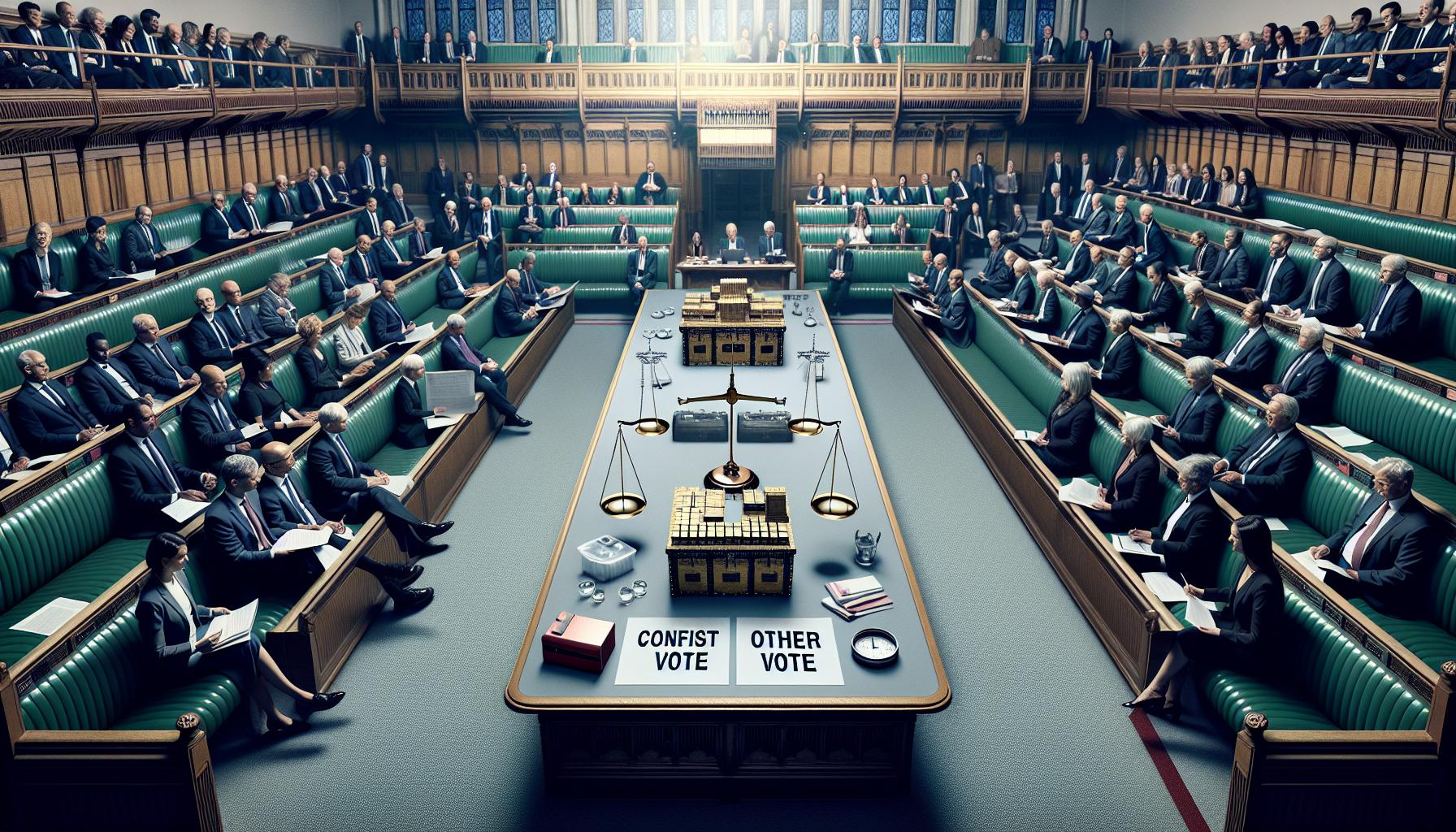
Differences Between Confidence Votes and Other Parliamentary Votes
Often misunderstood, confidence votes occupy a unique and critical position in parliamentary practice, sharply distinct from the wide variety of other votes that occur within the House of Commons. While many parliamentary votes deal with specific legislative proposals or procedural matters, confidence votes function as fundamental expressions of the government’s ongoing legitimacy and authority to govern. The stakes in a confidence vote are existential: failure to secure confidence typically triggers the resignation of the government or forces a general election, a consequence rarely attached to other parliamentary votes.
One key difference is that confidence votes are not merely about policy preferences or issue-based disagreement. Instead, they test whether the government commands the majority support of elected members essential for its survival. This majority backing is often demonstrated through votes on motions explicitly designated as confidence matters or implicitly tied to confidence by convention, such as budget approvals or major legislative agendas. Other votes-on bills, amendments, or committee motions-may influence policy direction, but they do not directly challenge the government’s right to continue in office unless identified as confidence matters.
- Explicit versus implicit confidence: Some votes are formally declared confidence votes, while others (like supply bills or budget votes) count as confidence tests by constitutional convention.
- Consequences: losing a confidence vote carries serious ramifications, frequently enough leading to the invocation of the Governor General’s powers to dissolve Parliament or invite an alternative government formation. Routine votes rarely bear such weight.
- Strategic considerations: Governments prioritize avoiding defeat on confidence matters, sometimes negotiating with opposition parties to secure survival, a dynamic less prevalent in standard legislative votes.
Such as, while opposition parties might frequently vote against government legislation as a routine challenge or bargaining tactic, it typically takes a deliberate motion of no confidence-or losing a pivotal budget vote-to precipitate a government’s fall. This strategic dimension is essential: governments treat confidence votes as political red lines. The ability to distinguish confidence votes from ordinary parliamentary business is crucial for members of Parliament, political strategists, and observers alike, as it signals when political battles extend beyond policy disagreements into struggles for executive survival.
By recognizing these distinctions, canadian citizens and political participants better understand the rhythm of parliamentary democracy-where not all defeats are equal, but confidence votes mark the ultimate test of a government’s mandate and durability.
The role of the Governor General After a No Confidence Vote
Few moments in Canadian parliamentary life highlight the pivotal role of the Governor General more starkly than following a vote of no confidence. When a government loses such a vote, it triggers a constitutional and political crossroads where the Governor General’s decisions will shape the immediate future of governance. Far from a mere ceremonial figure, the governor General acts as a constitutional safeguard, balancing political realities with established conventions to ensure the seamless operation of democracy.
Once it is clear the government no longer commands the confidence of the house of Commons, the Governor General typically has two main options: dissolve parliament and call a general election, or invite another party or coalition leader to form a government capable of securing parliamentary confidence.this choice is far from automatic and often involves consultations with political leaders, assessing whether a viable alternative government can maintain stability without plunging the country into the disruptions of an election. The Governor General’s discretion in this scenario underscores their role as a neutral arbiter acting in the best interests of the Canadian public, rather than a partisan actor.
Understanding the Governor General’s Constitutional Powers
- Dissolution of Parliament: This is the more straightforward route where a new election is called, allowing voters to decide the government’s composition afresh.
- Alternative Government Formation: Sometimes,especially when a viable opposition exists that can form a government,the Governor General may refuse dissolution and instead ask them to present a new government.
Historical precedents provide instructive examples about the Governor General’s nuanced role. for instance, while Canadian cases are rare, analogous events in Westminster-style democracies, like the 1975 Australian constitutional crisis, show how important the Governor General’s timing and judgment can be in moments of political impasse. In Canada,similar prudence ensures that the Governor General’s intervention after a no confidence vote maintains parliamentary democracy by preventing any single party from exploiting procedural mechanisms to cling to power unfairly[[[[[1]](https://www.reddit.com/r/askacanadian/comments/13ida75/what_would_happen_if_the_governor_general_didnt/),[[[[[2]](https://www.readersdigest.ca/culture/vote-of-no-confidence/).
What This Means for Canadians
For citizens, understanding the Governor General’s role helps clarify what happens behind the political scenes following dramatic parliamentary shifts. Rather than an abrupt end or chaotic power vacuum, the Governor General’s measured judgment usually ensures continuity, stability, and respect for democratic choice. Knowing this can empower voters with confidence that the system includes checks and balances that safeguard against political instability and abrupt governance breakdowns.
in practical terms, when you hear about a government losing a confidence vote, remember that the Governor General will weigh complex constitutional factors, consult political leaders, and only than make decisions that reflect both parliamentary reality and the broader public interest. This vital step underscores the resilience and maturity of Canada’s parliamentary democracy.
Common Misconceptions About votes of No Confidence
Few political procedures capture public inventiveness-and sometimes misunderstanding-quite like a vote of no confidence. Despite frequent media coverage, many Canadians harbor misconceptions about what such votes truly signify and how they function within the parliamentary system. for example, it is indeed frequently enough assumed that a single no confidence vote instantaneously topples a government, but the reality is more nuanced and rooted in constitutional conventions and political practice.
One common misunderstanding is that no confidence votes are solely tools of outright political opposition meant to forcibly remove a government. While opposition parties do initiate these motions, the purpose is fundamentally to test whether the governing party still holds the majority support in the House of Commons. Votes of no confidence can arise not only from dramatic political maneuvers but sometimes due to more technical reasons, such as defeat on budgetary legislation or key policy proposals.Thus,these votes serve as an essential democratic checkpoint rather than mere political gamesmanship.
another frequent misconception lies in the aftermath of a failed government. Many believe that losing a confidence vote guarantees an immediate general election. However, the Governor General’s role introduces an important layer of discretion and flexibility. Instead of promptly dissolving Parliament, the governor General may invite another party or coalition to form a government that can command the House’s confidence, avoiding the disruption of an election where possible. This step underscores the stabilizing function of Canada’s constitutional monarchy and safeguards parliamentary democracy from needless upheaval.[1]
Clearing Up Confusions: Practical Insights
- Not every loss is catastrophic: Sometimes governments lose votes on specific issues that don’t amount to confidence. Only certain motions-explicit confidence motions or those tied to budget and supply bills-trigger official no confidence status.
- “Surviving” a vote: If a government narrowly wins or the vote doesn’t amount to a loss of confidence, it continues governing, frequently enough with heightened caution to maintain support.
- Timing and political context matter: Governments may choose to test confidence deliberately during politically strategic moments,such as right before scheduled elections or after significant policy fallout.
understanding these realities allows citizens and observers to interpret parliamentary events with greater clarity,recognizing that votes of no confidence are not mere political theater but integral mechanisms upholding responsible governance and accountability. Recognizing the roles of both Parliament and the Governor General ensures a more informed perspective on Canada’s political stability amid moments of apparent crisis.
What Happens If the Government Survives a No Confidence Vote?
Few moments in parliamentary politics are as suspenseful as the proclamation of a no confidence vote result. When the government manages to survive such a test, it doesn’t simply breathe a sigh of relief; the aftermath sets a critical tone for how the administration proceeds forward. Surviving a no confidence vote often strengthens the government’s mandate-albeit sometimes tenuously-offering a renewed but cautious opportunity to govern. This narrow escape forces leaders to re-evaluate their parliamentary strategy, coalition-building efforts, and policy priorities to maintain stability.
A government that withstands a confidence challenge typically faces heightened pressure both internally and externally. Internally, cabinet ministers and party members become acutely aware that their grip on power is contingent upon continued parliamentary support, motivating tighter party discipline and strategic collaboration. Externally, opposition parties may intensify scrutiny, signaling that subsequent votes or motions could pose further challenges. To navigate this,prime ministers often engage in negotiation and compromise,seeking support from independents or smaller parties to secure a buffer against future confidence threats. In practical terms, this might meen modifying key legislation or calming contentious debates to avoid triggering another confidence crisis.
Building Momentum After a Narrow Victory
Survival also offers a chance for governments to capitalize politically, framing the result as a clear democratic endorsement. While the margin of survival matters, the outcome is used to project legitimacy and demonstrate that the government still commands the House’s confidence-a vital ingredient for effective governance. This political momentum can translate into:
- Renewed legitimacy: Reinforcing the government’s authority and bargaining power within Parliament.
- Policy momentum: Providing an opening to push prioritized bills that may have stalled.
- Public reassurance: Contributing to national stability by assuring citizens that governance continues smoothly.
However, it is important to note that survival is not synonymous with a clean slate. The government must often tread carefully on contentious issues to avoid reigniting instability, particularly if the confidence vote was narrowly won.
Learning from recent Canadian Contexts
For instance, when the Canadian government has survived confidence motions tied to budgets or key legislation, it faced an immediate need to ensure all members were aligned on future votes, preventing any surprises that might topple the administration later. This reflects the delicate balancing act inherent in parliamentary democracy: the government operates not just on majority numbers but on continuous, active support in the House of Commons.[1]
when a government survives a vote of no confidence, it gains a renewed mandate but must proceed with caution and strategic foresight. It’s an opportunity to stabilize governance and regain momentum, though it also highlights the fragile nature of political support and the ongoing need for consensus-building within Canada’s parliamentary system.
Frequently Asked questions
Q: How does a vote of no confidence influence the timing of Canadian federal elections?
A: A vote of no confidence typically triggers an early federal election if the government cannot regain confidence in the House of Commons. This interrupts the regular election cycle, meaning elections happen sooner than scheduled. Understanding this helps explain government stability and election timing, as detailed in our article’s sections on government stability and political consequences.
Q: What are the strategic reasons opposition parties call a vote of no confidence in Canada?
A: Opposition parties call a vote of no confidence to challenge the government’s legitimacy, frequently enough during political crises or unpopular decisions. This move aims to force an election or compel government changes.Learn more about political tactics and outcomes in the article’s discussions on consequences and initiation of no confidence votes.
Q: Can votes of no confidence in Canada be partial or issue-specific?
A: While most votes of no confidence address overall government support, some can focus on specific issues like budgets or key bills, classified as “confidence motions.” A loss on these can also topple the government. See the article section on differences between confidence votes and other parliamentary votes for more insights.
Q: What role does party discipline play during a no confidence vote in Canada?
A: Strong party discipline ensures most MPs vote along party lines in a no confidence motion, crucial for government survival. Defections or rebellions can trigger a government fall. This concept ties directly to how votes impact government stability,covered in our detailed analysis on political stability after no confidence votes.
Q: How does a government prepare for an upcoming vote of no confidence in Canada?
A: Governments prepare by rallying party members, negotiating with smaller parties, and sometimes adjusting policy to win support. they might also launch public campaigns to gain popular backing before the vote. Our article’s sections on government strategy and political consequences elaborate on these preparation methods.
Q: What happens procedurally if the government loses a vote of no confidence in Canada?
A: If the government loses a vote of no confidence, the Prime Minister must either resign or advise the Governor General to dissolve Parliament, leading to a federal election. This procedural outcome is central to the constitutional framework explained in the article’s legal sections.
Q: How often do votes of no confidence occur in Canadian federal politics?
A: Votes of no confidence are relatively rare but significant events that occur mainly during periods of political instability or crisis.Their infrequency makes each vote a critical moment, impacting government legitimacy and election timing. For historical context, refer to the article’s examples of past votes.
Q: Why do some no confidence motions fail despite government controversies in Canada?
A: No confidence motions may fail if the government maintains enough support through party discipline, alliances, or negotiation, even amid controversies.Survival means the government continues in power,sometimes with weakened authority. This dynamic is outlined in sections about government survival and misconceptions regarding no confidence votes.
For deeper insights on government consequences and procedural details, explore the related sections in our main article on “What Is a Vote of No Confidence in Canada? Explained.” Your understanding of this key parliamentary mechanism will strengthen every time you revisit these topics.
Wrapping Up
Understanding how a vote of no confidence operates in canada sheds light on the checks and balances vital to our parliamentary democracy. If you found this explanation helpful, be sure to explore related insights on Canada’s political system, like How Parliament Works and The Role of the Prime Minister Explained, to deepen your knowledge. Staying informed about these processes empowers you to engage more confidently with current events and political shifts.
Don’t miss out-subscribe to our newsletter for the latest updates and expert analyses on Canadian politics. Whether you’re curious about government stability or eager to understand related topics like parliamentary dissolutions and confidence motions, our resources are here to guide you. Have questions or thoughts? Share them in the comments below or connect with us for a personalized consultation to clarify complex political concepts. Your engagement helps us create content that matters and keeps you well-informed.