
Did you know that the voting age in most Canadian provinces has remained at 18 since it was first set decades ago? The question now is whether 16-year-olds should be given the right to vote, a topic gaining momentum in political debates across the country. This discussion matters becuase lowering the voting age could make democracy more inclusive and better reflect the voices of younger Canadians who are directly affected by today’s decisions. For readers wondering how such a change might impact political engagement, fairness, and youth portrayal, this overview explores the key arguments on both sides of the debate. Whether you’re a young person eager to have a say or a concerned voter curious about the implications, understanding this issue offers valuable insights into the future of Canada’s democratic process.Keep reading to discover why this seemingly small age adjustment could have a significant effect on the country’s political landscape and civic participation.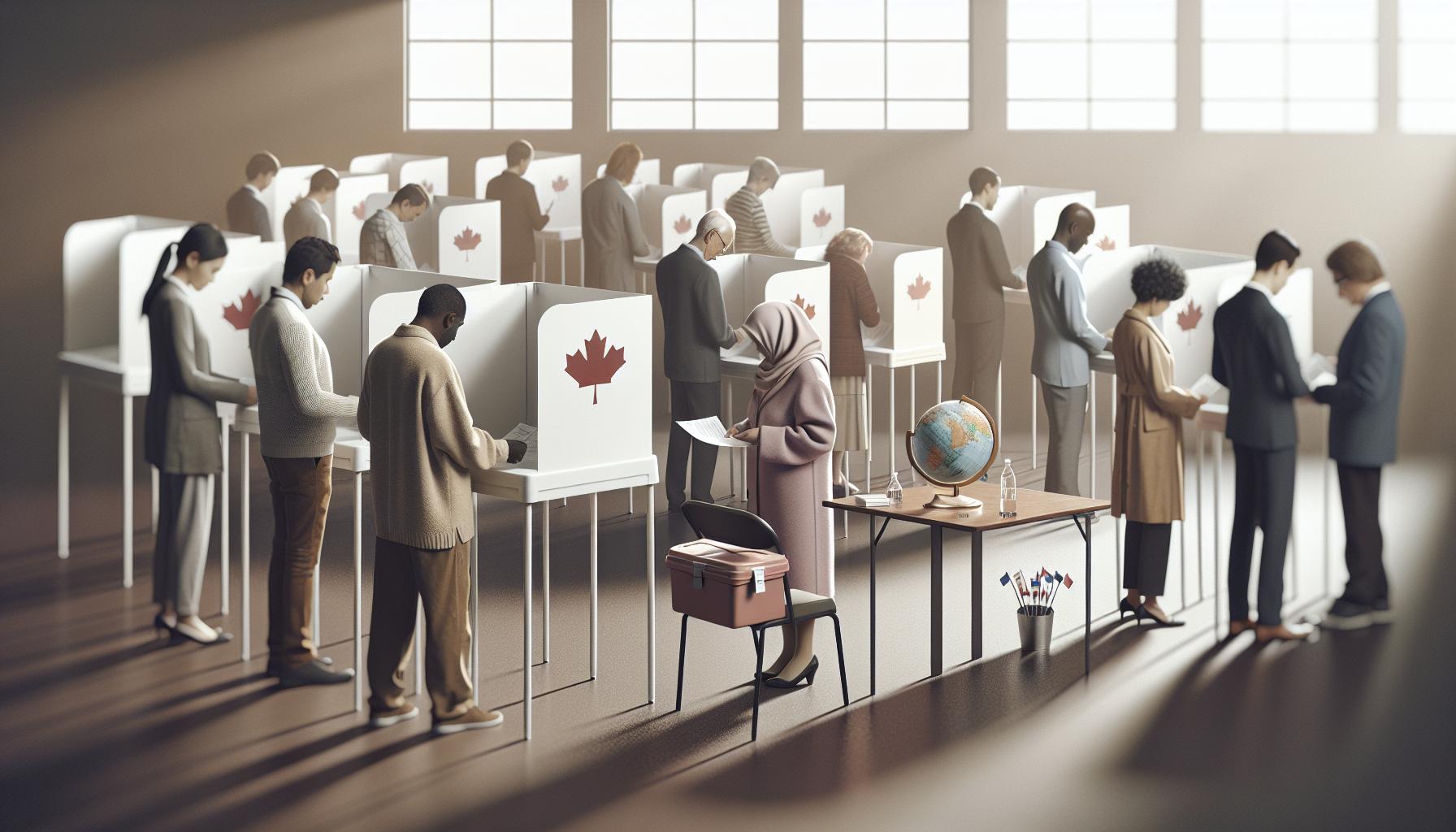
Table of Contents
- Understanding Voting Age Laws in Canada and Worldwide
- Arguments in Favor of Allowing 16 Year Olds to vote
- key Concerns and Counterarguments Against Lowering the Voting Age
- Impact of Lowering Voting Age on Political Engagement and Youth Empowerment
- Comparing Voting Rights and Civic Education for Teens in Different Regions
- Legal and Constitutional challenges of Changing Voting Age in Canada
- How lower Voting Age could Influence Canadian Elections and Policies
- Public Opinion and Youth Perspectives on voting at 16
- Examples of Successful Youth Voting Initiatives and Lessons Learned
- Potential Social and Educational Benefits of Early Voting Rights
- Faq
- Q: How would lowering the voting age to 16 effect youth political awareness in Canada? A: Lowering the voting age to 16 could significantly increase youth political awareness by encouraging early engagement with civic issues. Introducing votes at this age promotes lifelong participation and better-informed young voters, as explained in the article’s *Impact of Lowering Voting age on Political Engagement* section. Encouraging schools to integrate civic education supports this outcome. Q: What measures can schools take to prepare 16-year-olds for voting responsibly?
- Q: are there international examples where 16-year-olds successfully participate in elections?
- Q: What are the legal steps required to lower the voting age to 16 in Canada?
- Q: How might lowering the voting age to 16 impact voter turnout in Canadian elections?
- Q: What concerns do opponents raise about 16-year-olds voting, and how can they be addressed?
- Q: When is the earliest 16-year-olds might be allowed to vote in Canada if reforms pass?
- Q: How can citizens contribute to the debate on lowering the voting age to 16 in Canada?
- Future Outlook
Understanding Voting Age Laws in Canada and Worldwide
Voting age laws are foundational elements of democratic participation, frequently enough reflecting deep-rooted historical, cultural, and legal considerations within each country. In Canada,the federal voting age has been set at 18 as 1970,a reduction from the initial age of 21 established at Confederation in 1867. This change aligned with shifting perceptions about maturity and civic responsibility, positioning 18 as the standard age for legal adulthood and electoral participation [[3]](https://electionsanddemocracy.ca/voting-rights-through-time-0/case-study-3-youth-and-vote). Provinces, such as British Columbia, followed suit, lowering their voting age to 18 by the early 1990s to maintain consistency across federal and provincial elections [[2]](http://leg.bc.ca/learn/discover-your-legislature/1992-voting-age-lowered-to-18-years).
Globally,the minimum voting age varies considerably,reflecting diverse approaches to youth engagement and legal adulthood. While most democracies maintain 18 as the threshold, a growing number have begun to experiment with lowering the age to 16 in certain local or national elections. Countries like Austria, Argentina, and Scotland have incorporated voting rights for 16-year-olds at specific electoral levels, fostering early political engagement and encouraging lifelong voting habits. These international examples offer valuable insights into the potential implications of such reforms but also highlight the need to carefully balance legal readiness, political awareness, and societal values.
Key Criteria Behind Voting Age Determinations
- Legal Adulthood: Many countries correlate the voting age with the age of legal majority, which governs rights such as signing contracts, drinking alcohol, or joining the military.
- Cognitive and Emotional Maturity: Legislators often consider whether young people possess the necessary decision-making skills and understanding to engage meaningfully in elections.
- Consistency Across Laws: Aligning voting age with other age-related rights helps simplify legal frameworks and public expectations.
- Social and Civic Education: Jurisdictions with comprehensive civic education programs may be better positioned to lower the voting age responsibly.
Understanding the variation and rationale behind voting age laws can aid in evaluating the merits of lowering the age in Canada. Advocates argue that 16-year-olds are capable citizens who can benefit from early inclusion, while opponents stress the importance of maturity and experience. Appreciating the global landscape and Canada’s own legislative history offers a balanced foundation for further discussion. For Canadians, the current requirements remain clear: to vote federally, one must be a Canadian citizen, at least 18 years old on election day, and able to prove their identity and residence [[1]](https://www.elections.ca/content.aspx?section=vot&dir=bkg&document=ec90518&lang=e). Though, the ongoing debate continues to challenge these established norms.
Arguments in Favor of Allowing 16 Year Olds to vote
Lowering the voting age to 16 has the potential to energize democratic participation by tapping into a demographic that is traditionally underrepresented, yet highly capable of contributing meaningful perspectives. Evidence from countries like Austria, were 16- and 17-year-olds have been voting in national elections as 2007, shows not only heightened voter turnout among younger cohorts but also increased engagement with political issues earlier in life. This early involvement nurtures habits of civic responsibility that frequently enough continue throughout adulthood, fostering a more informed and active electorate over time [[1]](https://pmc.ncbi.nlm.nih.gov/articles/PMC4864896/).
Advocates emphasize that many 16-year-olds already undertake significant responsibilities, such as working part-time jobs, paying taxes, and making critically important decisions about their education and futures. Granting them the vote is seen as a logical extension of recognizing their maturity and stake in society. Moreover,by enabling youth to influence policies affecting education,the habitat,and employment prospects-issues they will face long-term-the political system becomes more inclusive and responsive to younger generations’ needs. Early voting rights can also help close the gap between political institutions and youth,making politics less abstract and more personally relevant.
Practical Benefits of Lowering the Voting Age
- Encourages lifelong voting habits: Engaging young people early increases the likelihood of consistent voter turnout in future elections.
- Amplifies youth voices: Policies impacting education, climate change, and employment become more representative of the younger population’s priorities.
- Enhances civic education: When voting rights align with schooling years, it can reinforce formal civic lessons through practical experience.
- Improves democratic legitimacy: A broader electorate that includes younger voters reflects the full spectrum of the population, strengthening democracy.
Real-world examples underscore that 16-year-olds are not only ready but eager to participate responsibly. In Scotland, where 16-year-olds voted in the 2014 independence referendum, turnout rates were comparable to older age groups, dispelling myths about immaturity or apathy. Implementing well-designed voter education programs alongside this expansion ensures young voters have the tools to make informed choices. By valuing young citizens as stakeholders early on, Canada could build a more engaged, diverse, and forward-looking democracy.
key Concerns and Counterarguments Against Lowering the Voting Age
Some of the most persistent concerns about lowering the voting age to 16 focus on questions of maturity, political knowledge, and motivation. Critics often point out that many teenagers may lack sufficient life experience or the cognitive development needed to make informed electoral decisions. Skeptics worry this could lead to less thoughtful voting and potentially weaken the overall quality of democratic participation. Such as, doubts remain about whether younger voters consistently seek out comprehensive political information or if they are more susceptible to peer pressure and social influence [[1]](https://pmc.ncbi.nlm.nih.gov/articles/PMC4020373/).
Another significant counterargument centers on the assumption that 16-year-olds are generally less engaged and motivated to participate in elections compared to older voters. Critics argue that early adolescence is marked by competing priorities, such as education and social development, which might limit interest in politics. Some suggest that before expanding voting rights, more effort should be invested in enhancing civic education and political awareness to ensure young voters are prepared to exercise this responsibility effectively. The concern is not only about the act of voting itself but about whether many youth possess the necessary political knowledge and critical thinking skills needed to contribute meaningfully to electoral outcomes [[2]](https://www.sciencedirect.com/science/article/pii/S026137942400009X).
Common Concerns Explored
- Cognitive developmental readiness: Critics argue decision-making capabilities may not be fully matured at 16, potentially affecting vote quality.
- Political engagement levels: Alleged lower motivation and information-seeking behavior in teenagers could lead to apathetic voting patterns.
- Legal and societal consistency: Questioning how voting rights align with other legal responsibilities and age thresholds, such as drinking age, driving, or contractual obligations.
- Impact on election outcomes: Fears that the voting bloc of 16- and 17-year-olds could be disproportionately influenced by specific interest groups or family perspectives, potentially skewing results.
While these concerns are critically important, many advocates urge that evidence from countries and regions where voting age has been lowered demonstrates that with appropriate civic education and support, young voters are capable of participating responsibly. The discourse encourages careful implementation-such as integrating comprehensive voter education programs-to mitigate risks of uninformed or disengaged voting. Ultimately, this debate highlights the need for balanced policy-making that weighs enthusiasm for inclusivity against safeguarding the integrity and effectiveness of democratic processes [[3]](https://www.aph.gov.au/DocumentStore.ashx?id=c31072cb-a1fb-4849-85f8-456704c5d9d6&subId=658345).
Impact of Lowering Voting Age on Political Engagement and Youth Empowerment
Expanding voting rights to 16-year-olds holds significant promise for transforming political engagement and fostering a stronger sense of empowerment among youth. Studies and real-world examples from countries like Austria, Scotland, and brazil illustrate that given the right conditions-including targeted civic education and accessible voting procedures-young voters can participate thoughtfully and enthusiastically in democratic processes. Early enfranchisement often coincides with heightened political interest and a lifelong habit of voting, which ultimately contributes to a more inclusive and representative electorate.
One of the most compelling impacts of lowering the voting age is how it enhances political efficacy among youth. When teenagers are trusted with the vote, they often feel a deeper connection to societal issues and a greater responsibility toward their communities. This psychological boost can stimulate increased participation not only in elections but also in related civic activities such as community organizing, policy debates, and local government engagement. By integrating voting rights with existing educational frameworks, especially in schools, governments can create a fertile environment where young people develop critical thinking and analytical skills related to politics and governance.
- Early engagement breeds informed voters: Civic education aligned with voting rights encourages teens to seek out political information proactively rather than passively accepting it.
- Empowerment through inclusion: Being part of the electorate helps teenagers feel recognized as stakeholders in their society’s future, boosting confidence and long-term participation.
- Potential to reshape political priorities: Youth voters often bring fresh perspectives on issues like climate change, education, and digital rights, nudging policymakers to address these concerns more directly.
Practical experience from countries that have lowered the voting age reveals that political institutions must pair enfranchisement with robust support systems. For example, Scotland’s 2014 independence referendum successfully included 16- and 17-year-olds, accompanied by vigorous voter education efforts, resulting in a turnout rate among young voters comparable to older age groups. This suggests that the impact on political engagement can be positive and substantial when young voters are adequately prepared and respected as participants.
| Country | Voting Age | Notable Impact on Youth Engagement | Supporting measures |
|---|---|---|---|
| Austria | 16 | Higher youth turnout relative to countries with conventional voting age | Mandatory civic education integrated with voting rights |
| Scotland | 16 | Youth turnout in 2014 referendum ~75%, matching older groups | Targeted youth outreach and accessible polling stations |
| Brazil | 16 (optional) | Broadened political participation among teenagers, especially in urban areas | Civic programs and voter awareness campaigns in schools |
For Canadian policymakers and advocates, these examples underline the importance of coupling any lowering of the voting age with comprehensive voter education and youth-directed engagement strategies. By doing so,the nation can unlock the untapped potential of its younger citizens,encouraging a generation of informed,motivated voters who contribute actively to shaping Canada’s democratic future and social fabric.
Comparing Voting Rights and Civic Education for Teens in Different Regions
Around the world, voting rights and civic education for teenagers vary significantly, revealing a mosaic of approaches that can inform Canada’s ongoing debate about enfranchising 16-year-olds. Some countries provide compelling models where early voting rights are paired with robust civic education, resulting in politically engaged young citizens. Others emphasize conventional voting ages but struggle with translating civics curricula into genuine voter participation, underscoring the importance of integrated policy and education strategies.
In nations like Austria and Scotland, lowering the voting age to 16 has coincided with well-structured civic education programs and inclusive electoral practices. Austria’s mandatory civic curriculum is interwoven with voting rights, helping teenagers not only understand political processes but also translate that understanding into active voting behavior. Scotland’s 2014 independence referendum demonstrated how accessible voting infrastructure combined with youth-targeted outreach efforts can produce a youth turnout on par with older age groups. these examples suggest that when voting rights are granted early and supported with effective education, young voters are capable and willing participants in democracy.
Lessons from Voting Rights and Civic Education Elsewhere
By contrast, research from several U.S. states raises warnings about the limitations of civics education that focuses primarily on rote memorization of political facts without fostering critical engagement or connection to lived political realities. A study highlighted that mandated civics tests did not translate to higher youth voter turnout, illuminating that knowledge alone isn’t enough to encourage electoral participation; experiential and participatory elements are essential. These findings suggest that countries and regions contemplating lowering the voting age must avoid relying solely on standardized testing or knowledge checks and rather foster meaningful interaction with political life.
| region | Voting Age | Civic Education Approach | Impact on Youth Engagement |
|---|---|---|---|
| Austria | 16 | Mandatory, integrated civic education and voting rights | High youth turnout and political efficacy |
| Scotland | 16 (for referendum) | Youth-targeted outreach, accessible polling stations | Strong youth participation (75% turnout) |
| Brazil | 16 (optional) | School-based voter awareness campaigns | Expanded youth political participation in urban areas |
| United States (selected states) | 18 | Civics testing focused on political knowledge recall | No significant increase in youth turnout |
Practical Advice for Canada
For Canadian policymakers and educators, these comparative insights emphasize the necessity of coupling any potential lowering of the voting age with a renewed focus on civic education that transcends memorization. To realise the full potential of youth enfranchisement, civic programs should prioritize:
- Interactive learning: Encouraging critical thinking, debate, and real-world civic participation to build meaningful political efficacy.
- Accessible voter engagement: Simplifying voting processes and enhancing outreach tailored specifically for younger voters.
- Community involvement: Connecting political education to local issues and enabling youth to see their tangible impact on governance.
Adopting such strategies can prevent the pitfalls seen elsewhere and promote a more informed, motivated, and consistent youth electorate. Ultimately, blending rights with responsibility and education ensures that granting voting privileges to 16-year-olds is not merely symbolic but a substantive expansion of democratic engagement.
Legal and Constitutional challenges of Changing Voting Age in Canada
Few issues in Canadian political reform ignite as much legal complexity as the question of lowering the voting age to 16. the legal foundation for voting rights lies primarily in the Canada Elections Act, which currently sets the minimum voting age at 18. Any alteration requires not only legislative action but a careful navigation through constitutional parameters and judicial interpretations. This dual hurdle ensures that proposed changes face rigorous scrutiny around eligibility, federal versus provincial jurisdiction, and the principles underlying democratic representation.
At its core, changing the voting age triggers constitutional considerations under sections that protect electoral rights. The canadian Charter of Rights and Freedoms guarantees the right to vote to every citizen 18 years and older, implying that lowering the voting age would require either a formal amendment to legislation or potentially the Charter itself. This introduces an inherent tension: while Parliament has the authority to modify election laws, it cannot contravene the Charter without following established procedures or being subject to court challenges. Thus, any reform effort must be precise in its legislative drafting, anticipating possible claims that youth enfranchisement either dilutes electoral integrity or conflicts with existing rights frameworks.
Practical Considerations in Legislative Reform
Historically, adjustments to voting laws in Canada, such as lowering the voting age from 21 to 18 in the 1970s, were achieved through parliamentary acts alone without constitutional amendments. However, the legal landscape has evolved, and the Charter introduces a more robust protections environment. Consequently, proponents of voting age reform should consider:
- Engaging constitutional experts: Collaborate with legal professionals to draft amendments that align with charter provisions and withstand potential judicial review.
- Coordinating federal and provincial policies: Given that provinces administer many aspects of voter registration and civics education, uniformity helps avoid jurisdictional conflicts.
- Public consultation and education: Demonstrating broad democratic support through public engagement can strengthen the legitimacy of legislative amendments and reduce opposition grounded in perceived paternalism.
Moreover, any legislative proposal must clarify eligibility criteria, ensuring that new voters satisfy citizenship and residency requirements while addressing concerns over maturity and informed participation.
Lessons from Comparative Jurisdictions
Looking abroad, countries like Austria and Scotland have successfully implemented voting rights at 16 by integrating reform within their legal frameworks while emphasizing complementary civic education.These examples highlight the necessity for Canada to prepare robust educational infrastructure accompanying any change to avoid legal and social pitfalls.
| Country | Voting Age | Legal Approach | Implementation Highlights |
|---|---|---|---|
| Austria | 16 | Electoral law amended within constitutional bounds | Mandatory civic education supporting voting rights |
| Scotland | 16 (referendum only) | Temporary legal provisions for referendum participation | Youth-centric outreach and polling access |
| Canada | 18 | canada Elections Act; Charter protections | Legal debates ongoing for lowering voting age |
Canada may also face unique challenges regarding indigenous youth voting rights and language considerations, which require thoughtful integration into legislative reforms.
Ultimately, respecting both the letter and spirit of canada’s democratic legal framework while fostering youth participation calls for a phased, consultative process. Providing clear legal pathways combined with educational support can minimize disputes and build broad consensus, ensuring that lowering the voting age is a well-founded enhancement to Canadian democracy rather than a source of constitutional conflict.
How lower Voting Age could Influence Canadian Elections and Policies
Lowering the voting age to 16 could transform canadian elections in ways that extend beyond expanding the electorate. Youth voters bring distinct perspectives and priorities that frequently enough differ from older demographics, potentially reshaping political discourse and influencing policy agendas. Political parties, aware of this newly enfranchised group, would likely adjust platforms to address issues crucial to younger voters, such as climate change, education reform, affordable housing, and mental health services. This shift could promote a more forward-looking policy environment that better reflects the long-term interests of Canadian society.
Introducing younger voters might also invigorate political engagement by embedding democratic participation at an earlier age. Studies from countries like austria show that 16- and 17-year-old voters tend to maintain higher turnout rates as they age, indicating that early enfranchisement helps establish lifelong voting habits. For Canadian policymakers and advocacy groups, this suggests an opportunity to build a more active and informed electorate, with youth engagement serving as a cornerstone for healthier democratic processes. The integration of voting rights with school-based civic education could further reinforce this effect by providing practical experience alongside theoretical knowledge.
- Campaign strategies would evolve: Parties might develop targeted outreach and dialog methods, such as social media campaigns and youth forums, to directly engage younger voters.
- Policy priorities could broaden: Urban planning, digital rights, and environmental sustainability might gain prominence due to youth concerns.
- Electoral dynamics would shift: In close races, the votes of young people could prove decisive, encouraging politicians to more seriously consider youth-related issues.
At the same time, expanding the electorate to include 16- and 17-year-olds would require logistical planning, from updating voter registration systems to ensuring accessible polling stations in schools or community centers. Political institutions would need to invest in youth-friendly information campaigns and training for election officials on engaging with younger voters. Despite these challenges, the potential benefits for democratic vitality and policy relevance present a compelling case to consider. By thoughtfully enabling younger Canadians to vote, elections could become more inclusive and responsive, fostering a political culture that values the voices and perspectives of its future leaders.
Public Opinion and Youth Perspectives on voting at 16
The conversation around lowering the voting age to 16 in Canada is gaining momentum, reflecting evolving societal attitudes toward youth participation in democracy. Interestingly, a growing body of research and polling data highlights that many young Canadians feel ready and eager to engage in political decision-making. Surveys have shown that a significant portion of teenagers actually support giving themselves the right to vote,citing a keen interest in shaping policies affecting their future-especially on pressing issues like climate change and education funding. This enthusiasm challenges outdated assumptions that young people lack the maturity or motivation needed to cast informed votes.
youth Engagement and Confidence in Voting
Beyond general support, many youth express a desire for voting rights tied closely to their evolving sense of civic responsibility. At 16, many are already working, paying taxes, and making crucial life decisions, which fuels their argument for equal representation. Though,youth perspectives also highlight the importance of accessible and relevant civic education. many young people advocate for school programs that not only teach the mechanics of voting but also encourage critical thinking about policy and governance,equipping them with the tools to become confident voters. Without this foundational support, even motivated youth can feel overwhelmed by electoral processes.
Public Opinion Trends and Political Responsiveness
Public opinion among adults remains divided but is slowly tilting toward acceptance in some regions, especially where trials or local initiatives to lower the voting age have been accomplished. For example, jurisdictions that have enabled 16-year-olds to vote report positive feedback from communities appreciating the fresh perspectives young voters bring. This shift is mirrored in political parties adapting outreach strategies to include younger voices, which in turn can influence voter turnout and election outcomes. Practical examples indicate younger voters often bring new priorities into political discourse, prompting politicians to pay closer attention to youth-centric issues.
- many young Canadians support early voting rights, seeing it as a step toward greater empowerment and inclusion.
- Effective civic education systems are critical to ensuring youth feel prepared and informed about voting responsibilities.
- Political parties stand to benefit by engaging youth early, cultivating lifelong voters who will influence the political landscape.
Understanding these perspectives can guide policymakers and educators in crafting initiatives that respect and amplify youth voices, ensuring any changes to voting laws come paired with the necessary resources to empower young voters. This balanced approach not only nurtures democratic participation but also underscores the evolving role of youth as active contributors to Canada’s political future[[1]](https://pmc.ncbi.nlm.nih.gov/articles/PMC4020373/)[[3]](https://fairvote.org/archives/why_should_we_lower_the_voting_age_to_16/).
Examples of Successful Youth Voting Initiatives and Lessons Learned
Youth enfranchisement experiments at 16 years old around the globe provide valuable insights into how lowering the voting age can reshape democratic participation. Notably, countries like Austria, Scotland, and certain municipalities in Germany have paved the way by integrating 16-year-olds into their electoral systems, yielding encouraging data about increased engagement and informed voting behavior. These real-world models underscore that when provided the right educational support and civic infrastructure,young voters can contribute meaningfully to political discourse and outcomes.
Austria’s nationwide decision in 2007 to lower the voting age in all elections to 16 offers a pioneering case worth examining. Following this change, turnout rates among the youngest voters have consistently matched or even exceeded expectations relative to their age group. One key lesson from Austria is the impact of a strong school-based civic education system that prepares youth in advance for electoral participation.This comprehensive approach to voter readiness helps mitigate concerns about maturity or political awareness, as young Austrians display thoughtful engagement with candidates and policies. These findings challenge stereotypes and suggest that age alone is not a barrier to responsible voting.
Similarly, Scotland’s 2014 independence referendum featured 16 and 17-year-olds as eligible voters, making it one of the first high-profile instances of youth voting in a major election on British soil. The initiative was coupled with targeted outreach and youth-friendly voter information campaigns, which boosted awareness and minimized procedural confusion. Studies following the event noted that younger voters participated at relatively high rates and reported feeling motivated to have their voices heard on consequential political decisions. This experience highlights the essential role of deliberate engagement strategies in ensuring youth turnout and meaningful involvement.
- Early, integrated civic education: Implement comprehensive curriculum that starts well before voting age to build foundational knowledge and interest.
- Youth-centric voter materials: Design accessible, jargon-free election guides and digital content tailored specifically for young audiences.
- Community and peer engagement: Leverage youth groups, schools, and social media to foster peer conversations and political interest.
- Local pilot programs: Start with municipal elections or school board votes to test and refine approaches before scaling nationally.
| Country/Region | Voting Age Lowered to | Key Initiative | Outcome/Lessons |
|---|---|---|---|
| Austria | 16 | Nationwide voting rights with strong civic education integration | Consistent youth turnout; informed electorate; framework for readiness |
| Scotland | 16 (for specific referendum) | Referendum voting with targeted youth outreach | High youth participation; motivation to engage on critical issues |
| Germany (Local) | 16 (varies by municipality) | Local government and school board elections | Positive community feedback; gradual cultural shift in youth engagement |
Drawing from these experiences, Canadian policymakers and educators can consider phased implementation-beginning with select local elections and coupling voting rights expansion with strengthened civic education programs tailored for teenagers. Equally important is adopting communication strategies that resonate with youth culture and leveraging social platforms to demystify voting processes. These steps collectively lay the foundation for a more engaged, politically aware generation, aligning democratic inclusion with contemporary social realities. By learning from international precedents, Canada can navigate practical challenges and harness the enthusiasm of its young citizens to enrich the electoral landscape.
Potential Social and Educational Benefits of Early Voting Rights
Lowering the voting age to 16 can unlock a range of social and educational benefits that extend far beyond the act of casting a ballot. One of the most compelling advantages is the reinforcement of civic engagement during a formative stage of life, when young people are developing a sense of community identity and responsibility. Participating in elections helps teenagers connect abstract political concepts to real-world outcomes,fostering a lifelong habit of involvement in democratic processes.
Educationally, integrating voting rights with robust civic education creates powerful synergies. For example, when youth are allowed to vote, schools are incentivized to enhance curriculum content related to government functions, critical thinking, and public policy analysis. This approach, pioneered in places like Austria, demonstrates how early enfranchisement paired with targeted educational programs equips young voters with the knowledge and confidence needed to make informed decisions. It effectively bridges classroom learning and active citizenship, turning theoretical ideas into tangible participation.
Strengthening Social Cohesion and Responsibility
Granting 16-year-olds the right to vote can also strengthen social cohesion by encouraging inclusivity. Young voters often bring fresh perspectives and priorities to the political landscape, influencing policies on education, climate change, and social justice issues that directly impact their lives. This inclusion promotes intergenerational dialogue and helps politicians better understand the needs and concerns of younger populations. Moreover, early enfranchisement supports the idea that civic rights come with civic responsibilities, fostering maturity and a sense of empowerment in youth.
- Enhanced civic knowledge: Real elections motivate schools to teach relevant political content with greater urgency and clarity.
- Increased political efficacy: Early voting experiences strengthen confidence in one’s ability to influence community and national affairs.
- Social inclusion: Youth votes ensure their interests are represented, promoting policies attuned to evolving societal challenges.
- long-term electoral participation: Early voter engagement correlates with sustained voting habits into adulthood.
Lessons From International models
Experiences from countries that have lowered the voting age reveal that early voting rights frequently enough lead to positive educational outcomes. For instance,in Scotland’s 2014 independence referendum,targeted youth outreach campaigns simplified complex political information,making participation accessible and meaningful. This empowered young voters and increased their political literacy, which in turn raised awareness and discussion within families and communities. Similarly, in local German municipalities, involving 16-year-olds in school board elections connects students directly with issues affecting their education, promoting active citizenship at the grassroots level.
| Country | Voting Age | educational Integration | Observed Benefits |
|---|---|---|---|
| Austria | 16 (nationwide) | Mandatory civic education linked to voting | High youth voter turnout; informed choices; civic preparedness |
| Scotland | 16 (referendum) | Youth-focused outreach and materials | Increased political engagement; stronger public discourse |
| Germany (municipal) | 16 (varies) | School-board elections involve youth | Gradual cultural shift; enhanced community participation |
By learning from these cases,Canada can harness the benefits of early voting rights to cultivate an informed,engaged,and socially responsible generation. Encouraging youth to vote not only promotes better educational outcomes but also helps build a more inclusive democracy that reflects the diverse voices shaping the country’s future.
Faq
Q: How would lowering the voting age to 16 effect youth political awareness in Canada?
A: Lowering the voting age to 16 could significantly increase youth political awareness by encouraging early engagement with civic issues. Introducing votes at this age promotes lifelong participation and better-informed young voters, as explained in the article’s *Impact of Lowering Voting age on Political Engagement* section. Encouraging schools to integrate civic education supports this outcome.
Q: What measures can schools take to prepare 16-year-olds for voting responsibly?
A: Schools can enhance civics curricula with practical lessons on government functions, critical thinking, and election processes to prepare 16-year-olds for responsible voting. Integrating mock elections and debates fosters informed decision-making, aligning with findings in the *Potential Social and Educational Benefits of Early Voting Rights* section. this prepares youth to engage meaningfully in democracy.
Q: are there international examples where 16-year-olds successfully participate in elections?
A: Yes, countries like Austria and Scotland allow 16-year-olds to vote with positive outcomes, including increased political engagement and voter turnout among youth. These international examples offer valuable lessons for Canada, as discussed in the *Comparing voting Rights and Civic Education* part of the article, supporting informed debate on lowering Canada’s voting age.
Q: What are the legal steps required to lower the voting age to 16 in Canada?
A: Lowering Canada’s voting age to 16 requires amendments to federal or provincial election laws and potentially constitutional challenges. The process involves legislative approval and public consultations, detailed in the *Legal and Constitutional Challenges* section. Advocacy groups and legal representatives play key roles in pushing for these reforms.
Q: How might lowering the voting age to 16 impact voter turnout in Canadian elections?
A: Allowing 16-year-olds to vote is expected to boost overall voter turnout by engaging younger demographics early, building lifelong voting habits. This can revitalize democratic participation, as noted in the *Impact of Lowering Voting Age on Political Engagement* section. Implementing accessible voting education can further maximize this effect.
Q: What concerns do opponents raise about 16-year-olds voting, and how can they be addressed?
A: Opponents frequently enough question the maturity and political knowledge of 16-year-olds. These concerns can be addressed by enhancing civic education and providing practical voting experience, outlined in the article’s *Key Concerns and Counterarguments* section. Clarity and education are crucial to ensuring informed youth participation.
Q: When is the earliest 16-year-olds might be allowed to vote in Canada if reforms pass?
A: if legislative reforms succeed, 16-year-olds could potentially vote in upcoming provincial or federal elections within a few years. Reform timelines vary by jurisdiction, as detailed in the *Legal and Constitutional Challenges* section. Staying updated with advocacy groups’ campaigns can provide the latest progress.
Q: How can citizens contribute to the debate on lowering the voting age to 16 in Canada?
A: Citizens can contribute by participating in public consultations, supporting advocacy organizations, and educating peers about youth voting rights. Engaging in local political discussions empowers informed community dialogue, aligning with recommendations in the *Public Opinion and Youth Perspectives* section. Staying involved encourages democratic evolution.
—
*For more insights, explore the article’s sections on legal challenges and youth political engagement to deepen your understanding of the evolving voting age debate.*
Future Outlook
Understanding the debate over whether 16 year olds should be allowed to vote in Canada highlights critically important questions about youth engagement and democratic representation. As discussions continue, exploring how lowering the voting age could impact political participation and policy-making remains essential.If you’re interested in learning more about Canada’s electoral system or youth civic involvement, be sure to check out our articles on Canadian voting rights and youth in politics.
Don’t miss the chance to deepen your understanding-sign up for our newsletter to stay informed about evolving debates and new perspectives on voting policies. Have thoughts on the voting age or want to share your opinion? Join the conversation below and connect with others passionate about shaping Canada’s democratic future. Exploring related topics like electoral reform and youth activism can offer even greater insights, so keep browsing and stay engaged with the issues that matter most.
A: Yes, countries like Austria and Scotland allow 16-year-olds to vote with positive outcomes, including increased political engagement and voter turnout among youth. These international examples offer valuable lessons for Canada, as discussed in the *Comparing voting Rights and Civic Education* part of the article, supporting informed debate on lowering Canada’s voting age.
A: Citizens can contribute by participating in public consultations, supporting advocacy organizations, and educating peers about youth voting rights. Engaging in local political discussions empowers informed community dialogue, aligning with recommendations in the *Public Opinion and Youth Perspectives* section. Staying involved encourages democratic evolution.