

Did you know that in Canadian politics, teh Official Opposition plays a critical role in holding the government accountable and shaping national debate? Official Opposition party status is granted to the political party with the second largest number of seats in the House of Commons or a provincial legislature. This status comes with critically important responsibilities and privileges, including leading criticism of government policies and presenting alternative solutions. Understanding what qualifies a party for this designation helps clarify how Canada’s democratic system functions beyond just the ruling party. Whether you’re a student, voter, or political enthusiast, grasping the importance of Official Opposition status reveals how balance and transparency are maintained in government. keep reading to discover the criteria, powers, and impact of the Official Opposition party in Canada’s parliamentary landscape - insights that deepen your recognition of how Canadian democracy remains vibrant and responsive to its citizens.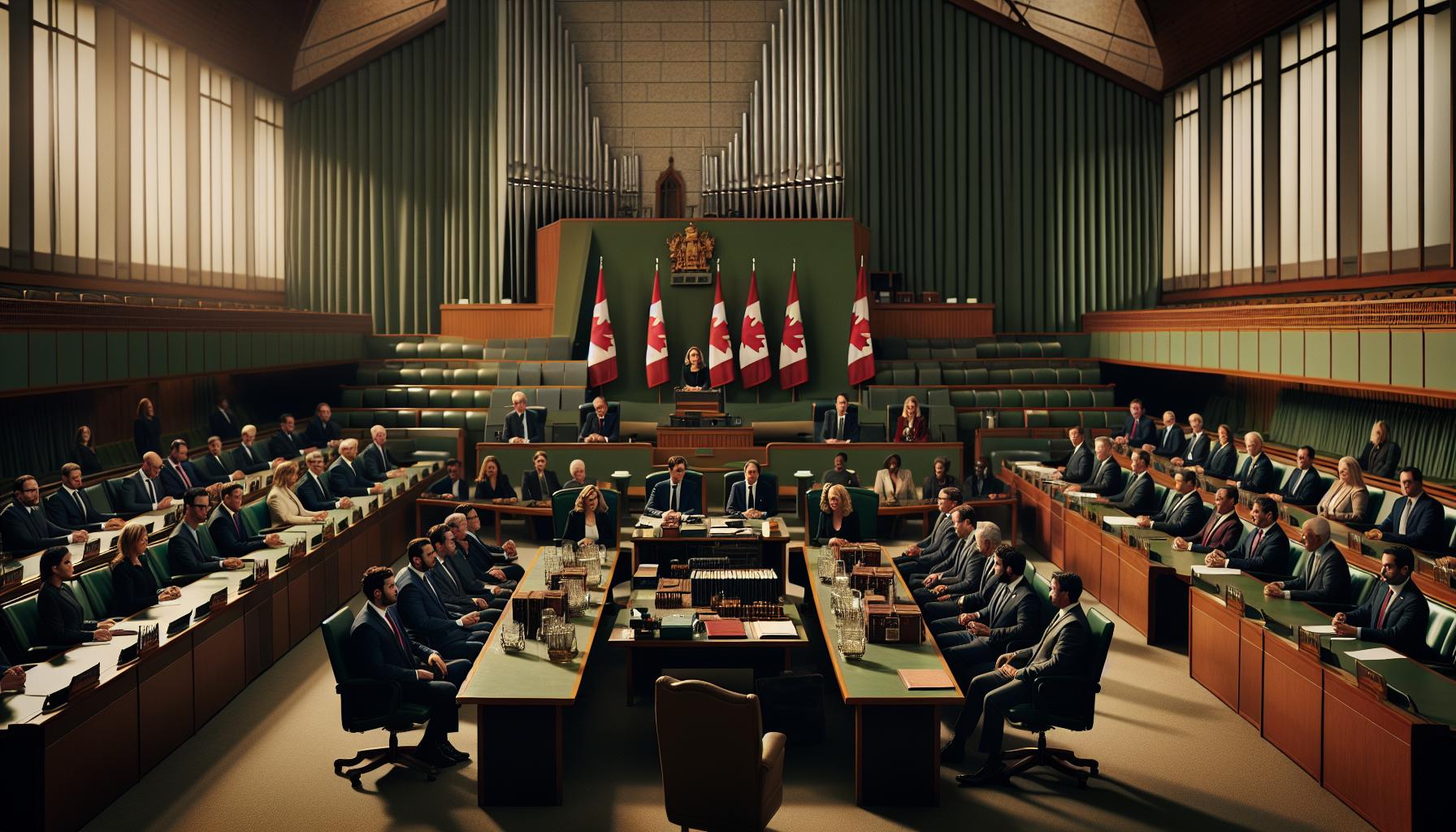
Table of Contents
- What Defines Official Opposition Party Status in Canada
- Key Criteria and Legal requirements for Official Opposition
- the Role and Importance of the Official Opposition Party
- How Official Opposition Status Impacts Parliamentary Privileges
- Historical Changes and trends in Opposition Recognition
- Common Misconceptions About Official opposition status
- Comparison of Official Opposition Rules Across Canadian Provinces
- Process for Losing or Gaining Official Opposition Status
- Influence of Party Size and Seats on Opposition Recognition
- Consequences for Smaller Parties without Official Status
- Future Outlook: Potential Reforms to Opposition Recognition Rules
- FAQ
- Q: How does the Official Opposition Party status affect access to parliamentary resources in Canada? A: The Official Opposition Party status grants enhanced access to parliamentary resources such as funding, research staff, and speaking time. This status ensures the opposition can effectively scrutinize the government, supporting a balanced democratic process. For practical insight, explore our section on How Official Opposition Status Impacts Parliamentary Privileges for detailed guidance. Q: Why is party seat count crucial for maintaining Official Opposition status in Canada?
- Q: Can coalition parties in Canada qualify for Official Opposition status together?
- Q: how does Official Opposition status differ between federal and provincial levels in canada?
- Q: What happens if the Official Opposition party loses members mid-term in Canada?
- Q: How does Official Opposition status influence a party’s election strategy in Canada?
- Q: Are independent members or small parties ever recognized as the Official Opposition in Canada?
- Q: How does Official Opposition status enhance democratic accountability in Canada?
- In Retrospect
What Defines Official Opposition Party Status in Canada
Parliamentary democracy thrives on a clear balance between governing parties and those who hold them to account. In Canada, the status of the Official Opposition is a critical element of this balance, signifying the largest political party not in government within the House of Commons. This designation is not merely symbolic; it carries formal recognition under parliamentary rules and confers unique responsibilities and privileges. Understanding what defines this status shines light on how parliamentary democracy functions to ensure government transparency and responsiveness.
Strictly speaking, Official Opposition Party status is determined primarily by the number of seats a party holds relative to others in the House of Commons. The party that wins the second-largest number of seats after an election assumes this role. This party must be organized,formally registered,and composed of members who demonstrate cohesion in opposition to the governing party.The Speaker of the House and parliamentary authorities officially recognize the party, enabling it to appoint leaders such as the Leader of the Official Opposition and organize a formal shadow cabinet, as seen with the current Conservative Party leadership team[[1]](https://www.conservative.ca/team/shadow-cabinet/).
Distinctive Features of Official Opposition Status
- Leader Recognition: The party leader is formally acknowledged as the Leader of the Official Opposition,giving them a prominent role in parliamentary debates and ceremonies.
- Shadow Cabinet Formation: The status allows the party to establish a shadow cabinet, where members act as critics to corresponding government ministers, scrutinizing policies and proposing alternatives.
- Parliamentary Privileges: The party receives funding and additional speaking time, supporting its function as the “government-in-waiting.”
While seat count is the major factor, other considerations can sometimes influence the recognition of a party’s status. For instance, if no single party clearly qualifies as the official opposition or if smaller parties claim similar sizes, decisions may rest with the speaker or parliamentary committees to determine appropriate recognition. This ensures the role remains meaningful and effective rather than merely a technical label.
In practice, the designation of the Official Opposition shapes the dynamics of parliamentary debate and oversight. It creates a structured and credible counterweight to government power, essential for democracy. Canada’s tradition has long held the Official Opposition to not only challenge government decisions but also provide voters with a clear alternative by demonstrating readiness to govern if elected. This blend of formal recognition and practical political function defines what it truly means to hold Official Opposition Party status in Canada[[2]](https://en.wikipedia.org/wiki/Official_Opposition_(Canada)).
Key Criteria and Legal requirements for Official Opposition
One of the most critical, yet frequently enough overlooked, aspects of parliamentary democracy in canada is the stringent criteria that determine which party earns the coveted role of the Official Opposition. This status is not simply a function of electoral outcome; it is backed by clear legal and procedural requirements that ensure the designated party can effectively fulfill its obligation to hold the governing party to account. Fundamentally, the Official Opposition is the largest political party in the House of Commons that is not part of the government, and its recognition rests on both numerical strength and internal institution.
To qualify, a party must hold a plurality of seats among non-governing parties, meaning it must have more Members of Parliament (MPs) than any other opposition party. this straightforward numerical rule serves as the primary benchmark for status recognition.Though, this seat count alone is insufficient without the party being formally registered under Canada’s electoral laws and demonstrating a unified parliamentary presence – including having a functioning internal structure capable of coordinating opposition activities. the Speaker of the House of Commons plays a pivotal role in confirming eligibility, ensuring that the party claiming Official Opposition status meets these thresholds and maintains cohesion in legislative conduct.
Beyond the quantitative and organizational benchmarks, there are defined legal privileges and responsibilities that accompany this status.The Official Opposition has the exclusive right to appoint a Leader of the Opposition, who is formally recognized in parliamentary proceedings and receives certain guarantees such as priority speaking rights and access to confidential briefings.Additionally, the party gains the authority to assemble a shadow cabinet – a structured team of critics responsible for scrutinizing government policies and offering alternatives, thereby providing voters a clear choice in governance. These structural features are enshrined within parliamentary rules and procedures, underscoring why adherence to key criteria isn’t just about position but about operational readiness to serve as the government-in-waiting.
In instances where no opposition party commands a clear plurality, or multiple parties are closely matched in seat numbers, the process for determining official status becomes more nuanced. Parliamentary authorities, including the Speaker and relevant committees, may intervene to adjudicate status based on factors like party discipline, public mandate, and the practical ability to lead opposition functions effectively.This ensures that the role does not become purely symbolic but reflects genuine parliamentary dynamics. Such as, smaller parties with similar seat counts but lacking formal cohesion typically do not attain this status, emphasizing the interplay between numbers and legitimacy.
Summary of Key Requirements
| Criterion | Description |
|---|---|
| Seat Count | Largest non-government party by number of MPs in the House of Commons |
| Formal Party Registration | Registered with Elections Canada and officially recognized as a party |
| Internal Cohesion | Demonstrated organizational structure and unified opposition stance |
| Recognition by Parliamentary Authorities | Confirmed by the Speaker of the House and/or parliamentary committees |
| Capability to Appoint Leadership | Ability to designate a Leader of the Opposition and form a shadow cabinet |
Understanding these criteria helps clarify why Official Opposition status is more than just a title; it is indeed a carefully regulated role designed to empower the opposition from the moment election results are confirmed, ensuring robust democratic oversight and effective challenge to government policy[[1]](https://www.conservative.ca/team/shadow-cabinet/)[[2]](https://thecanadianencyclopedia.ca/en/article/leader-of-the-opposition).
the Role and Importance of the Official Opposition Party
Few roles in Canadian parliamentary democracy wield as much influence behind the scenes as that of the Official Opposition. Far from being a mere ceremonial title, it embodies a vital democratic function: ensuring government accountability and providing voters with a credible alternative. The Official Opposition acts as an essential watchdog, scrutinizing legislation, questioning governmental decisions, and highlighting issues that might or else be overlooked. This constant vigilance not only keeps the ruling party transparent but also nurtures a healthy political habitat where policies are debated openly and rigorously.
The power of the Official Opposition extends beyond mere criticism.Thru its Leader and shadow cabinet, it organizes a structured and strategic response to government initiatives, challenging policies using detailed research, alternative proposals, and public engagement. For example, the shadow cabinet mirrors ministerial portfolios, enabling its critics to develop expertise and hold their government counterparts directly accountable. By systematically assessing each government action,the Opposition helps shape effective governance-even influencing legislation to be more inclusive or balanced. This dynamic also provides Canadians with clear choices in future elections, based on well-articulated policies rather than vague dissent.
Why the Official Opposition Matters to Citizens and Parliament
- enhancing transparency: Regular questioning periods and committee work expose government decisions to public scrutiny.
- Policy Alternatives: By proposing viable alternatives, the opposition empowers voters with informed options beyond the ruling party.
- Protecting Minority Interests: It can raise issues affecting groups or regions inadequately represented by the government, bolstering inclusivity.
- ensuring Readiness to Govern: The Opposition’s preparedness to serve as a government-in-waiting provides political stability and continuity.
Understanding the Official Opposition’s role also helps dispel common misunderstandings that it exists solely to oppose for opposition’s sake.Rather, it is indeed a constructive force pivotal in refining legislation and enhancing democratic debate. Its formal recognition underscores the importance of balance in governance-a cornerstone of Canadian democracy that prioritizes accountability, responsiveness, and representation. The Official Opposition is both a challenge and a partner in the parliamentary process, ensuring a vibrant democracy that responds to the evolving needs of its citizens.
How Official Opposition Status Impacts Parliamentary Privileges
Official Opposition status in Canada is more than a symbolic distinction; it unlocks a suite of parliamentary privileges that substantially enhance a party’s ability to influence governance and hold the government accountable.These privileges empower the Official Opposition not only to challenge government policies effectively but also to participate in parliamentary processes with distinct authority and resources that smaller parties lack.
One of the most impactful privileges is the guaranteed allocation of time during Question period, when the Official Opposition has priority to question the Prime Minister and ministers directly.This formal right ensures that government actions are scrutinized through sustained inquiry and public debate. Beyond Question Period, the Official Opposition also receives increased representation on parliamentary committees-critical venues where detailed examination of legislation and government administration takes place. These committees often control the nuances of law-making, and having more members allows the Opposition to influence outcomes meaningfully and gather evidence from stakeholders.
In addition to procedural benefits, the official Opposition is accorded financial and administrative resources that significantly bolster its operational capacity. Funding is provided to maintain a dedicated staff, conduct policy research, and support the shadow cabinet system, where members develop expertise aligned with government departments. Such as, the Conservative Party, as the current Official Opposition, has a well-structured shadow cabinet that mirrors ministerial portfolios, enabling direct policy critiques and alternatives [[3]](https://www.conservative.ca/team/shadow-cabinet/). Such institutional support transforms the Opposition from a loose group of dissenters into a cohesive,professional alternative government-in-waiting.
Practical Implications of Parliamentary Privileges
- Priority in Parliamentary Debates: The official Opposition gets the first opportunity to respond to government initiatives and motions, shaping the parliamentary agenda.
- Access to Confidential Government Information: privileged dialog channels allow the Opposition to receive classified briefings that inform their critiques and policy development.
- Dedicated Office Space and Staffing: These resources enhance logistical convenience and research capabilities, which smaller parties without official Opposition status often lack.
- Formal Recognition of the Leader of the Opposition: This role comes with speaking rights and precedence in parliamentary events, reinforcing leadership visibility and influence.
For parties sitting just shy of Official opposition status, the absence of these privileges can severely limit their effectiveness and public profile, diluting their ability to offer credible alternatives. Consequently, Official Opposition recognition is a strategic milestone that supports both democratic accountability and healthy political competition, ensuring robust engagement beyond mere electoral challenge [[1]](https://en.wikipedia.org/wiki/Official_Opposition_(Canada)).
In sum, the privileges tied to Official Opposition status create a parliamentary environment where scrutiny is structured, debate is meaningful, and policy alternatives are tangible. These privileges institutionalize the opposition’s watchdog role, making it an indispensable pillar for Canada’s parliamentary democracy.
Historical Changes and trends in Opposition Recognition
The recognition of an official opposition party in canada has evolved considerably since Confederation, reflecting shifts in political culture, party dynamics, and parliamentary rules. Early in canadian history, the title of Leader of the Opposition was informal and lacked the statutory clarity it enjoys today. As an example, Alexander Mackenzie was retroactively recognized as a formal Leader of the Opposition only in 1873, years after leading the Liberal party and opposing John A. Macdonald’s government [[2]](https://lop.parl.ca/sites/parlinfo/default/en_CA/People/LeadersOfficialOpposition). This gradual institutionalization underscored how opposition status moved from a customary recognition to a codified role essential in parliamentary democracy.
over time, legal frameworks and parliamentary conventions increasingly cemented the privileges associated with official opposition status. The criteria shifted from mere seat count to more precise legal and procedural rules that grant a party this designation. Such as, while the largest party not in government almost always becomes the Official Opposition, there have been occasions where smaller parties contested or shared influence, prompting clarifications in House of Commons rules.Additionally, the party’s ability to maintain cohesion and a structured shadow cabinet became a factor in its effective recognition. The rise of party discipline and formal shadow cabinets in the late 20th century, notably within parties like the Progressive Conservatives and later the modern Conservative Party, reinforced the functional importance of opposition status beyond symbolic value [[3]](https://en.wikipedia.org/wiki/Leader_of_the_Official_Opposition_(Canada)).
Shifts in Parliamentary Recognition Criteria and Trends
The historical trajectory shows a move toward formalization and inclusiveness, yet the system retains flexibility to adapt to evolving political landscapes. In earlier decades, the official opposition was almost always one of two dominant parties reflecting clear majority or minority governments. However, the emergence of multi-party parliaments and regional parties such as the Bloc québécois has complex recognition dynamics. Debates over thresholds for recognition (e.g., minimum seat counts) have prompted procedural reforms, often to ensure that the opposition party has the viability and organizational capacity to fulfill its parliamentary responsibilities effectively.
- Increased Formality: Parliamentary privileges and resources tied to opposition status were incrementally expanded, reinforcing the party’s watchdog role.
- Adapting to Political Fragmentation: In periods marked by smaller opposition parties or coalition-like arrangements, the House has sometimes grappled with defining “official” opposition status.
- Recognition of Regional Parties: The Bloc Québécois and others have occasionally assumed opposition roles or influenced parliamentary business, leading to nuanced recognition rules.
- Leader’s Role Solidified: Today’s parliamentary practice formally recognizes the Leader of the Opposition as an institutional actor with specific rights, representing a meaningful shift from early informality.
Understanding these trends is critical for appreciating how opposition status in Canada balances tradition with the need to reflect the contemporary political environment. This evolution illustrates that official opposition is not just about numbers but also about the capacity to organize, represent an alternative government, and engage effectively in parliamentary functions-principles that have guided reforms and continue to shape expectations.
Lessons for Parties and Parliamentary Observers
For parties aiming to achieve or maintain official opposition status, historical patterns suggest the importance of organizational coherence, seat count, and strategic parliamentary engagement.It is not simply having the second-largest number of seats but also demonstrating readiness to perform opposition duties meaningfully. Parliamentary officers and the Speaker play pivotal roles in interpreting rules and mediating recognition disputes, underscoring that procedural understanding is as vital as electoral success.
Looking forward, those involved in Canadian politics can expect ongoing refinements to the rules governing opposition recognition, driven by political realities and the aspiration to strengthen democratic accountability. Learning from historical precedents, parties smaller than the official opposition might wisely focus on building stable caucuses and clear policy platforms to position themselves effectively in evolving parliamentary landscapes.
Common Misconceptions About Official opposition status
It’s a common assumption that the Official Opposition status in Canada hinges purely on being the second-largest party in Parliament by seat count, but the reality is far more nuanced. While numerical strength is certainly crucial, parliamentary rules and traditions emphasize the capacity of a party to effectively fulfill the responsibilities that come with opposition status. This means that factors like organizational coherence, the ability to maintain a structured caucus, and the readiness to offer credible alternative policies all play significant roles.
Another frequent misconception is that smaller parties or even those with fewer seats can automatically claim opposition privileges simply by opposing the government. However, without meeting established thresholds-which often include a minimum number of seats and demonstrated party discipline-such parties are denied the formal recognition and resources granted to the Official Opposition. For example, the role of His Majesty’s Loyal Opposition is not just symbolic; it carries practical parliamentary privileges that smaller parties typically cannot access, such as enhanced questioning rights and funding to support shadow cabinet functions [[3]](https://www.assembly.ab.ca/learn/the-legislative-assembly/roles/official-opposition).additionally, many people believe that the status of Official Opposition is permanent throughout a parliamentary term once assigned. In truth, this status can change during a session if party standings shift significantly through by-elections, defections, or strategic coalitions. The Speaker and parliamentary authorities have discretion to recognize or withdraw official status based on evolving political realities, highlighting the dynamic nature of parliamentary recognition in Canada.This fluidity ensures that opposition status remains tied not only to numerical strength but also to the party’s ongoing ability to speak for a substantial segment of the electorate and hold the government accountable.
- Official Opposition recognition requires more than seat count-it demands organizational functionality and parliamentary readiness.
- Smaller opposition parties do not receive the full spectrum of official privileges without meeting specific criteria.
- Opposition status is subject to change within a parliamentary term, reflecting shifts in party standings and effectiveness.
Understanding these points helps clarify that Official Opposition is a formal parliamentary institution shaped by both legal frameworks and political practicality-not just a matter of size or opposition intent alone. For voters and political observers alike, this means that the second-largest party’s responsibilities go beyond numbers, requiring sustained engagement and capability to ensure robust democratic scrutiny of the government.
Comparison of Official Opposition Rules Across Canadian Provinces
Across Canada, the criteria for recognizing an Official Opposition party can vary significantly from province to province, reflecting the unique political cultures, sizes of legislatures, and local traditions. While the federal model places strong emphasis on being the second-largest party capable of fulfilling opposition duties, provincial legislatures often tailor their rules to suit their particular contexts, which can sometimes lead to surprising differences in how opposition status is awarded and maintained.
in some provinces, such as Ontario and British Columbia, Official Opposition status is firmly tied to a minimum number of elected members, with additional expectations regarding party cohesion and the ability to provide effective scrutiny of government policies. For example, a party might need to hold at least a specified percentage or number of seats-often around four or five-to gain recognition, alongside demonstrated organizational readiness. This ensures that the opposition is more than a token presence and can meaningfully challenge government initiatives. In contrast, smaller provinces or those with fewer legislative seats, like Prince Edward Island or Yukon, may adopt more flexible rules due to their limited numbers, sometimes granting Official Opposition privileges to parties with fewer seats simply based on relative size.
These provincial variations highlight practical realities: smaller legislatures cannot always afford to maintain a distinct and fully resourced opposition party if no clear second party attains a minimum threshold. This leads to scenarios where a “third-party” or coalition caucus might effectively act as opposition in some provinces, or where the Speaker exercises discretionary judgment to grant or withhold official status based on evolving political circumstances. Understanding these subtleties helps observers appreciate that Official Opposition recognition is not always a straightforward matter of seat count but a nuanced decision balancing democratic representation and legislative functionality.
Factors Influencing Provincial Opposition Recognition
- Seat thresholds: Provinces often set explicit minimum seats to qualify,but thresholds differ by legislative size.
- Organizational capacity: Readiness to hold the government to account through coordinated debate and policy alternatives is crucial.
- Flexibility in smaller legislatures: Some provinces show greater discretion to ensure meaningful opposition exists despite fewer parties.
- speaker’s discretion: The presiding officer in many provinces can influence official recognition by interpreting rules in context.
| province/Territory | Minimum Seats for official Opposition | Special Considerations |
|---|---|---|
| Ontario | 8 seats (approx.) | Emphasis on party discipline and readiness |
| British Columbia | 4-5 seats | Includes resource support for shadow cabinet |
| Prince Edward Island | Lower seat count accepted | Greater flexibility due to small legislature size |
| Yukon | Varies; often as low as 2 seats | Focus on party stability over size |
For voters and political analysts alike, recognizing these provincial distinctions is key to interpreting how effectively democracy functions at different levels of government. Advice for parties aiming to gain official status includes focusing not only on winning seats but also building strong organizational structures and demonstrating the capacity to engage meaningfully in legislative oversight. Smaller parties especially should be aware that opposition recognition is as much about political maturity and cohesion as it is indeed about raw numbers-a lesson reflected across Canada’s diverse political landscape.
Process for Losing or Gaining Official Opposition Status
It’s often surprising how fluid Official Opposition status can be, hinging on more than just seat counts in Parliament or provincial legislatures. Changes in party standings during or between election cycles can shift a party’s position, making the process of gaining or losing Official Opposition recognition a dynamic interplay of numbers, party organization, and political judgment.
At the federal level and in many provinces, the most straightforward pathway to obtaining official Opposition status involves becoming the second-largest party in the legislative assembly with sufficient numbers to credibly challenge the government. Though,this is more than a simple arithmetic exercise. Parties must demonstrate sustained cohesion, active engagement in legislative processes, and the capacity to organize a shadow cabinet or equivalent structures capable of holding the government to account effectively. Abrupt changes, such as losing members to resignation, defections, or by-elections, can jeopardize this status, potentially triggering reassessment by Parliament’s Speaker or equivalent authority at the provincial level.
How Official Opposition Status Shifts
- Seat counts and by-elections: Losing or gaining seats through by-elections or floor crossings can instantly alter party standings, sometimes narrowing margins so that the Speaker or legislative body must intervene to confirm official status.
- Party cohesion and readiness: Even if a party meets the numerical threshold, signs of internal fracturing or failure to put forward an organized alternative can lead to denial or withdrawal of status.
- Speaker’s discretion: In many jurisdictions, the Speaker plays a pivotal role in interpreting standing orders or precedent when partisan standings are ambiguous, making decisions based on whether a party can responsibly perform opposition functions.
Such as, in smaller legislatures such as yukon or Prince Edward island, where seat distributions are tight and political landscapes more personal, a party might lose Official Opposition status mid-term if members defect or resign, even if it technically remains the second-largest caucus. Conversely, gaining status outside of an election-such as when another party’s caucus diminishes-might happen if the legislative rules provide discretionary authority to recognize an emerging official opposition group.
Practical Steps for Parties
- Maintain stable caucus membership: Retaining members through solidarity and effective internal governance helps secure or regain status.
- Demonstrate organizational capacity: Establish and maintain shadow cabinets, engage actively in debates, and present policy alternatives.
- Monitor standings closely: Parties should stay vigilant during by-elections and legislative sessions to anticipate shifts that could impact their standing.
| Trigger for status Change | Typical Response | Example Impact |
|---|---|---|
| Loss of seats through by-election | Re-evaluation of official opposition status | Possible loss of additional funding and speaking privileges |
| Formation of coalition or party splits | Speaker assesses which faction qualifies | Recognition may shift to new or combined groups |
| increase in seat count mid-term | Recognition of new official opposition | Access to resources like research staff and shadow cabinet roles |
Understanding this evolving process equips political parties and observers to better navigate and anticipate the shifting landscape of parliamentary opposition-a vital component of democratic governance in Canada.
Influence of Party Size and Seats on Opposition Recognition
Party size and the number of seats held are often the most visible metrics when determining which group assumes the mantle of Official Opposition in Canadian legislatures, but these factors alone don’t tell the full story. While becoming the second-largest party is typically the minimum criterion, the underlying principle is that the opposition must possess both a sufficient numerical presence and the organizational capacity to provide an effective, responsible challenge to the governing party.This means that mere seat counts, especially in scenarios with razor-thin margins or fragmented party landscapes, may require deeper scrutiny by legislative authorities, including the Speaker.
Smaller legislatures vividly illustrate how precarious Official Opposition status can be: a party might technically maintain second place by seat count yet lose recognition if internal cohesion weakens or if defections reduce their ability to function as a credible opposition. Such as,in provinces or territories with less than 30 seats even a loss of one or two members due to resignation or floor crossing can significantly tip the balance,prompting a reassessment of status.In such cases, decision-makers look beyond the numbers to assess whether the party can maintain a robust shadow cabinet, propose coherent alternative policies, and reliably hold the government to account.
Beyond Numbers: Organizational Readiness Matters
This subtle interplay between size and function means parties should not only focus on winning seats but also on demonstrating operational readiness. A stable caucus with strong leadership, clearly identified critics for government portfolios, and active participation in legislative debates strengthens a party’s claim to Official Opposition status. Conversely, parties that suffer internal divisions, fail to present themselves as a united front, or neglect essential opposition duties risk losing privileges even if they rank second by seat count.
- Prioritize caucus stability: Encourage solidarity and clear communication among members to prevent unexpected defections or resignations that may jeopardize status.
- Demonstrate active governance: Maintain and publicize a functioning shadow cabinet and policy platform that shows readiness to govern.
- Engage continuously with parliamentary processes: Actively participate in question periods, committees, and debates to reinforce visibility and legitimacy.
- Monitor parliamentary seat dynamics: Stay alert during by-elections or intra-term changes that can alter standings, and prepare to assert claims if an opportunity to gain status arises.
| factor | Typical Impact on Opposition Recognition | Example Consideration |
|---|---|---|
| Second-largest caucus by seat count | Primary qualifier for status | May be overridden if functional ability is lacking |
| Caucus cohesion and unity | Critical in Speaker’s evaluation of status validity | Fragmented parties can lose recognition despite seat count |
| Capacity to perform opposition duties | Influences parliamentary privileges and resources granted | Shadow cabinets and active questioning viewed favorably |
| Shifts during and between elections | Triggers reassessment of official status | By-elections, floor crossings, coalition changes |
understanding that size is just one piece of the puzzle encourages parties to invest in their organizational strength alongside electoral victories. This balanced approach ensures they remain credible challengers with full access to parliamentary privileges, helping sustain a healthy democratic system where government accountability thrives.
Consequences for Smaller Parties without Official Status
Being outside the formal realm of Official opposition status places smaller parties in a challenging position within the parliamentary system.Without this designation, these parties often face significant limitations in terms of visibility, resources, and influence, which can hamper their ability to effectively represent their constituents or hold the government accountable. Despite their potentially crucial perspectives, smaller parties typically operate with fewer privileges, struggling to amplify their voice in legislative debates and media coverage.
One of the most immediate consequences is restricted access to parliamentary resources. Official opposition parties receive dedicated funding for research,staffing,and communications that help them develop policies and respond robustly to government actions. Smaller parties without this status usually lack similar financial support, relying heavily on limited internal resources to sustain day-to-day operations. This shortfall affects their ability to maintain a fully functioning shadow cabinet, diminishing their capacity to scrutinize government portfolios comprehensively.
Challenges in Legislative Influence and Media Exposure
Without the label of Official Opposition, smaller parties often receive less speaking time during debates and fewer opportunities to lead questioning periods. This scarcity restricts their capacity to shape the legislative agenda or highlight issues important to their supporters. The limited exposure translates to reduced media attention, making it more difficult to increase public awareness or build momentum ahead of future elections. In practice, this can create a cycle where diminished visibility leads to fewer electoral gains, perpetuating their marginalization.
Many smaller parties counter these limitations by focusing on targeted advocacy and building grassroots networks.They may concentrate their efforts on specific policy areas or local issues where they can exert influence outside the formal parliamentary spotlight. Such as, leveraging committee memberships or working collaboratively with like-minded legislators can create incremental opportunities to shape discussions and amendments. Moreover, savvy use of social media and community engagement can compensate somewhat for the lack of conventional platforms.
Practical Strategies for Smaller Parties Without Official Status
- Maximize committee participation: Committees often offer less formal but important venues to influence legislation and hold the government accountable.
- Build alliances: Partnering with other parties or members on shared goals can enhance bargaining power and visibility.
- Focus on local and issue-driven campaigns: Highlighting key constituencies or pressing topics can draw media and voter attention beyond parliamentary stature.
- Utilize digital platforms strategically: Social media and direct communications help bypass traditional gatekeepers and connect with broader audiences.
| Result | Impact | Potential Mitigation |
|---|---|---|
| Limited parliamentary speaking time | Reduced ability to influence debates and question government | Active committee work and media engagement |
| Restricted access to funding and staff support | Challenges in policy development and research | Grassroots mobilization and volunteer networks |
| Lower public profile and media attention | Difficulty expanding voter base and influence | Targeted campaigns and strategic communications |
While lacking Official Opposition status presents tangible hurdles, smaller parties that proactively adapt and innovate can still play an influential role in shaping politics and public policy. By emphasizing organizational strength, coalition-building, and issue advocacy, these parties contribute meaningfully to democratic diversity despite structural constraints.
Future Outlook: Potential Reforms to Opposition Recognition Rules
The evolving political landscape in Canada, marked by increasing diversity among legislative parties and fluctuating electoral outcomes, has prompted meaningful discussions about modernizing how Official Opposition status is recognized. Traditional criteria, primarily focused on which party holds the second largest number of seats, may no longer fully capture the complexity of parliamentary representation. This raises critically important questions about whether reforms could promote fairness, enhance democratic accountability, and ensure that various voices have sufficient opportunity to contribute effectively within the parliamentary system.
One key area gaining attention is the possibility of lowering strict numerical thresholds or introducing more flexible benchmarks that account for a party’s overall influence, not just seat count. As an example, considerations might include the party’s role in holding the government to account, its participation in committees, or its demonstrated public support. By broadening recognition criteria, legislatures could offer smaller yet significant parties enhanced privileges such as funding, speaking time, and official shadow cabinet roles, helping them punch above their electoral weight.
Potential Reforms to Support Broader Representation
- Tiered Recognition Systems: Introducing levels of opposition status could grant graduated privileges based on party size and function, creating more inclusive parliamentary participation.
- Dynamic Thresholds: Adjusting seat requirements in response to overall Assembly composition fluctuations or minority government situations to reflect changing political realities.
- enhanced Committee Roles: expanding formal influence through committees irrespective of official opposition label, enabling smaller parties to meaningfully impact legislation.
- Financial and Resource Equity: Providing baseline funding and staffing support for all opposition parties to strengthen democratic scrutiny nonetheless of party size.
Such reforms align with broader democratic principles, recognizing that a healthy opposition is not merely a monolith but a spectrum of voices contributing to robust debate and government accountability. For example, some provincial legislatures are exploring policies that grant recognition to the ”third party” or significant independents, reflecting a shift towards inclusivity. These adjustments can prevent the marginalization of emerging parties and improve the quality of legislative discourse.
| Reform Idea | Potential Benefit | Implementation Considerations |
|---|---|---|
| Tiered opposition Status | More inclusive parliamentary privileges | Requires clear definitions to avoid ambiguity |
| Dynamic Seat Thresholds | Responsive to shifting political landscapes | May complicate procedural consistency |
| Committee Empowerment | Enables smaller parties to influence policy | Needs balancing to maintain effective governance |
| Baseline Funding for All Oppositions | Leveling resource disparities | Budgetary impacts and accountability mechanisms |
Ultimately, any reform efforts should be designed with transparency and consultation among all parliamentary stakeholders to preserve the legitimacy of Official Opposition status while adapting to contemporary political realities. By embracing such changes, canada’s parliamentary system can better reflect its pluralistic society, provide equitable platforms for diverse political voices, and strengthen democratic governance for years to come.
FAQ
Q: How does the Official Opposition Party status affect access to parliamentary resources in Canada?
A: The Official Opposition Party status grants enhanced access to parliamentary resources such as funding, research staff, and speaking time. This status ensures the opposition can effectively scrutinize the government, supporting a balanced democratic process. For practical insight, explore our section on How Official Opposition Status Impacts Parliamentary Privileges for detailed guidance.
Q: Why is party seat count crucial for maintaining Official Opposition status in Canada?
A: Party seat count is the primary factor determining Official Opposition status, as the party with the second-largest number of seats typically gains this role. Losing seats can lead to losing status, impacting parliamentary influence. Learn more about this in our Influence of Party Size and Seats on Opposition Recognition section.
Q: Can coalition parties in Canada qualify for Official Opposition status together?
A: No,coalition parties generally do not combine to form Official Opposition status. The designation usually requires a single party holding the second-largest seat count, maintaining clear accountability and parliamentary procedure.for more, see Comparison of Official Opposition Rules Across Canadian Provinces.
Q: how does Official Opposition status differ between federal and provincial levels in canada?
A: While criteria are similar, provincial rules can vary in threshold and privileges. Federally, the largest non-government party gains status; provinces may have unique seat requirements or recognition methods. Our Comparison of Official opposition Rules Across Canadian Provinces section offers detailed distinctions.
Q: What happens if the Official Opposition party loses members mid-term in Canada?
A: If the Official Opposition party loses enough members to fall below another party’s seat count, it may lose its status, transferring privileges to the new largest opposition party. This shift affects parliamentary dynamics significantly. Refer to process for Losing or Gaining Official Opposition Status for actionable details.
Q: How does Official Opposition status influence a party’s election strategy in Canada?
A: Holding Official Opposition status enhances visibility, access to debates, and resources, motivating parties to secure enough seats for this role to strengthen electoral influence. this strategic factor is discussed in Future Outlook: Potential Reforms to Opposition Recognition Rules for emerging trends.
Q: Are independent members or small parties ever recognized as the Official Opposition in Canada?
A: Typically, independents or very small parties do not gain Official Opposition status due to insufficient seats and organization. Such entities play a different parliamentary role but lack formal opposition privileges. For further context, see Consequences for Smaller Parties Without Official Status.
Q: How does Official Opposition status enhance democratic accountability in Canada?
A: Official Opposition status empowers parties to effectively question and hold the government accountable with increased debate time and resources, strengthening Canadian parliamentary democracy.This core function is highlighted in The Role and Importance of the official Opposition Party section.
Feel free to explore these related sections for a deeper understanding and continue engaging with our complete analysis on Official Opposition Party status in canada.
In Retrospect
understanding what qualifies a party for official Opposition status in Canada is crucial for grasping the dynamics of parliamentary democracy. This status not only shapes political influence but also impacts the resources and privileges that parties receive. If you’re curious about how this designation affects legislative processes or want to explore related political roles,be sure to check out our detailed guides on Canada’s Parliamentary System and Roles of Political Parties in Governance.
To stay informed on the evolving landscape of Canadian politics and gain insights into key parliamentary functions, consider subscribing to our newsletter or exploring our expert consultations. Your questions and thoughts are valuable-don’t hesitate to leave a comment or share this article with others interested in political frameworks. Continue your learning journey by visiting our resources on Canadian Election Processes and discover how official Opposition status influences democracy firsthand.
A: No,coalition parties generally do not combine to form Official Opposition status. The designation usually requires a single party holding the second-largest seat count, maintaining clear accountability and parliamentary procedure.for more, see Comparison of Official Opposition Rules Across Canadian Provinces.
A: Holding Official Opposition status enhances visibility, access to debates, and resources, motivating parties to secure enough seats for this role to strengthen electoral influence. this strategic factor is discussed in Future Outlook: Potential Reforms to Opposition Recognition Rules for emerging trends.
A: Official Opposition status empowers parties to effectively question and hold the government accountable with increased debate time and resources, strengthening Canadian parliamentary democracy.This core function is highlighted in The Role and Importance of the official Opposition Party section.


