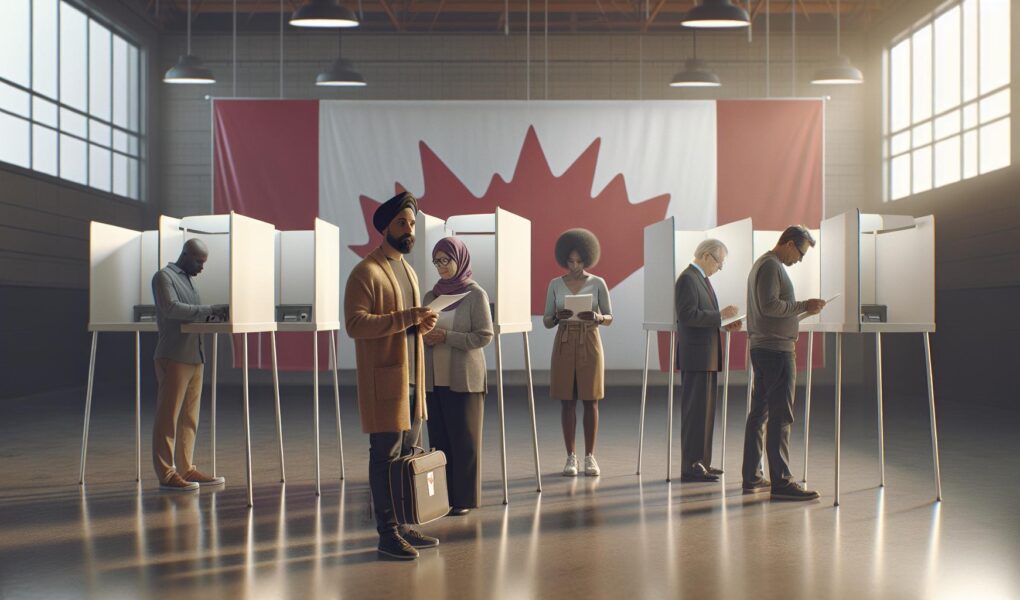
Did you know that when Canadians vote in a federal election, they don’t directly choose thier Prime Minister? Rather, they elect Members of Parliament (MPs) to represent their local areas, and the leader of the party with the most MPs usually becomes the Prime Minister. Understanding this process is crucial because it reveals how Canada’s government is formed and how citizens’ votes translate into real political power. Whether you’re a first-time voter or simply curious about how leadership is decided in one of the world’s largest democracies,knowing how Canada selects its Prime Minister helps you grasp the connection between everyday votes and the national government’s direction. This explainer will guide you through the parliamentary system step-by-step, showing exactly how Canadians’ choices shape their leadership and influence the contry’s future.Dive in to discover the mechanics behind the scenes and why this unique election process matters to everyone living in Canada.
Table of Contents
- How Canada’s Parliamentary System Shapes the Prime Minister’s Selection
- Understanding the Role of Members of Parliament in Leadership Choice
- The Party Leader’s Path to Becoming Prime Minister Explained
- How Federal Elections Influence Prime Minister Selection
- The Impact of party Majority and Minority Situations
- what happens When No Party Wins a Clear Majority?
- The Governor General’s Crucial Role in Appointing the Prime Minister
- Differences Between Public Voting and Prime Minister appointment
- Common Misconceptions About Voting for Prime Minister in Canada
- How Coalition Governments Affect Prime Minister Selection
- Historical Examples of Canada’s Prime minister Selection Process
- Why Canadian Voters Don’t Vote Directly for Prime Minister
- Frequently Asked Questions
- Q: How does the leader of a political party become Prime Minister in canada after an election?
- Q: What happens if a Prime Minister loses their seat in a federal election?
- Q: Why don’t Canadian voters cast a direct vote for prime Minister during federal elections?
- Q: can a Prime Minister remain in office if their party does not have a majority in the House of Commons?
- Q: In what situations might the governor General refuse to appoint the leader of the largest party as prime Minister?
- Q: How does voter turnout in local ridings impact the selection of the Prime Minister in Canada?
- Q: What role do political party conventions play in choosing a future Prime Minister candidate?
- Q: How do snap elections affect the process of selecting a Prime Minister in Canada?
- Key Protocols & Standards: Does Canada Have A Prime Minister
- To Wrap it Up
How Canada’s Parliamentary System Shapes the Prime Minister’s Selection

Canada’s parliamentary framework deeply influences how the nation’s prime minister is chosen, embedding this process within broader democratic principles rather than a direct public vote. Unlike presidential systems where citizens elect the head of government directly, Canada follows a parliamentary tradition that closely links the prime minister’s selection to the composition and confidence of the House of Commons. This ensures the leader who holds office has the practical support needed to govern effectively.
At the heart of this system is the idea that the prime minister must maintain the confidence of the majority of elected Members of parliament (MPs).After a federal election, it is not the public vote itself that directly appoints the prime minister; instead, the leader of the political party capable of securing the most seats, and thereby commanding the House’s confidence, typically steps into the role. This intertwining of party leadership and legislative support means the prime minister’s position depends heavily on parliamentary dynamics, making the system responsive to shifts within the elected House rather than simply public popularity.
Practical implications for Canadians
- Indirect Voting: Voters cast ballots for local MPs in their respective ridings,effectively choosing representatives who will support the leadership of a given party.
- Party Influence: Sence party leaders, not the general public, usually become prime minister upon winning a majority or gaining confidence, leadership changes within a party can alter who holds the prime minister’s office without a general election.
- Confidence is key: The prime minister must continuously maintain the trust of the house of Commons majority; losing it can trigger a change in leadership or an election.
This system offers distinct advantages. For exmaple, it fosters stability by linking executive leadership to legislative support, preventing leaders who lack parliamentary backing from governing ineffectively. Additionally, it encourages political parties to present clear platforms and capable leadership teams, as their success in the House relies on voter support across many ridings. Understanding this parliamentary foundation helps clarify why Canadians do not vote directly for prime minister and why shifts in party dynamics can be as impactful as election outcomes in shaping national leadership.
Understanding the Role of Members of Parliament in Leadership Choice

Members of Parliament (MPs) hold a pivotal role in shaping Canada’s leadership landscape, far beyond merely representing their local constituencies. Each MP is elected in their own electoral district-commonly called a riding-and serves as both a voice for their community and a crucial player in determining who leads the country. The prime minister’s authority hinges on maintaining the confidence of these elected representatives, making MPs the essential link between public will and executive power.
Because the prime minister must command the support of a majority of MPs, the collective decision-making among these individuals essentially decides who sits at the helm. This means that while Canadians vote for MPs directly, they do not choose the prime minister outright.Instead, MPs, often aligned with political parties, influence leadership by backing their party’s leader or, in some cases, shifting allegiance if confidence wanes. This dynamic ensures leaders are accountable not only to voters but also to their fellow parliamentarians, fostering responsiveness to parliamentary debate and collective governance.
How MPs Shape Leadership Choices Inside Parties
The influence of MPs extends within their parties, where they can support or challenge their leader’s position. For instance, if a prime minister loses the confidence of their caucus-a group of party MPs-they may be pressured to resign or be replaced internally without a general election. This internal oversight acts as a balance, preventing a leader from holding power unchecked. Additionally, MPs can participate in leadership contests within their parties, helping select new leaders who can present a united front in the House of Commons.
- Voting for Party Leaders: MPs may have votes in leadership races, guiding the choice of who leads the party both inside and outside Parliament.
- Confidence Votes: Essential parliamentary votes, such as budgets or motions of confidence, explicitly test whether MPs support the prime minister’s government.
- Cross-Party Cooperation: In minority parliaments, MPs from different parties might negotiate agreements, influencing which leader can maintain the House’s confidence.
This complex interplay highlights how the role of MPs in leadership selection is a living process, adapting between elections and affected by shifts in political alliances and priorities. Understanding this gives voters a clearer picture of the power structures that ultimately define Canada’s leadership, emphasizing why every MP’s seat carries weight far beyond its immediate electoral district.[[1]] [[2]]
The Party Leader’s Path to Becoming Prime Minister Explained
Few political roles are as closely linked to a country’s identity as the prime ministership in Canada, yet very few Canadians directly choose who holds this office. Instead, becoming prime minister involves a multi-step journey deeply embedded in Canada’s parliamentary traditions, party politics, and electoral outcomes. Understanding this path reveals how party leaders rise not just by popular appeal but by securing decisive support within their parties and among elected members of Parliament (MPs).
At the core of the process is the leadership of a political party that can command the confidence of the house of Commons. Party leaders are typically chosen through internal party mechanisms before any general election, involving votes by party members, delegates, or sometimes MPs themselves. Once a party leader is selected, they lead their party into a federal election, standing as the figurehead for their party’s platform across Canada. The election’s outcome then either confirms their claim or forces them to reconsider their leadership ambitions.
- Winning a Seat as an MP: To even become prime minister, a party leader usually must be elected as an MP in one of the federal ridings. This step legitimizes their leadership in Parliament and enables them to participate in debates and votes.
- Securing Party Majority or Confidence: After the election, the leader of the party with the most seats is invited to form the government. If their party commands a majority-more than half the seats-they typically become prime minister automatically. If not, they must negotiate support from other parties to maintain confidence.
The significance of this path was underscored in the 2025 federal election when Mark Carney’s Liberal Party, having faced meaningful challenges from U.S. trade tensions and internal party dynamics, secured a fourth consecutive term in government. Despite not being directly elected prime minister by the public, Carney’s leadership was ultimately endorsed through winning his riding and demonstrating majority support in Parliament, illustrating the winding but strategically navigated path leaders must take to reach the top job [[2]](https://apnews.com/article/canada-election-trump-carney-poilievre-861f5b00794355b231ee3f218568949b).
Internal Party Leadership Contests: A Crucial Step
Before political parties face voters, leadership runners undergo rigorous internal contests. These contests serve as a proving ground where MPs, party members, and sometimes affiliates vote among candidates. The process ensures the leader has the backing necessary to unify the party and strategize electoral success. For aspiring prime ministers, winning these contests is a sign of strength and is frequently enough accompanied by promises about governance approach and policy priorities.
Winning the election is not the final hurdle: a prime minister’s survival depends on maintaining the confidence of the House of Commons in ongoing parliamentary votes. This means the prime minister must manage party discipline and sometimes negotiate with opposition parties, especially in minority governments. Effective leadership hinges on this dynamic interplay between electoral success, party cohesion, and parliamentary support.
By appreciating this pathway-from party leadership, election victories, to parliamentary confidence-voters gain clarity on the complexities behind the prime ministership, revealing why the prime minister is both the party leader and a central figure in Canada’s parliamentary democracy.
| Step | What Happens | Why It Matters |
|---|---|---|
| Party Leadership Selection | Party members and MPs select their leader through a vote or convention | Determines who leads the party into elections and represents its platform |
| Election as an MP | Leader contests and wins a seat in a federal riding | Ensures the leader has a legitimate voice and seat in Parliament |
| General Election Outcome | Party wins most seats or secures confidence post-election | Enables leader to be invited to form government and become prime minister |
| Maintaining Parliamentary Confidence | Leader manages party support and votes in the House of Commons | essential for continuing as prime minister and governing effectively |
How Federal Elections Influence Prime Minister Selection

The outcome of federal elections plays a pivotal role in shaping who becomes Canada’s prime minister, but its crucial to understand that voters are actually casting their ballots for local Members of parliament (MPs), not directly for the country’s top leader. The election results translate into parliamentary seats won by various parties, which then determine which leader is invited to form the government. This indirect nature of the selection process frequently enough surprises those unfamiliar with Canada’s parliamentary system, where the prime ministership hinges on both electoral success and parliamentary confidence.
The party that wins the most seats in the House of Commons typically enables its leader to assume the role of prime minister. If a party secures a majority-meaning it holds more than half of the 338 seats-the path is straightforward: their leader is invited by the governor general to form the government. However, when no party achieves this majority, the situation becomes more complex. The leader of the party with the most seats may still be asked to govern but must negotiate with other parties to secure enough support to command confidence in the House. This frequently involves formal or informal agreements and can significantly influence the stability and priorities of the government.
- Electoral districts (ridings) matter: Leaders must personally win in their own constituencies to become MPs and maintain legitimacy in Parliament.
- Seat counts shape negotiation power: The number of seats a party wins directly affects its leader’s ability to stay in power, especially in minority or coalition contexts.
- Popular vote vs. seats: Sometimes a party wins the popular vote nationally but falls short of more seats, highlighting the strategic importance of targeted campaigning in key ridings.
Real-World Impact: The 2025 federal Election
Take the 2025 election as an example: Mark Carney’s Liberal Party managed to secure a fourth consecutive term, not through a direct popular mandate for Carney himself, but because the party won the largest number of seats and maintained confidence in the House of Commons. Carney’s success was as much about navigating electoral dynamics and party cohesion as it was about public appeal. This balanced interplay between election outcomes and parliamentary realities vividly illustrates why winning federal elections is crucial but not the sole factor in becoming prime minister.
Understanding how election results influence the prime minister’s selection helps clarify why Canadians vote the way they do and what strategic considerations go into federal campaigns. Rather of focusing solely on the figurehead, elections spotlight the performance of parties across all ridings, each contributing a piece to the overall puzzle that decides who will govern the country. Recognizing this empowers voters to appreciate the nuances behind their ballot box choices and the parliamentary system at large.
The Impact of party Majority and Minority Situations

Few aspects of Canada’s parliamentary system shape the prime minister’s role more profoundly than whether their party commands a majority or faces a minority in the House of Commons. A majority government, holding more than half of the 338 seats, allows the prime minister relatively stable control to implement policies and govern with confidence. In contrast, minority governments require more delicate political maneuvering and negotiation, leading to a far more dynamic and sometimes unpredictable political surroundings.
When a party secures a clear majority, its leader not only becomes prime minister but typically enjoys the freedom to advance legislative agendas without needing formal agreements with other parties. This majority status creates a decisive mandate and makes passing bills smoother since opposing parties cannot easily defeat the government on confidence motions. For voters, this often translates into a government perceived as more stable and capable of delivering on campaign promises.
- Stability advantage: Majority governments can pass laws and budgets independently.
- Policy clarity: Leaders have a clearer path to implement their platform.
- Reduced risk of early elections: Confidence is less likely to be lost.
By contrast, minority governments introduce a careful balancing act. A prime minister heading a minority must constantly secure support from other parties, either through confidence-and-supply arrangements or issue-by-issue alliances, to maintain power. This setting fosters increased collaboration and compromise but also shortens the government’s lifespan-minority administrations often face elections sooner if support erodes. For the prime minister,it means every parliamentary session involves strategic negotiation,making leadership more challenging and less predictable.
Practical Implications for Leadership and Governance
In minority situations, prime ministers cannot afford to ignore smaller parties whose backing becomes essential to passing legislation or surviving confidence votes. This reality influences Cabinet appointments, legislative priorities, and public messaging. Leaders may have to moderate their policies or engage in more frequent dialog with opposition parties, resulting in a government that tends to be more centrist or consensus-driven.
Consider the 2025 federal election where Mark Carney’s Liberal Party demonstrated the importance of parliamentary confidence, even when not commanding an overwhelming majority. Winning the largest number of seats granted legitimacy, but maintaining ongoing cooperation shaped the durability and effectiveness of Carney’s government. This example underscores that electoral victory alone does not guarantee smooth governance; it’s the ability to command the House’s confidence that truly defines the prime minister’s tenure.[[3]](https://www.pm.gc.ca/en)
How Party Strength Affects negotiation Power
| Party Situation | Prime Minister’s Leverage | Governance Dynamics |
|---|---|---|
| Majority | High: controls most seats | Stable government, decisive policy-making |
| Minority | Moderate to low: relies on others | Frequent negotiations; compromises needed |
| coalition or Confidence Agreements | Variable: depends on formal agreements | Shared power; policy concessions essential |
Voters and political observers alike benefit from understanding these dynamics, as the nature of the government profoundly affects everything from legislative productivity to how Canadians perceive accountability and political stability. Recognizing that the prime minister’s authority is tightly linked to party strength in Parliament provides deeper insight into the subtleties of canada’s parliamentary democracy.
what happens When No Party Wins a Clear Majority?

In Canadian federal elections, it’s not uncommon for no single party to claim more than half of the seats in the House of Commons, leading to what is known as a hung parliament. This situation sets the stage for a complex and frequently enough delicate period in Canadian politics where the prime minister’s selection and government formation depend heavily on negotiation and cooperation among parties. Without a clear majority, the leader of the party with the most seats is usually given the first prospect to try to govern, but they must demonstrate the confidence of the House to remain in power.
When no party wins a clear majority,the prime minister must rely on other parties’ support to pass legislation,especially on confidence motions such as budgets and key government initiatives. This often leads to the creation of minority governments or formal agreements like coalitions or confidence-and-supply deals. These arrangements allow the prime minister to hold office but require compromise and collaboration. for instance, after the 2025 election, Mark Carney’s Liberal Party, while not holding a majority, succeeded in forming a government by securing support from smaller parties, illustrating how electoral victory alone does not guarantee stable governance without parliamentary backing[[2]](https://www.scotiabank.com/ca/en/about/economics/economics-publications/post.other-publications.fiscal-policy.fiscal-pulse.federal.federal-budget-analysis-.federal-election-results–april-29–2025-.html)[[3]](https://www.pm.gc.ca/en).
Negotiation and Power Dynamics
In these scenarios, the prime minister’s ability to negotiate becomes crucial. Without majority control, every legislative move requires strategic dialogue with other parties, which can lead to policy moderation and shared governance. The balance of power may shift to smaller parties or independents, who can leverage their positions to influence government priorities. This shifting landscape means the prime minister must constantly maintain confidence in the House, or risk triggering an election if support dissolves.
- Building alliances: Prime ministers in minority contexts frequently enough form informal or formal accords with other parties to secure necessary votes.
- Policy compromise: Governments must sometimes adjust their platforms to reflect coalition partners’ priorities.
- Heightened accountability: Minority governments face closer scrutiny and are more instantly responsive to parliamentary feedback.
Consequences for Canadian Democracy
The absence of a clear majority encourages a more collaborative and transparent style of governance, but can also lead to uncertainty and shorter government tenures. Voters may see more frequent elections as minority governments struggle to maintain the confidence needed to govern effectively. However, this dynamic also reflects the multiparty reality of Canadian democracy, where diverse voices can shape policy outcomes more actively than under a dominant majority.
| Government Type | Prime Minister’s Authority | Governance characteristic |
|---|---|---|
| Majority Government | Strong control over agenda | Stable and decisive |
| Minority Government | Dependent on support from others | Collaborative but less predictable |
| Coalition Government | Shared leadership negotiated | Power-sharing and compromise essential |
Understanding these dynamics helps voters appreciate why the party leader with the most seats doesn’t always govern unchallenged, and why the prime minister’s tenure may depend as much on political negotiation as on electoral success. This reality emphasizes the unique features of canada’s parliamentary system, where leadership hinges not just on winning the vote, but on commanding the confidence of elected representatives in the House of Commons[[1]](https://policyoptions.irpp.org/2025/09/minority-governments/).
The Governor General’s Crucial Role in Appointing the Prime Minister

Few roles in Canada’s political system are as pivotal yet often misunderstood as that of the governor General when it comes to appointing the Prime Minister. While Canadian voters participate in federal elections by choosing their local Members of Parliament (MPs), the direct selection of the Prime Minister is actually a constitutional obligation entrusted to the Governor General. This official acts as the representative of the monarch and serves as the ceremonial but constitutionally essential link between election results and the formal formation of government.
The Governor general’s decision to appoint a Prime Minister is guided primarily by practical politics rather than personal discretion. Traditionally, this means inviting the leader of the party with the most seats in the House of Commons to form government. Though, in situations such as minority parliaments or hung parliaments-where no party commands a clear majority-the Governor General’s role becomes more nuanced. They must assess which leader is most likely to earn the confidence of the House, ensuring the government’s stability and the effective functioning of parliamentary democracy.
Guiding Principles Behind the Appointment
The Governor General operates under longstanding constitutional conventions, balancing respect for democratic outcomes with the practical realities of parliamentary support. Several key factors influence their decision, such as:
- Seat count: The leader of the party with the largest number of seats typically has the first opportunity to form government.
- Confidence of the House: Beyond numbers, the Governor General looks for evidence that the appointed Prime Minister can command majority support through formal or informal alliances.
- Previous government arrangements: In rare cases, the Governor General might invite a different leader if the incumbent Prime Minister resigns or loses a confidence vote.
An example is the 2025 election when Mark Carney’s Liberals, despite lacking a majority, secured support from smaller parties, allowing the Governor General to confidently appoint him as Prime Minister. This demonstrates how the Governor General’s role is not merely ceremonial, but a constitutional safeguard ensuring Canada’s government rests on stable parliamentary support[[2]](https://learn.parl.ca/understanding-comprendre/en/people-in-parliament/monarch-and-governor-general/).
Practical Advice for Voters
Understanding the Governor General’s role clarifies why Canadians do not vote directly for their Prime Minister, and why post-election politics involves negotiation and consensus-building. Voters should recognize that:
- Electing MPs effectively shapes who can become Prime Minister, as party leaders depend on winning seats to demonstrate House confidence.
- The Governor General’s appointment ensures continuity and stability, especially in complex electoral outcomes.
- Awareness of this process helps voters understand why party leaders may form coalitions or agreements after elections.
This institutional design reinforces Canada’s commitment to parliamentary democracy, where the Prime Minister must maintain the ongoing support of elected representatives, rather than relying on direct popular vote alone.
| Process Aspect | Role of Governor General | Voter Impact |
|---|---|---|
| Post-election government formation | Appoints Prime Minister who can maintain confidence | Depends on elected MPs, not direct PM vote |
| Minority or hung parliament | Assesses viable leader to ensure stability | Encourages strategic voting and party cooperation |
| Formal power vs. ceremonial | Constitutional authority with guiding discretion | Mostly background role, but crucial in crisis |
Recognizing the Governor General’s vital function demystifies a key step in Canada’s government formation process and provides a more complete picture of how parliamentary democracy operates in practice.
Differences Between Public Voting and Prime Minister appointment

Few aspects of Canada’s political process surprise voters more than the distinction between casting a ballot and the actual appointment of the Prime Minister. While Canadian citizens vote directly for their local Members of Parliament (MPs), they do not cast a direct vote for the Prime Minister. This separation is a defining feature of Canada’s parliamentary democracy and is vital to understanding how leadership is ultimately decided.
When Canadians vote, they choose the candidate who will represent their riding in the House of Commons.The party that secures the most seats typically forms the government, and the leader of that party is invited by the Governor General to become Prime minister.This means that the public’s influence over who becomes Prime Minister is indirect-it flows through the electoral success of individual MPs and, by extension, their party’s leader. For example,even if a party leader is very popular nationwide,if their party fails to win enough seats,they cannot become Prime Minister. This dynamic emphasizes the critical importance of local races and party unity.
The Practical Implications of This Process
- Voters impact leadership indirectly: By electing local MPs, Canadians determine the composition of Parliament, which forms the basis for selecting the Prime Minister.
- The role of party leaders is pivotal but contingent: Leadership within the party matters greatly since the leader becomes Prime Minister only if their party commands sufficient parliamentary support.
- Post-election negotiations matter: In minority parliaments, as seen recently with Mark Carney’s Liberals, coalition-building or agreements with smaller parties can shape who ultimately governs and leads.
This system aims to ensure the Prime Minister maintains the confidence of the majority in the House of Commons, rather than relying solely on a nationwide popular vote, which may not reflect parliamentary realities. It encourages strategic voting and coalition-building, fostering stability and adaptability in government formation.
Common Misunderstandings Clarified
Many Canadians mistakenly believe the Prime Minister is directly elected by the populace, leading to confusion after elections. Remember, the Governor general exercises constitutional authority to appoint as Prime Minister the leader best positioned to command the confidence of elected MPs. This mechanism not only respects democratic outcomes but also upholds parliamentary traditions that prioritize effective governance and continuity-even in complex electoral landscapes.
| Aspect | Public voting | Prime Minister Appointment |
|---|---|---|
| Who votes? | Citizens vote for local MPs | No direct vote by public |
| How is Prime Minister chosen? | Leader of party with most parliamentary seats | Appointed by Governor general based on parliamentary confidence |
| Effect of vote | Determines Parliament composition | Depends on party seat count and alliances |
| Role of Governor General | None in voting | Constitutional appointment power |
By recognizing these differences, voters can better appreciate the nuance of Canada’s parliamentary democracy and their critical role in shaping its leadership-not through direct election of the prime Minister, but through informed participation in local and party politics. This awareness empowers citizens to engage meaningfully in the electoral process and understand how their votes contribute to forming stable government.
Common Misconceptions About Voting for Prime Minister in Canada

Many Canadians are surprised to learn that voting in federal elections does not include a direct choice of Prime Minister. This common misconception frequently enough stems from experiences in other countries where leaders are chosen directly by popular vote. In Canada’s parliamentary system, however, citizens elect individual Members of Parliament (MPs) to represent their local ridings, and it is these elected MPs who indirectly determine the Prime Minister. Understanding this distinction clarifies why the leader of the party with the most seats becomes Prime Minister-not as voters cast ballots directly for them, but because their party secured parliamentary confidence.
Contrary to popular belief, the Prime Minister’s authority isn’t decided by a nationwide popular vote but by the ability to command a majority-either outright or through alliances-in the House of Commons. A less obvious but critically important nuance is that even a party leader with widespread personal popularity cannot become Prime Minister without sufficient parliamentary support. For example, if a party wins many votes nationwide but doesn’t translate those into enough ridings, their leader won’t be invited to govern. This indirect system ensures that leadership reflects parliamentary realities rather than just aggregate voter preferences.
Why This Matters for Voters
- Your vote shapes local portrayal: Selecting an MP affects which party holds the most seats, so local races carry significant weight.
- Party leadership is key but conditional: Leadership changes within parties between elections can influence who becomes Prime Minister without a new public vote.
- Coalitions and negotiations are part of the process: In minority parliament situations, smaller parties and their negotiations can affect who leads government, illustrating the complexity beyond just seat counts.
Digging deeper into the appointment process, the Governor General plays a constitutional role by formally inviting the leader who can secure the House’s confidence to become Prime Minister. This step often goes unnoticed by voters but is essential in preserving Canada’s parliamentary traditions and ensuring stable governance – especially after elections that produce uncertain outcomes.
Common Misunderstandings Summarized
| Aspect | What Voters Do | How Prime Minister Is Chosen |
|---|---|---|
| Ballot Content | Vote for local MP candidates | No direct ballot for Prime Minister |
| Decision Basis | Determines partisan composition of House of Commons | Leader of majority party or coalition appointed by Governor General |
| Effect of Popularity | Leader’s popularity influences party success but no guarantee | Must command confidence of MPs, not just popular vote |
| Role of Governor General | No role in election voting | Constitutionally appoints Prime Minister based on parliamentary support |
Recognizing these distinctions empowers voters to engage more thoughtfully in Canadian elections. Instead of focusing solely on a national “leader” figure, Canadians can appreciate their essential role in shaping Parliament’s makeup-a process that ultimately determines the Prime Minister and, by extension, the government’s direction.Embracing this deeper understanding supports a more informed electorate and strengthens Canada’s rich tradition of parliamentary democracy.
How Coalition Governments Affect Prime Minister Selection

Coalition governments, while relatively rare in Canadian federal politics, can significantly reshape the process by which the Prime Minister is selected. Unlike majority governments where one party holds over half the seats, coalitions arise when parties join forces to collectively command a majority in the House of Commons. This collaboration frequently enough requires negotiation and compromise between parties, impacting both who gets appointed Prime Minister and how government priorities are set.In coalition scenarios,the leader of the largest party involved will frequently enough remain the Prime Minister,but this is not automatic. The appointment depends on the coalition’s agreement and their ability to maintain the confidence of the house. Smaller parties in the coalition gain influence,sometimes negotiating policy concessions or key cabinet positions. This dynamic means the Prime minister must not only lead their own party but also manage relationships with partner parties to sustain a stable government, adding complexity to the leadership role beyond simple election results.
How Coalitions Influence Parliamentary Confidence
Coalitions affect prime ministerial selection primarily through their impact on parliamentary confidence. In minority parliaments, where no single party has a majority, coalitions (formal or informal) enable a composite majority by pooling seats.The Governor General will appoint as Prime Minister the leader who demonstrates they have this majority confidence, even if that leader’s party did not win the most seats outright. Thus,the Prime minister’s authority rests on united support from multiple parties rather than single-party dominance.
Practical Advice for Voters during Potential Coalition Periods
- Understand local party dynamics: Pay attention not just to the major parties but also potential smaller parties that might become coalition partners.
- Stay informed on coalition agreements: These documents can reveal compromises affecting government policy and leadership stability.
- Recognize the fluidity of minority parliaments: coalitions can form or dissolve, meaning prime ministerial leadership might shift without a new election.
Historically, formal coalitions are infrequent at the federal level, but the concept is well within Canada’s parliamentary framework, as exemplified by the “Great Coalition” of the 1860s or discussions during minority governments where parties negotiate supply and confidence agreements[[1]](https://en.wikipedia.org/wiki/Minority_governments_in_Canada)[[2]](https://www.law-faqs.org/national-faqs/coalition-government/).Recognizing the role coalitions play enriches voter understanding of how leadership can sometimes result from political negotiation rather than just election night seat counts, reflecting the flexible and pragmatic nature of Canada’s parliamentary democracy.
Historical Examples of Canada’s Prime minister Selection Process

Canada’s prime ministerial selection process has evolved through numerous pivotal moments that reflect the adaptable and consensus-driven nature of its parliamentary democracy. One of the earliest examples is the formation of the Great Coalition in 1864, a rare but strategic alliance among political leaders to break legislative deadlock and push forward Confederation. This coalition underscored how leadership at the time was not simply about commanding a majority through elections but about building cross-party consensus, setting a precedent for occasional shared governance and negotiation that can still influence prime ministerial transitions today.
Moving into the 20th and 21st centuries, the trend of coalition or minority governments has continued to shape the selection of Canada’s prime minister. For instance, during the 2008 federal election, stephen Harper’s Conservative Party won a minority government and sought support from smaller parties to maintain confidence in the House of Commons. The Governor General’s role became crucial here, as Harper remained Prime Minister not as of an outright majority but because he demonstrated the ability to govern with the confidence of the elected House. This historic case highlights a core principle: the Prime minister’s mandate depends on parliamentary support rather than direct popular vote, reminding voters that their chosen MPs hold the power to shape leadership[[1]](https://www.bbc.com/news/articles/cn4jd39g8y1o).
Lessons from Close Contests and Vote Validation
canada has witnessed tightly contested ridings that illustrate the delicate balance impacting prime ministerial outcomes. The 2025 election results showed seats switching hands by margins as narrow as a few dozen votes, such as in the Montreal suburb of Terrebonne, which initially flipped to the Liberals by just 35 votes before the Bloc québécois reclaimed it by 44 after official validation[[2]](https://www.bbc.com/news/articles/cn4jd39g8y1o).These examples emphasize the importance of the election’s procedural integrity and why the Governor General’s appointment decisions consider more than just raw results-they must account for confirmed confidence within Parliament.
Practical Insights for Voters
- Recognize the indirect nature of leadership selection: While you vote for your local MP,your collective choices determine the governing party and implicitly,the Prime Minister.
- Follow post-election negotiations: When no party wins a clear majority, watch for coalition talks or confidence agreements that influence who governs and how stable that leadership will be.
- Appreciate the Governor general’s role: This non-partisan figure acts as a constitutional safeguard, appointing the Prime Minister who holds the House’s confidence, ensuring continuity and stability.
This historical perspective reveals how Canada’s system goes beyond direct voting to embrace negotiation, parliamentary confidence, and constitutional customs. Understanding these elements arms voters with deeper insight into how their ballot choices impact leadership and why the Prime Minister is ultimately the leader who can command the trust of a majority of elected Members of Parliament.
Why Canadian Voters Don’t Vote Directly for Prime Minister

In Canada’s parliamentary democracy, the Prime Minister is not elected directly by the public, a fact that often surprises many first encountering the system. Rather, Canadians vote for Members of Parliament (MPs) in their local ridings.The Prime Minister emerges as the leader of the political party that commands the confidence of the majority of these elected MPs in the House of Commons. This means that leadership arises not from a direct public mandate, but through parliamentary support. As a result, the Prime Minister’s legitimacy is rooted in their ability to maintain the confidence of elected representatives rather than through a seperate, nationwide vote for the position.
This indirect process has historical and practical reasons grounded in the Westminster parliamentary tradition. voting for an individual Prime Minister would require a separate national ballot, complicating and perhaps prolonging elections. Instead, by focusing on local representation, voters influence who forms government indirectly and promote accountability at the constituency level. Furthermore, the system encourages party cohesion and collective responsibility: MPs elected from the same party support their leader, shaping a government led by consensus within Parliament. For example, during the 2008 minority government period, Stephen Harper remained Prime Minister not because he won a direct popular vote but because he could command the confidence of the House, supported by negotiations and agreements with smaller parties[[1]](https://www.bbc.com/news/articles/cn4jd39g8y1o).
- Your vote matters most locally: Electing a local MP means choosing who will represent your community and contribute to which party forms government, shaping the national leadership indirectly.
- Coalitions and minority governments factor in: When no party wins a majority,the Prime Minister’s role depends on parliamentary confidence,sometimes involving coalition talks or cooperation agreements that the public influences through MPs.
- Leadership can change mid-term: Because the Prime Minister is the party leader with parliamentary confidence, internal party changes or shifts in support can lead to new prime ministers without a general election.
By appreciating these dynamics, voters gain a clearer understanding of how their ballots influence leadership beyond simply picking a national figure.This indirect election mechanism fosters stability and responsiveness within Canada’s parliamentary democracy, ensuring the Prime Minister is always someone who commands active support from the elected House rather than relying solely on a separate, direct public mandate.
Frequently Asked Questions
Q: How does the leader of a political party become Prime Minister in canada after an election?
A: The leader of the party that wins the most seats in the House of Commons is usually invited by the Governor General to become Prime Minister. This selection depends on their party’s ability to secure confidence from MPs, emphasizing parliamentary support over direct public vote.See The Party Leader’s Path to Becoming Prime Minister Explained for details.
Q: What happens if a Prime Minister loses their seat in a federal election?
A: If a sitting Prime Minister loses their electoral district, they typically resign as party leader or seek to win a seat through a by-election. Maintaining a seat in Parliament is essential for the Prime Minister to continue governing and leading the party effectively.
Q: Why don’t Canadian voters cast a direct vote for prime Minister during federal elections?
A: Canadian voters elect MPs in their local ridings, not the Prime Minister directly, because Canada uses a parliamentary system. The Prime Minister is chosen based on who commands the majority support in the House of Commons,making local MP elections the foundation of the selection process.
Q: can a Prime Minister remain in office if their party does not have a majority in the House of Commons?
A: Yes, a Prime Minister can govern with a minority government if they maintain the support of other parties or MPs in confidence votes. This often involves forming agreements or coalitions and managing legislative challenges carefully for stability.
Q: In what situations might the governor General refuse to appoint the leader of the largest party as prime Minister?
A: The Governor General may refuse if the largest party leader cannot secure confidence in the House or if a viable coalition exists that can command majority support. This power preserves parliamentary democracy and ensures the government can function effectively.
Q: How does voter turnout in local ridings impact the selection of the Prime Minister in Canada?
A: Voter turnout affects which candidates win local seats, influencing the overall composition of the House of Commons. Higher turnout can shift the balance of power among parties, directly impacting which leader can form government and become Prime Minister.
Q: What role do political party conventions play in choosing a future Prime Minister candidate?
A: Party conventions elect or confirm the party leader, who often becomes the prime Ministerial candidate in federal elections. This internal selection process shapes who leads the party into the election and ultimately who may become Prime Minister.
Q: How do snap elections affect the process of selecting a Prime Minister in Canada?
A: Snap elections, called by the Prime Minister with the Governor general’s approval, can quickly change parliamentary dynamics. They may strengthen or weaken the current leader’s mandate, affecting their chances to remain or become Prime Minister as outlined in How Federal Elections Influence Prime Minister Selection.
For more insight on the Prime Minister selection process and Canada’s parliamentary system, explore the relevant sections of the article to deepen your understanding.
Key Protocols & Standards: Does Canada Have A Prime Minister
When reviewing requirements regarding does canada have a prime minister within Canadian legal, electoral, and parliamentary frameworks, accuracy and proper procedural adherence are paramount. Ensuring correct alignment with official guidelines guarantees clear communication and compliance with regulatory standards.
- Jurisdiction & Procedure: Determine whether the matter pertains to municipal, provincial, or federal governance before initiating formal actions.
- Record Documentation: Retain verified copies of all submissions, date stamps, and official case numbers for administrative review.
What is the recommended protocol regarding does canada have a prime minister?
Always verify jurisdictional authority, adhere to official formatting standards, and retain comprehensive documentation for future verification.
To Wrap it Up
Understanding how Canada votes for prime Minister reveals the unique workings of the parliamentary system and the crucial role of voters in shaping government. If you’re eager to deepen your knowledge on Canada’s political landscape, explore our detailed guides on Canada’s electoral process and how parliamentary democracy functions. These resources will equip you with the insights needed to engage confidently in civic discussions and future elections.
Don’t miss the opportunity to stay informed-subscribe to our newsletter for the latest updates and expert analyses on Canadian politics.If you have questions or want to share your perspective, join the conversation in the comments below or share this explainer with your network. By continuing your exploration, you can fully grasp the nuances of Canada’s voting system and its impact on governance, democracy, and policy-making. Your active participation helps strengthen democratic engagement and ensures you’re always a step ahead in understanding how Canada chooses its Prime Minister.
Get our latest guides, news, and insights highlighted in your Google Search & AI Overviews.