
✨ This article was AI edited. Editorial responsibility: DemocracyLawBlog.com.
Produced with AI. This article was artificially generated. Editorial responsibility: DemocracyLawBlog.com.
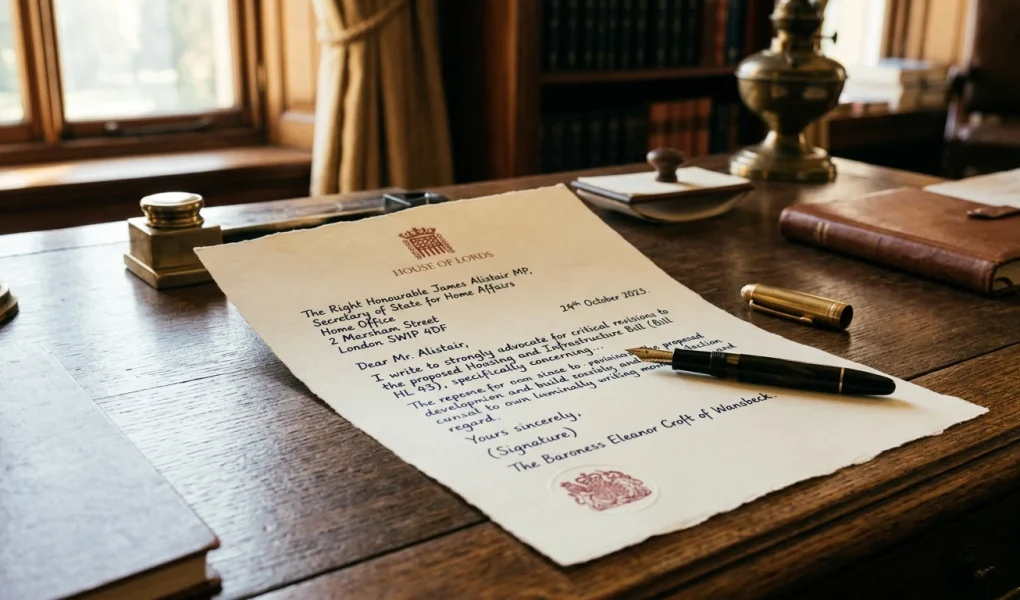
A “Dear Richard” letter in parliamentary and civic correspondence refers to a formal legislative letter addressed directly to an elected official using their given name within established diplomatic decorum. It balances personalized constituent advocacy with official protocol standards to maximize policy response and committee consideration.
Engaging with elected lawmakers requires a nuanced understanding of diplomatic salutations, institutional etiquette, and legal conventions. Whether writing to a Member of Parliament, a legislative representative, or a cabinet minister named Richard, adhering to the proper “Dear Richard” letter format ensures your communication commands immediate attention and adheres to official registry protocols.
Table of Contents
- Historical Context and Etiquette of Formal Legislative Letters
- Core Structure of a “Dear Richard” Political Letter
- Step-by-Step Methodology for Drafting Official Correspondence
- Parliamentary Casework vs Policy Correspondence: Behind the Triage Desk
- Cross-Jurisdictional Comparisons: UK, Canada, and Australia
- Sample “Dear Richard” Template for Policy Advocacy
- Legal Considerations and Public Records Compliance
- Checklist for Sending High-Impact Political Letters
- Frequently Asked Questions Regarding Formal Legislative Letters
Historical Context and Etiquette of Formal Legislative Letters
In democratic traditions derived from the Westminster system and North American civic governance, correspondence directed to public officials is cataloged, tracked, and archived as part of the permanent public record. While informal public feedback often gets lost in digital noise, structured physical and electronic letters formatted according to formal conventions receive official tracking numbers and ministerial review.
When drafting correspondence to an official with whom you have established a personal legislative rapport—or within parliamentary conventions where first-name salutations are permitted—the “Dear Richard” framing serves as a bridge between high protocol and direct constituent advocacy. For broader context on representative outreach, review our guide to writing to your political representative.
Core Structure of a “Dear Richard” Political Letter
To ensure structural clarity, every official letter must follow a rigorous tripartite framework consisting of precise metadata, substantive policy argumentation, and actionable legislative requests.
| Section | Key Components | Standard Protocol Requirement |
|---|---|---|
| Letterhead & Metadata | Date, sender constituency address, official recipient title | Full formal title on envelope and address block (e.g., The Right Honourable Richard [Last Name], P.C., M.P.) |
| Salutation | Formal opening greeting | “Dear Richard,” (when personal rapport exists) or “Dear Minister / Dear Mr. [Last Name],” |
| Opening Anchor | Statement of constituent standing and bill reference | Explicit citation of Bill number, statutory clause, or municipal docket |
| Substantive Argument | Empirical impact, local data, legal precedent | Cost-benefit analysis, regulatory burden, community impact assessment |
| Call to Action | Specific voting request or committee intervention | Concrete timeline and request for a formal written reply |
| Valediction | Formal sign-off and signature | “Yours sincerely,” accompanied by physical signature and contact details |
Step-by-Step Methodology for Drafting Official Correspondence
1. Validating Official Titles and Post-Nominals
Before putting pen to paper, verify the exact credentials and post-nominal letters of the recipient. If the official is a Privy Councillor, they retain the lifelong prefix The Honourable or The Right Honourable. For comprehensive salutation rules, consult our analysis of guidelines for formal salutations in political correspondence.
2. Crafting the Executive Opening Paragraph
State your identity as a resident of the official’s constituency within the first two sentences. Lawmakers prioritize correspondence from voters within their electoral boundaries. Reference your residential postal code directly to pass initial triage filtering conducted by legislative staff and correspondence directors.
3. Structuring Evidence with Clear Entity-Attribute-Value Triples
Avoid generalized grievances. Instead, structure your letter around clear factual propositions:
- Legislative Scope: Specify the exact legislation (e.g., Bill C-24, Section 4, Clause 2).
- Constituency Impact: Provide empirical metrics reflecting economic, environmental, or legal ramifications for local residents and commercial enterprises.
- Proposed Remedy: Offer specific amendment language, statutory carve-outs, or standing committee hearing recommendations.
4. Formal Valediction and Signature Etiquette
Conclude with standard diplomatic courtesies. In Commonwealth jurisdictions, “Yours sincerely,” is standard when the recipient is addressed by name (“Dear Richard”), whereas “Yours faithfully,” is employed when addressed by formal title alone (“Dear Sir/Madam”). For more on parliamentarian outreach, see how to address an MP in a letter.
Parliamentary Casework vs Policy Correspondence: Behind the Triage Desk
Constituency offices categorize incoming correspondence into two primary streams: individual casework (personal immigration, tax, or benefits appeals) and legislative policy advocacy (advancing or opposing specific statutes). Understanding how legislative aides handle these distinct categories ensures your letter reaches the appropriate policy director.
When policy letters arrive, casework managers log them into customer relationship management (CRM) software such as Caseworker or Intranet Quorum. Letters containing verifiable physical addresses receive a weighted score in legislative sentiment dashboards presented to the lawmaker before key parliamentary votes.
Cross-Jurisdictional Comparisons: UK, Canada, and Australia
While parliamentary norms share common roots across the Commonwealth, regional nuances dictate exact salutation protocols:
- United Kingdom (Westminster): Letters to Members of Parliament generally open with “Dear Mr./Ms. [Last Name]” or “Dear Richard” if a prior working relationship exists. The outer envelope must state “Richard [Last Name] MP, House of Commons, London SW1A 0AA”.
- Canada (Ottawa): Members of the House of Commons are addressed as “[Name], M.P.” on the envelope and “Dear Mr./Mrs./Ms. [Last Name]” or “Dear [First Name]” in personalized exchanges. Cabinet ministers are titled “The Honourable [Name], P.C., M.P.” and saluted as “Dear Minister”.
- Australia (Canberra): Federal representatives are addressed as “The Hon. [First Name] [Last Name] MP” (for ministers) or “[First Name] [Last Name] MP” for backbenchers, opening with “Dear Mr./Mrs./Ms. [Last Name]” or “Dear Richard”.
Sample “Dear Richard” Template for Policy Advocacy
[Your Full Name]
[Street Address, Postal Code]
[Email Address | Telephone Number]
[Date]
The Honourable Richard [Last Name], M.P.
House of Commons / Legislative Assembly
[Parliamentary Office Address]
Dear Richard,
I am writing to you today as a resident of [Constituency Name] to bring an urgent legislative matter to your attention regarding [Specific Bill Name and Number]. As our representative, your leadership on the Standing Committee on [Committee Name] is vital to ensuring that local economic and regulatory concerns are addressed during statutory review.
Over the past several months, local stakeholders across our riding have observed substantial challenges regarding [Specific Issue]. According to recent municipal data, implementation of the current draft provisions under Section [Number] will impose an estimated [Specific Impact, e.g., 15% increase in administrative compliance costs on local small businesses].
To ensure that the legislative intent of the bill is achieved without creating unintended burdens for constituents, I respectfully urge you to advocate for the following amendments during upcoming committee hearings:
- Incorporate a regional transition grace period for small enterprise compliance.
- Mandate an independent biennial review by the Auditor General or relevant oversight body.
- Clarify the statutory definition of [Key Term] in Section [Number] to eliminate regulatory ambiguity.
I would greatly appreciate the opportunity to discuss these proposed refinements with you or your senior legislative counsel. Thank you for your dedicated service to our community, and I look forward to receiving your written perspective on this critical issue.
Yours sincerely,
[Handwritten Signature]
[Your Printed Name]
Constituent of [Constituency Name]
Legal Considerations and Public Records Compliance
Correspondence sent to government ministers and public bodies may be subject to Freedom of Information (FOI) or Access to Information (ATI) legislation. While personal constituent casework remains strictly protected under privacy statutes, policy advocacy letters submitted by commercial entities, industry associations, or advocacy groups are routinely disclosed in public registry filings.
When drafting correspondence on behalf of an organization, ensure that any proprietary data or confidential commercial information is explicitly marked in accordance with statutory exemption protocols.
Checklist for Sending High-Impact Political Letters
- Recipient Verification: Confirm spelling of full name, post-nominals, and current cabinet or shadow cabinet portfolio.
- Constituent Proof: Include full residential address with postal code in the top header.
- Concise Focus: Keep the letter within one to two pages, focusing on a single core policy matter.
- Evidence Base: Cite empirical statistics, statutory clauses, or local case studies.
- Actionable Request: State clearly whether you request a vote, committee testimony, or a formal written response.
- Professional Tone: Maintain respectful, factual, and non-partisan diplomatic decorum throughout.
Frequently Asked Questions Regarding Formal Legislative Letters
When is it appropriate to address an elected official as “Dear [First Name]”?
Direct first-name greetings such as “Dear Richard” are appropriate when you have previously established professional or personal rapport with the representative, during informal legislative consultations, or when replying to personal correspondence where the official signed off using their first name. In cold constituent inquiries, formal title salutations (“Dear Mr. [Last Name]” or “Dear Minister”) remain the standard protocol.
Do physical letters carry more weight than digital emails?
Yes. Parliamentary and congressional research indicates that physical letters mailed to constituency or legislative offices receive significantly higher priority triage than bulk electronic emails, as physical mail demonstrates substantive constituent dedication, effort, and authentic local presence.
How quickly should you expect a formal reply from an MP or legislative office?
Standard parliamentary response service standards typically range between two and four weeks for general constituent policy inquiries. Time-sensitive legislative matters submitted during active committee review are frequently expedited by parliamentary casework directors.
Are letters to Canadian Members of Parliament free to mail?
Yes. Under the Canada Post Corporation Act, Canadian citizens can send mail to any sitting Member of Parliament at their parliamentary office in Ottawa completely postage-free without attaching stamps.
Get our latest guides, news, and insights highlighted in your Google Search & AI Overviews.


