Canada’s voting record on Israel-related motions at the United Nations often sparks intense debate and questions about the country’s stance on the complex Israel-Palestine conflict. Recently, canada’s decision to abstain or support certain UN resolutions has drawn attention, with some interpreting these actions as either opposition or support toward israel. Understanding the nuances behind Canada’s vote is crucial for anyone invested in international relations,peace efforts,and Canada’s role on the global stage. This article unpacks the facts, clarifies common misconceptions, and explores how Canada’s vote aligns with its broader foreign policy goals, providing you with clear insights to make sense of this important issue.Whether you’re following diplomatic developments, concerned about peace in the region, or simply seeking clarity on Canada’s international positions, this deep dive offers valuable context and perspective to help you stay informed.
Table of Contents
- Canada’s Voting Record on Israel: What Really Happened
- Understanding the Motion: background and Key Details
- Political Context Behind Canada’s Vote
- Canada’s Foreign Policy Stance on Israel Explained
- Reactions from Canadian Political Leaders and Parties
- global Responses to Canada’s Position on israel
- Media Coverage and Public Perception Analysis
- Implications for Canada-israel Bilateral Relations
- Common Misconceptions About the vote debunked
- Future Prospects: What this Vote Means for Canada’s Diplomacy
- Frequently asked questions
- Q: How did Canada’s abstention from certain UN votes affect its stance on Israel?
- Q: why did Canada abstain instead of voting against Israel in recent UN resolutions?
- Q: Does Canada’s UN vote impact its bilateral relations with Israel?
- Q: How does Canada’s UN vote align with its domestic political views on Israel?
- Q: What specific UN motions involving Israel has Canada abstained from recently?
- Q: How can Canadians understand the difference between abstaining and voting against israel?
- Q: what future diplomatic strategies might Canada use regarding Israel at the UN?
- Q: How do Canada’s recent UN votes compare with other countries’ voting patterns on Israel?
- The Conclusion
Canada’s Voting Record on Israel: What Really Happened
In recent international forums,Canada’s voting behavior regarding Israel has generated considerable attention,frequently enough sparking questions about whether Canada has indeed voted against Israel. The reality is more nuanced then a simple yes or no. for instance,in a notable May 2024 UN General assembly vote concerning the recognition of Palestinian statehood,canada chose to abstain rather than cast a direct vote against Israel. This abstention signifies a careful diplomatic balancing act rather than outright opposition, reflecting Canada’s attempt to navigate a complex geopolitical landscape without severing ties or appearing partial in a deeply polarized conflict [[2]](https://en.wikipedia.org/wiki/canada%E2%80%93Israel_relations).
This pattern is emblematic of canada’s broader approach at the United Nations, where Ottawa often aligns its votes with its officially stated policy, which supports Israel’s right to security yet also advocates for Palestinian rights and a peaceful, negotiated two-state solution.Critics, however, argue that Canada’s UN voting record occasionally diverges from this balanced stance, calling for adjustments to better reflect the government’s publicly declared positions on Israel-Palestine issues [[1]](https://www.cjpme.org/mend_1_3). Such perspectives highlight the ongoing internal and external pressures Canada faces in maintaining a consistent and credible foreign policy amid competing international expectations.
Understanding Canada’s Voting Pattern
Canada’s approach typically involves nuanced decisions rather than binary choices, often resulting in abstentions or votes on non-binding resolutions rather than outright opposition or support. as an example, the government has halted arms sales to Israel following non-binding UN votes and has taken firmer stances on actions in Gaza, indicating a willingness to temper relations when circumstances demand a principled response [[2]](https://en.wikipedia.org/wiki/Canada%E2%80%93Israel_relations),[[3]](https://www.cbc.ca/news/politics/canada-israel-rift-1.7563862). These decisions reflect a complex calculation aiming to uphold human rights standards and international law while preserving the historically strong bilateral relationship.
- Practical Insight: For observers and stakeholders, the key takeaway is that Canada’s votes are context-dependent, frequently shaped by specific resolutions’ language and implications rather than an automatic alignment against or for Israel.
- Advice for Analysts: When interpreting Canada’s stance, it is essential to examine the details of each vote and the accompanying diplomatic statements, rather than generalize based on headlines.
Ultimately, Canada’s voting record reveals an effort to pursue a middle path that aims to contribute constructively to peace efforts while managing domestic political considerations and international relationships. This careful diplomacy informs its public messaging and voting strategy, demonstrating that Canada’s position is driven by complexity and an ongoing reassessment of its role in one of the world’s most enduring conflicts.
Understanding the Motion: background and Key Details

One of the most misunderstood aspects of Canada’s voting behavior on Israel at international bodies like the United Nations is the complexity embedded in each motion’s language and intent. Motions concerning Israel and Palestine frequently enough include multilayered references to security, human rights, and political recognition, making a straightforward “yes” or “no” vote insufficient to capture the nuance. Such as, Canada’s abstentions or conditional votes can reflect a deliberate choice to withhold outright approval or rejection to maintain diplomatic flexibility, rather than an absolute stance against Israel.
Many of these motions involve resolutions that are largely symbolic or non-binding but carry important political weight.They often address contentious issues such as Palestinian statehood recognition, condemnation of specific actions taken by one party, or calls for ceasefire measures. Canada’s careful scrutiny of the text and its implications is a crucial part of how it approaches these votes. The government critically evaluates whether the language of a resolution aligns with international law, supports a pathway to peace, or unduly isolates Israel, before deciding how to position itself. This explains why Canada might refrain from casting a direct opposing vote while still signaling concern through abstentions or critical statements.
- Context Matters: Understanding the exact wording of the motion is essential. Even subtle phrasing-such as references to “occupation,” “security concerns,” or “right to self-defense”-can sway Canada’s voting calculus.
- Broader Implications: Canada considers how the motion will affect the larger peace process, international alliances, and its own diplomatic credibility. A vote is not just about the immediate issue but also about preserving channels for future dialog and cooperation.
In practice, Canada’s voting decisions are frequently enough informed by a balancing act between upholding its well-established support for Israel’s right to security and recognizing the legitimate aspirations of the Palestinian people. As an example, when faced with a resolution recognizing Palestinian statehood-a highly sensitive topic-Canada’s choice to abstain rather than oppose outright shows an attempt to neither alienate Israel nor ignore evolving international sentiments. This pragmatic stance aims to keep Canada engaged as a constructive player in Middle Eastern diplomacy and reflects the government’s wider strategy to promote a negotiated two-state solution through multilateral forums [[1]](https://www.pm.gc.ca/en/news/statements/2025/07/30/statement-prime-minister-carney-canadas-recognition-palestinian-state), [[2]](https://www.cija.ca/canada_un_vote_emboldens_hamas_and_undermines_peace).
This intricate approach underscores a key takeaway for observers: voting is never isolated from broader diplomatic currents. Canada’s record demonstrates that its involvement is less about taking sides in a binary conflict and more about advancing peace, security, and human rights in a highly polarized environment. for readers seeking clarity, this means looking beyond headlines to understand the full text of motions and accompanying government explanations, which often reveal Canada’s true rationale behind each vote.
Political Context Behind Canada’s Vote

Canada’s voting decisions on Israel-related motions at international forums cannot be fully understood without placing them within a broader political context that reflects both domestic considerations and global diplomatic dynamics. Far from being a simple matter of support or opposition, Canada’s position navigates a complex landscape shaped by ancient ties with Israel, commitments to multilateral diplomacy, and a pragmatic desire to foster peace in the Middle East. This balancing act often leads to positions such as abstentions or qualified votes instead of outright yes or no stances, signaling nuance rather than contradiction.
A key element influencing Canada’s vote is the evolving political environment both internationally and at home.Such as, tensions between Israel and Palestinian authorities, periodic escalations of violence, and international legal debates over territory and sovereignty levels impose layers of sensitivity on any resolution. Canada’s government carefully scrutinizes the language of each motion, aiming to avoid resolutions that might disproportionately delegitimize Israel or undermine ongoing peace efforts.This approach aligns with Canada’s stated policy of supporting Israel’s right to security while recognizing Palestinian aspirations for statehood-a difficult duality reflected in its diplomatic messaging [[1]](https://www.international.gc.ca/world-monde/international_relations-relations_internationales/mena-moan/israeli-palestinian_policy-politique_israelo-palestinien.aspx?lang=eng).
Domestically, political parties and public opinion add further nuance.Different Canadian political factions interpret the Israeli-Palestinian conflict through distinct ideological lenses, impacting parliamentary debates and influencing government strategy. The federal government under Prime Minister Carney, for example, has prioritized maintaining a position that encourages dialogue over polarization, consciously avoiding actions that could either alienate Israel or appear dismissive of Palestinian rights. This stance was evident when Canada abstained on a notable UN resolution on the International Court of Justice’s advisory opinion-reflecting a desire to support international law while also resisting moves perceived as overly one-sided against Israel [[2]](https://www.canada.ca/en/global-affairs/news/2024/09/canada-abstains-from-united-nations-general-assembly-resolution-on-the-advisory-opinion-of-the-international-court-of-justice-on-the-legal-conseque.html).
- Canadian Political Dynamics: Understanding how various parties and interest groups view Middle East policy helps explain government voting trends.
- International Pressures: Canada aligns its votes with broader alliances like NATO and seeks to preserve its image as an honest broker in peace efforts.
- Diplomatic Calculations: Votes are shaped by the desire to keep open diplomatic channels with Israel, Palestinian authorities, and other regional actors.
In practice, this layered political context means Canada often opts for measured, sometimes ambiguous voting to preserve its strategic flexibility, maintain constructive relations, and uphold principles such as human rights and international law-all critical to its reputation as a responsible middle power in global diplomacy.
Canada’s Foreign Policy Stance on Israel Explained
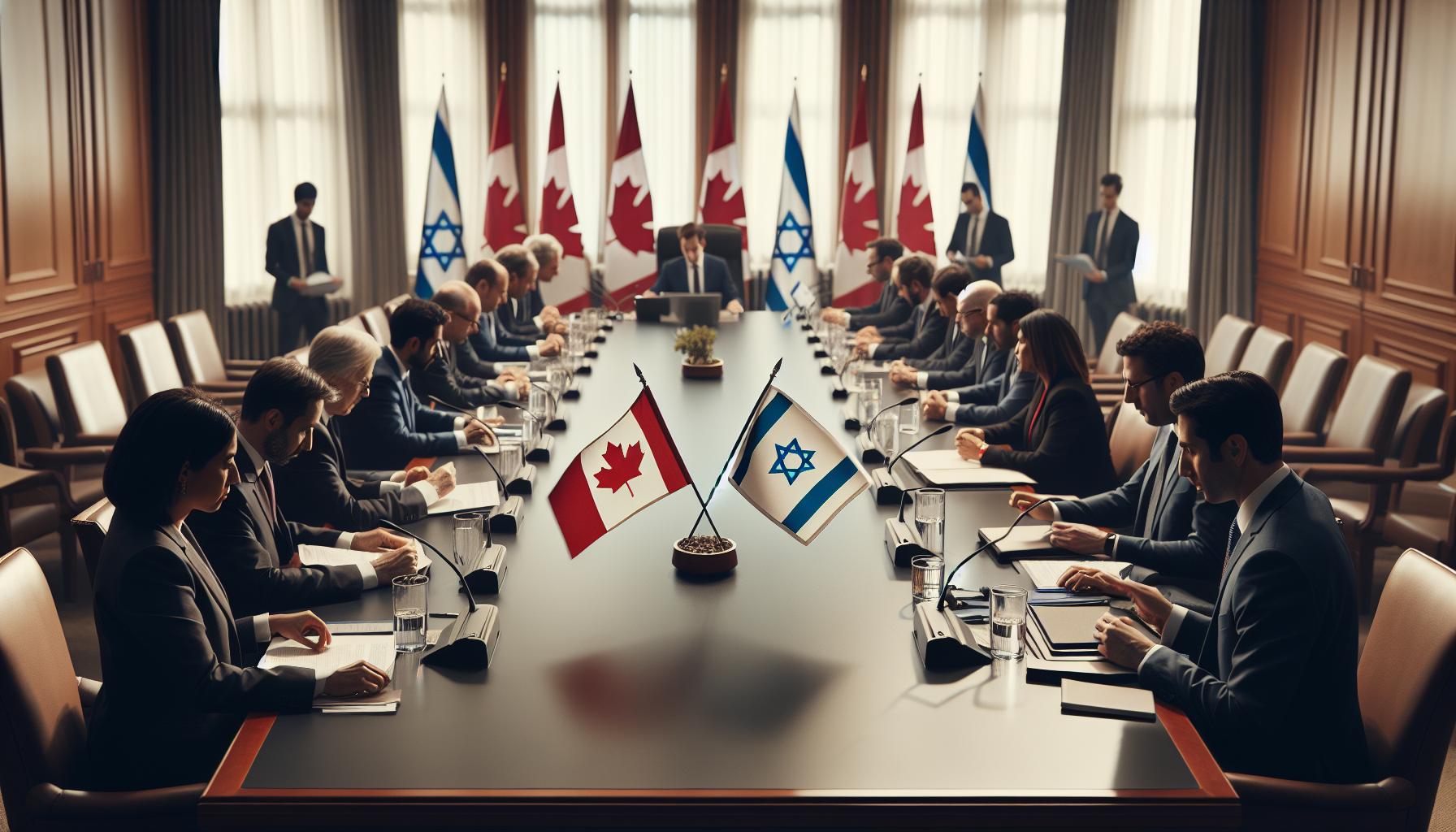
Canada’s approach towards Israel in international forums reflects a carefully calibrated foreign policy that seeks to balance historical alliances, legal principles, and evolving geopolitical realities. Rather than adopting a purely binary stance, Canada navigates a nuanced path that underscores both support for Israel’s right to security and recognition of Palestinian aspirations. This dual commitment often manifests in diplomatic choices such as abstentions or tempered votes, which can puzzle observers expecting unequivocal positions but are in fact deliberate moves to maintain constructive dialogue and multilateral legitimacy.
At the heart of Canada’s foreign policy is a pragmatic understanding that strong bilateral relations with Israel do not preclude advocating for human rights and international law within contentious contexts. For example, Canada has openly opposed measures it views as unilateral or prejudicial, such as Israel’s expanded settlements in occupied territories, reflecting its adherence to the principles outlined by international agreements and United Nations resolutions. Simultaneously, Canada resists resolutions perceived to disproportionately single out Israel or delegitimize its security concerns, demonstrating a commitment to fairness and balance in diplomacy.
- Balancing act: Canada supports Israel’s security while promoting Palestinian statehood, avoiding extremes that could undermine peace prospects.
- Diplomatic Flexibility: Abstentions on certain votes often signal Canada’s intent to keep open channels with all parties amid shifting regional dynamics.
- Alignment with Allies: Canada’s votes generally harmonize with broader Western alliances like NATO but are tailored to reflect its middle-power role and values.
The interplay of domestic political perspectives further shapes Canada’s stance. Different parties bring varying interpretations of the Israeli-Palestinian conflict, influencing parliamentary debates and the government’s messaging. this pluralism is evident in canada’s response patterns – for instance, opting for carefully worded statements or nuanced voting to balance competing political pressures at home with international responsibilities. Such an approach will likely continue to guide Canada’s foreign policy, positioning it as a thoughtful interlocutor committed to both principled diplomacy and pragmatic outcomes in the complex arena of Middle East politics.
Reactions from Canadian Political Leaders and Parties
Canada’s recent voting decisions at the United Nations have sparked a robust dialogue among political leaders and parties, revealing the nuanced perspectives that shape the country’s approach to Israel-related resolutions. Rather than a clear-cut “for” or “against” position,Canada’s choice to abstain or vote cautiously often reflects a strategic effort to maintain diplomatic balance amid complex international dynamics. This multifaceted decision-making process has drawn varied reactions from political quarters, each emphasizing different priorities and interpretations of Canada’s foreign policy principles.Some members of the governing party have defended the abstention or tempered votes as emblematic of Canada’s commitment to constructive engagement with all stakeholders. They argue that by avoiding outright condemnation or endorsement, Canada preserves its ability to facilitate dialogue and advocate for peace. This approach aligns with Canada’s broader objectives of supporting Israel’s security while simultaneously acknowledging Palestinian aspirations. Conversely, opposition parties have at times criticized these decisions as lacking clarity or decisiveness, calling for stronger affirmations of support for Israel or, alternatively, more assertive stances on Palestinian rights. These critiques illustrate how domestic political perspectives and electoral considerations influence foreign policy debate.
- Government Leaders: Emphasize diplomatic balance and pragmatic engagement as key to preserving Canada’s role as a mediator in Middle East affairs.
- Opposition Voices: Push for either unequivocal backing of Israel’s security or more vocal advocacy for Palestinian statehood and human rights.
- Cross-Party Dialogue: Some politicians advocate for a middle ground, underscoring mutual recognition and dialogue as the basis for sustainable peace.
Balancing Principles with Political Realities
Canadian political leaders frequently underscore that voting behavior at the UN is frequently enough a reflection of intricate geopolitical calculations rather than symbolic gestures. For example, recent abstentions have been explained as deliberate moves to avoid alienating key allies while signaling concerns about specific issues such as settlement expansions or the political role of groups like Hamas. Moreover, Canada’s emphasis on the futility of including entities that do not renounce violence in peace negotiations is reflected in official statements, clarifying that voting patterns do not equate to total opposition or support but a nuanced stance cognizant of on-the-ground realities.
Public statements from various parties also highlight differing views on Canada’s obligations as a middle power. Some urge heightened moral leadership in international forums, insisting that Canada should explicitly condemn actions that contravene international law and principles of human rights. Others warn that excessive partisanship risks eroding Canada’s credibility as an honest broker in the Israeli-Palestinian conflict. Ultimately, these varied reactions demonstrate the careful political calibration required to maintain both domestic support and international legitimacy.
Practical Advice for Readers
To better understand these complex reactions,readers should consider:
- Following official statements from multiple political parties to grasp the spectrum of perspectives within Canada.
- Recognizing that abstentions or nuanced votes are not necessarily negative but frequently enough strategic diplomatic tools.
- Paying attention to the broader context of Canada’s foreign policy goals, including peace facilitation and multilateral collaboration.
By appreciating these internal debates and their pragmatic underpinnings, readers can move beyond simplistic labels and gain insight into the thoughtful calculus influencing Canada’s actions on one of the most challenging international issues today.[[3]][[1]]
global Responses to Canada’s Position on israel
Canada’s position on Israel, notably its recent voting behavior at the United Nations, has resonated across the globe, eliciting a spectrum of responses that underscore the complexity of international diplomacy in the Middle East.While some countries interpret Canada’s cautious abstentions or balanced votes as a prudent attempt to navigate sensitive geopolitical terrain, others view these actions through more critical lenses, reflecting their own political alignments and regional interests. This global conversation highlights the balancing act Canada performs to maintain its image as a principled yet pragmatic actor on the world stage.
Among key Western allies,Canada’s approach has generally been understood as consistent with broader efforts to foster dialogue without alienating vital partners.For example, several European nations appreciate Canada’s avoidance of outright opposition to Israel while acknowledging concerns about settlement expansions and humanitarian issues. This shared sensibility often paves the way for collaborative initiatives focused on peacebuilding and conflict resolution. Conversely, some Middle Eastern and developing nations express cautious approval of Canada’s recognition of Palestinian statehood aspirations, interpreting it as a sign of engagement with long-standing demands for justice and self-determination. These varied perspectives serve as a reminder that international reactions are deeply influenced by each country’s historical experiences and strategic priorities.
understanding diverse International Reactions
- Western Allies: Often emphasize Canada’s commitment to Israel’s security alongside support for peaceful negotiations,interpreting abstentions as tactful diplomacy rather than hostility.
- Middle Eastern States: Some perceive Canada’s nuanced stance, including its recent recognition of a Palestinian state, as a positive step toward balanced engagement, yet expect consistent follow-through on human rights concerns.
- International Organizations: Entities such as the United Nations monitor Canada’s voting behavior as indicative of its evolving role in multilateral peace efforts, recognizing its potential as a bridge-builder.
This context helps explain why Canada’s nuanced voting record does not fit neatly into a binary narrative of “for” or “against” israel. Rather,it reflects a strategic calculation that aims to preserve diplomatic flexibility amid a polarized international arena. Countries observing Canada’s moves frequently enough look for signs of consistency and leadership, expecting it to contribute constructively to the fragile prospects for peace. From a practical standpoint, international partners pay close attention to how Canada’s votes dovetail with its broader foreign policy actions-such as diplomatic recognition steps or peace facilitation efforts-to assess its true stance.
For readers seeking to understand this global dialogue, several practical tips are useful:
- Track official statements from foreign governments and international bodies to appreciate the diverse interpretations of Canada’s decisions.
- Note that global responses frequently enough hinge on broader geopolitical alliances and interests rather than solely on the specific votes themselves.
- Consider the wider diplomatic actions Canada undertakes alongside its voting record,such as its recent Palestinian state recognition at the UN General Assembly,which also shapes international views.
the international response to Canada’s position on Israel illustrates the intricate interplay between national interests and global expectations. By maintaining a stance that aims for diplomatic balance-supporting israel’s existence and security while recognizing Palestinian statehood ambitions-Canada finds itself both praised for pragmatism and critiqued for caution. Understanding this multifaceted reaction enables readers to grasp why Canada’s voting actions evoke robust discussion worldwide and what they signify within the broader quest for a just and lasting peace.[[1]][[2]][[3]]
Media Coverage and Public Perception Analysis

Public reactions to canada’s recent United Nations vote on Israel have been deeply polarized, reflecting broader tensions surrounding middle Eastern geopolitics and domestic political divides. Media outlets across the spectrum have framed Canada’s abstention and nuanced voting behavior in varying lights-ranging from portrayals of careful diplomacy to accusations of ambiguity or even tacit disapproval of Israel. This divergence underscores just how interpretations of Canada’s actions depend heavily on editorial perspectives, political leanings, and the audience’s prior understanding of the complex Israeli-palestinian conflict.
Several major Canadian news organizations have focused on unpacking the government’s insistence that abstaining from contentious resolutions is a deliberate policy choice designed to maintain Canada’s role as an honest broker. Such as, prominent commentators highlight how abstaining allows Canada to avoid alienating either side while keeping its diplomatic options open.This stance is often echoed in op-eds by experts emphasizing Canada’s attempt to balance its historic support for Israel’s security with emerging international pressures to acknowledge Palestinian statehood aspirations. from a media literacy standpoint, readers should recognize such coverage as an effort to promote nuance rather than a black-and-white verdict on Canada’s moral or strategic posture.
Understanding Media Narratives and Public Messaging
- Differentiating headlines from content: Readers are encouraged to go beyond sensational headlines that suggest Canada “voted against Israel” and instead carefully examine the actual voting record and accompanying statements which reveal a more complex, often abstention-based approach.
- Skepticism toward oversimplification: Media discussions can sometimes reduce Canada’s diplomatic posture into simplistic pro- or anti-Israel stances, neglecting the layered considerations behind foreign policy, such as alliance dynamics and humanitarian commitments.
- Impact of social media amplification: Social platforms often magnify polarized opinions and snippets, possibly skewing public understanding. Engaging with full articles or official communications can definitely help clarify misunderstandings.
For citizens and observers interested in grasping the full picture, a practical step is to follow multiple, diverse news sources both within and outside Canada.international perspectives-such as coverage from European or middle Eastern media-offer additional context that helps counterbalance domestic biases. Additionally, reviewing Canada’s official foreign affairs releases and statements provides clarity on the government’s rationale supporting its voting behavior and the broader diplomatic strategy, illustrated by Canada’s continued advocacy for a two-state solution and peace negotiations [[2]](https://www.canada.ca/en/global-affairs/news/2024/09/canada-abstains-from-united-nations-general-assembly-resolution-on-the-advisory-opinion-of-the-international-court-of-justice-on-the-legal-conseque.html).
In sum, public perception frequently enough reflects a mosaic of media narratives shaped by editorial choices, political sympathies, and social discourse dynamics. By critically engaging with diverse sources and understanding the complexities behind Canada’s voting abstentions, readers can better appreciate the subtle diplomacy at play and avoid the pitfalls of mischaracterizing Canada’s stance as simply “for” or “against” Israel.This analytical approach helps ground conversations in facts rather than rhetoric, supporting a more informed and constructive public dialogue.
Implications for Canada-israel Bilateral Relations

Canada’s nuanced voting approach at the United Nations underscores a strategic effort to maintain a balanced and constructive bilateral relationship with Israel, even amid shifting political dynamics and international pressures. Historically, Canada has been a steadfast ally of Israel since recognizing the state in 1948 and establishing formal diplomatic relations shortly thereafter. while abstaining rather than outright opposing certain UN resolutions may appear cautious, this tactic reflects a deliberate diplomatic choice meant to preserve open channels for dialogue and cooperation rather than damage longstanding ties [[2]](https://www.international.gc.ca/country-pays/israel/relations.aspx?lang=eng).
The implications for Canada-Israel relations in the immediate aftermath of such votes are multifaceted. First, the abstention signals Canada’s desire to avoid alienating Israel while simultaneously responding to growing domestic and international calls for a more balanced engagement regarding Palestinian concerns. This approach has allowed Canada to sidestep the polarization often seen in Middle East debates, keeping collaboration alive in areas such as trade, technology exchange, and security cooperation. However, Canada’s cautious posture also invites vigilant diplomatic management to reassure Israeli officials that the friendship remains robust despite differences in multilateral forums.
- Diplomatic Dialogue: Continued high-level meetings and communications are essential to contextualize voting decisions and reinforce commitment to bilateral ties.
- economic and Technological Partnerships: Canada and Israel share strong cooperation in innovation sectors, providing a buffer against political fluctuations.
- Security Cooperation: Joint efforts, especially in intelligence and counterterrorism, remain a vital cornerstone of their relationship, requiring sustained trust despite occasional public disagreements.
Canada’s measured stance also bears implications for its overall credibility as a mediator and honest broker in the Middle East peace process. By preserving diplomatic flexibility and signaling a willingness to understand multiple perspectives, Canada can continue leveraging its bilateral ties with Israel as well as its relations with Palestinian authorities to foster dialogue and support peace initiatives. Nonetheless, this balancing act requires continuous effort to communicate intentions clearly-not only to Israeli officials but also to domestic constituencies and the international community-to mitigate any misconceptions that Canada’s abstentions equate to disengagement or opposition.
In practical terms,stakeholders interested in the future of canada-Israel relations should monitor:
| Factor | Potential Impact |
|---|---|
| Canadian Government Statements | Clarifications on UN votes shape Israeli perceptions and reassure partners. |
| Domestic Political Shifts | Changes in Canadian leadership or parliamentary dynamics can influence foreign policy tone. |
| Regional Events | Developments such as security incidents or peace talks affect bilateral priorities. |
| Public Opinion & Media Narratives | influence political mandates and diplomatic messaging strategies toward Israel. |
By staying informed of these evolving variables and engaging with official communications, readers and observers can more accurately gauge how Canada’s voting patterns impact the vital yet complex relationship with Israel. Ultimately, Canada’s abstention in contentious UN votes reflects a calculated and nuanced diplomacy aimed at sustaining cooperation and dialogue rather than causing rift-a position that will require ongoing finesse to manage in a rapidly changing geopolitical landscape [[1]](https://www.aljazeera.com/news/2025/9/10/canada-is-evaluating-ties-with-israel-after-qatar-attack-foreign-minister).
Common Misconceptions About the vote debunked
Few political actions become as promptly controversial and misunderstood as Canada’s voting behavior at the United nations regarding Israel-related resolutions. A common misconception is that Canada’s abstentions or nuanced votes automatically signal opposition to Israel or a retreat from its longstanding support. Yet, the reality reflects a far more strategic and balanced diplomatic posture. Canada’s position is often misinterpreted because abstaining is mistakenly equated with disapproval, while it actually serves as a deliberate diplomatic tool to navigate complex international expectations without jeopardizing critical bilateral ties.
One of the key misunderstandings is that canada’s decision to abstain-or sometimes vote “yes” on resolutions perceived as critical of Israel-is tantamount to endorsing anti-Israel narratives. In truth, abstention is often employed as a middle ground to avoid polarization. For example, during recent UN votes, Canada chose abstention to signal concern over certain resolution texts that were seen as one-sided while simultaneously not alienating other international partners or ignoring Palestinian perspectives. This calculated approach maintains diplomatic flexibility and opens doors for dialogue rather than shutting them [[2]](https://www.canada.ca/en/global-affairs/news/2024/09/canada-abstains-from-united-nations-general-assembly-resolution-on-the-advisory-opinion-of-the-international-court-of-justice-on-the-legal-conseque.html).
Clarifying the Nuances Behind ‘Against Israel’ Claims
Many critics conflate votes on broader UN resolutions with direct votes against Israel itself. Though, Canada’s voting record reveals a pattern that recognizes Israel’s right to exist and security concerns, while also acknowledging the importance of addressing Palestinian rights and concerns within the international legal framework. The nuances in language, timing, and context of the motions matter greatly and are often oversimplified in public discourse. As an example, some resolutions Canada abstained on focused on legal advisory opinions with implications for the peace process rather than explicitly condemning Israel’s actions.This subtlety is routinely lost when media headlines frame abstentions as outright hostility.
- Abstention as engagement: Rather than distancing itself, Canada’s refusal to vote against Israel outright reflects a careful balancing act to remain actively engaged in peace efforts.
- Support Beyond UN Votes: Canada’s strong diplomatic, economic, and security cooperation with Israel continues unabated, demonstrating commitment beyond just symbolic votes.
- Context-Specific Decisions: Voting is not a blanket policy but tailored to individual resolutions’ wording and potential impact on Canada’s broader foreign policy objectives.
Understanding that Canada’s voting behavior is embedded in broader foreign policy strategy helps dispel the myth that a single UN vote defines its stance on Israel. it also highlights the importance of interpreting international votes within the multilayered realities of geopolitics,diplomacy,and domestic considerations.
Practical Takeaways for Following Canada’s Israeli Policy
Readers seeking to navigate the complexities around Canada’s UN votes and Israeli relations should be cautious of oversimplifications. Here are actionable points for critically evaluating similar issues in the future:
| Common Misconception | Reality / Clarification |
|---|---|
| Canada voted “against” Israel at the UN | Canada mostly abstains or votes carefully, balancing support for Israel with justification of international law and Palestinian concerns. |
| Abstention means abandoning Israel | Abstention often indicates an attempt to maintain neutrality and avoid divisiveness,rather than opposition or disengagement. |
| Every UN resolution about the region is anti-Israel | Many resolutions cover complex issues, including humanitarian concerns, not simply condemnation, requiring nuanced readings. |
By recognizing these distinctions, observers can better appreciate Canada’s foreign policy’s deliberate and nuanced nature, avoiding the pitfalls of misinterpretation that polarize public opinion and obscure genuine diplomatic efforts.
Future Prospects: What this Vote Means for Canada’s Diplomacy
Few diplomatic decisions carry as much potential to influence Canada’s global standing as its nuanced votes on Israel-related motions at the United Nations.These votes are more than procedural formalities-they serve as key indicators of Canada’s evolving approach to balancing values, strategic interests, and international expectations in a complex geopolitical landscape.Looking ahead, this calibrated voting behavior signals a commitment to a more flexible, pragmatic diplomacy that prioritizes long-term engagement over short-term messaging.
This approach creates opportunities for Canada to strengthen its role as a mediator and credible partner in Middle East peace efforts. By neither rigidly aligning with one side nor openly opposing Israel, Canada fosters an environment conducive to dialogue and negotiation, which can enhance its influence in multilateral forums. Moreover, this balanced stance allows Canada to maintain strong bilateral relations with Israel while also addressing broader international concerns related to human rights and the rule of law. For diplomats and policymakers,this means sustaining a delicate dance-championing Israel’s security and sovereignty without disregarding Palestinian grievances or the calls for accountability embedded in some UN resolutions.
Strategic Considerations for Canadian Diplomacy
- Diplomatic Flexibility: Canada’s tendency to abstain or vote selectively preserves room for maneuver,allowing adaptation to shifting political dynamics both within the UN and in bilateral contexts.
- Coalition Building: This voting pattern supports Canada’s broader multilateral objectives, enabling cooperation with a diverse range of countries on issues beyond the Israel-Palestine conflict, such as trade, climate change, and security.
- Domestic Political Balance: Careful voting also reflects sensitivity to Canada’s own diverse domestic constituencies, which hold varying views on the Israeli-Palestinian conflict, helping the government avoid deep polarization at home.
looking forward, Canadian diplomats must continue to engage with emerging UN resolutions with an eye toward their specific language and real-world implications, rather than reacting to overarching narratives. This means advocating for precise, balanced texts that can promote human rights and peace without alienating allies. For canadian citizens and observers, understanding this nuance can enhance public discourse and prevent the misinterpretation of abstentions or nuanced votes as betrayal or abandonment.
A useful way to anticipate the future trajectory involves tracking Canada’s investments in diplomatic channels beyond voting-such as increasing support for international peace initiatives, backing humanitarian aid programs, and fostering cultural and economic ties with Israel and the Palestinian territories alike. Such multidimensional engagement underscores Canada’s commitment to a holistic approach, reaffirming that its UN votes are a single component of a broader, deeply interconnected foreign policy.
| Diplomatic Strategy | Practical Implication |
|---|---|
| Balanced Voting | Preserves Canada’s ability to act as impartial mediator in Middle East peace processes |
| Multilateral Cooperation | Broadens Canada’s influence on global issues beyond the israel-Palestine conflict |
| Domestic Considerations | maintains political cohesion amid diverse public opinions |
| Beyond Voting | Strengthens bilateral and multilateral ties via cultural, economic, and humanitarian channels |
By embracing this elegant, forward-looking posture, Canada positions itself not merely as a passive participant but as a thoughtful architect of international diplomacy-one that leverages measured UN votes as strategic tools rather than blunt instruments. This outlook bodes well for Canada’s continued relevance and credibility on the world stage, fostering partnerships that can endure the evolving challenges of peace-making and conflict resolution.
Frequently asked questions
Q: How did Canada’s abstention from certain UN votes affect its stance on Israel?
A: Canada’s abstention from specific UN General Assembly resolutions demonstrates a balanced diplomatic approach rather than voting against Israel. By abstaining,Canada avoids endorsing one-sided motions and maintains efforts to promote peace,reflecting its commitment to constructive dialogue in the region. Learn more about canada’s foreign policy in our article on [Canada’s Foreign Policy Stance on Israel Explained](#).
Q: why did Canada abstain instead of voting against Israel in recent UN resolutions?
A: Canada abstained on recent UN votes to signal *neutrality* and avoid exacerbating tensions. This approach aims to encourage multilateral peace efforts without alienating Israel or other parties. Abstention allows Canada to remain engaged constructively, balancing its support for israel’s security with broader regional stability goals.
Q: Does Canada’s UN vote impact its bilateral relations with Israel?
A: Canada’s voting decisions at the UN have minimal negative impact on its strong bilateral relations with Israel. The government emphasizes ongoing support for Israel’s sovereignty while advocating for peace. These diplomatic nuances ensure Canada maintains close ties,as detailed in our section on [Implications for Canada-Israel Bilateral Relations](#).
Q: How does Canada’s UN vote align with its domestic political views on Israel?
A: canada’s UN vote reflects a balance between diverse domestic political opinions, supporting Israel’s right to security while promoting peaceful conflict resolution. The government’s position aims to unify the country’s varied perspectives, avoiding divisive votes and reinforcing Canada’s role as a mediator internationally.
Q: What specific UN motions involving Israel has Canada abstained from recently?
A: Recently, Canada abstained from UN General Assembly resolutions related to the International Court of Justice’s advisory opinion on Israel’s legal actions. This abstention underscores Canada’s cautious diplomacy, prioritizing peace and law, rather than outright opposition to Israel, as explained in our detailed analysis of [Canada’s Voting Record on Israel](#).
Q: How can Canadians understand the difference between abstaining and voting against israel?
A: Abstaining means *Canada did not support* nor oppose the motion, reflecting neutrality, while voting against represents explicit opposition. Understanding this distinction clarifies Canada’s nuanced diplomacy, avoiding misconceptions about being “against Israel.” Our article’s section on [Common Misconceptions About the Vote Debunked](#) further explains this.
Q: what future diplomatic strategies might Canada use regarding Israel at the UN?
A: Canada is highly likely to maintain a careful diplomatic balance at the UN by continuing to abstain or support resolutions that promote peace and security for Israel and the region. Active collaboration with international partners will shape Canada’s strategy, enhancing constructive engagement detailed in [Future Prospects: What This Vote Means for Canada’s Diplomacy](#).
Q: How do Canada’s recent UN votes compare with other countries’ voting patterns on Israel?
A: Canada’s abstentions contrast with countries voting strongly for or against Israel, reflecting its moderate approach. This balance respects Canada’s support for Israel’s sovereignty while aiming to avoid polarizing the international community. Compare this with other nations in our analysis of [Global Responses to Canada’s Position on Israel](#).
—
For more insight on Canada’s nuanced votes and policy implications, explore the main article sections linked above to deepen yoru understanding of the diplomatic context.
The Conclusion
Understanding whether Canada voted against Israel is key to grasping the broader political and diplomatic dynamics at play.By unpacking this motion, we’ve shed light on the nuanced decisions influencing international relations and what they mean for future policies. If you’re interested in diving deeper, explore our detailed analysis on Canada’s foreign policy and the evolving Middle East landscape to stay informed and ahead.
Don’t miss out on the latest updates-subscribe to our newsletter for expert insights delivered straight to your inbox. If you have questions about this topic or want personalized guidance, visit our consultation page or join the conversation by sharing your thoughts below. Exploring related topics like the UN resolutions on Israel or Canada’s voting record can offer additional perspective and keep you engaged with key global developments.
Stay connected with us for continuous, in-depth coverage on complex international affairs and ensure you’re equipped with the facts to understand Canada’s role in this critical debate. your active engagement helps us provide better content-so comment, share, and return for more insightful discussions on canada’s stance on Israel and related subjects.
Get our latest guides, news, and insights highlighted in your Google Search & AI Overviews.