
Did you know that a simple vote in Parliament can determine whether the entire Canadian government continues to lead or must step down? This crucial procedure, known as a vote of no confidence, is a key mechanism that holds the Prime Minister and their cabinet accountable to elected representatives-and ultimately, to Canadians. Whether you’re a political enthusiast or simply curious about how Canada’s democracy stays balanced, understanding this process reveals how power shifts and stability are maintained in government.In this article, we’ll walk you through step-by-step how a no confidence vote works, why it matters, and what happens next, helping you grasp the practical impact it has on the country’s leadership and policies. Keep reading to uncover the captivating checks and balances that keep Canada’s political system obvious and responsive.
Table of Contents
- How a No Confidence Vote Shapes Canadian Politics
- Key Players Involved in a No Confidence Vote
- Step-by-Step Breakdown of the No Confidence Process
- Legal and Constitutional Framework Governing No Confidence votes
- Common Triggers Leading to a No Confidence Vote
- Impact of a No Confidence Vote on government Stability
- Differences Between No Confidence Votes and Other Parliamentary Motions
- Historical Examples of No Confidence Votes in Canada
- What Happens After a No Confidence Vote Passes?
- How Opposition Parties Use No confidence Votes Strategically
- Public Reaction and Media Influence During No Confidence Votes
- FAQ
- Q: How frequently enough are no confidence votes held in Canada’s Parliament?
- Q: Can a no confidence vote be triggered by any Member of Parliament?
- Q: What difference does a minority government make regarding no confidence votes?
- Q: What happens if a no confidence vote fails in Parliament?
- Q: How does a no confidence vote affect the Prime Minister’s position specifically?
- Q: Are all parliamentary motions considered no confidence votes?
- Q: How quickly must a new election be called after a no confidence vote passes?
- Q: Why do media and public reactions matter during no confidence votes?
- to Conclude
How a No Confidence Vote Shapes Canadian Politics
A no confidence vote acts as one of the most powerful tools within the Canadian parliamentary system, fundamentally shaping political dynamics by holding the government directly accountable to the house of Commons. When such a vote is initiated, it serves as a clear and formal expression that the sitting government no longer enjoys the support of the majority of elected representatives.This mechanism not only tests the government’s ability to maintain confidence but also catalyzes shifts in political strategy, alliances, and policy priorities. The very prospect of a no confidence vote often influences how governments approach legislation and negotiate with opposition parties, underscoring its deep impact on the political climate.
In practical terms, the ramifications of a no confidence vote extend beyond the chamber and into the broader political landscape. Governments facing a credible threat of losing confidence may adopt more cautious or conciliatory approaches, prioritizing unity and stability over ambitious agendas. Such as,minority governments-such as Prime Minister Justin Trudeau’s Liberal administration-must constantly engage in dialogue,seeking cross-party support to avoid triggering a confidence crisis,as was seen in his narrow survival of no confidence attempts in 2024[[3]](https://www.lemonde.fr/en/international/article/2024/09/26/canada-pm-trudeau-survives-no-confidence-vote-remains-on-thin-ice_6727279_4.html). this atmosphere frequently enough fosters a more cooperative, albeit sometimes contentious, form of governance where negotiation becomes essential.
- political accountability: A no confidence vote ensures elected officials remain answerable, reinforcing democratic principles by enabling Parliament to challenge the government’s mandate.
- Government Stability: These votes can precipitate rapid changes, either forcing a government to resign or leading to snap elections, injecting unpredictability but also renewal into the political system.
- Opposition Leverage: Opposition parties strategically use no confidence votes to pressure governments, especially when public dissatisfaction is high, thereby influencing policy concessions or public discourse.
The strategic weight of a no confidence vote means it shapes politics far beyond the immediate consequences. It acts as a barometer of government legitimacy and public mandate, with even the threat of such a vote impacting how politicians behave. For citizens,awareness of these dynamics is crucial,as it highlights how representative democracy maintains balance and responsiveness through structured parliamentary processes. Understanding this can empower voters to better appreciate the stakes involved whenever these votes arise and why they matter so deeply to Canada’s political health.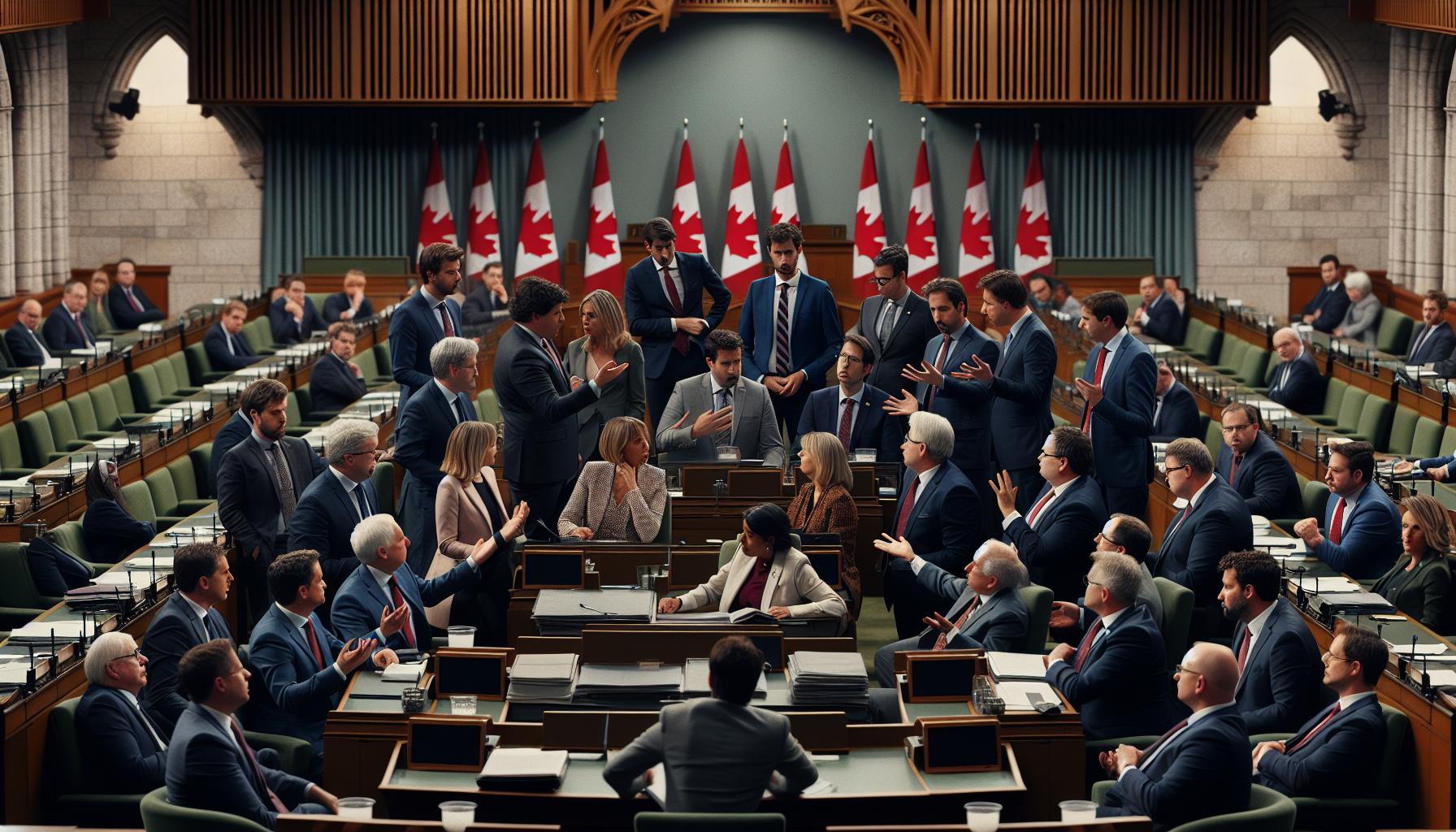
Key Players Involved in a No Confidence Vote
Few moments carry as much political weight in canadian governance as a no confidence vote, and behind every such vote lies a cast of key political actors whose roles collectively determine the outcome and subsequent ramifications. Understanding these players is essential for grasping how parliamentary democracy functions in Canada, and how power shifts can be triggered within days or weeks.
At the forefront is the Prime Minister and their Cabinet, who form the government and must maintain the confidence of the House of Commons to continue governing. The Prime Minister’s ability to rally support across party lines, negotiate with opposition and backbench Members of Parliament (MPs), and present a coherent agenda is continuously tested, especially during minority governments. For example, Prime Minister Justin Trudeau’s Liberal government has navigated multiple confidence votes in recent years by securing tactical support, highlighting the delicate balancing act leaders perform[2].
Opposition parties play a pivotal counterbalancing role. The Leader of the Official Opposition and their shadow Cabinet are often the prime movers behind initiating and tabling no confidence motions. They coordinate parliamentary strategy with smaller parties and independents to capitalize on any perceived government weaknesses. Their aim is not only to challenge the sitting government but to position their party as a credible alternative. This requires skillful coalition-building and messaging to persuade wavering MPs and the public.In some settings, smaller parties wield disproportionate influence, as their support or withdrawal can tip the scales.Beyond party leaders, rank-and-file MPs-both government backbenchers and opposition members-hold critical sway. Each MP’s vote counts in confidence motions, making parliamentary loyalty and discipline essential. However, dissent within the governing party or the wavering support of independents and smaller party members can undermine the government’s position. This emphasizes the significance of internal party unity and constituency pressures, as MPs must weigh political calculate, constituent interests, and party directives.
Other Crucial Figures
- Speaker of the House: Oversees the proceedings during the vote, ensuring rules and procedures are followed. Though expected to be impartial, the Speaker’s rulings can influence timing and debate around confidence motions.
- Governor General: Though not directly involved in the vote, the Governor General holds constitutional authority to accept a Prime Minister’s resignation or dissolve Parliament to call an election if confidence is lost.
- Media and Public Opinion Influencers: While not formal participants, journalists, analysts, and public commentators shape narratives that can pressure MPs’ decisions and impact the government’s survival prospects.
Understanding these diverse players and their interests helps demystify how confidence votes are not simply parliamentary formalities but intricate political contests involving strategy, negotiation, and timing. For readers and voters, recognizing the roles and motivations behind each political actor enriches insight into how Canada’s democracy operates during these critical junctures.
Step-by-Step Breakdown of the No Confidence Process
Few parliamentary events underscore the fragile balance of power quite like a no confidence vote in canada’s House of Commons. this mechanism is more than a formal test-it can swiftly alter the country’s political landscape. Understanding the procedural flow helps decode how government accountability unfolds in practice and why such votes command intense attention from MPs, the public, and media alike.The process typically begins when an opposition party or group of MPs tables a formal motion of no confidence. This motion explicitly declares that the House no longer supports the government’s ability to govern. Sometimes, the government itself may face a confidence vote tied to key legislative proposals such as the budget or the Speech from the Throne. Once the motion is introduced, the Speaker schedules time for debate, allowing MPs from all sides to express their stances. This stage is crucial as parties attempt to sway undecided or wavering MPs by highlighting the government’s successes or failures. Parliamentary discipline and persuasion are on full display hear.When the vote finally takes place, each Member of Parliament casts their ballot. the motion passes only if the majority of MPs vote against the government’s confidence-meaning the government loses the trust of the elected chamber. This majority typically requires more than half the sitting members to agree that the government must fall. Notably, in minority government situations, where the ruling party lacks an outright majority, the risk of losing these votes is significantly higher, making coalition-building and negotiation essential tools for governing survival.
Following the vote
If the government is defeated, several constitutional steps follow. The Prime Minister must either resign or request the governor General to dissolve Parliament, prompting a new election. Alternatively, if another party or coalition can demonstrate majority support, the Governor General may invite them to form a government. This transition period is often marked by uncertainty and rapid political maneuvering. For example, Prime Minister Justin Trudeau has faced multiple confidence votes where strategic alliances preserved his leadership, showcasing the dynamic nature of these proceedings[3].
- Step 1: Motion of no confidence is introduced in the House of Commons.
- Step 2: Parliamentary debates occur, frequently enough intensely scrutinizing government actions.
- Step 3: Members vote; the Speaker tallies votes to determine outcome.
- Step 4: If passed, the government resigns or the Governor General dissolves Parliament.
- Step 5: either a new government is formed from the existing Parliament or an election is called.
This procedural clarity highlights how no confidence votes serve as pivotal accountability checks. For citizens and observers, recognizing these steps arms them with insight into how democracy enforces government obligation and adaptation under pressure.
Legal and Constitutional Framework Governing No Confidence votes
Votes of no confidence are anchored deeply in Canada’s constitutional tradition,blending unwritten conventions inherited from the British parliamentary system with legal mechanisms that safeguard democratic accountability. While there is no single codified statute explicitly detailing all aspects of no confidence votes, their authority emerges from constitutional principles, particularly those related to responsible government. This means the executive-the Prime Minister and Cabinet-must retain the support of the elected House of Commons to govern legitimately.
At the heart of this framework is the role of the Governor General, Canada’s representative of the Crown. When a government loses a confidence vote, the Governor General has constitutional discretion to either dissolve Parliament and call a general election or invite another party or coalition that can command majority support in the House to form a government. This critical decision is guided by precedent and political realities rather than rigid legal mandates, emphasizing the flexibility and adaptability of Canada’s parliamentary democracy.
Conventions and constitutional Guidelines
Unlike fixed rules found in some countries, Canadian no confidence votes operate largely through constitutional conventions-accepted practices that, while not legally enforceable in courts, are politically binding and critical for democratic stability. for example, losing a confidence vote almost invariably triggers the government’s resignation or the dissolution of Parliament to restore democratic legitimacy. These conventions ensure that the executive remains accountable without frequent legal intervention. This balance between convention and law also means political actors must navigate the unwritten ‘rules of the game,’ making political judgment indispensable.
Practical Examples and Institutional Roles
Over time, actual instances have cemented these frameworks.Such as, recent no confidence votes affecting Prime Minister Justin Trudeau’s minority government illustrated how fragile parliamentary support directly influences governance and policymaking.The government survived by securing the backing of smaller parties or autonomous MPs, underscoring how the constitutional framework encourages negotiation and coalition-building within the House of Commons[1].
- Governor General’s Powers: Holds the authority to dissolve Parliament or call upon another leader to form government based on the confidence of the house.
- House of Commons’ Role: Provides the platform where confidence is tested, with majority votes determining the government’s survival.
- Prime Minister and Cabinet: Must maintain support and respond constitutionally to losing confidence, either by resigning or advising election.
Understanding these nuances equips citizens and political observers with clarity on how Canada’s unique blend of law and convention sustains orderly government transitions, even under intense political pressure. This framework does not just define the consequences of a no confidence vote but shapes the entire political culture surrounding government legitimacy and stability.
Common Triggers Leading to a No Confidence Vote
Few moments in parliamentary politics ignite as much tension and uncertainty as the lead-up to a no confidence vote. These votes are not called lightly; they usually erupt amid significant political turmoil or dissatisfaction. Understanding the common triggers can reveal much about the fragility or strength of a government’s mandate at any given moment. Often, these triggers reflect deeper issues within parliamentary dynamics or governmental decision-making rather than isolated disagreements.
One of the most frequent catalysts is the failure to pass key budgetary or financial legislation, frequently enough referred to as “money bills.” Since the government depends on the House of Commons’ approval to authorize public spending, a rejection can be interpreted as a essential loss of support.This failure signals to the opposition and the public that the government no longer commands the necessary confidence to manage national finances effectively, making it a classic trigger for no confidence proceedings.
Another critical trigger involves controversial policy proposals or legislative initiatives that fracture the governing party or alienate coalition partners and opposition MPs. Such as, if a minority government pushes through a divisive bill without adequate negotiation, dissenting MPs might band together to question the government’s legitimacy. Similarly,scandals or allegations of misconduct within the government or its members often weaken political capital severely,prompting opposition parties to seize the moment for a no confidence vote. These votes serve as both a challenge to the government’s ethical standing and a strategic move to capitalize on weakened public trust.
Political Strategy and Parliamentary Arithmetic
Opposition parties frequently use no confidence votes as a calculated strategy to test the government’s resilience or to position themselves ahead of upcoming elections. They may initiate a motion when sensing vulnerabilities-such as after a poor showing in public opinion polls or internal party discord-to rally support from smaller parties or independents. This underscores a crucial point: beyond policy disagreements, no confidence votes are tightly linked to the ebb and flow of parliamentary alliances.
- Budget defeats and finance bills: Seen as direct votes of confidence in government authority.
- Divisive legislation: Initiatives that alienate major MPs can fracture support.
- Political scandals: Allegations can erode legitimacy and prompt challenges.
- Shifts in party alliances: Coalition breakdowns or changing loyalties frequently enough precipitate votes.
- Strategic timing: Opposition may call votes to exploit perceived government weakness.
Recognizing these patterns offers citizens insight into why and when a government’s fate may be put to the test, reminding us that no confidence votes are as much about political momentum as they are about formal accountability.
Impact of a No Confidence Vote on government Stability
Few political procedures wield as much immediate influence over a government’s survival as a no confidence vote. This parliamentary tool doesn’t just signal dissatisfaction-it can fundamentally destabilize the entire executive, sending shockwaves that reshape political alliances and governance in Canada. When a government faces a no confidence motion, its ability to continue effectively hinges on prevailing in that vote; failure often triggers either a resignation or a general election, profoundly affecting political stability.
The stakes extend beyond the immediate government. when a no confidence vote succeeds, it indicates that the ruling party no longer commands majority support in the House of Commons. This frequently enough leads to a period of uncertainty where governing becomes precarious, especially in minority government situations where coalition-building is essential. The erosion of confidence can freeze legislative agendas, discourage investor confidence, and complicate international relations as Canada’s leadership faces scrutiny. For example,recent instances such as Prime Minister Justin Trudeau surviving no confidence votes illustrated just how fragile governance can be under continuous parliamentary pressure,requiring skillful negotiation and coalition management to maintain authority[[[2]](https://www.bbc.com/news/articles/cp8mzgr300ko).
Ripple Effects on Legislative and Political Dynamics
A no confidence vote can recalibrate the balance of power within parliament. Even unsuccessful motions shape future government actions by forcing ministers to reconsider contentious policies or amend legislation to regain support. Governments may adopt more conciliatory approaches toward opposition parties or dissident members, or they may alter their legislative priorities entirely. Opposition parties, simultaneously occurring, leverage these moments to strengthen their political capital and highlight government weaknesses to the public.
- Legislative pauses: A precarious government may delay major bills to avoid further conflict.
- Political realignments: Smaller parties or independents may gain influence as potential kingmakers.
- heightened public scrutiny: Media coverage intensifies, increasing pressure on government conduct.
Practical advice for political actors facing a looming no confidence vote includes immediate efforts to shore up alliances and dialogue. Engaging with dissenting MPs and building consensus is crucial, as is managing narratives in the media to maintain public confidence.
Maintaining Stability Amid Uncertainty
While a no confidence vote often heralds instability, it can paradoxically also strengthen democratic governance by holding the executive accountable. It compels governments to remain responsive and adaptive, highlighting the vitality of Canada’s parliamentary democracy. Politicians must recognize the importance of clarity and preemptive negotiation to mitigate the risk of losing such votes, which can precipitate elections and alter the political landscape drastically.
no confidence votes serve as critical pressure valves in Canadian politics. Whether survived or passed,they influence government stability by forcing political actors to navigate a complex interplay of legislative cohesion,public perception,and strategic negotiation. Understanding their multifaceted impact helps citizens and lawmakers alike anticipate the unfolding political consequences and respond accordingly.
Differences Between No Confidence Votes and Other Parliamentary Motions
Few parliamentary mechanisms carry the immediate political weight of a no confidence vote, yet its distinct nature often causes confusion when compared to other parliamentary motions. Unlike routine votes on legislation or procedural matters, a no confidence vote directly challenges the government’s legitimacy and ability to govern, carrying consequences that fundamentally reshape federal leadership and parliamentary dynamics.
At its core, a no confidence motion is a formal declaration by the House of Commons that it no longer supports the sitting government or a specific minister. This contrasts sharply with motions of censure or other non-binding motions, which, while expressing disapproval or urging policy changes, do not inherently threaten the government’s survival. when such a motion passes, constitutional conventions in canada oblige the Prime Minister to either resign or advise the Governor General to dissolve Parliament and call a general election. This is a uniquely authoritative outcome that underscores the paramount importance of maintaining the confidence of the elected house[[[2]](https://en.wikipedia.org/wiki/Motion_of_no_confidence).
Key Distinctions from Other Parliamentary Motions
Other parliamentary motions often address specific policies, budget approvals, or procedural issues without putting the government’s mandate on the line. For instance:
- Supply or budget Motions: While technically confidence matters, failing to pass a budget can trigger a no confidence crisis but is initially a vote on financial matters, not on the government’s overall fitness.
- Motions of Censure: These motions express criticism or disapproval of a particular minister or the government’s conduct but do not require resignation or elections.
- Procedural Motions: Such motions manage the day-to-day operations of Parliament and do not reflect on the government’s tenure.
The distinct procedural weight of a no confidence vote means it is indeed frequently enough wielded strategically by the opposition to test governmental stability, forcing ruling parties to maintain continual consensus with their members and coalition partners. This is less about specific policy disputes and more about overall trust and support.
Practical Implications for Politicians and observers
Understanding these differences helps political actors anticipate the stakes involved when a no confidence vote is tabled.Unlike typical legislative debates, these votes compel immediate high-level negotiations, as failure to secure majority confidence can abruptly end a government’s tenure. for observers and voters, recognizing that not all parliamentary motions threaten government stability clarifies how political accountability functions in a parliamentary democracy.
For example, a government may survive multiple censure motions while still retaining parliament’s confidence, but a triumphant no confidence vote marks a critical threshold that triggers constitutional processes. Thus, knowing when a motion truly imperils governance helps citizens and stakeholders gauge the political landscape accurately and respond with informed expectations.
| Type of motion | Impact on Government | Typical Outcome |
|---|---|---|
| No confidence motion | Directly challenges government’s mandate | Resignation or election call if passed |
| Motion of censure | Expresses disapproval but does not remove government | Government continues; may adjust policies |
| Supply/Budget Motion | Financial approval; breach may be considered confidence matter | Failure can trigger no confidence vote |
| Procedural Motion | Manages parliamentary process | No impact on government stability |
In essence, while parliamentary motions come in many forms, no confidence votes uniquely define the trust relationship between the government and Parliament.Recognizing this distinction empowers those involved to respond appropriately-whether by risk management in government ranks or informed civic engagement in the public sphere.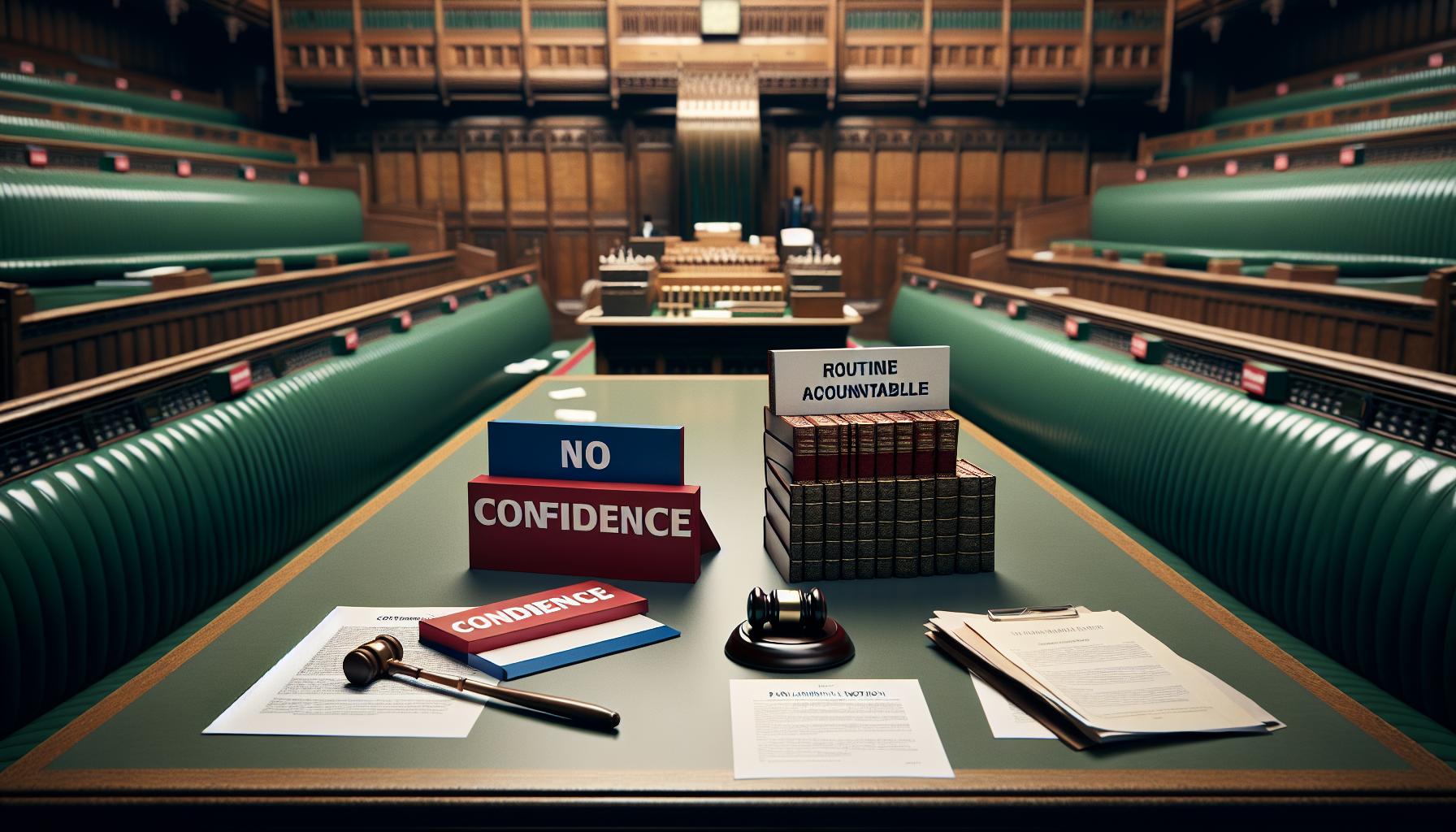
Historical Examples of No Confidence Votes in Canada
Few moments in Canadian parliamentary history have captured public attention and shaped government trajectories as sharply as no confidence votes.These decisive moments serve as crucial tests of political leadership and frequently enough ignite profound changes in the country’s governance. Understanding key historical instances sheds light on how such votes operate in practice and the significant consequences they can entail for administrations and the broader political landscape.
One of the most notable early instances occurred in 1926, during the infamous King-Byng Affair. Prime Minister William Lyon Mackenzie King’s government faced a no confidence motion after a scandal weakened its support. Refusing to resign, King asked Governor General Lord Byng to dissolve Parliament and call an election, but Byng denied the request-an unprecedented constitutional standoff that highlighted the delicate balance of powers between elected officials and the Crown’s representative. Eventually, an election was held, and King’s Liberals returned to power.This event remains a powerful example of how no confidence votes can expose vulnerabilities in both political leadership and constitutional conventions.
More recently, minority governments have frequently been subjected to no confidence votes, given their precarious standing in Parliament. As a notable example, in 2023, Prime Minister Justin Trudeau’s Liberal government survived a high-profile no confidence vote triggered by opposition dissatisfaction with certain policies. Even though the government narrowly retained confidence, the episode underscored the persistent challenges minority governments face in maintaining alliance support and managing dissent. Such modern examples illustrate how no confidence votes are not always about ousting a government immediately but serve as strategic tools for opposition parties to press for concessions or policy shifts[[[2]](https://www.lemonde.fr/en/international/article/2024/09/26/canada-pm-trudeau-survives-no-confidence-vote-remains-on-thin-ice_6727279_4.html).
Lessons from history
- Minority governments are Vulnerable: As seen in multiple cases, including the 2008 no confidence vote that toppled the Conservative government, minority administrations must continuously negotiate with opposition parties to survive.
- Constitutional Conventions Matter: Incidents like King-Byng demonstrate that beyond political maneuvering, no confidence votes invoke critically important constitutional principles and interpretations that shape outcomes.
- Strategic Use by Opposition: Opposition parties often time no confidence motions to capitalize on political momentum or government missteps, making timing and political context critical factors.
A practical takeaway for watchers of Canadian politics is that no confidence votes can dramatically alter parliamentary dynamics-sometimes leading to immediate elections, but other times resulting in negotiated agreements that stabilize governments temporarily. Staying informed about these historical precedents helps observers appreciate the stakes behind each vote, recognize indicators of governmental instability, and anticipate possible political shifts.
| Year | Prime Minister | Outcome | significance |
|---|---|---|---|
| 1926 | William Lyon Mackenzie King | Election called after Governor General refusal to dissolve Parliament | Highlighted constitutional limits and powers of Governor General |
| 2008 | Stephen Harper | Government defeated; avoided election via coalition talks | Showcased minority government vulnerability and coalition options |
| 2024 | Justin Trudeau | Government survived narrowly | Reflected ongoing minority government challenges and political negotiation |

What Happens After a No Confidence Vote Passes?
Few moments test the resilience of a government like a successful no confidence vote. when such a motion passes, it immediately signals that the sitting government no longer holds the support of Parliament’s majority, effectively triggering a constitutional and political crossroads. The Prime Minister and cabinet find themselves in a race against time to determine the next steps, which can profoundly alter the country’s political landscape.
Upon passing,the government must either resign or request the Governor General to dissolve Parliament and call a general election. This choice is not merely procedural but steeped in convention and strategy.If the Prime Minister opts to resign, the Governor General may invite another party leader who appears capable of commanding the confidence of the House to form a new government. Such situations often lead to coalition negotiations or agreements, especially in minority parliaments. However,if dissolution is requested,an election is called,providing the electorate the possibility to deliver a fresh mandate. This process can take weeks or months, during which the government remains in a caretaker role with limited powers, maintaining day-to-day administration but refraining from major policy decisions.
What Happens During the Transition Period?
- Caretaker Government Functions: After a no confidence vote passes, the existing government continues in a caretaker capacity. This means avoiding controversial decisions or new initiatives until a new government is established.
- Governor General’s Role: the Governor General’s discretion is vital here – deciding whether to accept the Prime Minister’s advice for dissolution or to explore alternative government formations based on parliamentary confidence.
- Opposition Negotiations: Opposition parties may seize this opportunity to negotiate coalitions or agreements, perhaps forming a new government without immediately heading to the polls.
Historical instances such as the 1926 King-Byng Affair exemplify this delicate balance of power. Prime Minister Mackenzie King’s request to dissolve Parliament after losing confidence was denied by Governor General Lord Byng, leading to a constitutional debate and a subsequent election. Similarly, in 2008, Stephen Harper’s conservative government was toppled by a no confidence vote but managed to avoid an immediate election due to coalition talks among opposition parties.These examples illustrate that passing a no confidence vote doesn’t always translate into instant elections but rather initiates a critical period of political negotiation and constitutional interpretation.Understanding what unfolds after a no confidence vote enables citizens and political observers to better anticipate shifts in government stability and policy direction. It also underscores the importance of parliamentary confidence as the lifeblood of responsible government, where losing it necessitates either a fresh electoral mandate or a reshuffling of leadership within the existing Parliament. This mechanism ensures that the government always reflects the will of the elected representatives and,ultimately,the Canadian public.
How Opposition Parties Use No confidence Votes Strategically
Few parliamentary tools hold as much potential for opposition parties as a carefully timed no confidence vote.Beyond simply toppling a government, opposition members use these motions strategically to maximize political leverage, influence policy direction, and reshape the balance of power without necessarily triggering an immediate election.
Opposition parties often deploy no confidence votes as a bargaining chip, especially in minority government scenarios where the governing party lacks an outright majority. They can signal dissatisfaction with specific government policies or leadership, while concurrently pressing for concessions or negotiations on key issues. For example, by threatening a no confidence vote, opposition parties may encourage the government to amend legislation, revise budgets, or incorporate opposition priorities to avoid losing power. This strategic maneuvering allows the opposition to punch above its weight,driving political discourse and extracting tangible outcomes even without fully toppling the government.
Coalition-Building and Negotiation
A no confidence vote can also serve as a platform for fostering alliances among opposition parties. Recognizing that success requires more than just opposition votes, parties often use these motions to begin behind-the-scenes coalition talks or confidence-and-supply agreements. The 2008 attempt by opposition parties to form a coalition government following a successful no confidence vote against Stephen Harper’s Conservative government is a prime example,demonstrating how such votes catalyze negotiations that might avoid a costly election while reshaping governance. These coalitions increase the opposition’s influence over parliamentary decision-making and enable them to present an alternative government to the electorate, strengthening their bargaining position.
Maximizing Public and Media Attention
No confidence motions also carry significant symbolic weight, serving as moments for opposition parties to amplify public scrutiny of the government’s performance. Opposition leaders frequently use these votes to spotlight perceived government failures, accountability issues, or policy missteps-engaging media outlets and public opinion to build pressure. Successful or not, the strategic timing of no confidence votes during politically sensitive periods (such as budget debates or scandals) maximizes their impact on public discourse. This heightened attention can force governments to address contentious topics or risk prolonged instability, thus furthering opposition aims beyond the parliamentary floor.
- Leverage Minority Governments: Opposition parties exploit the fragile nature of minority governments by wielding no confidence votes as credible threats.
- Shape Policy Outcomes: Threatening or initiating no confidence votes can compel governments to negotiate policy priorities.
- Coalition Negotiations: Votes offer a mechanism to solidify opposition alliances and propose alternative governance options.
- Public Messaging: Highly visible votes function as a rallying point for media coverage and public engagement.
Through such strategic use, opposition parties transform no confidence votes into more than just parliamentary procedures-they become powerful political tools that influence government behavior, alter power dynamics, and even set the stage for future elections. Understanding this nuanced role can help observers and citizens appreciate how these votes embody the dynamic nature of Canada’s parliamentary democracy.
Public Reaction and Media Influence During No Confidence Votes
Few political events ignite public interest and media frenzy quite like a no confidence vote in Canadian politics.These moments act as a crucible for public opinion,often amplifying scrutiny on the government’s performance and exposing underlying political tensions. Whether the motion ultimately passes or fails, media outlets seize the opportunity to dissect the motivations, ramifications, and key players involved, shaping how citizens perceive the legitimacy and stability of the ruling administration.
Media coverage during these votes tends to be intense and fast-paced, featuring live broadcasts from Parliament, expert panel discussions, and real-time social media commentary. This saturation influences public reaction profoundly, as the framing of issues-be it government accountability, leadership effectiveness, or partisan conflict-can sway citizen attitudes. For voters looking to understand the stakes, it helps to follow trusted news sources that provide balanced perspectives, including fact-based analysis and historical context, rather than simply partisan rhetoric.
Shaping Public Engagement and Political Narratives
The framing and timing of no confidence votes often dictate levels of public engagement. When timed around contentious topics, such as budget approvals or scandal revelations, these votes trigger heightened emotions and discussions beyond political observers. The opposition’s narrative during the vote-whether highlighting government failures or proposing clear alternatives-can resonate strongly with disenchanted segments of the population. Conversely, governments often use these moments to rally support by emphasizing stability and continuity, appealing to voters wary of uncertainty.
- Monitor Diverse Voices: Public reaction is complex; social media offers a pulse on grassroots sentiment but may also amplify misinformation or polarizing views.
- Context Matters: Understanding the policy issues behind the vote helps citizens avoid simplistic judgments based solely on political theatrics.
- Media literacy: Encourage critical consumption of news by comparing coverage from multiple outlets to identify biases or gaps.
Examples Illustrating Media and Public dynamics
In recent Canadian history, no confidence votes have showcased the significant impact of media framing. As an example, during the minority government periods, coverage of confidence motions has often magnified perceptions of fragility or impending change, even when the government survived, as Prime Minister Justin Trudeau did in multiple recent votes[[[1]](https://www.bbc.com/news/articles/cp8mzgr300ko). This ongoing attention fuels political debate, influences party strategies, and can alter government behavior to better respond to public concerns.
Understanding these dynamics equips citizens and observers to better navigate the political landscape during times of parliamentary uncertainty, allowing them to engage meaningfully with democratic processes and hold their representatives accountable.
FAQ
Q: How frequently enough are no confidence votes held in Canada’s Parliament?
A: No confidence votes are held sparingly and usually when the government’s legitimacy is questioned. They occur during political crises or after major disagreements,often triggered by opposition parties.For ongoing stability insights, explore the Impact of a No Confidence Vote on Government Stability section in the main article.
Q: Can a no confidence vote be triggered by any Member of Parliament?
A: Yes, any MP can propose a no confidence motion, but it typically requires support from multiple opposition parties to succeed. This highlights collaboration dynamics covered in How Opposition Parties Use No confidence Votes Strategically.
Q: What difference does a minority government make regarding no confidence votes?
A: In a minority government, no confidence votes are more frequent and critical since the ruling party lacks a majority and must negotiate support to survive. This vulnerability is discussed in How a No Confidence Vote Shapes Canadian Politics.
Q: What happens if a no confidence vote fails in Parliament?
A: If a no confidence vote fails, the current government retains power and can continue its agenda. This signals parliamentary confidence and political stability, linking to Legal and Constitutional Framework Governing No Confidence Votes for detailed context.
Q: How does a no confidence vote affect the Prime Minister’s position specifically?
A: A successful no confidence vote effectively forces the Prime Minister to resign or call an election, as it shows loss of parliamentary support. This is integral to the Step-by-Step breakdown of the No Confidence Process.
Q: Are all parliamentary motions considered no confidence votes?
A: No, only specific motions relating to government confidence qualify as no confidence votes. Other motions differ in purpose and impact; distinctions are explained in Differences Between No Confidence Votes and Other Parliamentary Motions.
Q: How quickly must a new election be called after a no confidence vote passes?
A: Following a passed no confidence vote, an election is usually called within days or weeks to resolve the leadership crisis, providing a fresh mandate. For procedural details, see What Happens After a No Confidence Vote Passes?.
Q: Why do media and public reactions matter during no confidence votes?
A: Media coverage and public opinion can influence political pressure and party strategies during no confidence debates, often swaying outcomes. This dynamic is covered in Public Reaction and Media Influence During No confidence Votes in the main article.
For deeper understanding, consider reviewing the linked article sections above to see how no confidence votes intertwine with Canadian political stability and governance.
to Conclude
Understanding how a no confidence vote works in Canada is key to grasping the delicate balance of parliamentary democracy. Now that you’ve seen the step-by-step process, consider exploring how recent confidence votes have shaped Canadian politics in our detailed analysis of recent parliamentary events. staying informed about these political mechanisms not only deepens your civic knowledge but also keeps you prepared for how government stability can shift quickly.
If you want to dive deeper, check out our guides on the roles of political parties during confidence motions and what happens after a vote passes. Don’t forget to subscribe to our newsletter for timely updates on canadian political developments and expert insights. Have questions or thoughts? Share them in the comments below and join a growing community of engaged readers. By exploring related topics like parliamentary procedures and canadian government structure, you’ll find even more ways to stay ahead in understanding the evolving political landscape.
Get our latest guides, news, and insights highlighted in your Google Search & AI Overviews.